
An older electrical system isn’t automatically unsafe, and a newer-looking one doesn’t prove it meets current requirements. If you’re searching for how to “bring home electrical up to code Picton,” start with a qualified assessment, not assumptions about your home’s age or appearance.
You may have questions if wiring has been altered, breakers trip repeatedly, or you’re unsure whether past work was inspected. In Ontario, electrical work is governed by the Ontario Electrical Safety Code, and the Electrical Safety Authority (ESA) oversees notifications and inspections. A qualified electrical contractor can review your concerns and explain which repairs or upgrades may be appropriate after assessing the relevant work.
This article covers warning signs, what to expect during an assessment, how notifications or inspections may apply, and what records to ask about after work is completed. Satrack Electric is a licensed and insured contractor offering residential electrical repairs and upgrades in Picton.
Key Takeaways
- A home’s age or appearance can’t confirm whether its electrical system meets the requirements that apply.
- Ask what an electrician’s assessment covers, and request clear findings and recommended next steps.
- Warning signs deserve attention, but an assessment is needed to identify the cause and determine whether a code deficiency exists.
- To bring home electrical up to code Picton, document concerns, review recommendations, and confirm which notifications or inspections apply to the specific work.
- Satrack Electric’s residential repairs, installations, upgrades, and panel upgrades may help address needs identified through an assessment.
Bringing a Picton home’s electrical system up to code
Code compliance means that the electrical work and installation meet the requirements that apply to them. Requirements can depend on the type of work, the parts of the system involved, and the rules in force when the work is done. A home’s age, a modern-looking panel, or one visible wiring detail can’t establish whether the entire system complies.
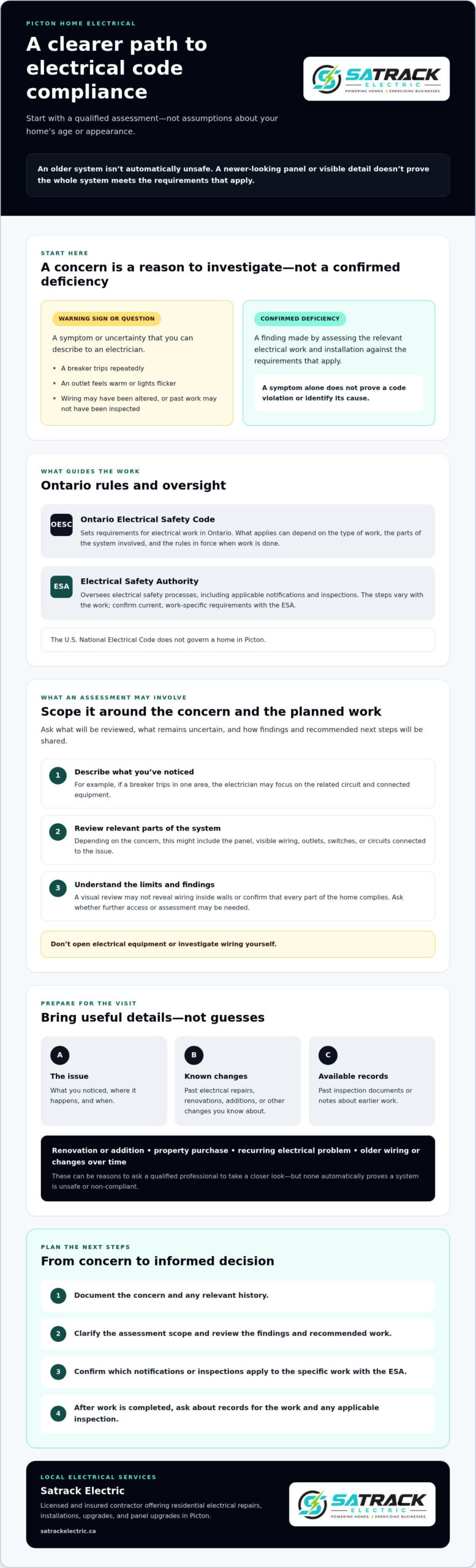
Distinguish a concern that needs investigation from a deficiency confirmed through assessment. For example, a breaker that trips is a reason to describe the problem to an electrician. It doesn’t, by itself, prove a code violation or identify the cause. If you want to bring home electrical up to code Picton, explain what you’ve noticed and ask what assessment is appropriate before assuming a particular upgrade is needed.
Which Ontario rules and authorities may apply to home electrical work?
The Ontario Electrical Safety Code (OESC) sets requirements for electrical work in Ontario. The Electrical Safety Authority (ESA) oversees electrical safety processes, including applicable notifications and inspections. The steps vary according to the work, so don’t assume every project follows the same process. For general background on how an electrical code is structured, see the US National Electrical Code. It is not the code that governs a home in Picton. Check current Ontario requirements and work-specific guidance directly with the ESA.
Why might a Picton homeowner seek an electrical assessment?
An assessment may help when you’re planning a renovation or addition, reviewing a property purchase, or dealing with recurring electrical problems. Older wiring or installations changed over time are also reasons to ask a qualified professional to look more closely. Neither a home’s age nor evidence of past changes automatically means the work is unsafe or non-compliant. An electrician can consider the reported concern, the property, and any proposed work, then explain the findings and appropriate next steps.
A concern is a symptom or question to investigate; a confirmed deficiency is a finding made through appropriate assessment against the requirements that apply. This distinction helps you avoid dismissing a potential risk or authorizing work based only on a guess.
Before proceeding, clarify what the assessment will cover and ask which requirements apply to the proposed work. Confirm any notification, inspection, or approval steps with the ESA, since they depend on the work and current rules. Clear findings can help you decide whether a repair, installation, or upgrade is warranted.
What can an electrician assess when checking a Picton home’s electrical system?
An electrical assessment should be guided by what you’ve noticed, the property’s circumstances, and any work you’re planning. If a breaker trips in one area, for example, the electrician may focus on the related circuit and the equipment connected to it. A planned renovation or panel upgrade may call for a different scope. Ask what the assessment includes and how the findings will be shared.
A visit or visual review can identify concerns, but it should not be treated as confirmation that every part of the home complies. A compliance conclusion requires assessing the relevant electrical work and installation against the requirements that apply. If you’re planning to bring home electrical up to code Picton, ask what was reviewed, what remains uncertain, and what next steps are recommended.
What areas and electrical concerns might be reviewed?
Depending on the concern, an electrician might review the electrical panel, visible wiring, outlets, switches, or circuits connected to a reported issue. These are examples, not a universal checklist for every home or visit. A visual review alone may not reveal wiring inside walls or other concealed areas. If the concern or proposed work warrants further investigation, ask what additional access or assessment may be needed. ESFI also shares general electrical safety tips for homeowners. Use them as general guidance, not as a substitute for an assessment of your property.
What should you share before an electrician visits?
Preparing a few details can help the contractor understand the issue and discuss a suitable scope. Before the visit, make a brief record of:
- What you’ve noticed, where it happens, and when, such as an outlet that feels warm or lights that flicker.
- Previous electrical repairs, renovations, additions, or other changes you know about.
- Available records, such as past inspection documents or notes about earlier work.
Don’t open equipment or investigate wiring yourself. Describe what you’ve observed, then ask what access is needed, how to prepare the space, and what the assessment will cover. If you’re unsure which details matter, share what you know and let the electrician guide the discussion.
After the assessment, ask for the findings and recommendations in clear terms. Confirm what work is proposed and what still needs to be checked. Homeowners in Picton seeking help with reported electrical concerns can review Satrack Electric’s residential electrical services. Satrack Electric offers electrical repairs, installations, and upgrades; the appropriate work depends on the assessment.
How to distinguish warning signs from confirmed code deficiencies
A symptom is a reason to pay attention, not a diagnosis. Recurring breaker trips, flickering lights, unusual heat near an outlet or switch, buzzing, or visibly damaged electrical components can indicate a problem that needs professional review. A symptom alone doesn’t confirm a code violation or explain its cause. Different issues can produce similar signs, so an electrician needs to assess the relevant installation before recommending corrective work.
Note what you’ve noticed, where it happens, and whether it is becoming more frequent or severe. Those details can help a qualified electrician focus on the concern. If you’re searching “bring home electrical up to code Picton,” remember that identifying a warning sign is only the first step. The next is to have the affected electrical work assessed against the requirements that apply.
Which electrical symptoms should prompt a professional assessment?
Arrange a professional assessment if a breaker trips repeatedly, an outlet or switch feels unusually warm, or electrical components appear cracked, loose, or discoloured. Take recurring or worsening symptoms seriously, even if the system still works. Don’t try to confirm the cause yourself. Avoid opening the electrical panel, testing live wiring, or attempting repairs. Describe what you observed and let a qualified professional determine what should be checked.
When should you treat an electrical concern as urgent?
If you see exposed or damaged electrical parts, keep people away and don’t touch them. Stop using affected equipment if you can do so without approaching or handling the hazard. If there’s an immediate threat to life or property, contact emergency services. Don’t rely on a remote description to diagnose the issue or decide that it’s safe to continue using the equipment.
For concerns that don’t present an immediate threat but continue or get worse, contact a qualified electrical contractor and explain the symptoms. Ask what assessment is appropriate and what to do about the affected area while you wait for professional guidance. The Electrical Safety Authority (ESA) also explains legal requirements for electrical work, including information about notifications and inspections. Check the ESA’s current guidance for the work involved. A warning sign alone doesn’t determine which requirements apply.
How to plan electrical corrections and confirm next steps in Picton
After an electrician has assessed the concern, use the findings to plan any necessary work. Don’t assume every recommendation is required to bring home electrical up to code Picton. A clear sequence keeps decisions tied to the actual condition of the installation:
- Document the concern: Note symptoms, previous work, and the areas involved.
- Arrange an assessment: Explain what you’ve observed and what work you’re considering.
- Review the recommendations: Ask how each proposed repair or upgrade relates to the findings.
- Confirm the scope: Agree on the work, responsibilities, access arrangements, and any follow-up.
Before work begins, verify which notifications, inspections, or approvals apply to the project. Requirements can depend on the work, so ask who will confirm the process and check current guidance with the Electrical Safety Authority (ESA). Request written details of the proposed work and ask what follow-up documentation you should keep.
What questions should you ask before electrical work begins?
Ask which concerns the work is intended to address and what falls outside the agreed scope. Clarify who will verify whether an ESA notification or inspection is required, what access the contractor needs, and how scheduling will be coordinated. If panel work is recommended, ask why it’s needed and what the assessment found. You can also review this electrical panel upgrade guide.
What should happen after corrective electrical work?
Ask what records or inspection documentation apply to the completed work, and keep relevant documents with your home records. Have the contractor explain any remaining recommendations, limitations, or follow-up steps in plain language. For further repair-related guidance, see the residential electrical repair checklist.
A written scope and follow-up details help you understand what was completed. They don’t mean that one repair confirms compliance throughout the entire home. For residential electrical repairs, installations, or upgrades in Picton, contact Satrack Electric about your electrical work.
Get professional help bringing your Picton home’s electrical system up to code
A qualified assessment can clarify whether a concern needs a repair, installation, or upgrade. Satrack Electric is a licensed and insured electrical contractor serving Picton. Its residential services include electrical repairs, installations, upgrades, and panel upgrades. The appropriate work depends on the property and the assessment, so don’t assume a code-compliance outcome before the relevant electrical work is reviewed.
If you’ve searched “bring home electrical up to code Picton,” look for a contractor who can explain the findings and the reasons behind any recommendations. A clear discussion can help you understand what needs attention, what work is proposed, and what follow-up may apply.
What to look for in a residential electrical contractor
Before arranging work, confirm the contractor’s licensing and insurance. Ask for a clear explanation of the assessment findings, proposed scope, and any exclusions or limitations. Also ask how project-specific Electrical Safety Authority (ESA) notification or inspection requirements will be verified. A contractor should explain what they know and identify what needs confirmation, rather than promise a result before assessing the work.
Arrange an electrical assessment for your Picton home
To start a useful conversation, share the property’s location, the concern you’ve noticed, and any electrical history you know, such as previous repairs or renovations. Mention any records you have. Ask what information or access the contractor needs to discuss an assessment and possible next steps. Satrack Electric offers residential electrical work in Picton, with recommendations based on the home and reported concerns.
Describe the issue plainly, even if you’re unsure whether it indicates a deficiency. A recurring problem, an upcoming renovation, or a question about past work can help frame the discussion. The contractor can advise what assessment may be appropriate and whether the requested work is among its services.
For residential electrical repairs, installations, upgrades, or panel upgrades in Picton, contact Satrack Electric to discuss your concern and ask about assessment and next steps.
Take the next step with a clear electrical assessment
To bring home electrical up to code Picton, begin with an assessment, not assumptions about the home’s age or one warning sign. An electrician can review the concerns you report, explain relevant findings, and discuss what work may be appropriate. Before proceeding, clarify the proposed scope and confirm which notifications, inspections, or follow-up records apply to that work.
Satrack Electric is a licensed and insured electrical contractor providing residential electrical services in Picton and nearby communities. An assessment can help determine whether repairs, installations, or upgrades are suitable for your home, without presuming a code-compliance outcome in advance.
Contact Satrack Electric to discuss an electrical assessment for your Picton home and share the concern you’d like reviewed. Clear information and qualified guidance can help you make informed decisions about the next steps for your home’s electrical system.
Frequently Asked Questions
How do I know if my Picton home’s electrical system is up to code?
A qualified electrical assessment is the practical way to determine whether the relevant installation and work meet applicable Ontario requirements. A home’s age, appearance, or one visible detail can’t establish whether its entire electrical system complies. If you searched “bring home electrical up to code Picton,” start by describing your concern to an electrician. Ask what the assessment covers, what the findings mean, and whether any follow-up or ESA process applies.
Does buying an older home in Picton mean its electrical system is not up to code?
No. A home’s age alone doesn’t confirm that its electrical system is deficient, just as a newer appearance doesn’t prove compliance. Wiring may have been updated or altered over time, and some parts may be concealed from view. If you’re buying a property or planning renovations, ask a qualified electrician to assess the concerns relevant to the home and explain any recommended next steps.
Can an electrician bring my whole home up to code in one visit?
Not necessarily. The time and scope depend on the reported concerns, the property, and the work an assessment identifies as appropriate. A focused concern may need a different review from a renovation or several electrical issues. Concealed wiring or additional work may require further assessment, and applicable notifications or inspections can affect the process. Ask what can be assessed during the visit and what follow-up might be needed.
What electrical problems should I have checked by an electrician?
Ask a qualified electrician about recurring breaker trips, flickering lights, buzzing, unusual heat near outlets or switches, or damaged electrical components. These symptoms are reasons to seek advice, not proof of a code violation or a diagnosis of the cause. Don’t open the panel, test live wiring, or attempt repairs. If parts are exposed or damaged, avoid touching them. Contact emergency services if there’s an immediate threat to life or property.
Does electrical work in Ontario require an ESA notification or inspection?
Some electrical work may require a notification to the Electrical Safety Authority (ESA) and an inspection, but the applicable process depends on the specific work. Don’t assume the same requirements apply to every repair or installation. Before work begins, ask the contractor who will verify whether notification or inspection is needed, and confirm current requirements directly with the ESA. Keep relevant completion or inspection records with your home documents.
Can Satrack Electric help with electrical repairs and upgrades in Picton?
Yes. Satrack Electric is a licensed and insured electrical contractor serving Picton, with residential electrical repairs, installations, upgrades, and panel upgrades among its services. The appropriate recommendation depends on the property and assessment, so a code-compliance outcome shouldn’t be assumed in advance. Satrack Electric also serves Belleville, Trenton, Brighton, Quinte West, Greater Napanee, and Cobourg. Describe your concern and ask what assessment and next steps may be appropriate.
What should I prepare before an electrician assesses my home?
Write down what you’ve noticed, where it happens, and whether it recurs or changes. Share relevant details about previous repairs, renovations, or known electrical alterations, and have available records or inspection documents ready. You don’t need to diagnose the issue yourself. Ask what areas the contractor expects to review, what access is needed, and whether you should prepare anything before the visit. These details help clarify the assessment scope and discussion.