
What if the right smoke alarm for your Belleville property depends less on the device and more on the building itself? A sound plan for smoke detector installation Belleville property owners can rely on starts with the layout, how each space is used, and the existing electrical setup. A home, rental property, and commercial space may each call for different considerations.
Choosing equipment is only one part of planning. Placement, power source, interconnection, and applicable requirements all matter. Before work begins, identify what is already installed and how it operates. That gives you a clearer basis for deciding whether the job involves a standalone alarm, interconnected equipment, or a detector connected to a building fire alarm system.
This guide explains the main factors to consider for residential and commercial properties in Ontario, including alarm options, placement, and installation planning. Satrack Electric provides residential and commercial electrical installations in Belleville, with a safety-focused approach to planning the work. Whether your property is in Belleville, Trenton, Picton, Brighton, Quinte West, Greater Napanee, or Cobourg, a building-specific plan is a better starting point than a generic device list.
Key Takeaways
- Learn how standalone alarms and system-connected detectors serve different properties, and how existing infrastructure can shape the setup.
- See why replacing one device may not address concerns with wiring, equipment condition, or system connections.
- Prepare for smoke detector installation Belleville by noting your building type, current equipment, access needs, and known system concerns.
- Follow a practical planning sequence, from describing the property to reviewing the completed installation.
- Understand how Satrack Electric’s residential and commercial electrical installation experience can support property-specific planning in Belleville and nearby communities.
Smoke detector installation in Belleville: alarms, detectors, and system basics
Smoke detection equipment provides an audible warning when smoke is detected, helping people recognize a potential fire and respond. A smoke alarm detects smoke and sounds a warning from the device. Choosing equipment and an arrangement suited to the property is essential: a device intended for a private home may not be the right solution for a workplace or a building with an existing fire alarm system.
For smoke detector installation Belleville properties need, start by identifying the role of each device. A standalone alarm operates as an individual unit, while a system-connected detector is part of a wider setup. The building’s use, layout, current equipment, and applicable requirements all inform which approach is appropriate. An overview of types of smoke detectors and their operation explains basic detection principles, but it cannot determine what a particular property needs.
Smoke alarm or commercial fire alarm detector: what is the difference?
In a home, a standalone smoke alarm detects smoke and gives an audible warning from that device. It is not automatically a substitute for equipment required as part of a larger building system. In commercial settings, a detector may connect to a building fire alarm system and report to its control equipment, rather than functioning as an independent household alarm. Terminology can vary, so identify equipment by its role and consider the requirements that apply to the property type.
Why the property type matters in Belleville
A private home and a workplace have different patterns of use, layouts, and existing equipment. A home may have standalone alarms, while a commercial property may rely on a broader fire alarm system. Even within one category, room arrangement, floors, additions, and existing connections can affect installation planning. Do not assume one device or arrangement suits every property.
Start by checking what is already in place. Identify whether each device is standalone or connected to a system, where it is located, and whether other alarms or detectors are linked to it. In a commercial building, changing one component without understanding its connection to the wider system can leave important planning questions unresolved. In a home, consider device quantity and placement in relation to the building and applicable requirements.
Requirements can depend on the property’s use and the nature of the work, so general advice is not a complete compliance plan. A suitable installation begins with the building: its use, the detection equipment already present, and how that equipment functions together. Satrack Electric provides residential and commercial electrical installations in Belleville. Its licensed and insured electrical team can plan electrical work around the property’s existing setup and intended use.
Choose a smoke detection setup for your Belleville home or business
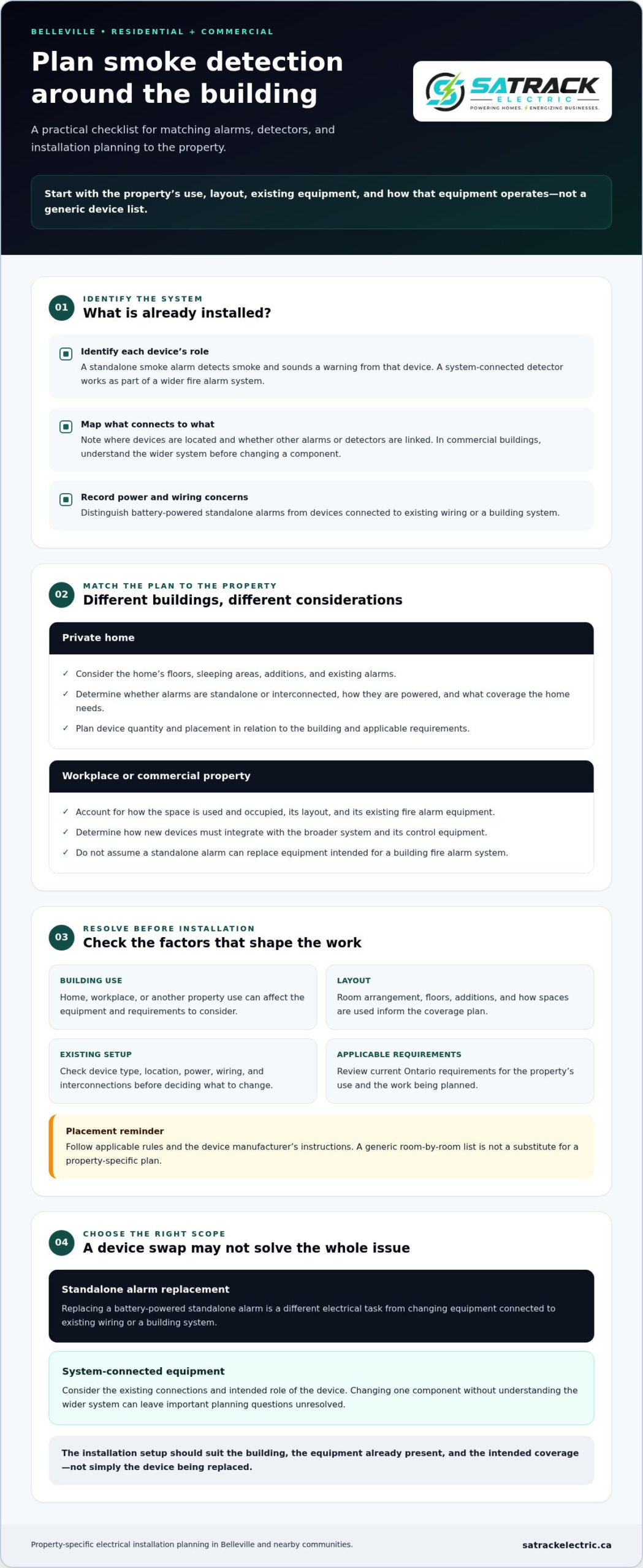
Once you know what equipment is already in place, match the proposed setup to the building. A standalone smoke alarm works as an individual unit. A system-connected detector is designed to operate as part of a broader fire alarm system. The choice affects more than the device itself: power arrangements, connections, and the intended coverage plan must suit the installation and applicable requirements.
Use this comparison to pinpoint what needs to be resolved before work is planned. It is a starting point, not a substitute for assessing the property or reviewing current Ontario requirements.
| Property type | System context | Questions to resolve |
|---|---|---|
| Private home | Standalone alarms or existing interconnected equipment | What alarms are installed, how are they powered, and what coverage does the home need? |
| Workplace or commercial property | Existing fire alarm equipment may connect detectors to a broader system | What equipment is present, how is the building used, and how must new devices integrate? |
Which installation factors should homeowners consider?
Start with the home’s layout, including its floors, sleeping areas, additions, and existing alarms. Note whether devices are standalone or connected, and record any known power or wiring concerns. Then define the coverage plan in relation to current requirements. Placement should follow applicable rules and the device manufacturer’s instructions, not assumptions based on a generic room-by-room list. For general guidance, consult NFPA guidance on smoke alarm placement, while using Ontario requirements as the relevant local reference.
What changes for a commercial property?
Commercial planning must account for how the space is occupied, the building layout, and any existing fire alarm equipment. A detector may need to work with a broader system, so adding a standalone device without considering existing connections may not meet the property’s needs. Review current Ontario requirements for the occupancy and work being planned before making compliance decisions.
Consider power and interconnection together. Replacing a battery-powered standalone alarm is a different electrical task from changing equipment connected to existing wiring or a building system. The installed setup needs to suit its intended role; one type should not be assumed to replace another. If the property has been renovated or its use has changed, include those details in the assessment because they may affect the plan.
For a home, make a simple inventory: where alarms are located, what type they appear to be, how they are powered, and whether any are linked. For a commercial space, include the areas served by existing fire alarm equipment and any known building changes. These details help clarify the scope of smoke detector installation Belleville properties may require. Satrack Electric provides residential and commercial electrical installations. Review its electrical installation services when planning the electrical work.
Address common concerns before booking smoke detector installation
Replacing a smoke alarm can seem like a simple fix, but a new device may not resolve a problem affecting the wider detection setup. The cause could involve the device, its power supply, existing wiring, or a connection to other equipment. Before arranging work, note what you have observed and where it happens. Those details help distinguish a straightforward device change from a job that needs a broader electrical assessment.
It also helps to distinguish a routine planning question from a persistent alarm fault. A device that repeatedly signals a fault, or equipment that does not operate as expected, needs prompt attention. Do not assume replacement alone will solve the problem. Follow the manufacturer’s instructions, and do not treat disabling a device as a lasting solution. If there is smoke or a suspected fire, leave the area and follow the appropriate emergency procedures.
Can existing smoke alarms or wiring be reused?
Possibly, but suitability depends on the equipment’s condition, compatibility with the proposed installation, and how the overall system is arranged. An electrician can assess existing electrical components and connections as part of installation planning. For example, a device connected to other equipment may need a different approach from a standalone alarm. Decide whether to reuse or replace equipment after assessing the specific setup.
Useful details to share include the locations of existing devices, visible labels or instructions, known wiring changes, and what happens when a fault appears. If the issue began after a renovation or another electrical change, mention that too. These observations help clarify the work without requiring you to diagnose the cause yourself.
Does every property need the same number and placement of devices?
No single arrangement fits every building. The number and placement of devices depend on the property’s layout, how spaces are used, the existing detection setup, and applicable requirements. A home with several levels presents different planning considerations from a commercial space with distinct areas and existing system connections. Current Ontario requirements and the equipment manufacturer’s instructions should guide decisions for a specific installation.
Installation planning is property-specific. For smoke detector installation Belleville homeowners or businesses are arranging, assess the actual building rather than relying on a generic device count. This can also help reveal whether a concern relates to one alarm or to wiring and connections across the wider setup.
Before booking, note the building type, the location and apparent type of existing equipment, known electrical or system concerns, and any access restrictions. A licensed and insured electrical contractor can use this information to plan the electrical work and assess the installation. Clear details at the outset help focus the discussion on the property’s needs, whether it is a residence or commercial space.
Plan smoke detector installation in Belleville: from assessment to testing
A clear plan connects the building, existing equipment, and intended coverage. Before arranging smoke detector installation in Belleville, gather a few practical details and expect the work to move through assessment, installation, and testing. A licensed electrical contractor can plan and complete electrical installation work, including addressing relevant wiring or connection concerns as part of the project.
What information helps plan the installation?
Note whether the property is residential or commercial, describe its layout, and identify where existing alarms or detectors are located. Record visible wiring, known system issues, and recent changes that could affect the setup. Mention access limitations, such as areas that are difficult to reach, so they can be considered when planning the work.
- Describe the property. Share the building type, how the space is used, its general layout, and any areas that may affect access.
- Summarize existing equipment. Identify known alarms or detectors, whether they appear standalone or connected to a wider system, and any visible wiring or labels. You do not need to diagnose the equipment.
- Explain the concern. Describe persistent faults, devices that do not seem to operate as expected, or known issues with wiring and system connections. If an existing fault is part of the work, electrical repairs and maintenance guidance can help you understand how electrical concerns fit into maintenance planning.
- Assess the installation. The contractor reviews the property details and existing setup to determine the electrical work required. The plan can account for intended coverage, electrical arrangements, and applicable requirements.
- Install and review operation. After the agreed work is complete, test the equipment in keeping with its instructions and applicable requirements. Review what was installed, how it operates, and any relevant instructions for ongoing use.
What should happen during installation and after it?
Assessment establishes the scope before installation begins. The work should follow the property-specific plan, rather than an assumed arrangement borrowed from another building. Operational testing is an important final stage, but the correct method depends on the equipment and its instructions. Ask for a clear walkthrough of the completed work and any operating information relevant to the installed setup.
Satrack Electric provides residential electrical services in Belleville. A careful process can help distinguish an issue with one device from a wider electrical connection, without assuming that one solution suits every property. Share your building details with Satrack Electric’s electrical team to discuss the electrical installation work you need.
Arrange professional smoke detector installation with Satrack Electric
A suitable installation starts with understanding the property and the role its smoke detection equipment needs to serve. A home with standalone alarms and a commercial space with existing fire alarm equipment can require different electrical planning. A property-specific assessment helps identify the existing setup, relevant wiring or connections, and the electrical work needed for a suitable installation plan.
Satrack Electric is a licensed and insured electrical contractor serving Belleville and nearby communities, including Trenton, Picton, Brighton, Quinte West, Greater Napanee, and Cobourg. Its residential and commercial electrical installation work takes the property’s needs into account, with a focus on safety. Planning around the actual building is more useful than assuming one arrangement fits every space.
Why work with a licensed and insured electrical contractor?
Electrical installation involves more than fitting a device. Existing wiring, power arrangements, and connections to other equipment can affect how the work should be planned. An electrical contractor can consider those details alongside the property’s use and layout, helping define the electrical scope before work proceeds. This is especially relevant where a device connects to a wider system or existing electrical concerns need attention.
For homeowners and commercial property managers, a clear assessment also helps distinguish a device replacement from work involving the surrounding electrical setup. The scope depends on the equipment and conditions at the property. Satrack Electric’s residential and commercial electrical experience supports a measured approach, with the plan tailored to the building and the work involved.
What happens after you request service?
Describe your property in Belleville or a nearby community, the type of building, the equipment already in place, and what you want addressed. Mention known faults, system connections, and access considerations. These details help frame the next steps, with the electrical work planned around the property and installation requirements rather than a preset solution.
As you plan smoke detector installation Belleville property owners may need, have any available equipment information or notes about past electrical changes on hand. You do not need to diagnose a fault. A clear description of what you have noticed gives the assessment a practical starting point.
- Residential properties: Share the general layout, existing alarms, and known power or wiring concerns.
- Commercial properties: Describe how the space is used and identify any existing fire alarm equipment or system connections.
- All installations: Note access needs and the outcome you are looking for, such as new equipment or an assessment of the existing setup.
For a property-specific next step, contact Satrack Electric to discuss your electrical installation needs and arrange service.
Take the next step towards a suitable installation
Turn uncertainty into a practical starting point by noting what you want the smoke detection setup to address, any changes to the property, and concerns about existing equipment. These details can help shape a focused discussion about smoke detector installation Belleville homes and businesses may need, without assuming a standard arrangement fits your building.
Satrack Electric is a licensed and insured electrical contractor providing residential and commercial electrical services in Belleville and surrounding communities. A property-specific approach keeps the building and its electrical setup central to planning the work.
When you are ready to discuss your electrical installation needs, contact Satrack Electric. Share the building type, existing equipment, and any known concerns to start planning a solution suited to your property.
Frequently Asked Questions
Do I need a smoke alarm or a smoke detector in my Belleville home?
Most homeowners are looking for an alarm that detects smoke and gives an audible warning, but terminology can vary. A standalone smoke alarm operates on its own, while “detector” may refer to a component connected to a larger fire alarm system. Check the device label and how it is connected before buying a replacement. For smoke detector installation Belleville homeowners are planning, the existing setup and applicable requirements help determine the right type.
Can smoke alarms be interconnected throughout a house?
Yes, some home alarms can be interconnected so that one alarm’s activation prompts others in the linked setup to sound. The devices must be compatible, and the connection method depends on the equipment and existing wiring. Before adding an alarm, check the manufacturer’s instructions for supported connections. If the home has older or mixed equipment, have the setup assessed before assuming a new device will link correctly.
How often should smoke alarms be tested or replaced?
Follow the alarm manufacturer’s instructions for testing and replacement, since intervals can depend on the specific device. Use the test control as directed, and check the label or manual for the manufacture date and replacement guidance. If the instructions are missing, identify the device and consult information from its manufacturer rather than guessing at its service life. A persistent fault or an alarm that fails its instructed test needs attention, not just a calendar reminder.
Can a smoke detector be installed in a commercial building?
Yes, smoke detection equipment can be installed in a commercial building, but the appropriate arrangement depends on how the property is used and whether it has an existing fire alarm system. A detector may need to connect with that system rather than operate as an individual household-style alarm. The installation plan should reflect the building and current applicable requirements. A licensed electrical contractor can assess the electrical work involved in the proposed setup.
Do smoke alarms also detect carbon monoxide?
Not necessarily. A smoke-only alarm detects smoke, while carbon monoxide detection requires a CO alarm or a combination device designed to detect both hazards. Check the device label and instructions to see which functions it provides; do not infer CO protection from an audible alarm alone. If you are reviewing equipment at home, note the model and detection types so you can identify gaps in the existing setup and plan appropriate replacements or additions.
Can existing smoke alarm wiring be used for a new installation?
It may be possible, but wiring should be assessed for its condition and compatibility with the new equipment and overall arrangement. A different device or system connection may require changes, so do not presume existing wiring is suitable based only on the old alarm’s location. Share any known electrical work or previous faults with the electrician. This helps the assessment account for wiring and connections before installation plans are finalized.
What should I do if a newly installed smoke alarm keeps chirping?
Check the alarm’s instructions first to identify what its particular chirp pattern indicates. Depending on the device, it may signal a battery, fault, or replacement issue, but do not assume the cause or silence it permanently. Confirm that the device is installed and powered as directed. If chirping continues after the manual’s recommended steps, or the alarm indicates a fault, arrange an assessment of the device and its electrical connections.