
A standard light fixture box is simply not designed to support the weight and constant vibration of a rotating motor. While it may be tempting to view ceiling fan installation as a simple weekend project, doing it wrong can lead to structural damage or serious safety hazards. You likely want the comfort of a breeze and lower energy bills, but you shouldn’t have to worry about a wobbly mount or confusing wiring diagrams for remotes and dimmers.
It’s vital to feel confident that your home’s electrical work is both secure and fully compliant with the Ontario Electrical Safety Code. This guide explains how professional installation ensures your fan remains whisper-quiet and safely attached to a CSA-approved, fan-rated box. We’ll walk through the technical requirements for high ceilings, the importance of licensed electrical work in the Quinte region, and how a properly installed fan can improve your home’s efficiency throughout the year.
Key Takeaways
- Learn the critical technical difference between standard light fixture boxes and CSA-approved, fan-rated mounting hardware required for structural safety.
- Understand why hiring a licensed electrical contractor for your ceiling fan installation is essential for maintaining home insurance validity and Ontario Electrical Safety Code compliance.
- Discover how to optimize your home’s energy efficiency by using specific fan settings to circulate air effectively during both Canadian winters and summers.
- Identify the specialized equipment and safety protocols necessary for mounting fans on vaulted ceilings or within high-traffic commercial environments.
- Realize the long-term benefits of a professional installation, including whisper-quiet operation and the elimination of dangerous wobbling or motor strain.
The Benefits of Professional Ceiling Fan Installation in Ontario
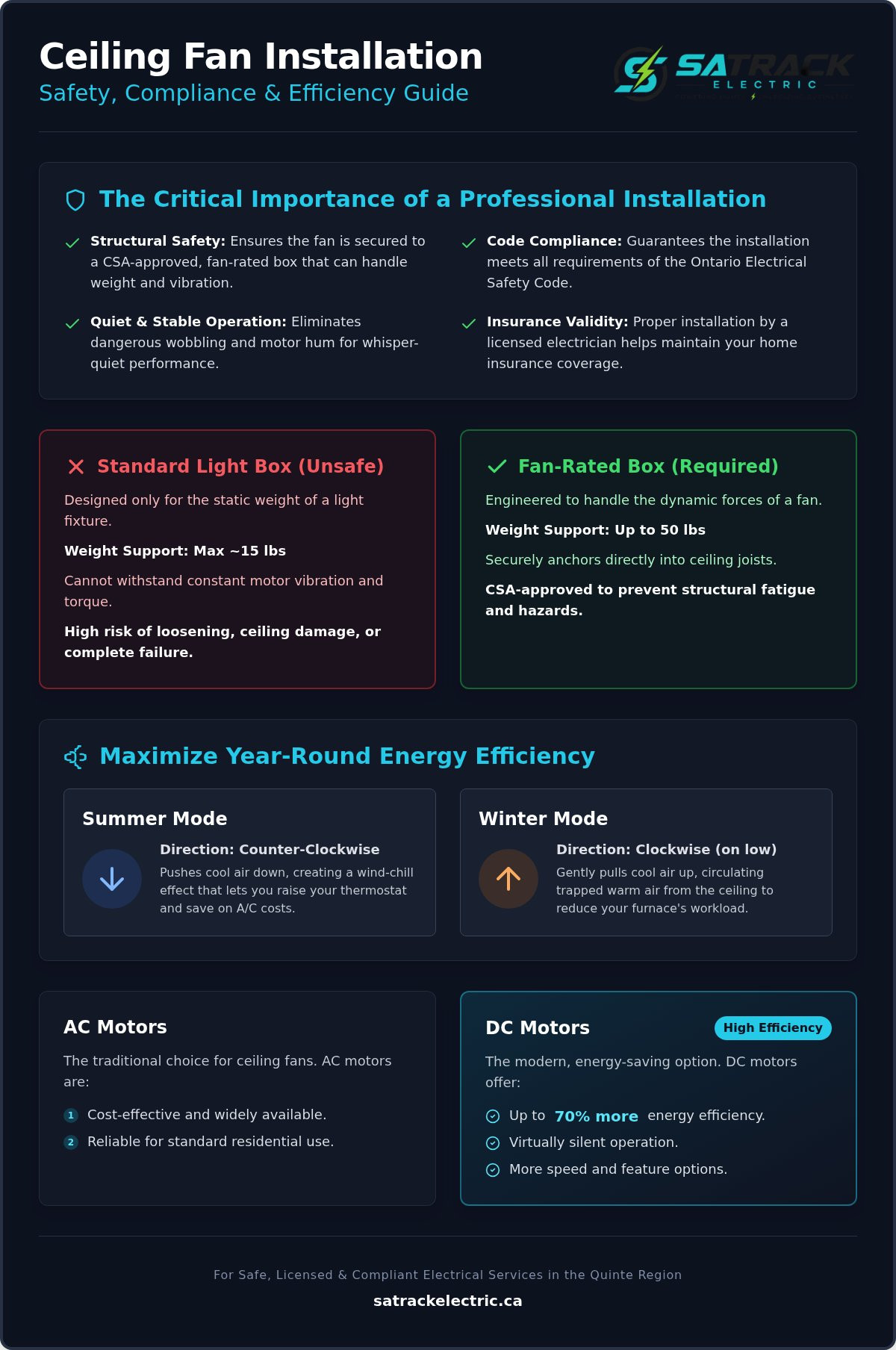
Professional ceiling fan installation involves more than just connecting wires; it requires securing a high-torque motor to a reinforced structural point. Unlike a standard light fixture, a fan generates dynamic weight and constant vibration while in motion. A licensed electrical contractor ensures the mounting box is specifically rated for this load, preventing the structural fatigue that can lead to ceiling damage or dangerous falling hazards. This methodical approach prioritizes the long term safety of your household.
Beyond safety, a professional mount eliminates the persistent “wobble” and motor hum often associated with DIY setups. When a fan is perfectly balanced and securely anchored, it operates in near silence. This precision allows for better air circulation without the distraction of mechanical noise, making it a reliable addition to bedrooms or home offices where quiet operation is essential.
Enhancing Energy Efficiency in Your Home
When considering a new ceiling fan installation, the primary goal for many homeowners is energy reduction. A well-placed fan creates a “wind chill” effect that makes a room feel significantly cooler by evaporating moisture from the skin. This allows you to raise your air conditioning thermostat by several degrees without sacrificing comfort. In the Quinte region, where seasonal temperatures fluctuate, fans provide year round utility. During the winter, reversing the motor direction pushes trapped warm air down from the ceiling, which reduces the workload on your furnace. By improving air distribution, you realize consistent savings on monthly energy costs while reducing overall HVAC strain.
Selecting the Right Fan for Your Space
Properly sizing a fan for residential electrical services in Belleville is fundamental to its performance. While a 52-inch fan is a standard choice, it may overwhelm a small guest room or underperform in a large open-concept living area. You should also consider the environment. For humid areas like bathrooms or covered patios, blades made of moisture-resistant ABS plastic are superior to traditional wood, which can warp over time.
You will also need to choose between AC and DC motors:
- AC Motors: These are reliable, traditional motors that are cost-effective for most standard residential applications.
- DC Motors: These use up to 70% less energy and generally offer more speed settings and quieter operation, though they often come at a higher initial price point.
This careful selection process ensures the fan complements your home’s layout while providing the specific airflow required for the local climate. Taking the time to evaluate motor quality and blade pitch before installation leads to a more effective and durable cooling solution.
Understanding the Technical Requirements: Boxes, Brackets, and Wiring
Successful ceiling fan installation begins with the hardware hidden behind your drywall. A standard light fixture box is designed to hold a static weight, usually not exceeding 15 pounds. In contrast, a CSA-approved, fan-rated box is engineered to withstand the dynamic forces of a rotating motor and can typically support up to 50 pounds. Standard plastic boxes often lack the metal-to-metal connections required to stay secure under constant vibration. Without this reinforced mounting, the centrifugal force of the spinning blades can cause the box to loosen or fail entirely over time.
Our technicians assess the ceiling joists to ensure they provide a solid anchoring point for the bracket. If a joist isn’t perfectly centred where you want the fan, we use specialized heavy-duty spreader bars that lock between the rafters. This ensures the weight is distributed safely across the home’s structure. If you’re unsure about the condition of your existing hardware, scheduling residential electrical services can help identify if your ceiling is prepared for a safe upgrade.
The Importance of a Fan-Rated Junction Box
A fan-rated junction box uses long, heavy-duty screws that pass through the box and directly into the wood framing. This structural reinforcement prevents the fan from pulling through the drywall during high-speed operation. You can often identify these boxes by the “Fan Rated” stamp inside the metal casing. If your room currently lacks a fixture, we can install a new box by cutting a precise opening and running fresh wire through the ceiling cavity. This methodical approach avoids unnecessary damage to your finishes while ensuring the mount is rock-solid.
Complex Wiring and Smart Home Integration
Modern ceiling fan installation often involves integrated remotes and smart home capabilities that require precise wiring. While older setups might use a single wall switch, many homeowners now prefer dual-switch configurations to control the light and the fan motor independently. We also specialize in integrating these systems with smart hubs and automated climate controls for better efficiency. In many older homes across the Quinte region, we encounter outdated wiring that lacks a dedicated ground wire or uses undersized conductors. We resolve these issues by updating the circuit to meet modern safety standards, ensuring your smart fan functions reliably without flickering or connectivity drops.
DIY vs. Hiring a Licensed Electrician: Safety and Compliance
Many homeowners view ceiling fan installation as a simple cosmetic upgrade. However, the legal and safety implications of electrical work in Ontario are significant. Attempting this task without proper training introduces risks of electrical shock, fire, and structural instability. If a fan is not anchored with precision, the constant torque of the motor can eventually weaken the mounting point. This can lead to the unit falling or causing localized damage to your ceiling’s framework.
Hiring a licensed professional is a matter of protecting your financial interests. Most home insurance policies in Ontario require electrical work to be performed by a Licensed Electrical Contractor. If a DIY installation causes a fire, your insurer might refuse to cover the damages. By choosing a professional, you receive a warranty on the connections and the labour. This ensures that any technical issues are addressed without additional costs. Many DIY attempts end up requiring professional electrical repairs in Belleville to rectify poor wire stripping, improper grounding, or loose terminals.
Ontario Electrical Safety Authority (ESA) Standards
The Electrical Safety Authority (ESA) oversees electrical safety throughout the province. They set strict standards for how fixtures are wired and mounted to prevent hazards. For a new ceiling fan installation that requires a new circuit or modified wiring, a notification to the ESA is generally necessary. Satrack Electric manages these regulatory steps for you. We ensure that every component, from the wire gauge to the junction box, meets the current Ontario Electrical Safety Code. This provides a documented record of safety that adds value to your home.
Structural Integrity and Long-Term Reliability
Long term reliability depends on the physics of the mount. Fan wobble occurs when the blades are out of balance or the mounting bracket is loose. This movement creates mechanical noise and can eventually crack the surrounding drywall. We ensure the fan has adequate clearance from any wall and sits at a safe height above the floor to optimize air movement. A professional technician secures the fan bracket to a ceiling joist using heavy duty fasteners to eliminate vibration and ensure the motor runs quietly. This methodical approach prevents the structural fatigue that often plagues uncertified installations.
Specialized Installations: High Ceilings and Commercial Spaces
While a standard bedroom setup is manageable for most licensed contractors, ceiling fan installation in vaulted or industrial spaces requires specialized equipment and technical planning. Working on cathedral ceilings or within large warehouses involves safety protocols that go beyond basic residential standards. Our team utilizes professional scaffolding and lifts to ensure every mount is secure, regardless of the height. This level of preparation is essential to prevent accidents and ensure the fan is perfectly level, which is much harder to achieve on a sloped surface.
For businesses looking to improve their facilities, we provide commercial electrical upgrades in Belleville that include the integration of high-volume, low-speed (HVLS) fans. These industrial units are designed for large open areas like warehouses or auto shops. Unlike residential models, these fans move a massive column of air slowly, which significantly reduces the perceived temperature without creating a disruptive breeze. Proper installation involves managing high-torque demands and ensuring the electrical circuit can handle the specific load requirements of industrial motors.
Vaulted and Sloped Ceiling Solutions
Achieving optimal air circulation on a sloped ceiling depends heavily on the downrod length. If the fan is mounted too close to a high ceiling, the air becomes trapped in a “chopping” cycle that fails to reach the occupants below. We calculate the specific drop required to keep the blades at least 7 to 9 feet above the floor while maintaining enough clearance from the sloped walls. Specialized canopy kits are often necessary to accommodate steep angles, which ensures the motor remains perfectly vertical. This precision prevents the internal bearings from wearing out prematurely due to uneven weight distribution.
Commercial and Industrial Fan Installation
In a professional environment, electrical systems are often more complex. Commercial grade fans frequently require integration with building automation systems or fire alarm relays. This ensures that the fans automatically shut down in the event of an emergency, which is a critical safety requirement in many Ontario building codes. The ROI for these systems is clear; by circulating air more effectively, businesses can lower their cooling costs during humid Ontario summers. If your facility requires expert ceiling fan installation to manage large scale climate control, we invite you to consult with our team at Satrack Electric to discuss your specific technical needs.
Expert Ceiling Fan Installation in Belleville and the Quinte Region
Choosing a local contractor for your ceiling fan installation ensures that the professional entering your home understands the specific housing stock and electrical infrastructure of the Quinte region. From the historic homes in Picton to modern builds in Trenton and Brighton, our team provides efficient and safe installations that prioritize long term reliability. We treat every property with respect, ensuring the work area remains clean and that the final result meets our high standards for safety and performance. By focusing on precision rather than speed, we guarantee that your fan operates exactly as intended from the moment it is powered on.
A professional installation appointment is a structured process designed to minimize disruption to your day. Our technicians arrive prepared to handle site preparation, structural reinforcement, and final balance testing. This methodical approach ensures that the fan is whisper-quiet and remains securely mounted even at its highest speed setting. We don’t just hang a fixture; we integrate a functional mechanical system into your home’s electrical network with the care and attention that a seasoned expert provides.
Why Choose Satrack Electric for Your Project?
As a licensed and insured electrical contractor, we take pride in being a trusted partner for residential electrical services in Belleville. Our team provides an upfront, professional assessment of your current wiring to determine if your ceiling can support the torque and weight of a new fan. We prioritize your family’s safety by adhering strictly to the Ontario Electrical Safety Code. Our reputation in the local community is built on quality workmanship and a calm, steady demeanour that instills confidence in every client we serve. We believe in providing thorough results that eliminate the need for future corrections.
Booking Your Installation: Next Steps
To begin your ceiling fan installation, we recommend clearing the furniture beneath the intended mounting point to allow our technicians safe ladder access. During the consultation, we can determine if your project requires a simple fixture replacement or a more complex run of new wiring. Many homeowners find it efficient to combine their fan project with other home improvements, such as an electrical panel upgrade in Belleville. This ensures your home’s overall infrastructure can safely handle modern power demands and smart home integrations. Contacting us for a professional assessment is the first step toward a more comfortable and energy efficient living space.
Achieve Lasting Comfort and Safety in Your Home
A successful project balances functional design with rigorous safety standards. From ensuring the use of CSA-approved hardware to navigating the specific requirements of the Ontario Electrical Safety Code, every technical step matters. You’ve seen how professional mounting prevents structural fatigue and how the right blade pitch can lower your monthly energy bills. These details are the difference between a noisy, wobbly unit and a silent, efficient climate control system.
As a licensed and insured electrical contractor serving Belleville, Trenton, and the broader Quinte region, we specialize in expert, safety-first installations. Whether you’re upgrading a residential bedroom or outfitting a commercial warehouse, we provide the technical precision required for a reliable result. Book your professional ceiling fan installation with Satrack Electric today! We look forward to helping you realize a more comfortable and energy-efficient environment for your home or business.
Frequently Asked Questions
Do I need a special electrical box for a ceiling fan installation?
Yes, you must use a CSA-approved, fan-rated electrical box for any ceiling fan installation. Standard light fixture boxes are not designed to support the dynamic weight and constant vibration of a rotating motor. A fan-rated box is typically secured directly to a ceiling joist or a heavy-duty spreader bar to prevent the mounting from loosening or failing over time.
Can I replace a light fixture with a ceiling fan myself?
While physically possible, it’s not recommended for homeowners in Ontario to perform this swap themselves. You must verify that the existing box is fan-rated and that the wiring can support the motor’s requirements. Licensed electricians ensure the installation meets the Ontario Electrical Safety Code, which is essential for both your family’s safety and your property’s long-term value.
How much does it cost to have a ceiling fan professionally installed in Ontario?
The cost for professional service depends on factors like ceiling height, the condition of existing wiring, and the complexity of the fan’s control system. A straightforward replacement where a fan-rated box is already present is a different technical task than running new circuits for a fresh installation. A professional assessment is required to determine the specific technical needs of your space.
How long does a professional ceiling fan installation typically take?
A standard ceiling fan installation usually takes between one and three hours to complete. This timeframe varies based on whether the technician needs to install a new mounting box or run fresh wiring through the ceiling cavity. High ceilings or integrated smart-home remotes may require additional time for precise balancing and safety testing.
Is it necessary to have a licensed electrician install a ceiling fan for insurance purposes?
Yes, most home insurance policies in Ontario require electrical modifications to be performed by a Licensed Electrical Contractor. If an uncertified installation results in a fire or structural damage, your insurer may deny the claim. Working with a licensed professional ensures the job is documented, insured, and fully compliant with provincial safety regulations.
What should I do if my ceiling fan is wobbling or making a clicking noise?
You should turn the fan off immediately and have it inspected by a professional. Persistent wobbling or clicking often indicates that the mounting bracket has loosened, the blades are unbalanced, or the motor is under mechanical strain. Ignoring these signs can lead to structural damage to your ceiling or the risk of the unit falling.
Can a ceiling fan be installed on a sloped or vaulted ceiling?
Yes, ceiling fans can be safely mounted on sloped or vaulted ceilings using specialized angled canopy kits and downrods. The downrod ensures the blades have enough clearance from the ceiling to allow for proper air circulation. This setup keeps the motor perfectly vertical, which prevents the internal bearings from wearing out prematurely due to an uneven load.
Do I need to upgrade my electrical panel to install multiple ceiling fans?
Most modern ceiling fans are energy-efficient and draw very little amperage, so a panel upgrade is rarely required for the fans alone. However, if you live in an older home with a limited electrical service, it’s wise to have a technician evaluate your current load. If your panel is already at capacity, an upgrade might be necessary to ensure the reliability of your home’s entire electrical system.