
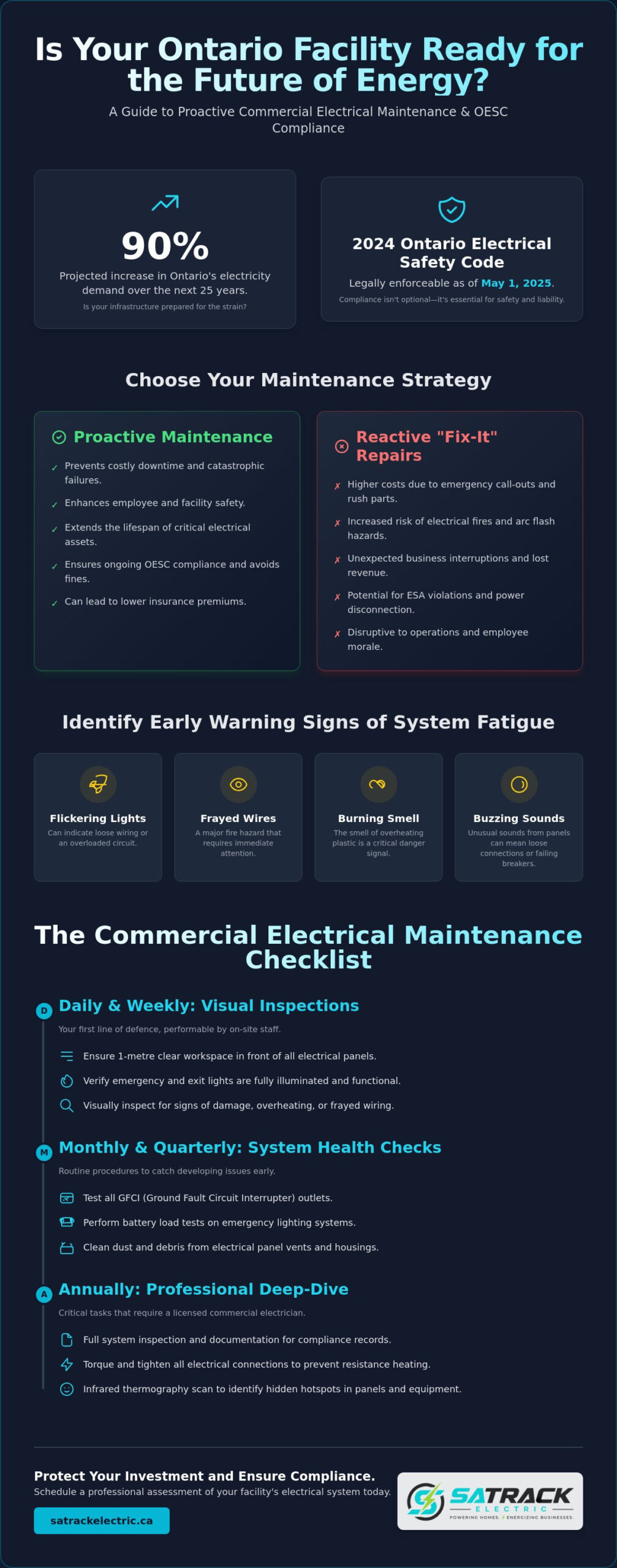
With electricity demand across Ontario projected to increase by as much as 90% over the next 25 years, is your facility’s infrastructure actually ready for the strain? It’s natural to feel concerned about the possibility of unexpected power outages or the need for commercial electrical upgrades Ontario businesses require to stay competitive. You likely already know that keeping up with the 2024 Ontario Electrical Safety Code (OESC), which took full effect on May 1, 2025, is essential for both safety and legal compliance.
This article outlines a practical framework to protect your business from unnecessary downtime and safety risks. You’ll learn how to implement a maintenance schedule that ensures your systems remain reliable and compliant with current standards. We’ll provide a clear, actionable checklist for your maintenance team and explore how to leverage provincial incentives, such as the Save on Energy Retrofit program, to offset the costs of keeping your building at peak performance.
Key Takeaways
- Learn why transitioning from reactive repairs to a proactive maintenance strategy is essential for meeting the latest Ontario Electrical Safety Code requirements.
- Utilize a structured, tiered checklist to organize daily, monthly, and annual electrical tasks for your facility’s critical infrastructure.
- Discover how to plan for commercial electrical upgrades Ontario facilities need to safely manage rising electricity demands and modern equipment loads.
- Train your staff to identify subtle warning signs of system fatigue before they lead to expensive downtime or hazardous electrical failures.
- Establish a reliable digital or physical logbook system to document all inspections and ensure your business remains fully compliant with provincial regulations.
Understanding Commercial Electrical Maintenance Requirements in Ontario
Commercial maintenance is the systematic inspection and testing of electrical systems to ensure safety and OESC compliance. In our province, this discipline is strictly governed by the Electrical Safety Authority (ESA), which ensures that all installations meet rigorous provincial requirements. Many facility managers unfortunately rely on reactive “fix-it” repairs, addressing issues only after a failure occurs. This approach is often more expensive and disruptive than a proactive strategy. By planning for commercial electrical upgrades Ontario organizations can transition to a model that identifies weaknesses before they become emergencies. Adhering to these rules aligns your facility with global electrical safety standards, providing a foundation of reliability for your daily operations.
The Role of the Ontario Electrical Safety Code (OESC)
The OESC is the primary regulation governing commercial properties in Belleville, Trenton, and the surrounding Quinte region. It’s essential for business owners to realize that the 2024 OESC, which is the 29th edition of the code, became legally enforceable on May 1, 2025. This updated code includes critical requirements regarding Energy Management Systems and enhanced Plan Reviews for certain equipment. Ignoring these updates leads to severe legal and liability consequences. If an inspection reveals non-compliance, the ESA has the authority to issue orders that must be addressed immediately to avoid fines or power disconnection. Consistent maintenance ensures your building remains on the right side of these evolving laws. For a detailed breakdown of what these changes mean for your property, our electrical code compliance Ontario guide for 2026 provides a clear roadmap for navigating every key requirement.
Why Proactive Maintenance is a Strategic Business Move
Moving beyond mere compliance, proactive maintenance serves as a shield for your company’s financial health. It significantly reduces the risk of catastrophic equipment failure and the resulting loss of expensive data or inventory. Regular system checks can also lead to lower insurance premiums, as many Ontario providers view documented maintenance as a sign of a lower-risk policyholder. When you invest in commercial electrical upgrades Ontario facilities stay modern and efficient.
- Employee Safety: Regular testing reduces the risk of arc flash or shock hazards in the workplace.
- Operational Continuity: Scheduled inspections minimize the chance of unexpected power surges that disrupt production.
- System Longevity: Cleaning and tightening connections extends the life of expensive electrical components.
The Ultimate Commercial Electrical Maintenance Checklist for 2026
Effective facility management requires a disciplined approach to electrical safety. Rather than waiting for a component to fail, a tiered maintenance schedule allows you to identify minor issues before they escalate into costly repairs or safety hazards. This framework ensures that any commercial electrical upgrades Ontario businesses have implemented remain in peak condition. By separating tasks into daily, monthly, and annual categories, you can delegate visual checks to on-site staff while reserving technical procedures for licensed professionals. This structured method aligns your facility with the latest NFPA 70B maintenance standards, which serve as a benchmark for equipment reliability and fire prevention.
Daily and Weekly Visual Inspections
Basic visual assessments are your first line of defence against electrical fires. Instruct your maintenance staff to walk through electrical rooms regularly to check for frayed wiring, unusual buzzing sounds, or the distinct “burning” smell of overheating plastic. It’s vital to ensure all electrical panels remain clear of debris and are easily accessible. In Ontario, the “1-metre rule” is a standard requirement, meaning there must be at least one metre of clear workspace in front of all electrical equipment. Additionally, verify that exit signs are fully illuminated and that emergency lighting units show a green “ready” status. These simple checks take only minutes but are essential for workplace safety.
Monthly and Quarterly System Tests
Every three months, more active testing should occur to verify that safety devices are functioning correctly. This includes pressing the “test” button on all Ground Fault Circuit Interrupters (GFCIs) and Arc Fault Circuit Interrupters (AFCIs) to ensure they trip as intended. You should also exercise your circuit breakers by switching them off and back on. This prevents the internal mechanisms from “freezing” in the ON position over time. Quarterly checks are also an ideal time to test battery backup systems for servers and security hardware. Ensuring these systems have sufficient charge will protect your data during a localized power dip.
Annual Comprehensive Professional Audits
Once a year, your facility requires a deep technical assessment that goes beyond visual checks. You should schedule a detailed commercial electrical upgrades Belleville assessment to evaluate the health of your entire system. During this audit, a professional will clean and tighten all connections within the main distribution panels to prevent arcing and heat buildup. They will also conduct load balancing checks to ensure no single circuit is being over-stressed by modern equipment. If your business is expanding, these audits identify where commercial electrical upgrades Ontario regulations might require new permits or equipment. Investing in professional Electrical Maintenance provides the documented proof of safety that insurance providers and the ESA require.
Identifying Critical Warning Signs of Electrical System Fatigue
Recognizing the early symptoms of system fatigue is a critical skill for any facility team. In a high-demand commercial environment, the temptation to ignore minor issues often leads to catastrophic failure. Small irregularities are rarely isolated. They usually indicate an underlying problem that could necessitate the commercial electrical upgrades Ontario businesses want to avoid. Discoloured outlet plates are a sign of internal arcing and require immediate attention. It’s a mistake to view these as cosmetic flaws. Additionally, Ontario’s unique environmental conditions, such as high summer humidity and extreme winter temperature swings, cause wiring to expand and contract. This physical stress can loosen connections over time, making regular vigilance essential for meeting Ontario Electrical Safety Code maintenance requirements. Training your staff to report these subtle changes immediately creates a culture of safety that prevents expensive downtime.
Thermal Anomalies and Unusual Odours
Heat is often the first indicator of a failing component. Using handheld infrared thermometers allows your team to identify “hot spots” within electrical panels without making physical contact. If a circuit or connection shows a temperature significantly higher than its neighbours, it’s a clear red flag that requires professional investigation. Unusual smells are equally telling and should never be dismissed. The scent of ozone or a fish-like odour coming from a wall or panel indicates that plastic insulation is melting due to a serious electrical emergency. This is frequently caused by a poor connection or an overloaded circuit that is literally cooking the wire’s casing. You should also monitor transformer temperatures during peak operating hours. If they are consistently running hot, it may indicate that your building’s demand is outstripping its current capacity.
Flickering Lights and Tripping Breakers
Many facility managers mistake flickering lights for simple bulb failures or poor-quality fixtures. However, if multiple fixtures across a room dim simultaneously when a large motor or HVAC unit kicks in, you’re likely facing a systemic voltage drop. This is often a sign that your current infrastructure can’t handle the load, suggesting that commercial electrical upgrades Ontario facilities require are now necessary. Similarly, a breaker that trips “occasionally” isn’t just a nuisance to be reset. It’s a symptom of a circuit operating dangerously near its limit. This “dirty power” or inconsistent voltage can cause permanent damage to sensitive commercial electronics, server racks, and POS systems. Over time, these surges and dips degrade internal components, leading to premature equipment failure and lost productivity. Addressing these symptoms early protects your hardware and ensures your business remains operational during peak demand periods. For a deeper understanding of how to diagnose and resolve these faults before they escalate, our guide to commercial electrical repair Belleville facilities rely on covers the most common troubleshooting scenarios in detail.
Building a Long-Term Facility Maintenance Schedule
A well-structured maintenance schedule is the backbone of facility reliability. Moving away from reactive repairs requires a commitment to consistency that only a formal plan can provide. Establishing a digital or physical logbook for all electrical work and inspections creates a permanent record of your system’s history. This documentation is invaluable when you are planning for commercial electrical upgrades Ontario businesses often require as they adopt new technologies or expand their operations. It’s a legal necessity that all maintenance is performed by a Master Electrician or an ESA-registered contractor. This ensures the work is done correctly and remains in full compliance with provincial safety laws.
Documentation and Compliance Reporting
Detailed record-keeping is more than just an administrative task. It’s a vital component of your risk management strategy. Detailed logs are essential for successful ESA inspections and are often the first thing an adjuster will request during an insurance claim. A professional maintenance report should include several key data points to be effective:
- Inspection Dates: A chronological list of every professional visit.
- Specific Equipment Checked: Identification of individual panels, transformers, or circuits.
- Test Results: Detailed findings from load balancing, thermal imaging, and GFCI testing.
- Corrective Actions: A record of any repairs made to address identified “red flags.”
These logs also allow facility managers to forecast capital expenditures. By tracking the performance of your system over time, you can predict when components will reach the end of their service life. This data-driven approach makes it easier to justify the budget for future commercial electrical upgrades Ontario facilities need to maintain their competitive edge. Understanding the full scope of your legal obligations is equally important, and our comprehensive resource on electrical code compliance in Ontario can help you stay ahead of the April 2026 fee updates and expanded AFCI requirements.
Coordinating with Licensed Ontario Electricians
Success in facility management often depends on the strength of your professional partnerships. Establishing a long-term service agreement with a local Quinte provider offers several advantages. A contractor who is already familiar with your building’s layout can identify changes or degradation more quickly than a stranger. They will also ensure your facility remains compliant with specific Belleville and Quinte West bylaws that may affect your operations. Before any work begins on-site, always verify that your contractor maintains current WSIB coverage and comprehensive liability insurance. This protects your business from financial risk in the event of an accident.
To minimize disruption to your business, coordinate maintenance windows during off-peak hours or scheduled shutdowns. A professional team will work with you to ensure that critical systems remain online whenever possible. If you are ready to stabilize your facility’s infrastructure, consider booking professional Electrical Maintenance to secure your long-term operational health.
Professional Maintenance Solutions for Quinte Region Businesses
Satrack Electric provides specialized support for businesses navigating the complexities of commercial electrical upgrades Ontario regulations. We understand that a retail space in Picton has different power requirements than an industrial facility in Trenton or a professional office in Belleville. Our methodical workflow is designed to integrate seamlessly with your business hours, ensuring that essential inspections and upgrades don’t stall your productivity. By prioritizing a calm and steady approach to safety, we provide the assurance that your infrastructure meets all 2026 provincial standards while minimizing the risk of unexpected outages. This disciplined process allows you to focus on your operations while we manage the technical reliability of your building.
Why Satrack Electric is Your Trusted Local Partner
Throughout the Quinte region, we’ve built a reputation for delivering consistent and professional results. Our team brings extensive experience across diverse commercial environments, ranging from small storefronts to large-scale distribution centres. Every project we undertake reflects a commitment to quality workmanship and strict adherence to the 2024 OESC standards, which became legally enforceable in May 2025. Our deep roots in the Brighton and Quinte West communities allow us to navigate regional building requirements with precision. We focus on delivering results that are both thorough and durable, ensuring your electrical system remains a stable foundation for your company’s long-term growth.
Get Started with a Comprehensive Facility Audit
For new commercial tenants, a professional facility audit is an essential first step before opening for business. During your initial consultation, we conduct a thorough review of existing wiring, panels, and grounding systems to identify any hidden risks or non-compliant installations left behind by previous occupants. We then help you prioritize necessary repairs or the commercial electrical upgrades Ontario inspectors will require, focusing on both immediate safety and long-term return on investment. This transparent process ensures you aren’t surprised by electrical failures or ESA orders after your lease begins.
A well-documented audit also serves as a baseline for your future maintenance logs, making it easier to track system fatigue over time. With the 1.9% increase in ESA licensing fees that took effect in April 2026, catching issues early is a financially prudent move. We invite you to contact Satrack Electric to schedule your commercial maintenance review and secure the safety of your facility.
Securing Your Facility’s Operational Future
Maintaining a commercial facility in Ontario requires a disciplined approach to safety and regulatory compliance. By shifting from reactive repairs to a proactive maintenance framework, you protect your bottom line from the high costs of unexpected downtime. Whether you’re conducting weekly visual checks or planning for commercial electrical upgrades Ontario businesses need to handle rising energy demands, consistency remains your best insurance policy. Documenting every inspection in a formal logbook ensures you’re always ready for an ESA audit or an insurance review.
As a licensed and insured Ontario electrical contractor, we bring specialized expertise in OESC 2026 compliance to every project. We take pride in serving Belleville, Trenton, and the wider Quinte region with reliable, methodical service that prioritizes your safety. You don’t have to manage these complex requirements alone. Protect your business with a professional electrical maintenance plan from Satrack Electric. Taking these steps today ensures your facility remains a stable and productive environment for years to come.
Frequently Asked Questions
Is commercial electrical maintenance mandatory in Ontario?
Yes, electrical maintenance is a legal requirement under the Ontario Electrical Safety Code and the Occupational Health and Safety Act. Business owners are responsible for ensuring that all electrical equipment is maintained in a safe operating condition to prevent workplace hazards. Regular inspections help you meet these provincial obligations and protect your staff from injury.
How often should a commercial electrical panel be inspected?
A comprehensive professional inspection of your electrical panels should occur at least once per year. While your on-site team can perform daily visual checks for obvious damage, a licensed electrician needs to conduct technical testing annually. Facilities with high-demand machinery or older infrastructure may benefit from more frequent quarterly reviews to ensure system stability.
What is the Ontario Electrical Safety Code (OESC) and how does it affect me?
The OESC is the provincial regulation that sets the standard for all electrical installations and equipment maintenance in Ontario. It affects every commercial property owner because all electrical work must comply with these rules to be considered legal and safe. Adhering to the code is essential for passing inspections and maintaining your building’s insurance coverage.
Can my in-house maintenance team perform electrical checks?
Your in-house team can perform basic visual assessments and non-technical tasks like monitoring exit sign illumination. However, any technical testing, repairs, or commercial electrical upgrades Ontario law governs must be performed by a licensed electrical contractor. Only qualified professionals possess the training and legal authorization to open panels and work on energized systems.
How much does a commercial electrical maintenance plan cost in Ontario?
The cost of a maintenance plan depends on the size of your facility, the age of your equipment, and the frequency of required visits. Since every commercial property has unique power needs, there isn’t a single standard price. You should request a detailed consultation from a licensed contractor to receive an accurate quote tailored to your specific infrastructure.
What are the signs that my business needs an electrical panel upgrade?
Frequent breaker trips, flickering lights, and discoloured outlet plates are all clear indicators that your system is struggling. If you’re adding new technology or electric vehicle charging stations, commercial electrical upgrades Ontario regulations require may include a panel replacement. Upgrading ensures your distribution system can safely manage the increased electrical load of modern business equipment.
What happens if a business fails an ESA inspection in Ontario?
The Electrical Safety Authority will issue a notification of defects that outlines the specific areas where your facility is non-compliant. You’ll be given a set timeframe to correct these issues through a licensed contractor. Failing to address these defects can lead to significant fines, increased insurance liability, or the disconnection of your building’s power supply.
How do I find a licensed commercial electrician in Belleville or Trenton?
You can find a qualified professional by using the Electrical Safety Authority’s online contractor look-up tool. It’s important to choose a provider with a physical presence in the Quinte region to ensure they understand local environmental factors. Always verify that your chosen electrician holds a valid ECRA/ESA licence number before they begin any work on your property.