
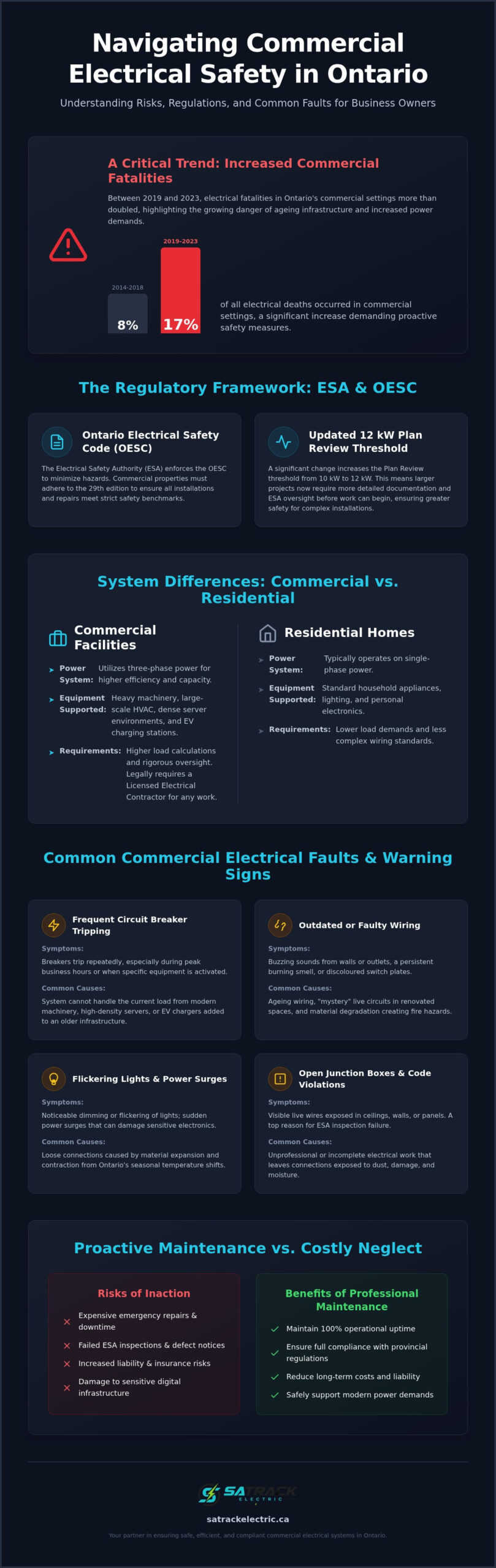
Between 2019 and 2023, electrical fatalities in Ontario commercial settings rose to 17% of all electrical deaths, which is a significant increase from the 8% recorded in the previous five year window. This trend highlights that the common commercial electrical problems Ontario businesses encounter are becoming more dangerous as infrastructure ages and power demands grow. You likely recognize that even a brief power outage can stall your operations, while the fear of failing an ESA inspection adds unnecessary stress to your daily management tasks.
We will help you identify, troubleshoot, and resolve the most frequent electrical issues affecting your property to ensure you maintain 100% operational uptime. This guide provides a clear look at how to manage the 2024 Ontario Electrical Safety Code (OESC) and the new 12 kW plan review threshold that took effect in July 2026. By addressing these concerns proactively, you can reduce liability risks and keep your facility safe, efficient, and fully compliant with provincial regulations.
Key Takeaways
- Understand how the 2024 Ontario Electrical Safety Code and the updated 12 kW plan review threshold dictate your facility’s maintenance standards.
- Identify and troubleshoot common commercial electrical problems Ontario properties face, from flickering lights to persistent circuit breaker tripping.
- Evaluate your electrical capacity to ensure it can support modern infrastructure like EV charging stations and dense server environments.
- Discover the most frequent causes of ESA defect notices and the steps required to maintain full compliance with provincial safety regulations.
- Recognize how professional maintenance and panel upgrades serve as cost-saving measures against expensive emergency repairs and downtime.
The Landscape of Commercial Electrical Systems in Ontario
Operating a business in Ontario requires a clear understanding of the regulatory framework that keeps your property safe. Unlike residential buildings, commercial facilities are subject to rigorous oversight and more frequent safety audits. The Electrical Safety Authority (ESA) ensures that every installation meets strict safety benchmarks to protect employees and the public. Many common commercial electrical problems Ontario facility managers experience can be traced back to a misunderstanding of these evolving standards. It’s vital to realize that in Ontario, only a licensed and insured electrical contractor can legally perform commercial repairs or installations. This legal requirement protects your business from liability risks and ensures that your insurance coverage remains valid in the event of an incident.
The Role of the ESA and OESC
The ESA acts as the administrative body that enforces the Ontario Electrical Safety Code (OESC). For 2026, businesses must adhere to the 29th edition of the OESC, which became effective on May 1, 2025. A significant change that took effect on July 6, 2026, is the increase in the Plan Review threshold from 10 kW to 12 kW. This means that larger projects require more detailed documentation and oversight before work begins. Every commercial project requires a permit from the ESA, which creates a vital paper trail of safety for your records. This regulatory environment is designed to minimize hazards such as:
- Electrical fires caused by improper installations or outdated equipment.
- Shock hazards resulting from non-compliant grounding or bonding.
- Power quality issues that can damage sensitive digital infrastructure.
- Unplanned downtime due to system failures that could have been prevented through code-compliant maintenance.
Commercial vs. Residential Electrical Standards
Residential systems typically operate on single-phase power, which is sufficient for standard household appliances. Commercial properties in the Quinte region utilize three-phase systems to support heavy machinery, large-scale HVAC units, and high-density lighting. These systems demand a sophisticated approach to electrical wiring standards to prevent phase imbalances and overheating. Retail spaces and industrial offices have much higher load requirements than a standard home, and resolving common commercial electrical problems Ontario businesses face requires specialized knowledge of these high-voltage systems. This complexity is why specialized commercial electrical services in Belleville are necessary to maintain compliance and ensure your facility operates at peak efficiency.
Frequent Commercial Electrical Faults in Ontario Facilities
Older commercial properties in Belleville often struggle with flickering lights and sudden power surges. These symptoms aren’t just minor annoyances; they frequently indicate deeper systemic issues. Ontario’s extreme seasonal shifts cause materials to expand and contract, which can loosen connections in outdoor signage or rooftop HVAC units over time. These environmental factors contribute to the common commercial electrical problems Ontario facility managers must monitor to prevent equipment damage. When connections become loose, they create heat, which increases the risk of fire and can lead to expensive equipment failure during peak operational hours.
Wiring and Connection Issues
Faulty or outdated wiring remains a leading cause of safety hazards in commercial spaces. You might notice buzzing sounds behind walls or a faint burning smell near outlets. These are clear indicators that your system is under duress. In renovated downtown Trenton properties, we often find “mystery wiring” where abandoned circuits remain live behind new walls, creating hidden risks. Open junction boxes are another frequent issue. They’re a top reason for inspection failure because they leave live wires exposed to dust and physical damage. Ensuring your facility maintains strict ESA Compliance is the only way to verify that these connections are secure and code-compliant.
Circuit Breaker and Panel Malfunctions
If your circuit breakers trip during your busiest hours, it’s a sign that your system can’t handle the current load. This often happens when modern machinery or high-density server racks are added to a building without verifying the existing capacity. Some facility owners attempt to resolve this by “over-fusing,” which involves installing a higher-amperage breaker on a circuit that isn’t rated for it. This is a dangerous practice that can melt insulation and cause fires. Instead of temporary fixes, an electrical panel upgrade in Belleville is frequently the most reliable solution for aging infrastructure. Upgrading your panel ensures your breakers are correctly sized and that your facility can support its operational demands without interruption. Addressing these common commercial electrical problems Ontario businesses face requires a methodical approach to safety. If you’re concerned about the reliability of your current system, scheduling professional electrical maintenance can help identify these faults before they cause a total power failure.
Modern Power Demands and Overloaded Commercial Systems
The shift toward electrification is accelerating across the province. The Independent Electricity System Operator (IESO) forecasts that Ontario’s electricity demand will grow by 75% by 2050. This growth is driven largely by the industrial sector and the rapid adoption of electric vehicles. For many facility managers, this creates a new category of common commercial electrical problems Ontario buildings weren’t originally designed to handle. Adding high-draw equipment like modern HVAC units or EV charging stations without a proper load assessment can lead to thermal stress on your electrical panel and unexpected system failures.
The 2024 Ontario Electrical Safety Code (OESC) introduced specific requirements for electric vehicle supply equipment (EVSE). Revised demand load calculations are now mandatory to prevent overloading the main service during peak charging times. If you’re planning to install charging stations for employees or fleet vehicles, you must ensure your current infrastructure can support the continuous load. Failing to do so doesn’t just risk a power outage; it compromises workplace electrical safety by pushing components beyond their rated capacity.
Digital Infrastructure and Server Loads
Modern offices rely on sensitive digital infrastructure that requires a stable, “clean” power supply. Server rooms and data centres generate significant heat and demand constant current. We often see common commercial electrical problems Ontario businesses face when these digital loads are mixed with industrial equipment on the same circuit. Dedicated circuits and comprehensive surge protection are essential to prevent data loss and hardware damage. Balancing these loads in a mixed-use space requires an organized approach to circuit distribution to ensure that a spike in one area doesn’t crash your entire network.
Retrofitting for Modern Efficiency
Transitioning to energy-efficient systems is a logical step for reducing operational costs. However, moving to LED lighting or installing smart building sensors often requires specific adjustments to your existing wiring. LEDs have different inrush current characteristics than older fluorescent systems, which can sometimes cause nuisance tripping if the breakers aren’t compatible. Planning for future growth involves implementing scalable commercial electrical upgrades that allow your facility to evolve as your power needs increase. By integrating smart sensors, you can monitor your electrical health in real-time and identify potential overloads before they become safety hazards.
ESA Compliance: Avoiding Inspection Failures and Defect Notices
Maintaining compliance with the Ontario Electrical Safety Code (OESC) is a continuous responsibility rather than a one-time event. For many facility managers, the fear of an unexpected audit stems from a lack of clarity regarding current standards. When an ESA inspector identifies a non-compliance, they issue a Defect Notice. This document isn’t just a warning; it’s a formal requirement to remedy the issue within a specific timeframe. The ESA follows a strict reminder process at 30, 60, and 90 days. Failure to address these defects can lead to power disconnection or prosecution. Beyond legal trouble, non-compliance often invalidates your commercial insurance, leaving your business vulnerable to massive liability if an incident occurs.
Top Commercial Inspection Failures
Many common commercial electrical problems Ontario businesses face are discovered during these mandatory inspections. One frequent failure is inadequate grounding and bonding, particularly in high-moisture environments like commercial kitchens or heavy industrial zones. Without proper grounding, equipment can become energized, posing a severe shock risk to your staff. Another area where businesses often fall short is emergency exit lighting. Signage and path illumination must remain functional during a power loss, yet battery backups are frequently neglected during routine checks. Finally, the improper use of extension cords as permanent wiring is a major red flag for inspectors. Extension cords are for temporary use only. If you need a permanent power source, you require a proper installation.
Navigating the ESA Inspection Process
Preparing for an audit shouldn’t be a stressful experience if you follow a methodical approach. Start by conducting a pre-inspection audit with a licensed professional. This allows you to identify and correct hazards before the official ESA inspector arrives on site. This proactive step helps you avoid the administrative burden of managing a Defect Notice. Once repairs are completed, keep a detailed record of the work performed. Using a professional maintenance checklist ensures that you don’t overlook critical safety components during your internal reviews. If you are concerned about your facility’s current status, you should contact Satrack Electric for a compliance review to ensure your property meets all provincial safety standards.
Professional Solutions: Maintaining Electrical Reliability
Ensuring the longevity of your facility’s infrastructure requires more than just responding to failures as they occur. A strategic approach to your power systems can prevent the common commercial electrical problems Ontario businesses face, such as unplanned outages or equipment damage. By identifying vulnerabilities early, you protect your bottom line and ensure the safety of everyone on your property. Professional diagnostic services and routine oversight are the most effective ways to maintain a stable operational environment while staying aligned with provincial safety codes. This disciplined approach eliminates the stress of potential ESA defect notices and keeps your facility running at peak performance.
Proactive vs. Reactive Maintenance
Waiting for a component to fail before calling a technician is a costly strategy. Reactive repairs often result in emergency service fees and lost revenue from halted production. In contrast, scheduled electrical maintenance in Belleville allows for the identification of worn components before they trigger a system-wide shutdown. We utilize advanced tools like thermal imaging to detect hidden hotspots in panels and disconnects that are invisible to the naked eye. These hotspots often indicate loose connections or overloaded circuits that could lead to a fire if left unaddressed. Regular testing of your breakers and grounding systems ensures that your safety mechanisms will function correctly when they are needed most. This preventative work is a direct investment in your building’s safety and operational continuity.
Choosing Satrack Electric for Your Business
Satrack Electric is a licensed and insured contractor dedicated to providing reliable results for commercial clients. We understand the specific demands placed on businesses in the Quinte region and prioritize high-quality workmanship in every project. Our team stays current with the latest OESC updates to ensure your facility remains fully compliant with all regulations. We provide comprehensive service coverage across Belleville, Trenton, and Napanee, positioning us as a dependable local partner for your long-term growth. Business owners should realize that working with a seasoned expert provides the peace of mind necessary to focus on their core operations. If you’re ready to secure your facility’s future, you can book a comprehensive commercial electrical assessment to identify and resolve any common commercial electrical problems Ontario properties may be harbouring. Our methodical approach ensures that every circuit and panel meets the highest standards of safety and efficiency.
Secure the Future of Your Facility’s Power
Managing a commercial property in Ontario involves more than just keeping the lights on. It requires a commitment to safety and a clear understanding of how modern technology impacts your infrastructure. By addressing the common commercial electrical problems Ontario businesses face, you ensure your facility remains compliant with the 2024 OESC and the latest 2026 plan review thresholds. From retrofitting for EV charging to implementing proactive thermal imaging, your focus on reliability will prevent costly downtime and insurance complications.
As local Quinte region experts, we specialize in commercial upgrades and maintenance that keep your operations running smoothly. We are ESA licensed and fully insured, providing the professional assurance you need to manage complex electrical systems with confidence. Protect your business with professional commercial electrical services from Satrack Electric. Taking these steps today creates a safer, more efficient environment for your employees and customers for years to come.
Frequently Asked Questions
What are the most common electrical problems in Ontario commercial buildings?
Overloaded circuits, outdated distribution panels, and loose wiring connections are the most frequent issues identified in provincial facilities. These common commercial electrical problems Ontario businesses encounter often manifest as flickering lights, tripping breakers, or unusual buzzing sounds behind walls. Addressing these symptoms early prevents small faults from escalating into significant safety hazards or operational disruptions.
Do I need an ESA permit for minor electrical repairs in my business?
Yes, almost all commercial electrical work in Ontario requires a permit and an inspection from the Electrical Safety Authority. This includes most repairs, installations, and upgrades to your existing system. Obtaining a permit ensures that the work is recorded and verified for safety, which is a critical requirement for maintaining your commercial insurance eligibility and provincial code compliance.
How often should a commercial building undergo an electrical inspection in Ontario?
While specific intervals can vary based on your industry, most commercial properties should undergo a professional safety assessment at least once per year. Facilities with high-density machinery or older infrastructure may require more frequent checks to monitor for thermal stress. Regular inspections help you identify wear and tear caused by Ontario’s seasonal temperature swings before they lead to system failure.
Why do my office lights flicker when the HVAC system turns on?
Flickering lights typically indicate a significant voltage drop when high-draw equipment, such as an HVAC unit, starts up. This is a sign that the specific circuit is overloaded or that your main electrical panel lacks the capacity to handle simultaneous loads. If this occurs frequently, it’s a clear signal that your system requires a professional load assessment to prevent potential damage to sensitive electronics.
What is an ESA Defect Notice, and how do I resolve it?
An ESA Defect Notice is a formal order issued by an inspector when an electrical installation fails to meet the Ontario Electrical Safety Code. To resolve it, you must hire a licensed electrical contractor to correct the identified hazards within the timeframe stated on the notice. Once the repairs are complete, the contractor will notify the ESA to schedule a follow-up inspection to clear the defect.
Can a general contractor perform electrical work in my Ontario facility?
No, general contractors are not legally permitted to perform electrical work in Ontario unless they also hold a valid Licensed Electrical Contractor (LEC) designation. By law, only a licensed and insured electrical contractor can pull the required permits and perform commercial electrical services. Always verify that your provider carries a valid ECRA/ESA licence number to ensure your business remains protected and compliant.
How can I reduce the risk of electrical fires in my commercial property?
Implementing a proactive maintenance plan that includes infrared thermal imaging is the most effective way to reduce fire risks. This technology allows technicians to find overheating components and loose connections that are not visible to the naked eye. Eliminating the use of extension cords for permanent power and ensuring all junction boxes are properly covered also significantly lowers the chance of an electrical fire.
What are the signs that my business needs an electrical panel upgrade?
Frequent circuit breaker trips, charred smells near the service area, and the inability to add new equipment without losing power are primary indicators that you need an upgrade. If your facility still utilizes an older 100-amp service or shows signs of physical corrosion, it’s likely struggling to meet modern power demands. Upgrading your panel ensures you can safely support digital infrastructure and high-efficiency systems without interruption.