
A panel inspection can matter as much as the paperwork when an insurer reviews a property’s electrical system. An electrical inspection for insurance in Belleville may include a review of the panel, grounding and bonding, GFCI protection in areas exposed to moisture, and how electrical loads are managed. Records such as permits, ESA inspection records, contractor invoices, and documentation of past repairs or upgrades may also support insurance or real estate needs.
For a commercial property, an inspection can clarify the condition of equipment that supports day-to-day operations, not just identify visible concerns. Ontario’s Electrical Safety Code sets minimum requirements for safe electrical installations and ongoing maintenance. Non-compliance doesn’t automatically void insurance coverage, but it can complicate a claim or delay processing.
If you’re arranging an inspection, it helps to know what a professional may assess, which records may be useful, and how residential and commercial needs differ. This article explains the role of the electrical panel, the documentation insurers or real estate transactions may involve, and what to expect when arranging electrical service in Belleville.
Key Takeaways
- An inspection can assess whether electrical protection, grounding, bonding, and load management need attention.
- A panel’s condition and capacity can affect the inspection findings and the work needed to address them.
- Organized permits, ESA records, contractor invoices, and repair or upgrade records can help support insurance or real estate requirements.
- For commercial properties, inspection priorities depend on the electrical systems and equipment that support the building’s operations.
- Clear details about the property, the reason for the inspection, and available records can help plan the service in Belleville.
Electrical safety and maintenance inspections
An insurance inspection reviews electrical safety concerns that may affect a property or claim. In Ontario, the Ontario Electrical Safety Code sets minimum requirements for safe electrical installations and ongoing maintenance.
Inspector Qualifications
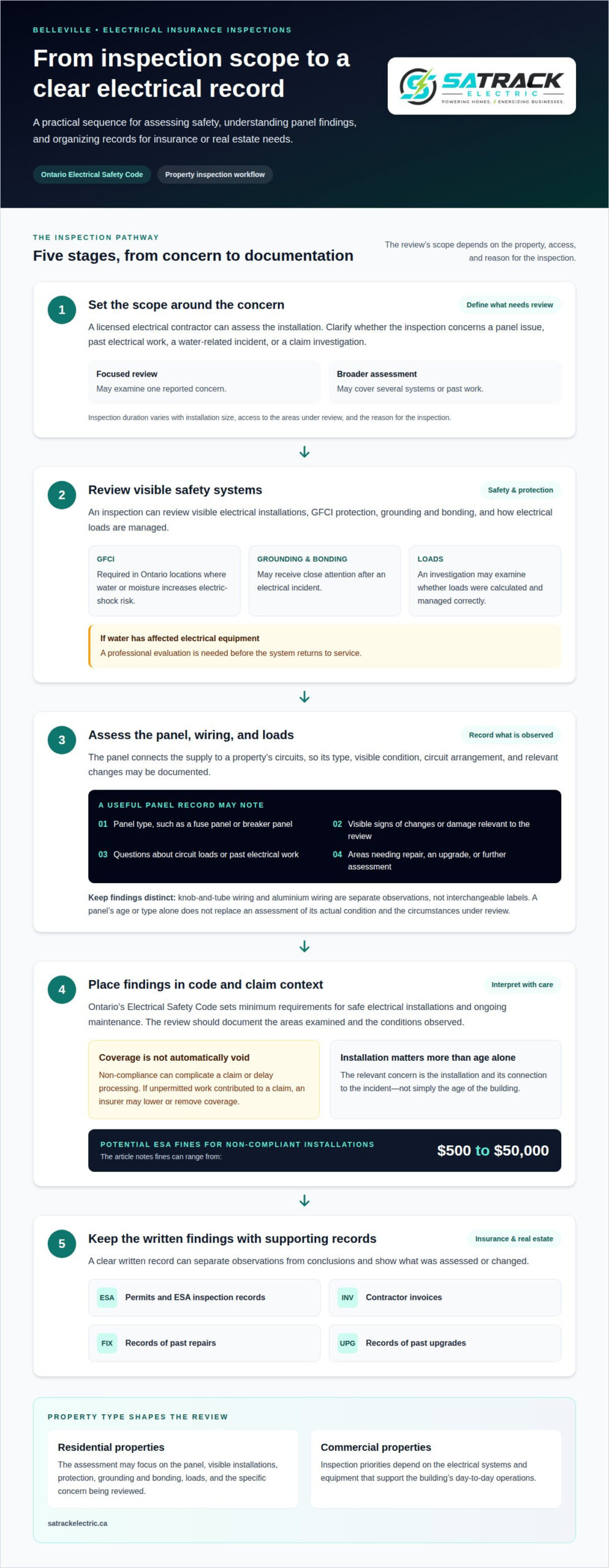
A licensed electrical contractor is an appropriate professional to assess a property’s electrical installation. For an insurance electrical inspection in Belleville, the assessment should address the specific concern, such as a panel issue, past electrical work, or an incident involving water. The scope matters: a focused review may differ from an assessment following a claim. A clear written record of the findings can help explain the work reviewed.
Inspection Scope and Timing
An inspection can review visible electrical installations, GFCI protection, grounding and bonding, and how electrical loads are managed. GFCI protection is required in Ontario locations where water or moisture increases electric-shock risk. After an electrical incident, grounding and bonding may receive close attention. Inspectors may also examine whether loads were calculated and managed correctly during an insurance-claim investigation.
Inspection duration varies by property. It depends on the size of the installation, access to the areas under review, and the reason for the inspection. A review of one reported concern differs from an assessment covering several systems or past work. If water has affected electrical equipment, a professional evaluation is needed before the system returns to service.
Code Compliance Review
The review considers whether the installation meets the Ontario Electrical Safety Code’s minimum requirements. Electrical work completed without permits or an ESA inspection can be an insurance-claim red flag. If unpermitted work contributed to a claim, an insurer may lower or remove coverage. Code non-compliance does not automatically void coverage, but it can complicate a claim or delay processing.
Non-compliant electrical installations can also lead to ESA fines ranging from $500 up to $50,000. The relevant concern is the installation and its connection to the incident, not simply the age of a building. Findings may identify conditions requiring repair or further assessment before affected equipment is used. A qualified inspection can document which areas were examined and what conditions were observed.
Vehicle checks are separate from building electrical inspections. In Canada, each province sets its own motor vehicle inspection regulations, and vehicle inspections can include insurance, safety, and emissions checks. A vehicle inspection may be useful when buying, selling, or obtaining insurance for a used vehicle. For local motor vehicle inspection rules, consult Ontario’s provincial transportation ministry. These checks do not assess a home or commercial building’s wiring.
In parts of British Columbia’s Lower Mainland, primarily around Vancouver, the AirCare emissions test is required every two years.
Electrical panel condition
If an inspection finds knob-and-tube wiring, aluminium wiring, or a fuse panel, the report should identify the system and describe its observed condition. The finding alone doesn’t establish that the installation is non-compliant or automatically void insurance coverage. Its significance depends on the inspection findings and the insurer’s review.
Electrical panels are a common focus during insurance-claim inspections because they connect the supply to a property’s circuits. An inspector can document the panel type, visible condition, circuit arrangement, and any changes relevant to the reported concern. This gives the insurer information about the equipment and helps distinguish a panel issue from other electrical work in the building.
Load management may also be part of the assessment. An inspector may examine whether electrical loads were calculated and managed correctly when investigating an Ontario insurance claim. For example, if a claim concerns an electrical incident, the review may consider how the panel and connected circuits relate to the reported event. The panel’s age or type should not replace an assessment of its actual condition and the circumstances under review.
A clear inspection record can separate observations from conclusions. It may identify:
- The panel type, including a fuse panel or breaker panel.
- Visible signs of changes or damage relevant to the inspection.
- Whether the review raised questions about circuit loads or past electrical work.
- Areas that require repair, an upgrade, or further assessment.
Knob-and-tube wiring and aluminium wiring should be recorded as distinct findings, not treated as interchangeable labels. The inspector’s report can describe where the wiring was observed and whether the review identified a related concern. This helps an insurer assess the property’s electrical condition and any connection to a claim. It also gives the property owner a clearer basis for discussing next steps.
For real estate or insurance purposes, keep panel findings with related permits, ESA inspection records, and invoices for past work. These documents help show what was assessed or changed, rather than relying on the panel type alone. If findings point to an electrical change, an electrical panel upgrade may address the identified work. The appropriate work depends on the inspection results and the installation’s requirements, not simply the name of a wiring method or panel.
When a report identifies panel work, electrical panel upgrade service can be a practical next step for addressing the panel findings.
Inspection documentation for insurance and real estate
Insurance and real estate files can include several records about a property’s electrical history. An insurer may ask for permits, ESA inspection records, licensed-contractor invoices, and documents for previous electrical upgrades or repairs. Together, these records help show what work took place and what inspections or follow-up occurred.
Insurers set their own underwriting and claim requirements; there isn’t one Ontario-wide insurer rule requiring every home to have an electrical inspection. The insurer handling an application or claim determines whether it needs an inspection and which electrical details it wants documented.
A request may concern a home’s electrical work or a system connected to a claim. Work completed without permits or an ESA inspection can be an insurance-claim red flag. A property’s age alone doesn’t establish that an inspection is required; the relevant issue is the electrical information requested for that home or claim.
For an insurance file, organize the documents by work or event. Useful records may include:
- Electrical permits associated with installation, repairs, or upgrades.
- ESA inspection records that relate to the work.
- Invoices from the licensed contractor who completed electrical work.
- Records describing earlier repairs, panel changes, or other upgrades.
- An inspection report addressing the insurer’s stated concern.
Dates and descriptions help connect each record to the work performed. For example, an invoice describing a panel repair is more useful alongside its related permit or inspection record than in an unrelated folder. Keep copies together, especially when a claim involves a particular repair or electrical change.
For a home sale, electrical records can explain the property’s documented work history. A buyer, seller, or insurer may need to understand whether a past upgrade was inspected and what the contractor addressed. If the records relate to different projects, separate them by project instead of treating them as one continuous inspection history.
Missing paperwork can make the sequence of past work harder to establish. An invoice may show that a contractor performed a repair, while an ESA record provides separate inspection documentation. Neither substitutes for the other. Each record serves a different purpose, so include the documents that relate to the specific work or question.
When an inspection report identifies a concern, retain it with the related electrical records. A clear file can help an insurer or real estate party understand the finding, the work reviewed, and any documented follow-up. If unpermitted work contributed to an insurance claim, coverage may be lowered or removed. Ontario non-compliance doesn’t automatically void coverage, but it can complicate or delay processing.
Booking an inspection
Start by identifying why the inspection is needed: an insurer’s request, a claim, or a real estate transaction. The reason helps define the areas to assess and the records that may be relevant. A focused concern, such as panel damage, differs from a request to review a wider part of the property’s electrical system.
Share the property type, location in Belleville, inspection purpose, and any written requirements from the insurer or real estate representative. Include relevant details about the concern, such as electrical work following an incident or a panel issue raised during a transaction. If available, provide related permits, ESA inspection records, contractor invoices, and past repair or upgrade records.
These details help establish a practical inspection scope. The professional can determine which electrical areas relate to the stated concern and what access the assessment requires. For example, a request focused on a particular panel may have a narrower scope than one involving several electrical systems. Duration depends on the property, scope, and access; there is no single time that applies to every booking.
In Belleville, requested municipal building inspections take place within 2 business days, except occupancy inspections. An occupancy inspection takes place within 10 business days of the request. These are timelines for building inspections, not a stated booking or completion timeframe for a private insurance electrical assessment. Keeping that distinction clear helps avoid confusing a municipal inspection request with an insurer’s electrical requirements.
The cost of an electrical inspection in Belleville depends on the property, inspection scope, access, and documentation required, and is provided after a quote request. Reviewing one reported concern may involve different work from assessing multiple areas. The requested report or records can also affect the scope, so describe the purpose clearly when arranging the service.
Before the appointment, gather the information that explains the request. A concise set of details can include:
- The insurer’s written inspection request or the relevant claim concern.
- The property address and whether it is residential or commercial.
- Records for electrical work connected to the concern.
- Any known access requirements for the areas under review.
After the assessment, retain the report with records tied to the same work or claim. If the inspection identifies a repair or upgrade, keep its documentation with the original findings. This creates a clearer file for an insurer or real estate transaction and separates the assessment from any later electrical work.
Commercial electrical inspections
A commercial inspection should reflect how a Belleville business uses its electrical system. An office, retail unit, and workshop have different equipment and operating needs. The inspection scope should connect the property’s electrical condition to the insurer’s request or the specific concern under review.
For a useful assessment, the professional first establishes which areas and systems relate to the request. A retail space may rely on lighting, point-of-sale equipment, and refrigeration. An office may have dedicated circuits for workstations or server equipment. These examples help define inspection priorities; they do not replace an assessment of the actual installation.
Commercial properties can include shared spaces, tenant areas, and equipment serving several parts of a building. The inspection should distinguish the area under review from adjacent systems. For example, a concern in a tenant’s unit may require attention to that unit’s electrical installation and relevant supply arrangements. The property’s layout and access influence what the assessment can cover.
Depending on the stated scope, a professional may document:
- The electrical areas and equipment included in the assessment.
- Visible conditions connected to the insurer’s request or reported incident.
- Electrical loads relevant to the equipment or business activity under review.
- Any identified concern requiring repair, an upgrade, or further assessment.
For an insurance claim, the connection between the electrical system and the reported event matters. If a workshop incident involves equipment, the review may consider the related installation and how electrical loads were managed. If a retail property reports a concern near refrigeration equipment, documenting that area can clarify the inspection’s focus. Findings should describe observations without implying that unrelated systems were assessed.
Business records can make a commercial inspection more useful. Permits, ESA inspection records, contractor invoices, and past upgrade or repair documents can help establish a system’s history. A property manager may also need to identify which records relate to a particular tenant area or piece of equipment. Organizing documents by location or project gives the review clearer context.
The Ontario Electrical Safety Code sets minimum requirements for safe electrical installations and ongoing maintenance. A commercial assessment can document relevant findings for the work and areas within its scope. Non-compliant installations can complicate an insurance claim, particularly when the electrical condition relates to the event. Clear findings help distinguish observed issues from areas outside the assessment.
For a commercial property in Belleville, arrange an inspection scope that matches the insurer’s request and the business’s electrical needs. Arrange commercial electrical service for an assessment of the relevant electrical work.
Satrack Electric
Satrack Electric helps homeowners and businesses in Belleville and surrounding communities address electrical work identified during an insurance or real estate review. If an inspection report points to a repair or installation, Satrack Electric provides residential and commercial electrical services for the next step. The appropriate work depends on the findings and the property’s electrical needs.
Share the report’s relevant observations and explain whether the property is residential or commercial. This gives the discussion a clear focus, such as a documented repair or electrical installation. Satrack Electric provides electrical repairs and installations for homes and businesses in Ontario.
For help with electrical work following an inspection, contact Satrack Electric to discuss the property’s needs.
Take the next step with a clear inspection plan
Before arranging an electrical inspection for insurance in Belleville, clarify the insurer’s request or the specific property concern. A clear starting point helps shape a useful conversation about the assessment, access, and records relevant to your situation. For a real estate transaction, timing and questions raised about the property can also guide what needs attention first.
An inspection is one step in documenting a property’s electrical condition. If it identifies work to address, keep the findings connected to the next decisions and any related records. This can help you organize a clearer file for the insurer or transaction, without treating an assessment as a substitute for your insurer’s coverage decision.
Contact Satrack Electric to book an inspection and discuss your property’s needs. A clear starting point can make the next step easier to manage.
Frequently Asked Questions
What is an electrical inspection for insurance in Belleville, Ontario?
An electrical inspection for insurance in Belleville is a professional assessment of a property’s electrical condition for an insurance-related request. The scope may focus on a specific concern, such as panel damage, or cover relevant parts of a home or business. Findings can document observed conditions and inform an insurer’s review. They don’t replace the insurer’s decision about coverage or claim handling.
Does Belleville require an electrical inspection when buying or selling a home?
A home purchase or sale does not, by itself, mean an electrical inspection is required. An insurer may request an inspection, or one may be arranged to document electrical condition during a transaction. For example, a buyer may want a reported panel concern assessed, while an insurer may request information for underwriting. The reason for the inspection determines its purpose and scope.
What electrical inspection forms or reports do Ontario insurers accept?
Ontario insurers may request different documentation, so the materials needed depend on the insurer’s requirements. Relevant records can include an inspection report, electrical permits, ESA inspection records, licensed-contractor invoices, and documents describing past repairs or upgrades. If the question concerns a panel change, for example, records connected to that specific work provide useful context. Keep the report and supporting documents together for the insurance file.
How long is an electrical inspection report valid for insurance purposes?
There isn’t one report-validity period for every insurance situation. The insurer’s requirements and changes to the electrical system can affect whether an earlier report remains useful. For example, a report completed before later electrical work may not describe the current installation. An incident or a new concern can also prompt a review of relevant conditions, even if a previous report is available.
How can I arrange an electrical inspection in Belleville, and what should I prepare?
To arrange an inspection, describe the property, the reason for the assessment, and any specific concern. Prepare the insurer’s request or claim details, the property address, and records related to relevant electrical work. For a commercial property, identify which business areas or equipment connect to the concern. Clear information helps define the assessment’s scope and organize access to the areas under review.