
The most expensive part of your new electric vehicle setup isn’t always the car; it’s often the hidden distance between your garage and your home’s electrical panel. If you’re asking, “How Much Does an EV Charger Installation Cost in Ontario?”, you’ve likely realized that the hardware is only one piece of the puzzle. It’s common to worry about unexpected panel upgrade costs or the safety risks of an uncertified installation that could jeopardize your home insurance.
This guide provides the professional clarity you need to plan your budget for 2026. We’ll break down the labour considerations for the Belleville and Quinte West areas, explain the latest ESA permit requirements, and help you identify the technical factors that influence your total investment. By understanding these real-world requirements, you can ensure a safe, code-compliant installation that protects your home and your new vehicle.
Key Takeaways
- Level 2 charging is the practical standard for modern range requirements, but hardware costs represent only a portion of the total project investment.
- When evaluating “How Much Does an EV Charger Installation Cost in Ontario?”, the distance between your panel and the charger location is often the most significant labour factor.
- A professional load calculation is the only reliable way to realize if your home requires an electrical panel upgrade to safely handle the new demand.
- Filing a notification of work with the Electrical Safety Authority (ESA) is a legal requirement that ensures your installation remains code-compliant for 2026.
- Selecting a licensed electrical contractor provides the professional assurance that your charging station is installed to the highest safety standards in the Quinte West region.
Understanding EV Charger Levels and Hardware Costs
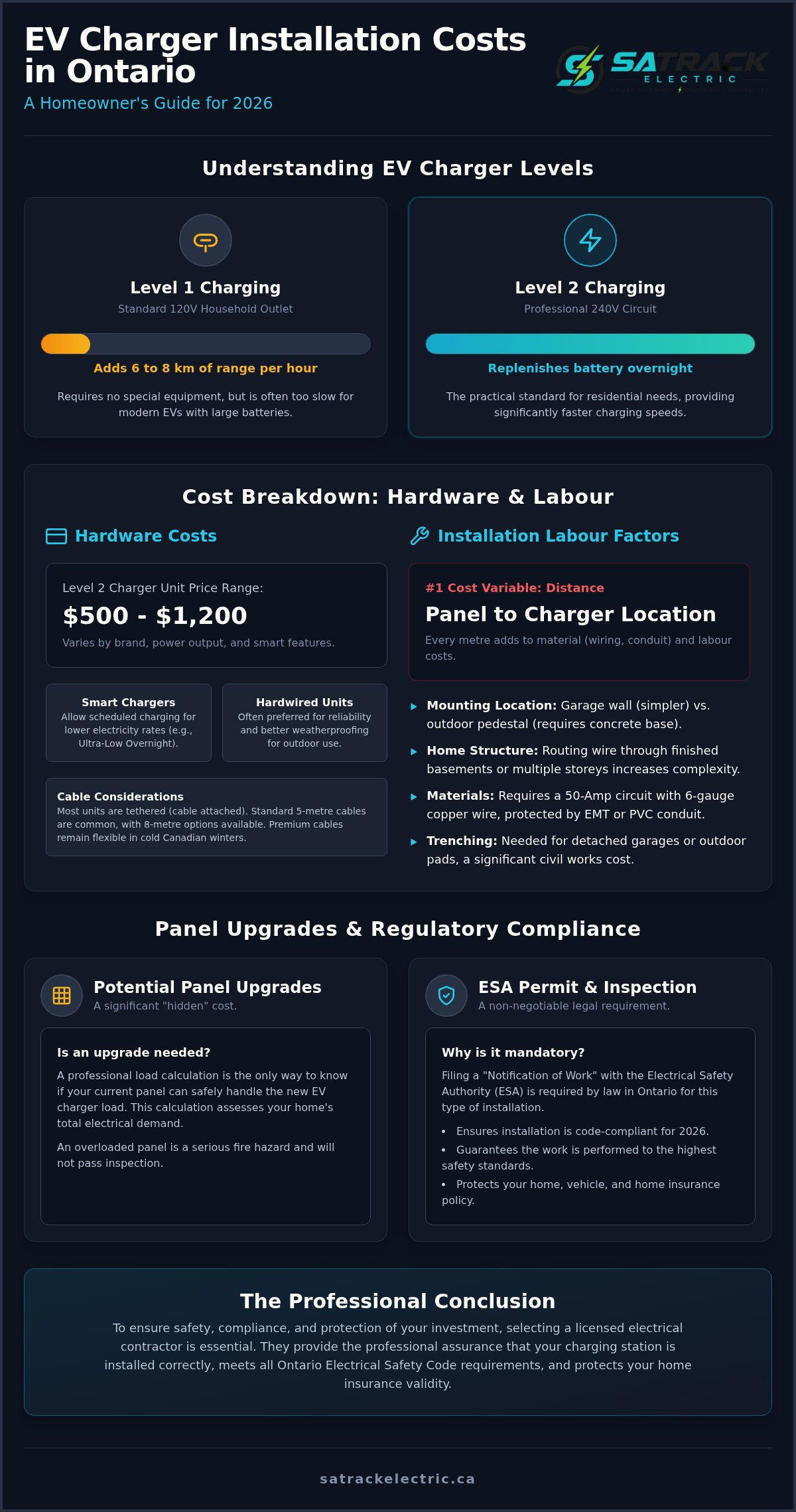
Understanding the different EV charger levels is the primary step for any homeowner in Belleville or Quinte West. Level 1 charging relies on a standard 120-volt household outlet. While this method requires no special equipment, it only adds approximately 6 to 8 kilometres of range per hour of charging. This slow pace is rarely sufficient for modern electric vehicles with large battery capacities. Level 2 charging, which operates on a 240-volt circuit, is the practical standard for residential needs. It provides much higher speeds, allowing most drivers to fully replenish their battery overnight.
When investigating “How Much Does an EV Charger Installation Cost in Ontario?”, you must first consider the price of the hardware itself. High-quality Level 2 charging units available in Canada typically range from $500 to $1,200. This price varies based on the brand, power output, and connectivity features. You will also need to decide between a plug-in model and a hardwired installation. A plug-in unit connects to a heavy-duty NEMA outlet, while a hardwired unit is connected directly to your electrical system. Hardwired installations are often preferred for their reliability, higher power delivery, and superior weatherproofing for outdoor use.
Level 2 Chargers: Smart vs. Basic Units
Basic Level 2 chargers are straightforward devices that begin charging as soon as they are connected to the vehicle. Smart chargers represent a higher initial investment but offer WiFi connectivity and integrated apps. These smart features are highly beneficial for managing electricity expenses. They allow you to schedule charging sessions to align with Ontario’s Ultra-Low Overnight electricity rates, ensuring you charge when power is most affordable. If your charger will be mounted outside, ensure the unit is rated for durability against the fluctuating temperatures and precipitation common in the Quinte region.
Tethered vs. Untethered Cables
The configuration of the charging cable also influences the hardware cost. Most units in the Canadian market are tethered, which means the cable is permanently attached to the charging station. This setup is generally more convenient for daily use. Standard cables are typically 5 metres long; however, many manufacturers offer 8-metre options for an additional cost. A longer cable provides more flexibility if your parking arrangement changes. These hardware choices are a central component when calculating how much does an EV charger installation cost in Ontario. Because our local winters can be harsh, the material of the cable is a significant factor. Premium units use high-grade compounds that stay flexible in freezing temperatures, making them much easier to handle than cheaper, plastic-based cables that stiffen in the cold.
Primary Factors Influencing Installation Labour and Materials
The physical distance between your electrical panel and the intended charging location is the most significant variable in your budget. Every additional metre of conduit and wiring adds to both the material list and the labour hours required. This distance is a primary reason why “How Much Does an EV Charger Installation Cost in Ontario?” can vary so widely between neighbouring homes. A charger positioned directly next to an interior panel is the simplest configuration. If the wiring must traverse a finished basement or navigate multiple storeys, the project becomes more involved.
Mounting a unit on a garage wall is typically faster than installing a standalone pedestal in a driveway. Pedestals require a concrete base and additional structural support to remain stable. If your home has a finished basement, routing the new circuit often requires creative solutions to avoid excessive damage to your drywall. For homeowners dealing with these structural complexities, a professional residential electrical installation assessment can provide a clear path forward that maintains the aesthetic of your home.
The Cost of Conduit and Wiring
Most Level 2 installations require a 50-amp circuit to operate safely. To comply with the Ontario Electrical Safety Code, 6-gauge copper wire is the industry standard for these high-demand loads. The type of protective conduit used also dictates the price. Electrical Metallic Tubing (EMT) provides a clean, durable look for indoor garages, whereas PVC is the standard for moisture-prone areas. Current market copper prices in 2026 continue to influence the baseline cost of these heavy-duty materials.
Trenching and Civil Works
Detached garages or outdoor parking pads often require trenching. Ontario safety standards mandate that underground electrical lines are buried at a depth of at least 600mm to avoid seasonal ground movement and accidental damage. If the route crosses an existing asphalt driveway or stone patio, the labour includes the careful removal and restoration of these materials. These civil requirements are essential for a safe, long-term setup but add layers to the overall project scope. Understanding these site-specific needs is vital when determining how much does an EV charger installation cost in Ontario for your specific property.
The Hidden Costs: Panel Upgrades and Load Management
While the charger and wiring are visible components, your home’s existing electrical capacity is often the most critical factor in the final bill. Many older residences in the Quinte West area were built with 100-amp electrical services. Adding a high-draw appliance like a Level 2 charger can push these systems to their limit. This capacity constraint is a major variable when calculating How Much Does an EV Charger Installation Cost in Ontario? for older properties. A professional load calculation is the standard method used to determine if your current panel can handle the additional demand. This calculation considers the total wattage of your existing appliances, heating, and lighting. If the total exceeds your service limit, an upgrade is mandatory for safety and code compliance. You can find more specific details on this process in our Electrical Panel Upgrade in Belleville guide.
Upgrading to a 200-amp service provides significant future-proofing for your home. It ensures your electrical system can accommodate future additions, such as heat pumps, hot tubs, or a second electric vehicle, without further electrical work. The total cost of installing a home charger often increases significantly if a full service upgrade is required, but it adds long-term value and safety to your property. Investing in your infrastructure now prevents the need for repetitive, costly modifications later.
When is a Panel Upgrade Necessary?
Signs of an overloaded panel include frequently tripping breakers or lights that dim when heavy appliances start up. Adding a modern EV load to an aging fuse box is particularly risky and often discouraged by insurers. In Ontario, a full service upgrade typically ranges from $1,500 to $4,500, depending on the complexity and local utility requirements. This investment ensures your home remains compliant with current safety standards while protecting your sensitive vehicle electronics from power fluctuations.
Load Management Systems (EVEMS)
Electric Vehicle Energy Management Systems (EVEMS) offer a modern alternative to expensive panel upgrades. These devices, such as the DCC-10, monitor the total power consumption of your home in real-time. If the household demand nears the service limit, the EVEMS temporarily pauses or reduces the power to the charger. This technology allows you to install a charger on a 100-amp service without the $3,000 plus cost of a full panel replacement. It is a highly efficient solution for homeowners looking to manage their budget while maintaining full safety standards. This approach is particularly useful in densely populated neighbourhoods where utility-side service upgrades might be physically difficult or prohibitively expensive.
Ontario ESA Permits and 2026 Regulatory Requirements
The legal framework surrounding electrical work in the province is strict. Any homeowner asking “How Much Does an EV Charger Installation Cost in Ontario?” must account for the mandatory permit and inspection process. As of April 1, 2026, the Electrical Safety Authority (ESA) increased wiring and licensing fees by 1.9 percent to account for inflation. Currently, the minimum fee for a residential notification of inspection is $88. This permit, officially called a notification of work, must be filed by a Licensed Electrical Contractor (LEC) before the project begins. It is a non-negotiable step that ensures the installation meets the 2024 edition of the Ontario Electrical Safety Code, which became effective on May 1, 2025.
During the inspection, an ESA official verifies that the circuit is dedicated, the load calculations are accurate, and the equipment is properly grounded. This oversight provides the professional assurance that your home can safely support the high-amperage draw of a Level 2 charger. For those planning a broader renovation alongside their charger, consulting a professional for Residential Electrical Services in Belleville ensures that every component of your home’s power system remains code-compliant. Following these regulations is the only way to guarantee the long-term safety of your electrical infrastructure.
Insurance Implications of Unlicensed Work
Skipping the permit process to save on costs creates significant legal and financial liability. If an electrical fire occurs and there is no record of an ESA inspection, your home insurance provider may void your coverage entirely. Upon successful completion of the inspection, the ESA issues a Certificate of Acceptance. Homeowners should realize that this document is a vital record for insurance purposes and future home resale. The modest cost of a permit is a small price to pay compared to the risk of uncertified wiring and the potential loss of your property’s protection. A licensed professional ensures this paperwork is handled correctly from the start.
Ontario Rebates and Incentives in 2026
As of July 2026, the Government of Ontario does not offer provincial rebates for purchasing or installing residential EV chargers. However, the federal Electric Vehicle Affordability Program (EVAP) continues to provide point-of-sale rebates of up to $5,000 for new battery-electric vehicles. For those purchasing pre-owned, a $1,000 incentive is available through the non-profit organization Plug’n Drive. While direct infrastructure rebates are absent, you can still achieve significant operational savings. By utilizing Ontario’s Ultra-Low Overnight (ULO) electricity rates, you can charge your vehicle during off-peak hours for a fraction of the standard cost. These savings help offset the initial installation investment over time.
To ensure your installation is fully permitted and safe, contact our licensed team for a professional site assessment.
Why Professional Installation is the Logical Conclusion
A master electrician’s site assessment is the foundation of a reliable home charging setup. Beyond simply running wires, a professional evaluates the thermal capacity of your equipment and the integrity of your existing connections. While many homeowners start their journey by asking How Much Does an EV Charger Installation Cost in Ontario?, the value of a professional installation extends far beyond the initial price tag. Attempting to use “DIY kits” or uncertified components often leads to failure. These kits frequently lack the specific weatherproofing or current-limiting features required by the Ontario Electrical Safety Code, creating significant fire risks in residential garages.
Protecting your vehicle’s battery warranty is another critical reason to choose a licensed professional. Most major EV manufacturers require that charging equipment be installed by a qualified technician to maintain the validity of the vehicle’s electrical system warranty. An improper installation that causes a power surge or a ground fault could result in thousands of dollars in uncovered repair costs for your car. Satrack Electric prioritizes safety and competence, ensuring that your charging station operates within the exact parameters specified by both the vehicle manufacturer and provincial safety standards.
The Satrack Electric Advantage in Belleville
Our team provides deep local expertise across the Quinte region, including Trenton, Picton, and Greater Napanee. We understand the unique housing stock in Quinte West, from heritage homes with original wiring to newer developments with specific panel configurations. This local knowledge allows us to anticipate challenges that generic contractors might overlook. As a licensed and insured team, we provide the professional assurance that your project is handled with integrity. This community-focused approach ensures that every installation we perform contributes to the long-term safety and stability of our neighbours’ homes.
Next Steps: Getting a Professional Quote
To receive an accurate estimate of How Much Does an EV Charger Installation Cost in Ontario? for your specific property, it’s helpful to have a few details ready. Clear photos of your electrical panel, the make and model of your vehicle, and a basic description of your garage or driveway layout allow us to provide a more precise assessment. You should always insist on a formal written estimate rather than a verbal or “back-of-the-napkin” price. A professional quote clearly outlines the scope of work, material specifications, and permit inclusions, preventing unexpected costs once the project begins.
A methodical approach to your installation ensures a smooth, hassle-free experience from start to finish. When you are ready to move forward with a code-compliant setup, contact Satrack Electric for an EV installation quote to secure your home’s electrical future.
Securing Your Home’s Electrical Future
Planning for a home charging station requires a balance between hardware selection and infrastructure readiness. While charger units have predictable pricing, the final answer to “How Much Does an EV Charger Installation Cost in Ontario?” depends heavily on your home’s existing panel capacity and the physical distance to your garage. By identifying the need for potential panel upgrades or modern load management systems early, you can avoid unexpected expenses and ensure your system remains reliable for years to come.
Safety remains the most critical component of any electrical project. Every installation must adhere to the latest provincial codes and undergo a formal ESA inspection to protect your home insurance and your vehicle’s warranty. As a licensed and insured electrical contractor serving Belleville, Trenton, and the wider Quinte region, we manage the entire permit and inspection process on your behalf. This methodical approach provides the peace of mind that your installation is both safe and code-compliant.
When you are ready to transition to efficient home charging, Request Your Professional EV Charger Installation Quote today. Our team is committed to delivering thorough results that empower your move toward sustainable driving.
Frequently Asked Questions
Can I install an EV charger myself in Ontario?
Ontario law requires that most electrical work be performed by a Licensed Electrical Contractor (LEC). While a homeowner is technically permitted to perform work on their own principal residence, they must still file a notification of work with the ESA and pass a rigorous inspection. Given the high voltage and continuous load requirements of a Level 2 charger, professional installation is the safest way to ensure your home insurance remains valid and your equipment functions correctly.
How much does the ESA permit cost for an EV charger in 2026?
The minimum fee for a residential notification of inspection from the Electrical Safety Authority is $88 as of July 2026. This reflects a 1.9 percent fee increase that took effect on April 1, 2026, to account for inflation. This permit fee is a standard component of the total budget when calculating how much does an EV charger installation cost in Ontario for any legal residential project.
Does an EV charger always require a panel upgrade?
A panel upgrade is not always mandatory, but it depends on the results of a professional load calculation. If your existing 100-amp or 200-amp service has sufficient “headroom” to support an additional 40 to 50 amps, you can proceed without an upgrade. In cases where the panel is at capacity, an Energy Management System (EMS) can often be installed to manage the load and avoid the higher cost of a full service replacement.
How long does a professional EV charger installation take?
A straightforward installation typically takes between three and six hours to complete. This timeline includes mounting the unit, running the conduit, and finalizing the connections at the panel. If your project requires trenching for a detached garage or a full electrical service upgrade, the work may extend over a full day or more. Our team provides a clear schedule before work begins to ensure a smooth experience.
What is the difference between a hardwired and a plug-in Level 2 charger?
Hardwired chargers are connected directly into your home’s electrical system, while plug-in units use a heavy-duty NEMA 14-50 or 6-50 outlet. Hardwired installations are generally more reliable for outdoor use and can often support higher charging speeds. Plug-in models offer the flexibility to take the charger with you if you move, but they require a high-quality, industrial-grade receptacle to safely handle the continuous power draw.
Are there any government rebates for EV chargers in Ontario for 2026?
There are currently no provincial government rebates available for the purchase or installation of residential EV chargers in Ontario. The federal government provides point-of-sale rebates for the vehicles themselves, but infrastructure costs are the responsibility of the homeowner. You can still realize long-term savings by utilizing the Ultra-Low Overnight electricity rate, which significantly reduces the cost of every charge.
Will installing an EV charger increase my property value in Belleville?
A certified Level 2 charging station is increasingly viewed as a valuable asset by prospective homebuyers in the Quinte region. As electric vehicle adoption grows, having a permitted and code-compliant charging setup makes a property more competitive in the local real estate market. It demonstrates that the home’s electrical system is modern and capable of supporting the latest technology, which provides a clear advantage during a sale.
Can Satrack Electric install chargers for commercial fleets in Trenton?
Yes, we provide comprehensive commercial electrical services, including the design and installation of fleet charging infrastructure. We manage the entire process for businesses in Trenton and the surrounding areas, from initial load assessments to final ESA inspections. Our team ensures that your commercial charging system is robust enough to handle the demands of multiple vehicles while maintaining full compliance with provincial safety standards.