
The most powerful connection isn’t automatically the right one. Choosing an EV charger outlet or hardwired in Quinte West depends on your charger’s requirements, your parking location and your home’s electrical capacity. A plug-in setup can offer flexibility, while a hardwired connection creates a permanent installation. Each option has practical considerations for safety, durability and maintenance.
Your electrical panel may need an assessment to determine whether it can support Level 2 charging or whether other electrical work is needed. A licensed electrical contractor can review the site and existing electrical service, then plan an installation suited to your home and charger. In Ontario, Level 2 installations require an Electrical Safety Authority permit and must comply with the current Ontario Electrical Safety Code.
This guide compares outlet and hardwired connections, explains the equipment and site details that shape the choice, and outlines how panel capacity and installation requirements fit into the decision. With a clear understanding of the trade-offs, you can plan a suitable EV charger installation in Quinte West.
Key Takeaways
- Compare a plug-in connection’s flexibility with the permanence of hardwiring, while checking charger and vehicle compatibility.
- Consider your panel capacity, available circuit space and charger requirements to understand what your home can support.
- Plan around the parking location, cable reach and weather exposure.
- To decide on an EV charger outlet or hardwired in Quinte West, gather your vehicle and charger documentation before assessing the site and planning the electrical work.
- Satrack Electric’s licensed and insured residential electrical services support homeowners planning an EV charger installation in Quinte West.
EV Charger Outlet or Hardwired in Quinte West: What Is the Difference?
An outlet-connected EV charger plugs into a compatible receptacle supplied by a dedicated electrical circuit. A hardwired charger connects directly to the home’s electrical wiring, making the charging unit a fixed part of the installation. Both options can support home charging. The right one depends on the charger’s instructions, your vehicle’s charging capability and the electrical conditions at the installation site.
The connection method is separate from the charging level. Choosing a receptacle or hardwiring doesn’t automatically make charging faster. Charging capability depends on the charger, the vehicle and the electrical supply. The term electric vehicle supply equipment (EVSE) refers to the equipment that supplies power to charge an electric vehicle.
What does an outlet-connected EV charger involve?
With this setup, compatible charging equipment plugs into a properly installed receptacle. Unplugging the unit can be convenient if you want to store it or use it elsewhere, but another location must also have a suitable receptacle and circuit. The receptacle type, circuit capacity and charger requirements all need to match. A familiar-looking outlet isn’t enough to establish compatibility.
What does a hardwired EV charger involve?
For a hardwired setup, an electrician connects the charger directly to the electrical wiring. The unit stays in its installed position rather than plugging into and out of a receptacle. This can suit a permanent charging location, but servicing or moving the charger involves electrical work. Hardwiring isn’t automatically safer, faster or better. Suitability depends on the equipment and site.
Here’s a practical comparison for homeowners considering an EV Charger outlet or hardwired in Quinte West:
| Consideration | Outlet-connected | Hardwired |
|---|---|---|
| Installation | Requires a compatible receptacle and circuit. | Charger connects directly to the wiring. |
| Portability | Compatible equipment can be unplugged; use elsewhere depends on a suitable connection. | Fixed in place; relocation requires electrical work. |
| Maintenance | Receptacle condition and plug compatibility are part of the setup. | No plug-in receptacle at the charger; servicing still requires appropriate electrical work. |
| Site suitability | Works where a suitable receptacle can be installed near the parking space. | Can suit a planned, permanent charger location. |
Use the charger’s installation manual and the vehicle’s charging specifications to narrow down compatible options. An electrical assessment can then establish which connection suits your home’s wiring, planned charger location and intended use.
How Quinte West Homes Affect an EV Charger Connection
A charger’s connection type is only one part of the installation plan. Your electrical panel, available circuit capacity and the charger’s requirements all help determine what your home can support. Even if a charger matches your vehicle’s charging specifications, it still needs a suitable electrical supply and a practical location.
Which electrical details should be assessed before installation?
An electrical assessment considers the panel and service, existing circuits, the proposed charger load and where you intend to charge. Capacity depends on your home’s electrical system and planned use, including the demands of other equipment operating at the same time. The assessment helps determine whether the existing wiring is suitable or whether electrical changes, such as panel work, may be needed.
If a panel change is part of the plan, this electrical panel upgrade guide provides additional context. The right approach depends on the specific home, not simply the charger’s advertised capability.
How should you plan an outdoor or garage installation?
Start with how you park and use the space each day. Position the charger so its cable can reach the vehicle’s charging port without making your usual parking routine awkward. Consider the cable route from the electrical supply, access to the charger and whether it will be inside a garage or exposed to outdoor conditions. The equipment and installation need to suit the actual location, so use the charger’s instructions and an electrical assessment to guide the plan.
For example, a parking spot shared by different vehicles may call for a different placement than a dedicated space beside a garage wall. A long or obstructed cable route can also affect where the charger is most practical. These details help shape both the connection method and the work needed.
Assess your home’s electrical capacity, wiring and intended installation location before choosing a charger.
For homeowners weighing an EV charger outlet or hardwired in Quinte West, Satrack Electric’s residential electrical installation and upgrade services support site-specific planning. Explore residential electrical installation services to plan a suitable connection.
Outlet vs. Hardwired EV Charger: Compare the Trade-Offs
The choice between an outlet and a hardwired connection comes down to equipment compatibility, how permanent you want the setup to be and what your home’s electrical system can support. Neither option is automatically the better fit. The charger’s installation manual and electrical requirements establish which methods are viable, while a site assessment helps determine what work is needed.
| Consideration | Outlet-connected | Hardwired |
|---|---|---|
| Installation | Requires a compatible receptacle and circuit for the charger. | Charger connects directly to the electrical wiring. |
| Equipment compatibility | Charger plug, receptacle and circuit must meet the manufacturer’s requirements. | Charger must be approved for the specified hardwired connection. |
| Portability | Compatible equipment can be unplugged, but using it elsewhere depends on having a suitable connection. | Fixed in place; moving it involves electrical work. |
| Maintenance access | The plug and receptacle form part of the connection and require appropriate inspection and care. | No charger receptacle is involved, but servicing still requires access to the fixed electrical connection. |
When might an outlet connection suit your needs?
A plug-in setup may suit a homeowner whose charger is designed for a receptacle and whose parking area can be served by a compatible circuit. Unplugging the unit can be useful if you need to store or transport it, but relocation isn’t necessarily simple: the new location still needs a suitable receptacle and electrical supply. Have the receptacle and circuit assessed before planning around this option.
When might hardwiring be the practical choice?
Hardwiring may make sense for a fixed parking space and a homeowner who prefers a permanently connected charger. Some equipment specifies this connection method, so the manufacturer’s instructions are central to the decision. Hardwiring is one practical option, not a universal recommendation. The home’s wiring, charger requirements and installation location still need to align.
A plug-in connection doesn’t make installation a simple DIY task. Installing or modifying the receptacle and circuit involves electrical work. In Ontario, Level 2 EV charger installations require an Electrical Safety Authority permit and must be completed by a licensed electrical contractor. Choose the connection based on the equipment instructions and a professional assessment, not convenience alone.
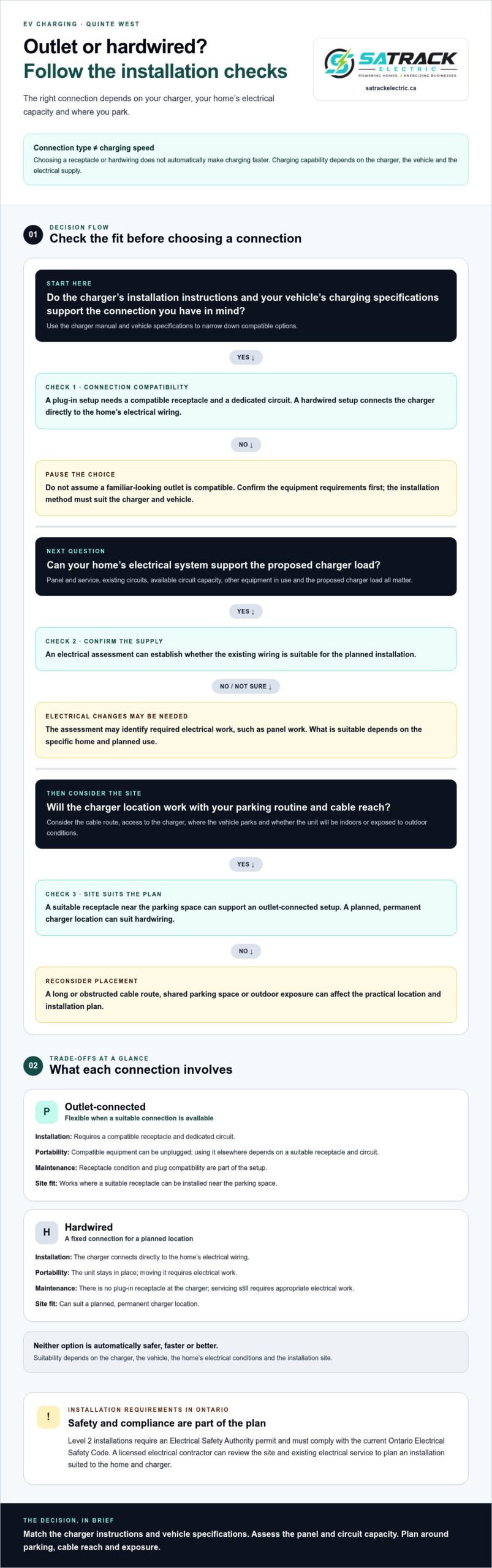
How to Decide on an EV Charger Connection in Quinte West
Use a step-by-step approach rather than choosing a connection based on preference alone. Gather the equipment details, consider how and where you charge, then have the electrical system and proposed installation assessed. This helps determine whether an outlet or hardwiring is suitable and whether your initial preference needs to change.
What information should you gather first?
Collect the details that will shape the installation plan:
- Vehicle specifications: Check the charging connector and onboard charging capabilities in the vehicle manual.
- Charger instructions: Review the manufacturer’s approved connection method and installation requirements.
- Charging location: Identify where you usually park, the likely cable route and how you will access the charger.
- Charging routine: Consider whether the vehicle usually stays in one spot or your parking arrangements vary.
These details help match the vehicle’s capabilities and charger requirements to your everyday use. They don’t establish, on their own, whether your home’s wiring can support the installation.
What happens during professional installation planning?
An electrician assesses your home’s electrical system alongside the proposed charger location and equipment. The assessment considers whether the existing electrical supply and wiring are suitable, how the charger will connect and whether related electrical work is needed. Your preferred option may change if the equipment calls for a different connection or the site assessment shows that the original plan isn’t appropriate.
For Level 2 charging in Ontario, an Electrical Safety Authority permit is required, and the installation must be completed by a licensed electrical contractor in accordance with the current Ontario Electrical Safety Code. Professional planning accounts for these requirements as well as the practical details of your home.
Once the electrical needs are clear, compare suitable connection options against your routine. An outlet may suit compatible equipment and a suitable receptacle; hardwiring may fit a permanent setup. The choice should follow the charger’s instructions and the site assessment, not assumptions based on portability or appearance.
For related home electrical work, see the residential electrical services guide. If you’re planning an EV Charger outlet or hardwired in Quinte West, arrange professional electrical installation planning with Satrack Electric’s residential electrical team.
Plan Your EV Charger Electrical Installation with Satrack Electric
The right EV charger connection fits the equipment, parking location and home electrical system. An outlet may work for compatible equipment and a suitable receptacle; hardwiring may suit a fixed installation or be specified by the manufacturer. The choice should follow an assessment of the property, not a general preference for one method.
Satrack Electric is a licensed and insured electrical contractor serving Quinte West. Its residential electrical installation and upgrade services help homeowners plan the electrical requirements for EV charging. Properties differ in their wiring, panel capacity and installation conditions, so the plan needs to fit the home.
What to expect from a local electrical contractor
Professional planning starts with the proposed charger location and details about the vehicle and charging equipment. The charger documentation establishes its connection requirements, while the site assessment considers the existing electrical system, cable route and practical access. Together, these details inform an installation plan and help identify whether related electrical work is needed. The installation approach depends on the property and equipment.
Come prepared with the vehicle specifications and charger manual. Be ready to describe where you park, where you want the charger installed and whether you prefer an outlet or hardwired connection. Your preference is a useful starting point, but the electrical assessment determines which options suit the home.
Arrange the next step for your Quinte West home
For an EV Charger outlet or hardwired in Quinte West, bring together the details that connect your daily charging routine to the installation: the vehicle, charger, parking spot and preferred connection. Satrack Electric can use this information to plan the electrical work around your property’s requirements. If the assessment identifies a need for electrical upgrades, those can be considered as part of the overall plan.
Satrack Electric provides residential electrical installation and upgrade services in Quinte West, with a safety-focused approach to electrical planning. Share your project details and discuss the work needed for your home. Discuss your EV charger installation needs with Satrack Electric.
Plan a Charger Installation That Fits Your Home
The choice between an outlet and a hardwired charger should follow the equipment requirements and an assessment of your home’s electrical system and parking location. A plug-in connection can offer flexibility when the charger and receptacle are compatible; hardwiring may suit a fixed setup or be specified by the manufacturer. Neither option is right for every property.
For EV Charger outlet or hardwired in Quinte West, plan around your vehicle, charger, electrical capacity and everyday charging routine. A professional assessment can clarify which connection is suitable and whether electrical upgrades are needed before installation.
Satrack Electric is a licensed and insured electrical contractor serving Quinte West, with residential electrical installation and upgrade services tailored to the property. The company also serves homeowners in Belleville, Trenton, Picton, Brighton, Greater Napanee and Cobourg. Share your vehicle and charger details, preferred parking location and connection preference to start planning. Discuss your home electrical installation with Satrack Electric and plan for charging at home.
Frequently Asked Questions
Is an outlet or hardwired connection better for an EV charger?
Neither connection is universally better. The right choice depends on the charger’s instructions, your home’s electrical system and how you use the parking space. An outlet may suit compatible equipment when a suitable receptacle and circuit are available. Hardwiring may be practical for a permanent setup or required by the charger manufacturer. An electrical assessment helps determine which option suits your home.
Can I plug an EV charger into a regular household outlet?
Only if the charger is designed for that type of outlet and the electrical circuit is suitable. A regular household receptacle may not meet the charging equipment’s requirements, so don’t rely on plug fit alone. Check the charger’s installation instructions and have the circuit assessed before use. Level 2 charging generally requires a connection planned for the charger’s specified electrical needs.
Does a hardwired EV charger charge faster than a plug-in charger?
Not automatically. Charging capability depends on the charger’s output, the vehicle’s onboard charging system and the electrical supply, rather than the connection method alone. A hardwired unit may support a different capacity than some plug-in equipment, but the specific charger and vehicle specifications determine possible charging performance. Compare those requirements before choosing a connection, and have your home’s electrical capacity assessed.
Do I need an electrician to install an EV charger outlet in Quinte West?
Have a licensed electrical contractor install the receptacle and circuit for an EV charger. The work must suit the charger’s requirements and your home’s electrical system. In Ontario, a Level 2 EV charger installation requires an Electrical Safety Authority permit and must be completed by a licensed electrical contractor. Professional installation planning helps ensure the connection suits the equipment and location.
Is a NEMA 14-50 outlet suitable for every EV charger?
No. A NEMA 14-50 receptacle is suitable only when the charger is designed and approved for that connection and the circuit meets its electrical requirements. Some chargers are made for other receptacles or for hardwiring. Check the installation manual for the required connection, then have the proposed circuit assessed. The outlet’s appearance or name alone doesn’t confirm compatibility with the charger or home wiring.
Can I switch an EV charger from an outlet to hardwired later?
Possibly, but it depends on whether the charger supports both connection methods and whether your home’s wiring can accommodate the change. The work may require changes to the existing circuit or installation, and the charger manufacturer’s instructions must be followed. Have a licensed electrical contractor assess the equipment and site before planning a conversion. Don’t modify the connection yourself or assume the existing setup can be reused.
How do I choose between an EV charger outlet and hardwiring?
For an EV Charger outlet or hardwired in Quinte West, start with your vehicle’s charging specifications and the charger’s approved installation instructions. Then consider the electrical panel, available circuit capacity, parking location, cable route and whether you want a fixed or disconnectable setup. A professional assessment can identify suitable options and any electrical work needed. Let the equipment and site conditions guide the decision, not assumptions about charging speed.