
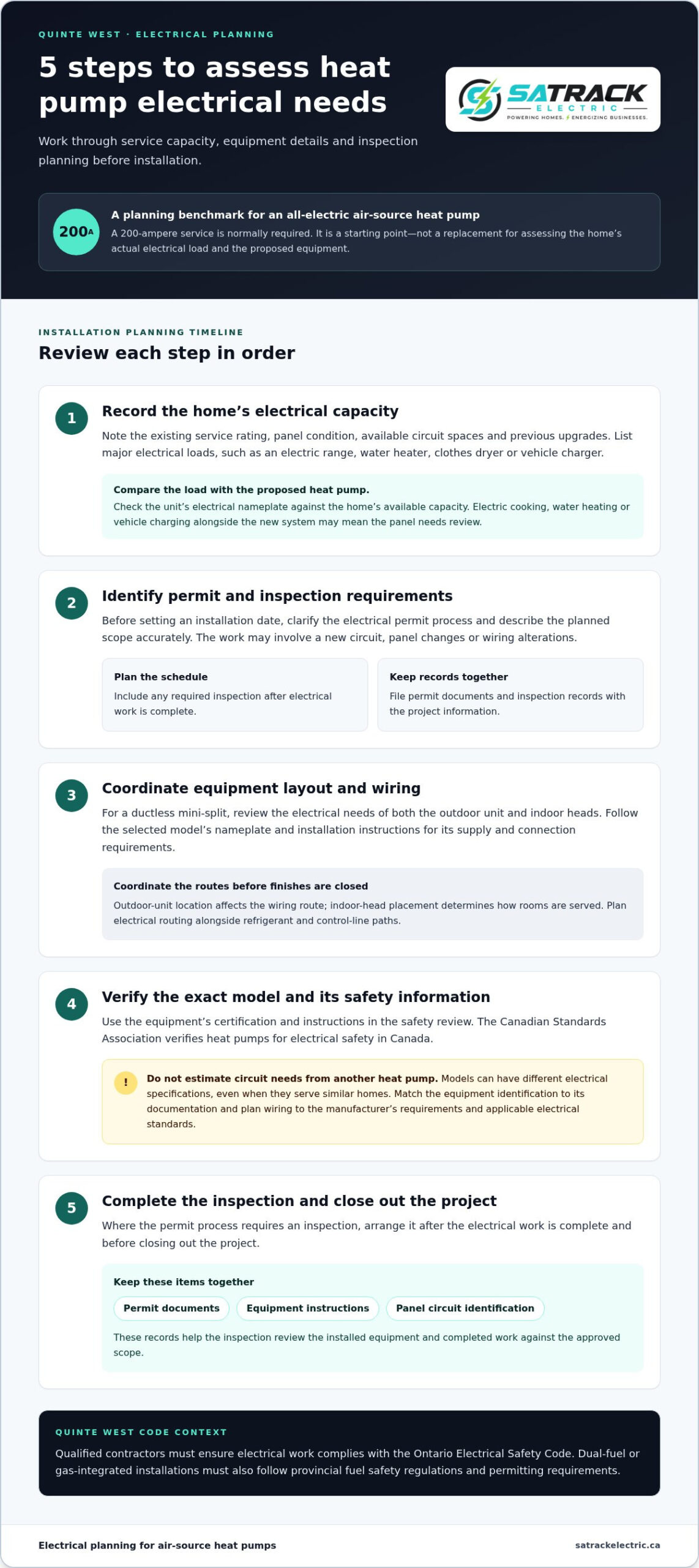
A 200-ampere electrical service is normally required for an all-electric air-source heat pump. In Quinte West, the electrical requirements for a heat pump start with assessing whether your existing service and panel can support the system alongside your home’s other electrical loads. The 200-ampere figure is a useful starting point, but the equipment’s electrical specifications and a review of your home’s capacity matter too.
It’s reasonable to want a clear answer before planning a heat pump installation, especially if you’re unsure whether your panel can handle the added demand. This guide explains how to assess service capacity, what information to gather about the proposed equipment, and how qualified electrical work and local requirements contribute to a safe, code-compliant project.
You’ll learn what to review before installation and when an electrical upgrade may need consideration. These steps help you make a methodical decision and discuss the right electrical work for your home with confidence.
Key Takeaways
- Use 200-ampere service as a starting point when planning an all-electric air-source heat pump, then assess the home’s actual electrical load and equipment specifications.
- Review the proposed system’s electrical requirements and safety certification before installation so its connection can be planned appropriately.
- Consider whether existing electrical service can support the heat pump alongside other household loads; a transition from gas or oil heating may call for a panel upgrade.
- Check how rebate eligibility is affected by system type, efficiency, home characteristics, and program requirements, including any documentation or verification.
- Use a recognized home heating and cooling capacity method, such as CSA F280-12, as part of planning a suitably sized system.
Air-source heat pump installation considerations
- Start by recording the existing service rating, panel condition and major electrical loads. A 200 ampere electrical service is normally required for an all-electric air-source heat pump. Treat this as a planning benchmark, not a substitute for a load assessment. Compare the proposed unit’s electrical nameplate with the home’s available capacity. For example, an existing panel may need review if the heat pump is being added alongside electric cooking, water heating or vehicle charging.
- Identify the electrical permit process for the work before setting an installation date. The scope may involve a new circuit, panel changes or wiring alterations, so describe the planned work accurately when arranging permit steps. Include any required inspection in the schedule. Keep permit documents and inspection records together, especially if a panel upgrade and heat pump connection are completed as part of the same project.
- Use the equipment’s certification and instructions as part of the safety review. The Canadian Standards Association verifies heat pumps for electrical safety in Canada. Match the model identification on the equipment with its documentation, then plan wiring to meet the manufacturer’s requirements and applicable electrical standards. Don’t estimate circuit needs using another heat pump: models can have different electrical specifications, even when they serve similar homes.
- Plan the post-installation inspection as a distinct step, not an afterthought. Where the permit process requires an inspection, arrange it after the electrical work is complete and before closing out the project. Keep the permit documents, equipment instructions and panel circuit identification together. This helps the inspection review the installed equipment and completed work against the approved scope, rather than relying on memory or unfinished wiring.
In Quinte West, qualified contractors such as Satrack Electric must ensure all electrical work complies with the Ontario Electrical Safety Code, and dual-fuel or gas-integrated installations must also adhere to provincial fuel safety regulations and permitting requirements.
Air-source heat pump systems
- Trace how the system transfers heat before comparing models. An air-source heat pump moves heat between outdoor air and the home, rather than producing heat by burning fuel. In heating mode, its outdoor and indoor components work together to move heat indoors. In cooling mode, the process reverses. This operating cycle explains why the same equipment can serve both heating and cooling needs, while its electrical supply must support the equipment specified for the home.
- Consider Quinte West’s winter conditions when assessing the heating system. Winter temperatures can range from -10°C to -5°C, so compare the equipment’s performance information at relevant outdoor temperatures. New heat pump models remain highly efficient at temperatures as low as -20°C. That figure describes low-temperature efficiency, not a guarantee that every model or installation will perform identically. Review the manufacturer’s performance data for the specific equipment being considered.
- Include sound and placement in the system plan. Modern heat pumps typically operate at 45-55 dB, so the outdoor unit’s position matters to household comfort and nearby living areas. Identify a practical location before finalizing the electrical route. Check access for maintenance, airflow around the unit and the path between outdoor and indoor components. For a ductless system, also map indoor heads to the rooms they are intended to serve.
- Relate equipment capacity to the building instead of choosing by floor area alone. CSA F280-12 is a recognized method for determining the required capacity of residential space heating and cooling appliances. Use a building-specific heating and cooling assessment to guide equipment selection, then compare the selected model’s electrical specifications with the planned system layout. Reviewing these items together helps align comfort, capacity and electrical planning. For the electrical installation planning, review residential electrical installation options.
Electrical service capacity for heat pumps
- Record the service rating and panel details before planning electrical work. Note the rating, panel condition, available circuit spaces and any previous upgrades. Then list major equipment, such as an electric range, water heater, clothes dryer or vehicle charger. This inventory gives a useful picture of the home’s electrical setup. For a Quinte West homeowner, it’s a practical first step in assessing electrical requirements for heat pump Quinte West homes.
- Gather the proposed heat pump’s nameplate information and manufacturer documentation. Record the supply requirements for the specific model and its components. Don’t estimate based on another unit, since models can have different electrical specifications. Keep these documents with your home’s equipment inventory so the person assessing service capacity can compare the proposed heat pump with the existing electrical setup.
- Assess existing and proposed loads together, rather than reviewing the heat pump alone. Include current household equipment and planned additions. For example, if you’re adding a heat pump and an electric vehicle charger, have both changes considered in the same assessment. The key question is whether the electrical service can support the combined demand. Open breaker spaces alone don’t establish that the service has sufficient capacity.
- Use the assessment findings to define the next steps. If the service can support the proposed system, the electrical plan can focus on the connection and circuit work. If it can’t, identify the panel or service changes needed before installation proceeds. Keep the heat pump documentation, equipment inventory and assessment findings together. These records help align the electrical work with the selected system and guide project planning.
When reviewing the project budget, keep possible rebates separate from the electrical service assessment. Treat incentives as potential financial support, not as evidence that a panel or service can support the proposed system.
Keep applicable program details with your other planning records and confirm eligibility before relying on a rebate in the project budget. Incentive and capacity reviews answer different questions: rebates relate to possible financial support, while an electrical assessment determines the work required by the selected equipment and household loads. Keeping both reviews helps align the financial estimate with the proposed installation without treating an incentive estimate as a technical decision about service capacity.
Are there rebates or incentives in Ontario for heat pump electrical upgrades?
- Start by listing the heat pump and electrical work separately in your project notes. A rebate may apply to qualifying equipment, while a panel upgrade is a separate part of the installation scope. Don’t assume an incentive for equipment automatically covers electrical upgrades. For a Quinte West home, list the proposed system, any required panel work and the reason for it. This makes it easier to compare your project with the terms of each active Ontario program.
- Review eligibility criteria before choosing equipment or scheduling work. Programs may assess system type, efficiency level, home characteristics and current program requirements. For example, a program may distinguish between heat pump types or set efficiency conditions. Compare the specific model and property details with those criteria. Keep the program terms with the equipment information so you can identify which project components appear to qualify.
- Read the program’s wording about electrical work separately from its heat pump criteria. Look for references to equipment, installation, panel work or other eligible upgrades. These terms determine how the program treats each part of a project. If a Quinte West installation includes a panel upgrade, record it as a separate scope item rather than assuming it qualifies with the heat pump. This helps avoid mistaking an overall incentive for coverage of every project expense.
- Organize the documents describing the system and completed work. Some heat pump rebate programs require documentation or post-installation verification. Keep the equipment details, installation records and electrical upgrade information in one project file. If verification is required, these records can help show what equipment was installed and what work was completed. Follow the applicable program’s documentation instructions, which specify what records support an application.
- Compare current program terms with your project before relying on an incentive in your budget. Eligibility and rebate availability in Quinte West depend on active programs and their requirements. Review the stated system type, efficiency criteria, home conditions, eligible work and documentation rules. Record which project components meet those terms and which are treated separately. This gives you a clearer basis for planning the heat pump and electrical upgrade together.
Heating cooling
- Start with a room-by-room review of heating and cooling needs. Record which rooms feel cold in winter or warm in summer, and note how each is used. A bedroom used overnight has different comfort priorities from a kitchen used throughout the day. Include the home’s layout and existing heating equipment in your notes. These details connect the system’s intended operation to the rooms it must serve, rather than relying on a general impression of the house.
- Gather information about the building before system capacity is selected. Note insulation conditions, window locations, drafts and recent renovations. For example, a finished addition may need separate attention if its insulation differs from the rest of the home. Share these observations during the heating and cooling assessment. They help explain why homes with similar floor areas can have different heating and cooling needs, and why equipment selection should reflect the actual building.
- Compare the planned system’s operating details with the home’s existing distribution. For ducted equipment, record which rooms the ducts serve and note any areas with uneven airflow. For ductless equipment, list the rooms each indoor unit is intended to serve. Compare the proposed arrangement with your comfort notes. The system plan should explain how heating and cooling will reach the areas that matter, not just where equipment will be installed.
- Review the electrical implications alongside the heating and cooling design. Gather the selected equipment’s electrical specifications and note any supplemental equipment included in its proposed configuration. Share these details with the person assessing the home’s electrical capacity. This connects the system design with its electrical needs before installation planning advances. If the project requires electrical installation or upgrade work, discuss the electrical work for your heat pump as part of the planning process.
Satrack Electric: Commercial Electrical Services
Bring the proposed equipment details and any capacity assessment findings when discussing the electrical work. This helps define what’s needed to connect the system safely and suit the building’s existing electrical setup. Contact Satrack Electric to discuss electrical installation or repair needs, or visit satrackelectric.ca.
Move from planning to a clear next step
For the electrical portion, Satrack Electric offers Commercial Electrical Services, Residential Electrical Services and Electrical Repairs. Share the project details to discuss the electrical work involved and its place in your installation plan. Contact Satrack Electric about your heat pump to take the next step with a clear plan.
Frequently Asked Questions
What electrical service size is required for a heat pump in Quinte West, Ontario?
A 200-ampere service is normally required for an all-electric air-source heat pump. Use this as a planning benchmark, not a rule that replaces assessment of the home’s loads. A home with existing electric heating or several major appliances needs its full demand considered. The proposed heat pump’s nameplate and manufacturer documentation provide model-specific electrical details for planning its connection.
How do I calculate whether my electrical panel can support a heat pump?
Compare the home’s existing electrical demand with the proposed heat pump’s documented requirements through a load assessment. Gather the service rating, panel information, major appliances and planned additions, such as an electric vehicle charger. For example, a household adding a heat pump and charger should have both proposed loads assessed together. Breaker spaces alone don’t establish service capacity or confirm that the panel can support the change.
When is an electrical panel upgrade needed for a heat pump in Quinte West?
A panel upgrade is needed when the existing electrical system can’t accommodate the heat pump’s requirements alongside the home’s other loads. This may arise when replacing natural gas or fuel oil heating with an all-electric system, or adding other major electrical equipment. The decision depends on service capacity, panel condition, the load assessment and the selected model. Review these details together before finalizing the electrical work.
What Ontario Electrical Safety Code rules apply to heat pump installations?
Installation planning should account for the applicable Ontario Electrical Safety Code requirements and the heat pump manufacturer’s wiring instructions. The equipment’s certification also matters: the Canadian Standards Association verifies heat pumps for electrical safety in Canada. Use the exact model documentation when planning its electrical connection, rather than copying another unit’s wiring arrangement. The equipment and installation scope determine the relevant technical details.
Does a heat pump installation in Quinte West require an electrical permit or ESA inspection?
Build permit and inspection planning into the project before electrical work begins. The scope, such as adding a dedicated circuit or changing a panel, affects what needs to be addressed. Keep records of the equipment and completed electrical work, and arrange any applicable inspection through the relevant process. Don’t assume a permit or inspection requirement for another Ontario municipality automatically applies in Quinte West.
What are the risks of installing a heat pump on an undersized electrical panel?
An undersized panel may not support the heat pump alongside the home’s other electrical loads. That can leave the installation unable to meet the equipment’s documented electrical requirements. For example, adding a heat pump without including existing electric heating or cooking equipment in the capacity assessment can lead to an incomplete plan. Use a load assessment and model documentation to determine the required electrical work before installation.