
Did you know that power surges occur in Canadian homes thousands of times every single year? While many homeowners wait for a major lightning storm to worry about their electronics, the reality is that everyday appliances like your air conditioner or refrigerator often cause small, internal surges that gradually wear down sensitive circuits. It’s a hidden risk that can lead to a sudden, costly failure of your most expensive devices without any warning at all.
It is understandable to feel a sense of concern when a heavy storm rolls over the Bay of Quinte, especially if you’re unsure whether a basic power strip is enough to save your home theatre or home office. You shouldn’t have to guess when it comes to your property’s safety. This guide explains exactly how to protect your home from power surges by using a professional, tiered strategy tailored for Ontario’s unique climate and electrical standards. We will look at the 2026 Ontario Electrical Safety Code updates, the critical difference between DIY plug-ins and professional whole-home solutions, and how a structured approach ensures your peace of mind during the next summer storm.
Key Takeaways
- Understand that approximately 80% of power surges originate from within the home, caused by the routine cycling of major appliances like air conditioners.
- Learn a comprehensive, three-tiered defence strategy on how to protect your home from power surges by combining panel-mounted units with point-of-use protection.
- Stay informed about the 2026 Ontario Electrical Safety Code updates that now emphasize the installation of surge protective devices during panel upgrades.
- Recognize why professional installation is necessary to ensure your home’s grounding system is adequate and that you remain compliant with insurance requirements.
- Identify the specific technical specifications, such as Joule ratings, that distinguish a basic power bar from a certified surge protective device.
What is a Power Surge and Why is Your Ontario Home at Risk?
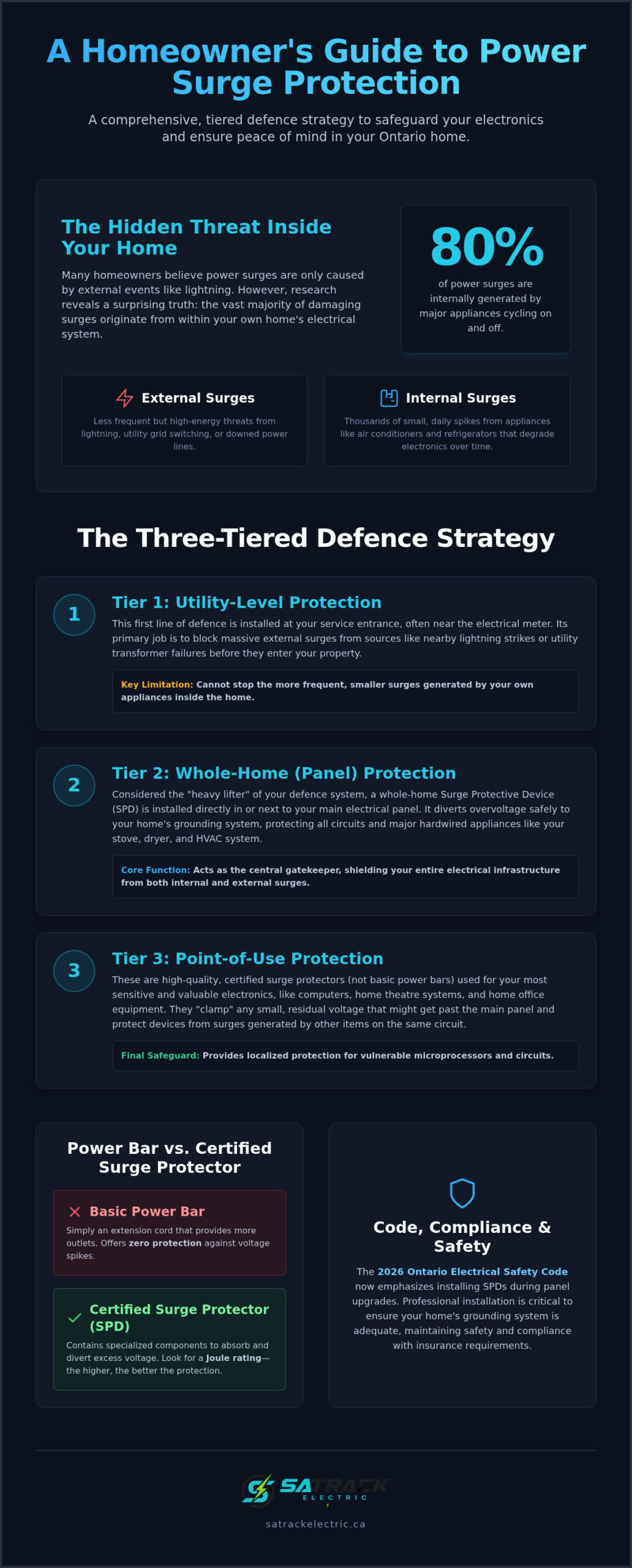
A power surge is a transient overvoltage that lasts for only millionths of a second. While it’s brief, the spike in electrical pressure can exceed the standard 120-volt capacity of your home’s wiring. Understanding these events is the first step in learning how to protect your home from power surges. Many homeowners assume surges only happen during dramatic storms, yet research indicates that approximately 80% of these incidents actually begin inside the property.
Small spikes occur every time a high-energy appliance cycles on or off. These internal events happen dozens of times daily. While they don’t always cause immediate failure, they steadily degrade sensitive components. External surges, though less frequent, carry much higher energy from sources like lightning or utility grid switching. A high-quality surge protector at the panel acts as a gatekeeper against these massive external threats.
Common Triggers for Surges in Belleville and Quinte West
Belleville and Quinte West residents face specific environmental and infrastructure risks. During the humid summer months, the region frequently experiences severe thunderstorms that can send thousands of volts through local power lines. Beyond weather, the local utility grid occasionally undergoes switching or maintenance that causes voltage fluctuations. When power is restored after a local outage, the initial rush of electricity often creates a massive surge that can overwhelm unprotected circuits. Heavy motors in central air conditioners or large refrigerators also create significant internal spikes when they cycle, which is a common trigger in residential settings.
The Hidden Cost of Unprotected Electronics
Modern homes are filled with sensitive microchips found in everything from smart thermostats to high-end kitchen appliances. These components are extremely vulnerable to even minor voltage spikes. Over time, repetitive surges act as a “silent killer” for your electronics. They shorten the lifespan of LED lighting systems and high-efficiency HVAC control boards. In extreme cases, a massive surge can damage internal wiring insulation, creating a potential fire hazard. Learning how to protect your home from power surges is not just about saving a television; it’s about maintaining the long-term safety and integrity of your entire electrical system.
The Three-Tiered Approach to Comprehensive Surge Protection
A single power strip is rarely enough to safeguard a modern household. To understand how to protect your home from power surges effectively, you must view your electrical system as a series of gates. A professional strategy uses a three-tiered approach to ensure that no matter where a spike originates, there is a mechanism in place to divert it safely to the ground. Relying on only one tier leaves gaps that a sophisticated surge can easily exploit.
Tier 1: Utility-Level Protection
Tier 1 protection is installed at the service entrance, typically near the electrical meter. This device is designed to catch massive external surges, such as those caused by lightning strikes on nearby utility poles or transformer failures. While some local utility providers offer this as a service, it’s important to realize that meter-based protection has a specific limitation. It only stops surges coming from the outside. Because it sits at the very edge of your property, it cannot detect or stop the smaller, more frequent spikes generated by your own appliances once the electricity has already passed into your home’s main panel.
Tier 2 vs. Tier 3: Understanding the Difference
Tier 2 protection involves a whole-home surge protective device (SPD) installed directly onto your main electrical panel. This is the heavy lifter of the system. When a surge occurs, the Tier 2 device detects the overvoltage and diverts it to the home’s grounding system before it can travel through the branch circuits to your outlets. This level of protection is vital for large appliances like stoves, dryers, and HVAC systems that aren’t usually plugged into a power strip.
Even with a Tier 2 device, Tier 3 protection remains necessary. These are point-of-use surge protectors, often seen as high-quality power bars. Their job is to “clamp” any residual voltage that might have bypassed the main panel, as well as to protect against internal surges from nearby devices on the same circuit. When power is restored after a local blackout, the resulting damage from electrical surges can be severe. A coordinated system ensures that these spikes are filtered at multiple points. If you are considering an electrical panel upgrade, it is an ideal time to integrate a Tier 2 SPD into your system for maximum coverage.
Installing a Whole-Home Surge Protector at the Panel
Positioning a whole-home surge protector at the main service panel is the most effective way to address the question of how to protect your home from power surges. This device, known as a Type 2 SPD, sits at the heart of your electrical system. It monitors the incoming voltage and instantly redirects excess energy into the ground. The success of this installation depends entirely on the condition of your existing electrical infrastructure and the quality of the connection to the earth.
Why Panel Health Matters for Surge Protection
An outdated or overcrowded panel can hinder the effectiveness of surge protection. If your home still uses a fuse box or an older breaker system, it might lack the physical space or the electrical integrity required for a modern SPD. When considering how to protect your home from power surges, you must first ensure your panel is up to current standards. For many local residents, an electrical panel upgrade Belleville is a necessary prerequisite to installing advanced protection. A modern panel provides the dedicated breaker space needed to mount the SPD correctly and ensures the busbars can handle the redirected current.
Professional Installation Requirements
The Ontario Electrical Safety Code is clear: any work involving the main electrical panel must be performed by a licensed electrical contractor. This isn’t just about legal compliance; it’s about safety. Whole home Surge Protective Devices rely on a perfectly executed grounding and bonding system to function. If the connection to the earth is loose, corroded, or improperly sized, the surge has nowhere to go. It will simply continue into your home’s circuits, defeating the purpose of the device and potentially damaging the panel itself.
A professional installation includes testing the unit to verify that the internal diagnostics are active. Most Type 2 units feature indicator lights that show the status of the protection. If these lights are out or red, your home is vulnerable. An electrician will also verify that the device is connected to a dedicated two-pole breaker, which allows the SPD to monitor both legs of your 240-volt service. By ensuring your grounding is solid and your panel is healthy, you create a robust barrier that protects every outlet in your house.
Point-of-Use Protection and Home Electrical Maintenance
While whole-home units handle the heavy lifting at the electrical panel, point-of-use devices provide the final, essential layer of security for your most sensitive electronics. Understanding how to protect your home from power surges requires a clear distinction between a standard power bar and a certified surge protector. A basic power bar often serves as nothing more than an extension cord with multiple outlets. In contrast, a true surge protector contains specialized components designed to absorb or divert excess voltage before it reaches your equipment.
The primary metric for these devices is the Joule rating. This number represents the total amount of energy the protector can absorb before its internal components fail. For high-value electronics like gaming computers or home theatre systems, you should look for a rating of at least 2,000 Joules. Lower ratings might suffice for simple lamps or clocks, but they offer little defence against the repetitive spikes that occur in a modern household.
Selecting the Right Surge Strips
When shopping for Tier 3 protection, always verify the presence of CSA or UL certification marks. These labels ensure the device has been tested to meet rigorous Canadian safety standards. It’s also vital to realize that surge protectors are not permanent fixtures. The internal components, typically metal oxide varistors, degrade every time they encounter a spike. If your protector has been in use for several years or has weathered a major storm, it’s likely time for a replacement. Many modern units include a status light to indicate if the protection circuit is still active. If that light is out, the device has sacrificed itself and is now merely a power bar.
General Maintenance for Surge Resilience
Maintaining your home’s electrical health is just as important as installing the right hardware. Routine electrical repairs Belleville homeowners invest in often uncover hidden vulnerabilities like loose terminal screws or corroded grounding rods. If your home’s grounding system is compromised, even the best surge protector will fail to function correctly because the excess energy has no safe path to the earth.
Watch for signs of previous electrical stress, such as:
- Flickering lights when large appliances like the air conditioner start.
- Discoloured, charred, or warm outlet faceplates.
- A faint burnt smell near the electrical panel or major electronics.
- Frequent tripping of circuit breakers without an obvious cause.
Conducting a seasonal inspection of your external service mast and grounding wire before the spring storm season is a practical way to ensure your system is ready. If you suspect your home’s wiring is outdated or has suffered previous damage, schedule Residential Electrical Services to verify your surge resilience and overall safety.
Why Professional Installation is Essential for Quinte Area Homeowners
Professional installation is the final link in the chain of a surge-resilient home. While high-quality hardware is important, the efficacy of these devices depends on their integration with your home’s unique electrical architecture. A licensed electrician ensures that all installations adhere to the 2026 Ontario Electrical Safety Code, which is vital for maintaining your home insurance coverage. Insurance providers often require proof of professional installation to honour claims related to electrical damage. When determining how to protect your home from power surges, a professional assessment identifies specific risks such as inadequate grounding or overloaded circuits that a DIY approach might overlook.
For many homeowners in the Quinte area, surge protection is part of a broader resilience strategy. This often includes a generator installation Belleville residents rely on during frequent winter outages. A professional ensures that surge protective devices and backup power systems are properly coordinated. This coordination prevents the surge protector from interfering with the generator’s sensitive control board during a transition to backup power. Expert installation provides the peace of mind that comes from knowing your family and property are protected by a system that meets the highest safety standards.
The Satrack Electric Advantage
Our team possesses a deep familiarity with the electrical infrastructure across Belleville, Trenton, and Picton. We understand how the local rural grids and urban systems react to the volatile weather of the Bay of Quinte. We prioritize clear, professional communication and quality workmanship in every project. Whether you require a simple device installation or a comprehensive system overhaul, we provide tailored solutions for both residential and commercial properties. We don’t believe in one-size-fits-all answers; instead, we evaluate your specific electrical load and risk factors to design a defence that works for your specific needs.
Next Steps: Securing Your Home
Taking action before the next major storm is the most effective way to prevent costly damage. Booking a professional electrical safety inspection is the most reliable way to begin. During this visit, an expert will evaluate your current panel capacity and recommend the specific Type 2 hardware that fits your household load. We will help you understand how to protect your home from power surges by creating a clear, actionable plan that covers every tier of your electrical system. Contact Satrack Electric for professional surge protection today to secure your home and protect your investment in modern electronics.
Securing Your Home Against Electrical Volatility
Building a surge-resilient home is an investment in both safety and long-term savings. By implementing a tiered defence strategy, you address the 80% of surges that originate inside your home while providing a robust shield against external lightning strikes and utility fluctuations. This comprehensive approach ensures that every device, from your high-efficiency HVAC system to your sensitive home office equipment, remains operational and secure.
Understanding how to protect your home from power surges is the first step toward total peace of mind. However, the effectiveness of your protection depends on professional execution and adherence to the Ontario Electrical Safety Code. As a licensed and insured Ontario electrical contractor, Satrack Electric brings specialized expertise in residential safety upgrades to homeowners in Belleville, Quinte West, and the surrounding regions. We prioritize reliable workmanship to ensure your property remains protected during every season. Protect your home from unpredictable surges with Satrack Electric and enjoy the confidence that comes with a professionally secured electrical system.
Frequently Asked Questions
Does my home insurance require surge protection in Ontario?
Most Ontario home insurance policies don’t strictly mandate surge protection for basic coverage, but they often exclude or limit payouts for damage caused by voltage spikes. Learning how to protect your home from power surges can sometimes lead to lower premiums or satisfy specific high-value equipment riders. You should review your policy carefully. Professional installation by a licensed contractor ensures that any claim you do make is supported by proof of code-compliant work.
How do I know if my current power strip is actually a surge protector?
You can distinguish a surge protector from a standard power bar by checking for a Joule rating on the manufacturer’s label. A genuine protector will list its energy absorption capacity in Joules, whereas a simple power bar will not. Additionally, look for the CSA or UL certification marks. If the device has a “protected” indicator light that is no longer illuminated, the internal components have likely worn out and the unit should be replaced.
Can a whole-home surge protector save me money on my electricity bill?
A whole-home surge protector does not directly lower your monthly hydro bill because it doesn’t reduce the amount of electricity your appliances consume. However, it provides significant long-term financial savings by preventing the premature failure of expensive electronics. By shielding sensitive microchips from the repetitive, small internal surges that degrade components, you avoid the high costs of frequent appliance repairs or the total replacement of smart home technology and high-efficiency HVAC systems.
Do whole-home surge protectors protect against direct lightning strikes?
No device can provide absolute protection against a direct lightning strike to your home’s structure due to the immense energy involved. However, whole-home surge protectors are highly effective at managing the secondary surges that travel through utility lines after a strike occurs nearby. For residents in the Quinte area, this level of defence is critical. Combining panel-level protection with point-of-use strips is the best way to manage these high-energy external events.
How long do whole-home surge protective devices typically last?
Most whole-home surge protective devices have a lifespan of approximately three to five years, though this varies based on the frequency and intensity of surges in your area. Every time a device diverts a spike, its internal components degrade slightly. If your home experiences a major electrical event or a severe storm in Belleville, it’s wise to have a licensed electrician inspect the unit’s status indicators to ensure it’s still providing active protection.
Is it worth installing surge protection in an older home with a fuse box?
It’s highly beneficial to protect older homes, but a fuse box often lacks the necessary architecture to support a modern Type 2 surge protector. In these cases, the most effective way to learn how to protect your home from power surges is to consider an electrical panel upgrade. Upgrading to a breaker system allows for the proper installation of a whole-home SPD, ensuring your vintage home’s wiring and modern electronics are equally shielded from damage.
Will a surge protector work if my home isn’t properly grounded?
A surge protector will not function correctly without a proper grounding system. These devices work by diverting excess voltage safely into the earth. If your home’s grounding rod is corroded, disconnected, or non-existent, the surge has no safe path to follow and will likely continue into your electronics. Part of our residential electrical services includes verifying that your grounding and bonding are sufficient to support your surge protection strategy and maintain safety.