
What if the shed you’re planning as a workshop needs more electrical capacity than a few lights and receptacles can provide? Before work begins, consider whether your home’s electrical system can support your plans, how the wiring route will work outdoors, and what digging may involve. A dependable shed wiring service Picton homeowners can use starts with the shed’s purpose and the property’s electrical capacity, not simply the shortest route for a cable.
This guide covers what to consider before installation, from listing your power needs and planning a route to understanding the role of the Electrical Safety Authority (ESA). You’ll also learn how to prepare your property and what information helps an electrician plan the work around your shed and its intended use.
Satrack Electric is a licensed and insured Ontario electrical contractor that provides shed wiring and other electrical services in Picton. The company serves Picton and nearby communities, including Belleville, Trenton, Brighton, Quinte West, Greater Napanee and Cobourg. The sections ahead explain the key planning questions, outdoor wiring and excavation considerations, and how professional installation can take the project from assessment through completion.
Key Takeaways
- Match the shed’s electrical plan to its intended use, including the lighting, receptacles and equipment you expect to need.
- A shed wiring service Picton homeowners can use should account for the home’s electrical capacity, the distance to the shed and a suitable wiring route.
- An extension cord may suit temporary use, but it isn’t a substitute for permanent wiring.
- Before digging, arrange utility locates through Ontario One Call so underground services can be identified.
- Satrack Electric handles shed wiring, from discussing the intended use and assessing the property to planning and professional installation.
When does a shed in Picton need professional wiring?
Will lighting, charging or tools make your shed more useful? If you want dependable power without running a cord from the house for each task, it may be time to plan a permanent installation. A shed wiring service Picton homeowners can use starts with assessing the electrical needs and the site, then planning and installing a supply for the detached building.
The scope depends on more than the shed’s size. A storage shed with a light and occasional device charging has different needs from a workshop where several tools may run during the same work session. The distance from the house, the route between buildings, the shed’s layout and the existing electrical system all help shape the plan. An assessment brings these factors together before installation begins.
What do you want to power in the shed?
Start with a practical equipment list. Include planned lighting, receptacles, battery chargers and any tools or other equipment you expect to use. Note which items might run at the same time rather than planning around one device in isolation. If you may add a workbench, more lights or change the shed from storage to a workshop, mention that before the plan is settled.
Occasional charging and a light for finding stored items call for a different arrangement than regular work with power tools. The goal isn’t to overbuild, but to plan for how you’ll actually use the space. Details about your routine help an electrician consider the supply, circuit arrangements, and placement of lights and receptacles.
Why use a permanent electrical installation?
Permanent wiring is planned for the shed and the electrical loads it’s intended to serve. It provides access to power where you need it without bringing an extension cord out from the house for each task. A cord can be useful for temporary needs, but it isn’t a substitute for permanent wiring designed for an outbuilding.
Electrical installations in Ontario must follow applicable safety requirements. The Canadian Electrical Code provides the national framework that provinces and territories adopt through their own rules. A qualified electrical professional can plan the work for your property and intended use, then complete the installation with safety in view.
Professional planning is especially useful when the route is long, the shed will support regular tool use, or you’re unsure whether the home’s electrical system can support the added load. Satrack Electric provides residential and commercial electrical work in Picton, including shed wiring planned around the property’s needs. Consider the route, site conditions and existing electrical supply together rather than treating the shed as an isolated project.
What does a shed wiring service in Picton need to account for?
A reliable plan connects the shed’s intended use with the home’s available electrical capacity and the realities of the property. The shed’s planned use determines the electrical scope. Keeping that in mind helps prevent a mismatch between what the installation can support and how you expect to use the space.
A shed wiring service Picton homeowners arrange should consider the electrical loads, distance from the house, route between buildings, shed layout, and the condition and capacity of the existing electrical system. These factors work together. A route that’s easy to access may simplify planning, while a longer or obstructed route can affect the installation approach.
How do shed use and electrical capacity shape the plan?
Occasional lighting and low-demand charging differ from regular workshop use or equipment that runs for extended periods. An electrician assesses the planned loads alongside the home’s electrical system and proposed connection. Rather than assuming the same circuit or capacity will suit every shed, the assessment establishes what the property and intended use require.
Think through a typical session in the shed. Will lights, chargers and tools be used at the same time? Are you planning a few receptacles or a work area with several pieces of equipment? Share both current needs and likely future uses so they can be considered before installation.
How do distance and the wiring route affect the work?
The route from the house to the shed is part of the design, not just a line on a site plan. Underground wiring may be an option, depending on site conditions and applicable requirements. Landscaping, paved or other hard surfaces, access for the work and the position of the buildings can all influence the route and installation plan.
A site assessment connects the electrical plan to the actual property. For example, a direct route may cross a garden bed, while another path may involve a driveway or established landscaping. Point out features you want preserved and any known obstacles. This gives the electrician useful context for planning a route that accounts for access and the building layout.
Planning also means deciding where lighting and receptacles will be most useful. The workbench, storage shelves and equipment can affect outlet placement and how the space is lit. A simple sketch showing doors, work areas and intended equipment makes the discussion more specific. The electrician can then assess the home’s electrical system, the planned connection and how the installation fits the shed’s use.
Satrack Electric provides residential and commercial electrical installations in Picton, including shed wiring planned around the property and its intended use. If you’re weighing the route, electrical capacity and shed layout together, discussing your shed wiring plans can help establish a clear scope for the work.
DIY, extension cord, or electrician: which shed power option makes sense?
The right choice depends on whether you need power briefly or want the shed to function as a dependable extension of your home. An extension cord may serve a temporary task, while a permanent installation needs to be planned around the shed, its electrical loads and the property. Owner-prepared site work can help with logistics, but it doesn’t replace electrical assessment or installation.
| Option | Best suited to | Key consideration |
|---|---|---|
| Temporary extension cord | Occasional, short-term use | It’s not a substitute for permanent wiring or an ongoing power arrangement. |
| Owner-prepared site work | Planning and agreed non-electrical preparation | Coordinate the work with utility locates and the project plan before disturbing the ground. |
| Professional wiring | Reliable ongoing power for lighting, receptacles or equipment | An electrician assesses the property, then plans and completes the electrical installation for its intended use. |
Can an extension cord supply a shed long term?
A cord can be convenient for an occasional task, but using one as the ongoing power arrangement leaves the shed dependent on a connection run from the house. Suitability also depends on the specific cord, equipment, conditions and how it’s used, so not every temporary use presents the same risk. If you expect to use lights, charge tools or work in the shed regularly, plan a permanent supply rather than treating a cord as installed wiring.
What can an owner prepare before the electrician arrives?
Useful preparation starts with decisions, not electrical work. List the shed’s intended uses and equipment, then mark preferred locations for lighting, receptacles, work areas and storage. Identify landscaping, paved areas, access points and any known underground services. Discuss excavation or other site preparation with the electrician and arrange utility locates before digging. Don’t connect circuits or install electrical equipment as part of the preparation.
A short distance from the house doesn’t automatically make electrical work safe to do yourself. The route is only one consideration. The home’s electrical system, planned loads and installation requirements matter too. In Ontario, homeowners may perform their own electrical work, but it must comply with the Ontario Electrical Safety Code and be reported to the Electrical Safety Authority as required. Choosing a qualified electrician keeps the assessment and installation in professional hands.
For dependable shed power, a shed wiring service Picton homeowners can rely on begins with a clear scope and property-specific assessment. Satrack Electric provides residential and commercial electrical installations in Picton, with work planned around the intended use and site conditions. Discuss your shed wiring plans as you prepare for a permanent installation.
How to prepare your Picton property for shed wiring
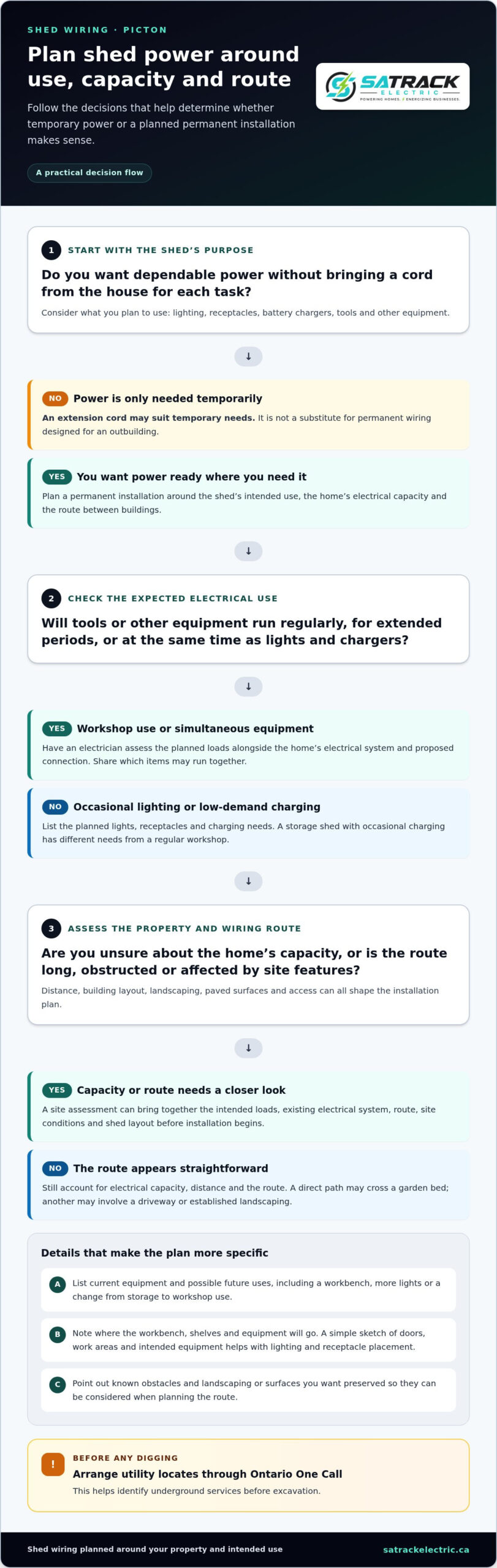
A little preparation can make a shed wiring project clearer and help reduce avoidable disruption. Define how you’ll use the shed, map a possible route, arrange utility locates before digging, then coordinate electrical work and site preparation with the electrician. Treat the route as a planning aid, not a final installation specification.
- Define the use: List planned equipment and note whether it may run at the same time as lighting or other devices.
- Map the route: Sketch the house, shed, access points and possible paths between them.
- Arrange locates: Contact Ontario One Call before any digging. Locate services help identify underground utilities in the requested area.
- Coordinate the work: Review the site and proposed electrical work with the electrician before excavation or installation begins.
What information helps plan the installation?
Record the approximate distance from the house to the shed, whether the shed is already built and what you intend to power. On a simple floor plan, mark preferred locations for lights and receptacles, along with doors, work areas and fixed storage that could affect access. Note landscaping, paved or other hard surfaces, narrow access and known site constraints. These details help the electrician assess the property and plan around the building and its intended use.
If you’re unsure where the route should go, show the electrician more than one possible path rather than choosing based only on distance. A short route may cross a hard surface or conflict with landscaping, while a longer path may be easier to access. The final approach depends on the property, applicable requirements and electrical plan.
What needs to happen before excavation or installation?
Arrange Ontario One Call locates before digging and follow the instructions provided with the locate results. Locates help identify underground utilities, but don’t treat a general online trench-depth figure as a specification for your project. Installation details depend on the wiring method, route, site conditions and applicable requirements. Coordinate site preparation with the electrician’s plan.
Before electrical work starts, check current Electrical Safety Authority (ESA) requirements for notifications and any inspections that apply to the installation. Plan the work stages accordingly. If an inspection is required before wiring is covered, leave the trench or other concealed work accessible until the inspection is complete. Don’t backfill or close up the work based on assumptions about timing or inspection requirements.
Clear preparation makes it easier to discuss the project scope and coordinate excavation with electrical installation. For a shed wiring service Picton homeowners can plan around their property and intended use, arrange a shed wiring assessment with Satrack Electric.
Arrange professional shed wiring service in Picton with Satrack Electric
A well-planned installation reflects how you’ll use the shed and the conditions on your property. Satrack Electric provides residential and commercial electrical service in Picton and nearby communities, including Belleville, Trenton, Brighton, Quinte West, Greater Napanee and Cobourg. As a licensed and insured Ontario electrical contractor, Satrack Electric handles shed wiring from the initial discussion and property assessment through planning and professional installation.
The process begins with the details that shape the work:
- Discuss the intended use: Describe the lighting, receptacles, equipment and expected use of the shed.
- Assess the property: Review the existing electrical system, building layout, access and potential wiring route.
- Plan the work: Develop an approach suited to the shed’s electrical needs and site conditions.
- Install professionally: Complete the electrical work with attention to safety and workmanship.
What should you expect from the project discussion?
Bring a list of equipment and note where you’d like lighting and receptacles. A simple sketch of the shed can show the door, work area, storage and preferred outlet locations. Include expected simultaneous use and future plans, such as changing a storage shed into a workshop. These details help shape a proposal for the property and its intended electrical use.
The assessment also considers site conditions, including the distance between buildings, access, landscaping and existing hard surfaces. Rather than assuming one wiring approach suits every shed, the electrician uses those details to plan the work. Project scope, scheduling and cost depend on the installation requirements, so discuss the proposed work and next steps during project planning.
Why work with a local licensed and insured electrician?
Electrical work for a detached building involves more than placing lights and outlets. A professional assessment connects the shed’s needs with the home’s electrical system and conditions along the route. Satrack Electric serves Picton with residential and commercial electrical experience, using a safety-focused, property-specific approach to installation planning and workmanship.
Working with one electrical contractor through assessment, planning and installation can also keep the project coordinated. The intended use, site constraints and proposed work can be considered together, helping you understand the plan before installation proceeds. For broader local electrical support, Satrack Electric’s Picton electrician service page provides information about its work in the area.
If you’re planning a shed wiring service Picton project, gather your equipment list, preferred lighting and receptacle locations, and any site notes. Then discuss the project with Satrack Electric to review the property, plan the installation and arrange the next steps.
Take the next step toward dependable shed power
Before starting, consider how you want the shed to serve you over time. A space used for storage today may later become a work area, so it helps to identify your priorities and leave room for practical discussion. You don’t need to settle every technical detail yourself. Bring your intended use, equipment list and questions about the site to the project discussion.
A shed wiring service Picton homeowners plan with professional guidance can turn early ideas into a site-specific scope of work. Satrack Electric’s electrical installations, repairs, upgrades and maintenance support residential and commercial electrical needs. Start with a direct discussion about your shed, property and intended use.
Discuss your shed wiring project with Satrack Electric to plan a permanent installation around your space and its intended use.
Frequently Asked Questions
Do I need an ESA notification to wire a shed in Ontario?
Many shed wiring installations require an Electrical Safety Authority (ESA) notification and inspection, but requirements depend on the work involved. Don’t assume a small shed or short run is exempt. Before work begins, have the proposed installation assessed and confirm the current ESA process that applies. Notification and inspection are separate from the electrical design, so clarify which stages must be completed and when before the work is covered or put into use.
Can I dig the trench for shed wiring myself?
You may be able to handle site preparation, but coordinate excavation with the electrician before starting. Arrange Ontario One Call locates first and follow the instructions provided for the marked utilities. A route that appears clear from the surface may still cross buried services. Don’t use a trench depth from another property as your specification. The wiring route and excavation plan must suit your site and the installation requirements.
Can I use an existing outdoor outlet to power my shed?
Possibly for a limited need, but don’t assume an existing outlet is suitable for regular shed use. An outlet already serving seasonal equipment, for example, may not be appropriate for additional ongoing loads. The circuit, protective devices, outdoor conditions and equipment all affect suitability. Have the setup assessed before connecting shed equipment or planning routine use. If you need dependable power for multiple purposes, discuss a permanent installation designed for the shed.
Does a detached shed need its own electrical panel?
No, a separate panel isn’t automatically needed for every detached shed. The decision depends on the proposed electrical arrangement, the loads, the distance and the property’s existing system. A shed used for a light and occasional charging presents a different planning question from a workshop with several tools. An electrician can assess the connection and explain whether a panel or another arrangement is appropriate for the installation.
Should I plan shed wiring before the shed is built?
Yes, early planning can make it easier to coordinate electrical needs with the shed’s layout and construction. Decide where work surfaces, storage, doors, lighting and receptacles should go before those choices become fixed. If you’re still choosing the shed’s location, consider access for the electrical route as part of that decision. An existing shed can also be assessed, though its construction and finished surfaces may shape the available installation options.
Can shed wiring support a workshop or high-demand tools?
It may, provided the installation is planned around the tools and the property’s electrical capacity. Share equipment details, including which tools could operate together and whether use will be occasional or routine. Planning for a table saw and dust collection operating at once differs from planning for one tool used intermittently. A licensed electrician can assess the home’s system and proposed connection before determining a suitable scope for workshop use.