
A standby generator can start during a routine test and still have an issue that affects its readiness for an outage. That’s why standby generator maintenance Trenton homeowners can rely on involves more than a quick visual check. Safe owner observations, manufacturer-directed engine servicing and professional electrical maintenance each play a different role.
This checklist explains what you can observe between service visits, how to prepare for an outage and when to arrange professional help. You’ll learn how to record visible concerns without opening or altering electrical components, and how to keep engine tasks aligned with the manufacturer’s instructions. The same planning applies to homes and businesses in Trenton, Belleville, Picton, Brighton, Quinte West, Greater Napanee and Cobourg.
Key Takeaways
- Plan standby generator maintenance Trenton homeowners can follow using the manufacturer’s manual and a clear record of service and observations.
- Keep electrical checks separate from manufacturer-directed engine and fuel servicing, and understand the transfer switch’s role in supplying selected circuits.
- Use a safe pre-outage checklist to note visible concerns and indicators without opening or altering electrical components.
- Arrange professional electrical maintenance when an observation concerns the generator’s connection to your property.
- Gather the generator’s details and your recorded observations before discussing electrical maintenance with Satrack Electric, a licensed and insured Ontario electrical contractor.
Why standby generator maintenance matters for Trenton properties
A generator issue can go unnoticed until an outage interrupts work, household routines or equipment that depends on backup power. Planning inspections and service gives you a chance to spot concerns before the generator is needed. Standby generator maintenance means paying attention to the unit’s readiness, its electrical connections and the manufacturer’s instructions. For standby generator maintenance Trenton property owners should consider all three, rather than relying only on whether the generator looks intact.
Readiness depends on the generator, how it connects to the property and what you expect it to power. A system intended for selected circuits calls for different planning than one designed to support broader property needs. The standby generator overview explains the general role of these systems and their components. Your equipment manual is the reference for model-specific requirements. Maintenance supports readiness, but it can’t guarantee operation during every outage.
What does standby generator maintenance cover?
Owner observations and professional work are separate responsibilities. From a safe, accessible position, look for visible damage or changes and note any indicator that needs attention. Don’t open the unit or alter wiring. Electrical maintenance concerns the generator’s connection and integration with the property; engine and fuel servicing should follow the manufacturer’s instructions.
Use the manual to identify your model’s service intervals and tasks. If an electrical connection or component appears damaged, leave it undisturbed and arrange professional attention.
Why does local property context matter in Trenton?
Begin with your backup plan: which circuits or equipment should receive power, and what does your household or business need to keep functioning during an outage? Identifying those priorities helps you assess whether the existing arrangement suits the property’s intended use. Don’t assume every generator is set up to supply every circuit.
Placement and electrical integration vary between homes and businesses. The unit’s location, its connection to the electrical system and the circuits selected for backup all affect what a professional electrical review should consider. A setup that suits one property may not suit another.
Keep the manual and service records together. Note changes in indicators, visible condition or system behaviour during routine checks, without attempting electrical work yourself. These details can help an electrician assess the generator’s connection to the property and identify electrical maintenance needs. Keep engine and fuel servicing aligned with the manufacturer’s schedule, as those tasks are separate from reviewing the electrical system.
Standby generator maintenance: understand the electrical and mechanical checks
A standby generator has electrical and mechanical maintenance needs, but they aren’t interchangeable. Electrical maintenance focuses on how the generator connects to the property and supplies selected circuits. Engine and fuel servicing follows the equipment manufacturer’s instructions. For standby generator maintenance Trenton property owners should keep these responsibilities distinct, so an electrical review isn’t mistaken for a complete service of the generator itself.
The transfer switch is a key part of the electrical system. It connects backup power to selected property circuits and manages the changeover between utility and generator power. Its condition and integration matter, but inspecting or working inside it isn’t an owner task.
| Electrical-system checks | Manufacturer-directed engine and fuel service |
|---|---|
| Observe accessible wiring, enclosures and the area around the transfer switch from a safe position. A qualified professional can assess electrical connections and how the system integrates with the property. | Service categories may include the engine, fuel system, starting battery and other model-specific components. Follow the generator manual for required tasks and timing. |
| Visible damage, deterioration or loose components are reasons to arrange professional assessment. Don’t dismantle equipment or test live wiring. | Electrical maintenance doesn’t replace mechanical servicing. Procedures and intervals vary by generator, so don’t assume a schedule based on another model. |
Which generator checks are electrical?
From a safe position, look at accessible exterior wiring, enclosures and the transfer-switch area without removing covers. Note visible damage, deterioration or components that appear loose, then arrange a qualified assessment rather than attempting repairs. Electrical maintenance addresses the generator’s connection and integration with the property. It doesn’t set engine or fuel service intervals.
Which tasks follow the generator manufacturer’s schedule?
Engine, fuel and battery care are among the maintenance categories that may be covered in a generator’s manual, along with other model-specific items. The manual sets out the tasks and timing for that equipment. General generator maintenance information can provide context, but it can’t replace your model’s instructions or a qualified assessment of electrical components.
Keep the manual and service records available, and note visible changes for the next maintenance review. Don’t open equipment, test live wiring or handle fuel-system components, as these activities can expose you to electrical and mechanical hazards. If you’re unsure whether an observation relates to the electrical connection or manufacturer-directed servicing, record what you noticed and leave the equipment undisturbed until it can be assessed.
For property-specific attention to the generator’s electrical connection, learn about electrical maintenance with Satrack Electric. A licensed and insured Ontario electrical contractor can assess how the generator integrates with your home or business.
How often should you check a standby generator in Trenton?
There isn’t one inspection calendar that suits every standby generator. Use the manufacturer’s manual as the starting point for owner observations and scheduled servicing, then account for the generator’s operating history, site conditions and the property’s system requirements. This keeps standby generator maintenance Trenton owners arrange tied to the actual equipment instead of a generic interval that may not apply.
Separate routine observations from professional electrical reviews and manufacturer-directed servicing. The table below helps organize those responsibilities, but it doesn’t set a schedule. Follow your manual’s model-specific instructions and arrange qualified attention if you notice a concern.
| Maintenance activity | How to plan it |
|---|---|
| Owner observations | Use the manual to understand which visible indicators or exterior conditions to observe, and record unusual sounds, warning indicators or changes. Don’t open equipment or adjust electrical components. |
| Professional electrical review | Plan a review of the generator’s electrical connection and integration with the property according to system needs, service history or observed concerns. A professional can assess issues that aren’t suitable for owner inspection. |
| Manufacturer-directed servicing | Use the model’s manual to plan engine, fuel, battery and other specified maintenance. Record completed work and follow any service guidance provided for the equipment. |
How should you build a maintenance schedule?
Gather the generator’s model information, installation details and manual before setting reminders. Transfer the manual’s instructions into a calendar or maintenance log, then record completed service dates so upcoming tasks are easy to track. Operating hours and site conditions can affect planning. Include relevant usage and observations when you review the schedule instead of relying on a generic calendar interval.
If you notice an unusual sound, an indicator change or a visible concern, record it when it occurs. Don’t wait for the next reminder to document a change. Make a note and arrange appropriate follow-up if the concern relates to the electrical system or the manual’s service guidance.
What should you document after an inspection?
A useful record is brief but specific. Note the date, what you observed, any service completed and any recommended follow-up. Keep the manual and records with other property documents so they can be reviewed together when planning maintenance or discussing system changes.
Use a simple entry format:
- Date: When the observation or service took place.
- Observation: Visible condition, indicator or unusual sound noted.
- Work completed: Service or electrical review performed, if applicable.
- Follow-up: Recommended next step and relevant manual guidance.
For system-planning context, the generator installation guide for Belleville homeowners explains the connection between a generator and a property’s backup-power needs. Use your own manual and service record to keep the maintenance plan specific to your equipment.
Use this standby generator maintenance checklist before an outage
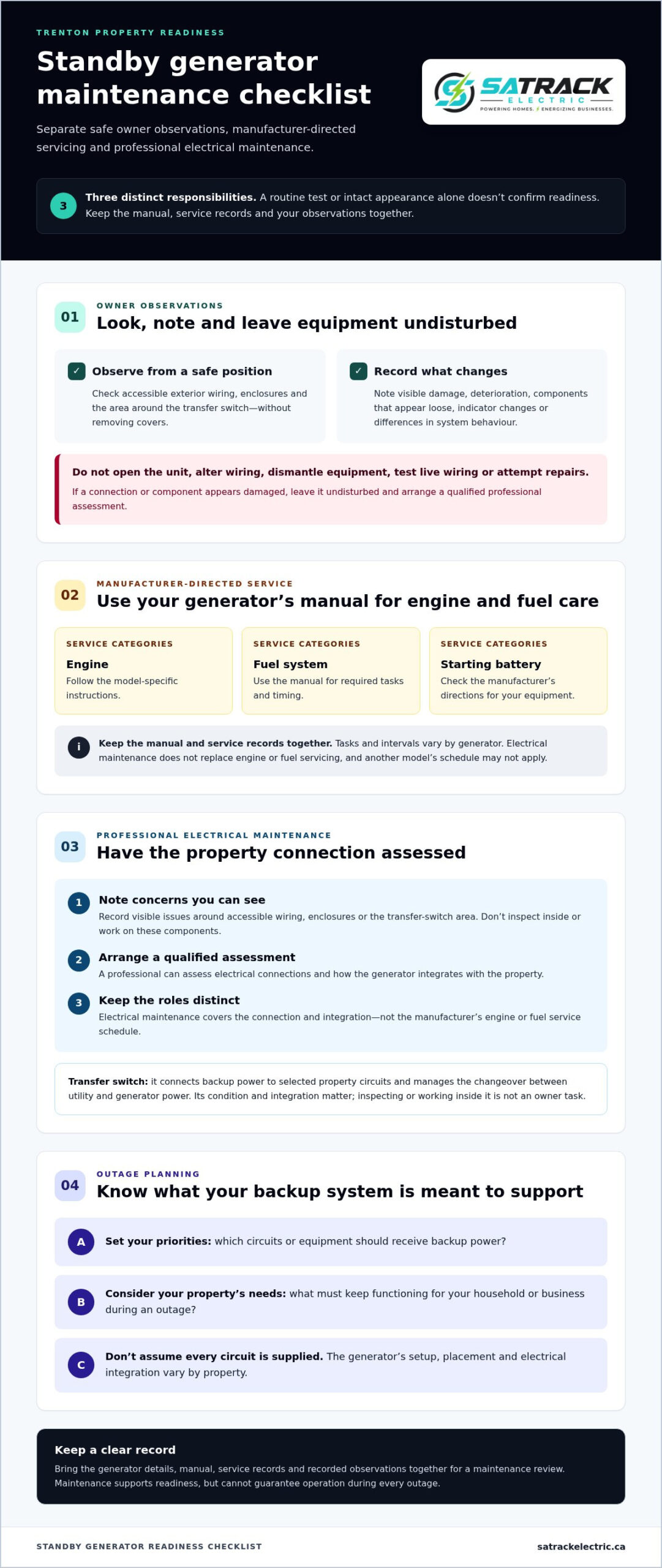
A short, consistent review can help you notice changes before you need backup power. Follow the manufacturer’s manual and limit your review to safe, accessible observations. Don’t open the generator or transfer switch, touch exposed wiring or attempt electrical adjustments. This checklist helps Trenton property owners plan standby generator maintenance without replacing professional electrical or manufacturer-directed service.
What can an owner safely observe?
Stay outside the equipment enclosure and look only at accessible areas. Follow the manual when reviewing indicator lights or display messages. Write down what you see rather than trying to clear or troubleshoot an unfamiliar warning. Keep your hands away from exposed wiring, fuel lines and internal components. If anything looks damaged or has changed noticeably, leave it undisturbed and arrange a professional assessment.
- Gather the records. Keep the generator manual, model details, installation information and service history together. Note any maintenance or electrical review already completed.
- Review the exterior. From a safe position, look for obvious damage, changes in condition or material blocking accessible areas. Don’t move covers or dismantle components to inspect further.
- Read the indicators. Check lights or display messages according to the manufacturer’s instructions. Record the exact message or indicator and the date, rather than assuming what it means.
- Note changes in operation. Record an unusual sound, repeated starting difficulty or a transfer problem. Avoid repeated attempts to start the unit or trial-and-error repairs.
- Arrange follow-up. If you see visible electrical damage, an unusual indicator or a concern about the generator’s connection, share your notes and service records with a qualified electrical professional.
When should you arrange professional electrical maintenance?
Arrange an assessment if wiring or an enclosure appears damaged, a connection seems loose, an indicator is unusual or the transfer process raises concerns. Repeated starting or transfer problems need diagnosis, not guesswork. For broader electrical-system concerns, the professional electrical repairs and maintenance checklist offers related guidance. Questions about available panel capacity may also call for reviewing an electrical panel upgrade.
Write down what happened, when you noticed it and any message shown. These details can help focus a professional review of the generator’s electrical connection and integration with the property. Don’t remove covers, handle wiring or alter the transfer switch while waiting for assessment.
Satrack Electric provides residential and commercial electrical maintenance in Trenton and nearby communities. Its work includes attention to the generator’s electrical connection and integration with your property.
Arrange standby generator electrical maintenance with Satrack Electric
A useful electrical maintenance review starts with information about the property and the generator’s setup. For standby generator maintenance Trenton owners can plan more clearly by gathering system details, consulting the manual and recording concerns before arranging professional attention. These steps help clarify the electrical questions without requiring you to open equipment or attempt repairs.
What information helps plan an electrical maintenance review?
Collect what you have on hand. The aim is to describe the installation and concern clearly, not to diagnose the issue yourself. A few relevant details can help focus a review on how the generator connects to the property and whether that arrangement aligns with the backup-power plan.
- Generator details: Note the make and model, and keep the equipment manual accessible.
- Installation records: Gather available installation details and past electrical service records.
- Panel information: Identify the electrical panel and note relevant information shown in its documentation. Don’t remove its cover.
- Property and backup plan: Describe whether the system serves a home or business, and which circuits or equipment the backup plan is intended to support.
- Recorded concerns: Share dates and descriptions of indicators, visible changes, unusual sounds or connection concerns. Leave the equipment undisturbed.
If a detail isn’t available, provide what you do know. Avoid guessing at technical specifications or trying to reproduce a problem through repeated starts or adjustments.
What can Trenton property owners expect from Satrack Electric?
Satrack Electric is a licensed and insured Ontario electrical contractor serving Trenton and nearby communities. Its residential and commercial electrical services include generator installation and electrical maintenance. This work provides relevant electrical support for considering how a generator connects with a property, its panel and the circuits identified in the backup plan.
The electrical work needed depends on the property and its existing system. A home and a commercial site may have different layouts, panels and backup-power priorities, so useful planning begins with the details you’ve gathered. An electrical review focuses on the generator’s connection and integration with the property; it doesn’t replace maintenance tasks set out in the manufacturer’s manual.
Share your system information and observations with Satrack Electric when discussing the property’s electrical maintenance needs. Learn about generator electrical maintenance with Satrack Electric.
With the right information and a clear understanding of maintenance responsibilities, you can make a practical plan for your property. Keep the generator details, service history and backup priorities together so they’re easy to refer to during future maintenance.
Keep your backup plan current
Your backup-power plan should keep pace with changes to the property. Renovations, electrical upgrades or changes in the equipment you rely on can affect which circuits matter and how the generator fits your needs. Revisit your records and maintenance plan when these changes occur, rather than waiting for an outage to reveal a mismatch.
Keep one current file with the generator details, manual, service notes and intended backup circuits. Update it after relevant electrical work or a change in the property’s priorities, and make sure it’s easy to find when maintenance is planned. A clear record gives future discussions a useful starting point and helps keep electrical work aligned with how the home or business is used. Planning standby generator maintenance Trenton around current property needs supports informed decisions, though maintenance can’t guarantee operation in every outage.
For property-specific attention to your generator’s electrical connection, discuss standby generator electrical maintenance with Satrack Electric. Bring your notes and any recent changes to the conversation.
Frequently Asked Questions
How often should a standby generator be maintained?
Use the generator’s manual as the authority for inspection and service timing. There isn’t a universal interval that suits every model. Review its schedule alongside operating hours and usage changes, such as a period of frequent operation. For standby generator maintenance Trenton owners can record completed service and set reminders based on the manufacturer’s instructions. If the manual is missing, note the model number and use it to find the relevant documentation.
What does standby generator maintenance include?
Maintenance may involve electrical attention to the generator’s connection with the property, as well as manufacturer-directed care for the generator itself. The manual identifies relevant service items for that model, which may include engine, fuel or battery components. Keep receipts or service notes that identify the work completed and any recommended follow-up. This record helps distinguish electrical work from equipment servicing when planning future maintenance.
Can I inspect my standby generator myself?
You can make limited observations from outside the equipment, provided you follow the manual and don’t touch wiring or internal parts. For example, note whether an indicator differs from what the manual describes or whether the enclosure’s visible condition has changed. Record what you see and when you noticed it. Don’t remove covers, handle fuel lines or try to correct an unfamiliar message yourself.
What should I do if my standby generator will not start?
Stop repeated start attempts and consult the manual for the meaning of any displayed message or indicator. Record what happened, including whether the unit tried to start and what appeared on its display, then arrange assessment of the concern. Don’t bypass controls, open the unit or attempt electrical or fuel-system repairs. If the outage is in progress, use your established backup plan while the generator issue is addressed.
Does standby generator maintenance include the transfer switch?
Electrical maintenance can include professional attention to the transfer switch and its connection to the generator and selected property circuits. The switch is part of the electrical integration, so concerns such as visible damage or unreliable transfer warrant assessment. Don’t remove its cover or attempt to operate internal components. Engine servicing follows the generator’s manual and is separate from reviewing the transfer switch.
Can Satrack Electric help with standby generator electrical maintenance in Trenton?
Yes. Satrack Electric provides electrical maintenance and generator installation for homes and businesses. The company is a licensed and insured Ontario electrical contractor serving Trenton, Belleville, Picton, Brighton, Quinte West, Greater Napanee and Cobourg. Have your generator model, available installation records and a description of the concern ready to explain the system and the electrical attention you need.