
The surge protector with the biggest number on its label isn’t automatically the right choice for your property. In Quinte West, choosing Surge Protection Equipment starts with understanding your electrical system, the equipment you want to protect, and the different roles of panel-mounted devices and plug-in protectors.
It’s reasonable to want to reduce the risk of damage to sensitive electronics or interruptions to home and business operations. But surge protection has limits, and product claims don’t tell the whole story. Compatibility, grounding, and installation requirements matter too. This article explains how common options work, what they can and can’t protect, and what to ask a licensed electrical contractor. You’ll also find practical steps for planning around your property rather than relying on general product claims.
Key Takeaways
- Surge Protection Equipment can limit transient overvoltage, but no device can guarantee that all surge damage will be prevented.
- Compare options by where they’re installed, what they’re intended to protect, and whether they’re compatible with the property’s electrical system.
- Identify the electronics or business-critical systems that matter most before deciding whether protection should be considered across the building.
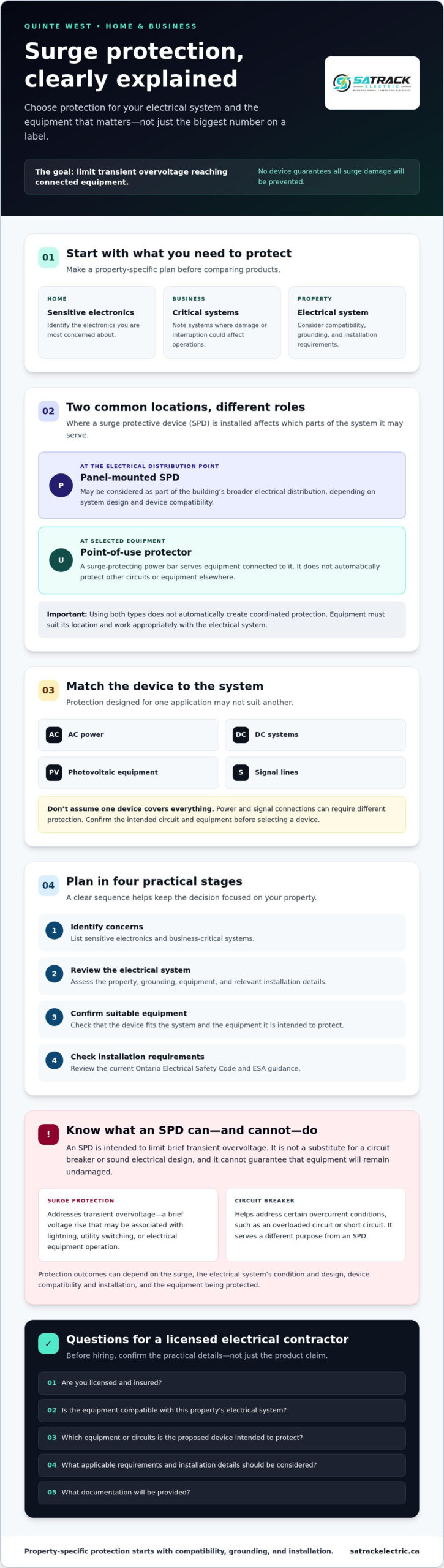
- Plan in stages: identify concerns, review the electrical system, confirm suitable equipment, and check installation requirements against the current Ontario Electrical Safety Code and ESA guidance.
- Before hiring a contractor, ask about licensing, insurance, equipment compatibility, applicable requirements, and the documentation you’ll receive.
What surge protection equipment does, and what it cannot guarantee
A surge protective device (SPD) limits brief overvoltage so less transient electrical energy reaches connected equipment. It is not a substitute for a circuit breaker or sound electrical design. This distinction matters when comparing Surge Protection Equipment. Surge protection addresses a different risk from equipment designed to interrupt an overload or short circuit.
A surge is a brief rise in voltage above the level a system is intended to handle. It may be associated with lightning, utility switching, or the operation of electrical equipment within a building. Not every voltage fluctuation causes damage. A surge is also different from sustained overvoltage, which lasts longer, and an overloaded circuit, where connected loads draw more current than the circuit is designed to carry. A breaker helps address certain overcurrent conditions; an SPD is intended to limit transient overvoltage.
The term surge protector is commonly used for devices that limit or manage excess voltage. An SPD may direct surge energy along an intended path or otherwise limit the voltage reaching connected systems. Its role depends on the device and how it fits the electrical installation.
What is an electrical surge, in plain language?
Think of a surge as a short-lived voltage spike rather than a general power fluctuation. Sensitive electronics, computers, control equipment, and other business systems may be affected, depending on the surge and the equipment. A momentary change in supply doesn’t automatically mean damage has occurred, but repeated or more severe events may be worth assessing.
Does surge protection prevent all electrical damage?
No single device should be treated as complete protection. An SPD can reduce risk, but it can’t guarantee that equipment will remain undamaged. The outcome can depend on the surge’s characteristics, the condition and design of the electrical system, device compatibility and installation, and the equipment being protected. Surge protection also doesn’t replace appropriate circuit protection or good electrical design.
If your home contains sensitive electronics or your business relies on critical systems, begin by listing the equipment that matters most. Then ask a qualified electrical contractor to assess the installation. A property-specific review can help clarify which options may be appropriate and what limitations to plan around. Don’t rely on a label or product claim alone.
How surge protection equipment works across a building electrical system
An SPD connects to an electrical system to limit transient voltage and direct surge energy along an intended path. Its location affects which parts of the system it may serve. The National Institute of Standards and Technology discusses how surge-protective devices (SPDs) may be integrated into a building’s electrical distribution system. The right arrangement still depends on the property and the equipment.
Panel-mounted protection connects at an electrical distribution point, while point-of-use protection is intended for selected equipment plugged into or connected to that device. These approaches have different roles. Neither should be assumed to cover every circuit or need.
Panel-mounted and point-of-use protection: different roles
A panel-mounted SPD may be considered as part of a building’s broader electrical distribution, subject to the system design and device compatibility. A point-of-use device, such as a surge-protecting power bar, serves the equipment connected to it. Its protection is limited to what is plugged in and how the device is used. It won’t automatically protect other circuits or equipment elsewhere in the building.
Using both types doesn’t automatically create coordinated protection. Devices need to suit their locations and work appropriately with the electrical system. Before choosing an approach, ask a contractor to review the equipment, installation details, and which systems you want to prioritize.
AC, DC, and signal-line protection serve different systems
Surge protection devices may be designed for different applications, including AC power, DC systems, photovoltaic equipment, or signal lines. These are examples of distinct system types, not interchangeable options or endorsements of a particular product. A device intended for one circuit or system may not suit another.
This distinction matters in properties with specialized equipment or connected systems. The selection needs to match the circuit and equipment being protected, and installation details should be assessed for the specific property. Don’t choose by label alone or assume that one device covers power and signal connections alike.
For a home or business in Quinte West, make a list of the systems you want to protect and where they connect. A licensed electrical contractor can review the building’s distribution and discuss suitable options without treating multiple devices as an automatic solution. To discuss broader electrical needs, see residential and commercial electrical services.
How to compare surge protection equipment for your property
Start with the property, not the product label. A useful comparison depends on the electrical service configuration, distribution equipment, connected loads, and which systems matter most. A plug-in protector may serve selected equipment, but it doesn’t replace an assessment of the building’s electrical system or show that other circuits are protected.
Use the questions in this table to organize what needs checking. Confirm the answers for the specific device and installation.
| Comparison factor | What to check | Question to ask |
|---|---|---|
| Installation location | Whether the device is intended for a distribution point or for use near selected equipment. | Where would it be installed, and what part of the system would that location serve? |
| Protected system | Which circuits or connected equipment the device is designed to serve. | Does it address the equipment I’ve identified as important? |
| Compatibility | The device’s documented application, the property’s electrical service configuration, and the existing distribution equipment. | Is this device suitable for my system and intended use? |
| Maintenance | Manufacturer guidance on inspection, status indicators if present, and replacement conditions. | How can I tell whether it needs attention or replacement? |
| Professional review | Installation conditions and applicable requirements for the property. | What needs to be checked before installation? |
Which property and equipment details should guide selection?
Before comparing Surge Protection Equipment, make a short inventory. Note whether the property is a home or business, the electrical service and distribution equipment, and the loads connected to it. List sensitive electronics and, for a business, systems whose interruption could affect normal operations. Also identify specialized equipment, such as photovoltaic or communications systems, since its protection needs may differ from those of ordinary AC power circuits.
This inventory helps focus the discussion on practical priorities rather than broad product claims. For example, a small office may need to consider both its computers and the systems essential to its work. The appropriate plan depends on the actual installation and equipment, not an assumed one-size-fits-all solution.
What specifications and installation questions should you check?
Read the manufacturer’s documentation for the device’s intended application, compatibility, and installation conditions. Ask the contractor how the proposed selection relates to the existing electrical system, which equipment it is intended to protect, and what maintenance guidance applies.
Compare documented suitability, not unsupported rankings or isolated performance figures. A high number on a label doesn’t, by itself, show that a device fits your property or will protect every connected system. A licensed electrical contractor can review the details and explain the limits of the proposed approach.
Planning surge protection installation in Ontario homes and businesses
Plan around the property, not a generic device recommendation. A practical sequence is to identify concerns, review the electrical system, confirm suitable equipment, arrange professional installation, and keep records of the work and equipment details. A home, commercial site, and property with specialized systems may each require different assessment and installation considerations.
In Ontario, ask that the proposed work and installation requirements be checked against the current Ontario Electrical Safety Code and applicable Electrical Safety Authority (ESA) guidance. Confirm what applies to the specific work, including whether a permit or inspection is needed. Don’t assume the answer is the same for every project.
What should an electrical assessment cover?
Ask the contractor to review the distribution equipment, site conditions, and intended loads before discussing options. Explain which electronics or business systems are important, describe any existing electrical concerns, and mention equipment damage that may have occurred. These details help keep the assessment focused on the property’s actual needs.
For a commercial property, consider which systems are essential to normal operations and how an interruption could affect work. Broader electrical planning may also be relevant during an upgrade. See this commercial electrical upgrades guide for related considerations.
Service availability can depend on location. Satrack Electric serves residential and commercial customers in Belleville, Trenton, Picton, Brighton, Quinte West, Greater Napanee, and Cobourg. Confirm availability for your property when making an enquiry.
Why should a qualified electrician handle installation?
Installing equipment within an electrical system calls for attention to compatibility, site conditions, and applicable requirements. It shouldn’t be treated as a casual do-it-yourself task. Ask a licensed electrical contractor to explain how the proposed equipment relates to your system and confirm any code, permit, or inspection requirements for the specific work.
Before work begins, clarify what will be installed and where. Afterward, keep any documentation provided, including equipment information and installation or inspection records where applicable. These records can be useful when arranging future electrical maintenance or upgrades.
For property-specific electrical planning, contact Satrack Electric about residential or commercial electrical services. The company is a licensed and insured contractor serving the listed Ontario communities. Confirm directly whether the particular work you need is available.
Choosing an electrical contractor for surge protection equipment
Choosing a contractor involves more than selecting a device. The electrical professional should explain how the proposed equipment and installation relate to your property, identify applicable requirements, and clarify what work is included. Before approving a plan, ask questions and make sure you understand the answers.
Questions to ask before approving the work
- Are you licensed and insured? Confirm the contractor’s credentials and insurance before work proceeds.
- Why does this device and location suit my electrical system? Ask how the recommendation accounts for the building’s distribution equipment, connected loads, and the equipment you want to protect.
- Which requirements apply? Ask how the work will be checked against the current Ontario Electrical Safety Code and relevant Electrical Safety Authority guidance, and whether any permit or inspection requirements apply to this specific project.
- What work is included? Clarify the proposed scope, and confirm that any additional electrical repairs or upgrades would be discussed and approved separately.
- What documentation will I receive? Ask what records will be provided for the work and equipment, and request the manufacturer’s guidance on maintenance or replacement.
These questions help distinguish a property-specific recommendation from a product suggestion based mainly on a label. A suitable contractor should be able to explain the reasoning and limitations of the proposed approach without promising that surge damage can be eliminated.
How Satrack Electric can support local property owners
Satrack Electric is a licensed and insured electrical contractor serving residential and commercial customers in Quinte West and other listed Ontario communities, including Belleville, Trenton, Picton, Brighton, Greater Napanee, and Cobourg. Its services include electrical installations, repairs, upgrades, and maintenance. These services may be relevant when surge protection questions arise alongside broader electrical work, but confirm directly whether the specific assessment or installation you need is available.
For a business, surge protection planning may connect with other electrical upgrade considerations. For a home, an existing electrical concern or panel condition may affect what needs review. In either case, describe your property and priorities, then ask what work is within the contractor’s scope before deciding.
To discuss your property and electrical service needs, contact Satrack Electric. A clear conversation can help determine whether an assessment or installation is appropriate for your situation.
Make a property-specific plan for surge protection
Choosing Surge Protection Equipment starts with your property’s electrical system and the equipment you want to protect. Panel-mounted and point-of-use devices have different roles, and neither should be assumed to protect everything. Reviewing compatibility, installation requirements, and the system’s condition can help you make an informed plan without relying on product claims or expecting a device to prevent all damage.
Satrack Electric is a licensed and insured Ontario electrical contractor serving residential and commercial customers in Belleville, Trenton, Picton, Brighton, Quinte West, Greater Napanee, and Cobourg. Its services include electrical installations, repairs, upgrades, and maintenance. Confirm directly whether a specific surge protection assessment or installation is available.
Discuss your electrical protection needs with Satrack Electric and ask what assessment or related electrical work may suit your property. This is a practical next step towards a plan that fits your home or business.
Frequently Asked Questions
What is surge protection equipment?
Surge protection equipment is designed to limit brief increases in voltage reaching electrical systems or connected devices. A surge protective device (SPD) may be installed at an electrical distribution point or used to protect specific connected equipment. It serves a different purpose from a circuit breaker, which addresses certain overcurrent conditions. The right option depends on the electrical system, intended application, and equipment you want to protect.
Is surge protection equipment worth installing in a home?
It may be worth considering if your home contains sensitive electronics or equipment that would be costly or difficult to replace. Whether a device is appropriate depends on your electrical system, its condition, and what you want to protect. Surge protection can reduce risk, but it can’t guarantee that equipment will avoid all damage. A property-specific review can help you weigh the options and understand their limits.
Can a surge protector protect a whole house?
A device installed at a home’s electrical distribution point may provide protection across parts of the electrical system, depending on the equipment and installation. Don’t assume it protects every circuit or connected system equally. A plug-in protector serves the equipment connected to it. A licensed electrical contractor can assess your home’s distribution equipment and explain what a proposed device is intended to cover.
What is the difference between a panel surge protector and a plug-in surge protector?
A panel surge protector connects at an electrical distribution point and is considered in relation to the building’s wider electrical system. A plug-in surge protector serves selected equipment connected to it, such as a computer or television. Their coverage differs, and neither automatically suits every property. Check the device’s intended application and compatibility, and ask a contractor how it may fit your electrical system.
Does surge protection prevent damage from lightning?
Surge protection may reduce the risk of damage from transient voltage associated with lightning, but it can’t guarantee that a building or its equipment will be unharmed. The result depends on the surge, the electrical system, the device, and its installation. Don’t treat one SPD as complete protection. If you’re concerned about lightning-related surges, ask an electrical contractor to review your property and explain the limits of suitable options.
Does surge protection equipment need to be installed by an electrician in Ontario?
Panel-connected or other hardwired surge protection should be assessed and installed by a licensed electrical contractor. The work must be considered against the current Ontario Electrical Safety Code, and applicable Electrical Safety Authority (ESA) permit and inspection requirements should be confirmed for the specific project. Plug-in devices are different; follow their manufacturer’s instructions. If you’re unsure which requirements apply, ask the contractor before work begins.
How do I know which surge protection equipment my business needs?
Start by identifying the systems most important to daily operations, such as computers, communications equipment, or other sensitive loads. Then have a contractor review the site, electrical service, distribution equipment, and device compatibility before recommending an approach. Surge Protection Equipment should suit the actual business system, not just a product label. Satrack Electric serves businesses in Quinte West, Belleville, Trenton, Picton, Brighton, Greater Napanee, and Cobourg.