
In March 2025, a generational ice storm swept through central Ontario, leaving thousands in the Quinte area without power and placing their sensitive electronics at immediate risk. While many homeowners rely on basic power bars, these small devices often fail to stop the high-voltage spikes that follow a major grid disruption. Investing in robust surge protection equipment is no longer an optional luxury; it’s a fundamental requirement for protecting your home’s modern electrical system.
You likely worry about the cost of replacing expensive appliances or losing irreplaceable digital data during a storm. We understand that the technical differences between various surge protective devices can feel overwhelming, especially with the 2024 Ontario Electrical Safety Code now in effect. This article will help you realize how to safeguard your property with the right equipment and professional installation. We’ll explain the different types of SPDs, how to identify CSA-certified products, and what you need to do to maintain your insurance validity and peace of mind.
Key Takeaways
- Distinguish between common power spikes and major surges to prioritize the protection of your home’s most sensitive smart appliances.
- Learn to identify high-quality Surge Protection Equipment by understanding technical specifications like joule ratings and clamping voltage.
- Explore the three-tier SPD system and why service entrance protection is critical for comprehensive property safety.
- Understand how professional installation ensures your system meets the latest Ontario Electrical Safety Code requirements and protects your insurance standing.
- Discover the methodical approach used to assess local electrical risks and select equipment tailored to the unique needs of the Quinte region.
Why Surge Protection Equipment is Essential in Ontario
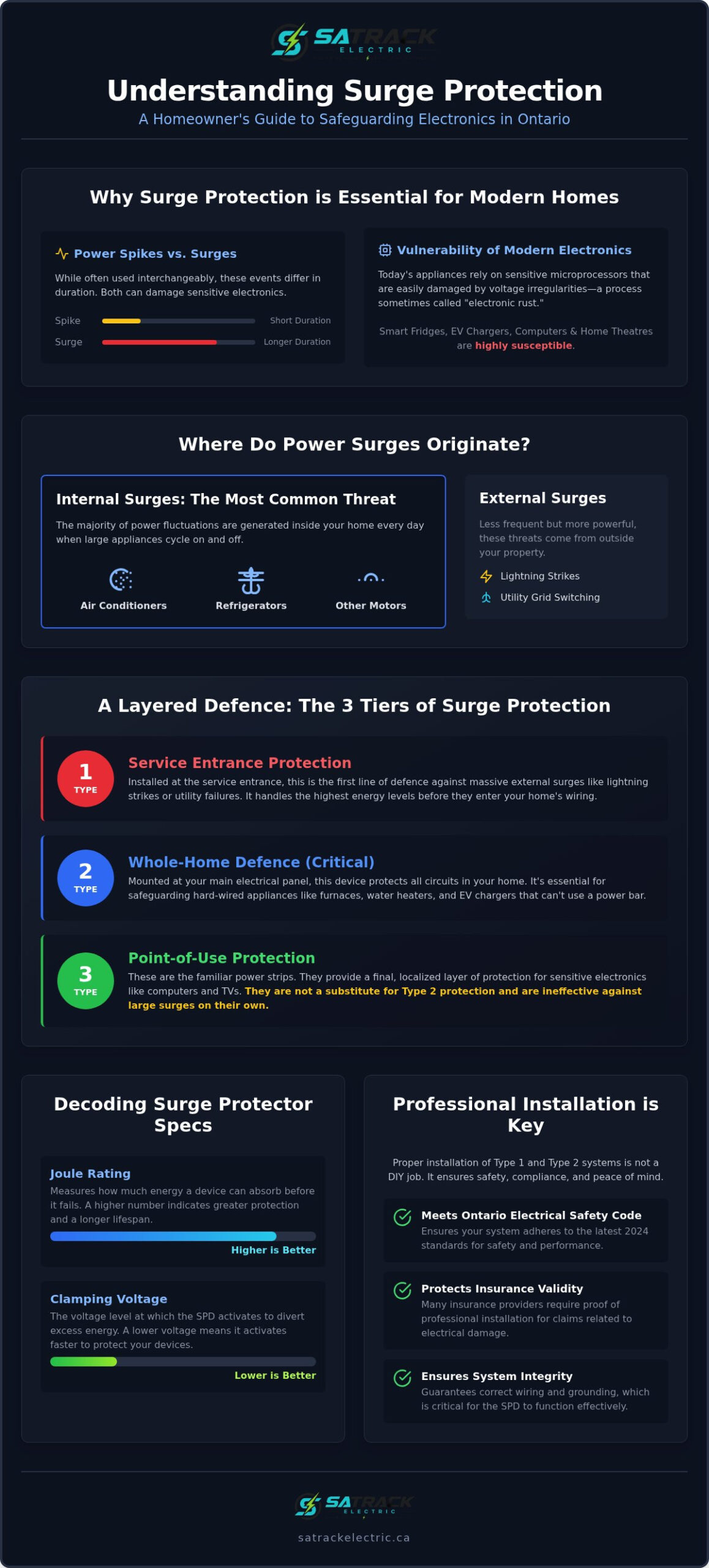
Voltage irregularities are a constant reality for residents in Belleville, Trenton, and the surrounding Quinte area. While many use the terms interchangeably, a voltage spike is a momentary burst of energy, while a surge lasts slightly longer. Both events can overwhelm your home’s electrical system without warning. Installing high-quality Surge Protection Equipment creates a necessary buffer, diverting excess electricity safely to the ground before it reaches your devices.
Modern homes are increasingly reliant on sensitive microprocessors found in everything from smart refrigerators to electric vehicle chargers. These components are far more delicate than the mechanical appliances of the past. A single significant event can fry these boards instantly, but even small, frequent fluctuations take a toll. Consistent protection helps extend the overall lifespan of your electrical system by maintaining a stable flow of power, preventing the premature failure of expensive investments.
Common Causes of Power Surges in the Quinte Region
Our local geography plays a significant role in electrical stability. The Great Lakes storm seasons often bring intense lightning strikes that can impact local power lines directly. Beyond weather, utility grid switching and routine maintenance by providers like Hydro One can introduce sudden changes in voltage. It’s a mistake to assume all threats come from outside. Large appliances within your own home, such as air conditioning units or refrigerators, create internal surges every time their heavy motors cycle on and off. These internal events account for the majority of power fluctuations a typical property faces daily.
The Hidden Cost of “Silent” Surges
Many homeowners don’t realize that “silent” surges are causing cumulative damage to their property. These small, repetitive spikes don’t always cause immediate failure; instead, they slowly degrade circuit boards over time through a process called electronic rust. For local businesses, the financial impact of fried electronics goes beyond equipment replacement costs. Downtime can lead to lost revenue and compromised data. A Surge protector installed at the panel level provides a comprehensive defence that point-of-use power bars cannot match. Many Ontario insurance providers now look for proof of professional installation and adherence to the Ontario Electrical Safety Code when processing claims related to electrical damage.
Understanding the Tiers of Surge Protection Devices (SPDs)
Effective protection against electrical transients requires more than a single device. Professionals categorize Surge Protection Equipment into three distinct tiers, or “Types,” based on where they are installed within your electrical system. This layered approach ensures that high-energy external surges are mitigated before they reach your home’s internal wiring, while smaller internal fluctuations are managed at the source. As detailed in the NIST Recommended Practice Guide, utilizing multiple levels of protection significantly reduces the risk of equipment failure compared to relying on a single point-of-use strip.
Type 1 and Type 2: The Whole-Home Defence
Type 1 devices are installed at the service entrance, typically on the line side of your main disconnect. These are built to handle the massive energy of a direct lightning strike or a utility transformer failure. Type 2 devices are mounted directly to your main electrical panel and protect all branch circuits in the facility. These units can be either hard-wired to the side of the panel or installed as specialized plug-in breakers. For Ontario properties, these tiers are the most critical components. They intercept surges at the gateway of your home, protecting hard-wired appliances like furnaces, water heaters, and ovens that cannot be plugged into a standard power bar. If you are considering a modern electrical panel upgrade, integrating a Type 2 SPD is a logical and efficient safety addition.
Type 3: Point-of-Use Strips and Suppressors
Type 3 devices are the familiar power strips found in most retail stores. While these provide a final layer of protection for sensitive electronics like computers, servers, and home theatre systems, they have significant limitations. A standard retail power bar cannot absorb the energy of a major surge. If it’s the only line of defence, it will often fail or even pose a fire risk during a significant event. These devices must be used in conjunction with Type 2 protection to be truly effective. Proper placement is essential; use them at the outlet for individual workstations or media centres to catch any residual voltage that bypasses the panel-level protection. Relying solely on Type 3 devices leaves your major appliances completely vulnerable to the unpredictable grid fluctuations common in the Quinte region.
Evaluating Surge Protection Specs: Joules, Clamping, and Response
Selecting the most effective Surge Protection Equipment for your property requires a clear understanding of technical specifications. While many manufacturers highlight a single impressive number, true reliability comes from a balance of three key metrics. Adhering to IEEE standards for surge protection ensures that the equipment you install meets recognized safety and performance benchmarks. Before any installation, always verify that a device carries a CSA or UL 1449 certification label. These marks confirm the unit has been tested specifically for the Canadian electrical environment and meets the rigorous safety standards required in Ontario.
Deciphering Joule Ratings
The joule rating measures how much energy a device can absorb before it fails. It is a common misconception that a higher rating means the device can stop a larger surge. Instead, think of joules as a reservoir of protection that depletes over time. Every time a protector diverts energy, its internal components degrade slightly. Residential systems generally benefit from ratings between 1,000 and 4,000 joules. Commercial installations often require much higher capacities to handle the repetitive surges caused by industrial motor cycles. You can typically tell when a device’s protection has been exhausted by checking the status indicator light. If the light has changed colour or turned off, the internal components can no longer divert excess voltage, leaving your system vulnerable.
Clamping Voltage and Response Speed
Clamping Voltage is the specific voltage level that triggers the SPD to divert excess energy to the ground. Finding the “sweet spot” for this threshold is vital for protecting delicate electronics. For a standard 120V circuit, a clamping voltage between 330V and 400V is ideal. If the threshold is set too high, sensitive circuit boards may be damaged before the protector ever engages. Response speed is the other half of this equation. Because electrical spikes happen in a fraction of a second, quality protectors must operate in nanoseconds. A slow response time renders a device useless. The surge will have already passed through the circuit and reached your equipment before the protector can react. Balancing a low clamping voltage with a nanosecond response time ensures your system remains stable during both minor fluctuations and major grid events.
Professional Installation and Ontario Electrical Standards
Installing whole-home Surge Protection Equipment is not a task for the weekend hobbyist. While point-of-use power bars are simple to plug in, any device that integrates directly with your main electrical panel requires the expertise of a licensed electrical contractor. Handling live components within a panel carries the risk of arc flashes and severe electrical shock. Professional installation ensures that the device is positioned correctly to provide maximum protection for your specific wiring configuration.
Adherence to the Ontario Electrical Safety Code (OESC) is mandatory for all electrical work in the province. The 2024 edition of the code emphasizes the importance of proper equipment selection and installation to prevent fire hazards. A licensed professional will ensure that your protector is mounted with the shortest possible lead lengths, which is critical for maintaining the device’s response speed. Many high-end equipment manufacturers explicitly state that their product warranties are only valid if the unit was installed by a qualified professional. Attempting a DIY installation could void both your product warranty and your home insurance coverage in the event of a claim.
The effectiveness of any surge protector depends entirely on your home’s grounding system. If the ground path is weak or outdated, the diverted energy has nowhere to go, rendering the most expensive protector useless. A professional inspection verifies that your grounding electrodes and bonding are up to modern standards before the equipment is commissioned.
Integrating Surge Protection with Panel Upgrades
An electrical panel upgrade in Belleville is the ideal time to add comprehensive surge protection. When upgrading to a modern panel, we can easily assess your current capacity and install dedicated SPD breakers. This methodical approach ensures that your new system is built with safety as a core component rather than an afterthought. If you are planning a renovation, contact us at Satrack Electric to discuss how to integrate these vital safety features into your project.
Commercial Surge Solutions for Quinte Businesses
For local business owners, the stakes are even higher. Specialized machinery, medical equipment, and sensitive POS systems require customized protection strategies. Regular commercial electrical maintenance in Ontario is the best way to verify your facility’s surge readiness. Industrial facilities in Trenton often face unique challenges due to heavy motor loads that generate internal transients. We provide thorough assessments to ensure your commercial infrastructure is resilient against both grid-side events and internal fluctuations.
Securing Your Property with Satrack Electric
At Satrack Electric, we approach property safety with a disciplined and methodical focus. We understand that residents in the Quinte area require reliable solutions that account for both local weather patterns and utility grid characteristics. Our process begins with a comprehensive evaluation of your existing infrastructure to identify specific vulnerabilities. By assessing the unique demands of your home or business, we help you select the most appropriate Surge Protection Equipment for your specific electrical load. This ensures that every component, from the main service entrance to individual branch circuits, is properly defended against unpredictable grid events.
Our commitment to excellence extends beyond the initial installation. We believe that surge protection should be a fundamental part of your ongoing electrical maintenance. During routine service calls, we verify the status of your protective devices and ensure that your grounding remains effective. This proactive strategy allows us to maintain the high standards of safety and competence that our clients expect. Choosing a licensed and insured contractor provides the assurance that your property is in the hands of a seasoned professional who takes their responsibilities seriously.
Residential Peace of Mind in Quinte West
Older homes in Picton and Brighton often possess legacy wiring that requires a specialized approach. We take the time to integrate modern safety devices into these systems without compromising their historical integrity. For those who have invested in outdoor luxury, protecting your hot tub wiring in Belleville is a priority. These installations are particularly susceptible to environmental surges and require robust Tier 1 and Tier 2 protection to ensure longevity. We provide clear, honest advice on equipment selection, focusing on products that meet Canadian standards and offer genuine value for your investment.
Get Started with a Professional Assessment
Professionalism means taking every detail seriously. A thorough electrical safety inspection is the first step in creating a resilient home or commercial facility. We examine your panel, grounding system, and current wiring to ensure everything aligns with the latest Ontario Electrical Safety Code requirements. This methodical review identifies potential issues before they lead to costly equipment failure or fire hazards. We offer a logical progression from your initial inquiry to the final installation, ensuring a smooth and efficient experience. Contact Satrack Electric for professional surge protection today to secure your property and gain the confidence that comes from expert workmanship.
Secure Your Home with Professional Electrical Defence
Ensuring the longevity of your modern appliances requires a methodical approach to electrical safety. By understanding the layered tiers of protection and selecting Surge Protection Equipment with the appropriate joule and clamping specifications, you can mitigate the risks posed by Ontario’s unpredictable grid. Professional installation isn’t just about functionality; it’s about maintaining insurance validity and adhering to the latest Ontario Electrical Safety Code standards.
Satrack Electric is a licensed and insured Ontario electrical contractor dedicated to serving homeowners and business owners in Belleville, Trenton, and Quinte West. We specialize in OESC-compliant installations that integrate seamlessly with your existing infrastructure. Our team prioritizes your peace of mind by delivering thorough results that safeguard your most valuable investments against silent electrical degradation. Protect your property today—Contact Satrack Electric for a Surge Protection Assessment. Taking this proactive step ensures your electrical system remains resilient for years to come.
Frequently Asked Questions
Do I really need a whole-home surge protector if I have power bars?
Yes, power bars are insufficient for comprehensive property protection. While they offer point-of-use safety for small electronics, they don’t protect hard-wired appliances like your furnace, water heater, or oven. A whole-home system intercepts surges at the main panel, shielding every circuit in your property. This approach prevents high-voltage transients from travelling through your home’s internal wiring and damaging sensitive components that aren’t plugged into a strip.
How long do surge protection devices typically last before needing replacement?
Most high-quality devices last between three and five years. Their lifespan is determined by the cumulative energy they absorb rather than just time. Every surge depletes the internal components that divert excess voltage. If your area experiences frequent storms or grid instability, you might need a replacement sooner. It’s a good practice to inspect the status indicator lights after any major weather event in the Quinte region.
Can a whole-home surge protector save me money on my insurance?
Many insurance providers in Ontario recognize the value of professional risk mitigation. While policies vary, some companies offer premium reductions for homes with verified whole-home protection. Even without a direct discount, preventing a major claim for fried appliances helps you avoid paying a deductible and keeps your insurance history clear. Professional installation provides the necessary documentation to prove your home meets modern safety standards during an audit.
What happens to a surge protector during a direct lightning strike?
During a direct strike, the device acts as a sacrificial barrier. It’s designed to divert the massive surge of energy directly to the ground before it reaches your home’s branch circuits. While a high-quality protector can handle significant transients, the extreme energy of lightning may cause the device to fail permanently. This failure is a sign the equipment has performed its job by protecting your more expensive household appliances and wiring.
Is it possible to install a Type 2 surge protector myself?
You shouldn’t attempt to install a Type 2 protector yourself. This process requires opening the main electrical panel and working near live bus bars, which presents a significant risk of arc flash or electrocution. In Ontario, all panel-level work must be completed by a licensed electrical contractor. This ensures the installation follows the OESC and maintains your home insurance validity by providing a record of professional, code-compliant workmanship.
How can I tell if my current surge protector is still working?
You can verify the status of your Surge Protection Equipment by checking the integrated LED indicator lights. Most units feature a green light to signify the protection is active. If the light is red or has turned off completely, it means the internal components have been exhausted and the device no longer provides safety. We recommend a professional assessment if your equipment has been in place for several years without an inspection.
Does surge protection equipment help with power flickers and brownouts?
No, these devices are not designed to correct low-voltage issues or power drops. Surge Protection Equipment focuses exclusively on diverting high-voltage spikes that could damage circuit boards. If you experience frequent brownouts or flickers, you might need a dedicated voltage regulator or a battery backup system. Our team can help you determine the cause of these fluctuations and suggest the appropriate corrective measures for your specific electrical system.
Are there specific Ontario electrical codes for surge protection in 2026?
The 2024 Ontario Electrical Safety Code (OESC) provides the current regulatory framework. It emphasizes the use of Type 1 or Type 2 surge protective devices, especially during new builds or panel upgrades. These requirements are designed to address the increasing vulnerability of modern smart home technology and EV charging stations. Working with a licensed contractor ensures your property remains compliant with these evolving safety standards as they are updated by the ESA.