
Did you realize that as of May 2026, Ontario’s electrical safety standards for backyard spas have undergone their most significant update in years? If you are planning to install a new spa in your backyard, understanding the latest requirements for hot tub wiring in Belleville is the only way to ensure your investment remains a safe sanctuary for your family. It’s natural to feel concerned about the risks of mixing water and electricity, especially with the new OESC Bulletin 68-8-4 mandates regarding perimeter bonding and stray voltage.
You deserve a backyard oasis that offers total peace of mind without the fear of electrical faults or insurance complications. This guide provides a clear roadmap to a code-compliant installation; it helps you navigate the technical differences between 120V and 240V circuits while ensuring your electrical panel can handle the new load. We will outline the essential steps for obtaining ESA certification and explain how the updated 2026 regulations affect your specific property layout so you can enjoy your first soak with absolute confidence.
Key Takeaways
- Understand why modern spas require a dedicated circuit and why standard outdoor outlets are insufficient for safe, long-term operation.
- Identify specific Ontario Electrical Safety Code (OESC) requirements, including the mandatory 1.5-metre clearance for receptacles and GFCI protection.
- Determine if your home’s electrical panel has the capacity to support the 50 to 60 amps required for professional hot tub wiring Belleville projects.
- Learn the essential steps of the installation process, from the initial site assessment to obtaining the final ESA certificate of inspection.
- Recognize the importance of hiring a licensed electrical contractor to ensure full compliance with 2026 safety regulations and to protect your property insurance.
Understanding Hot Tub Wiring Requirements in Belleville
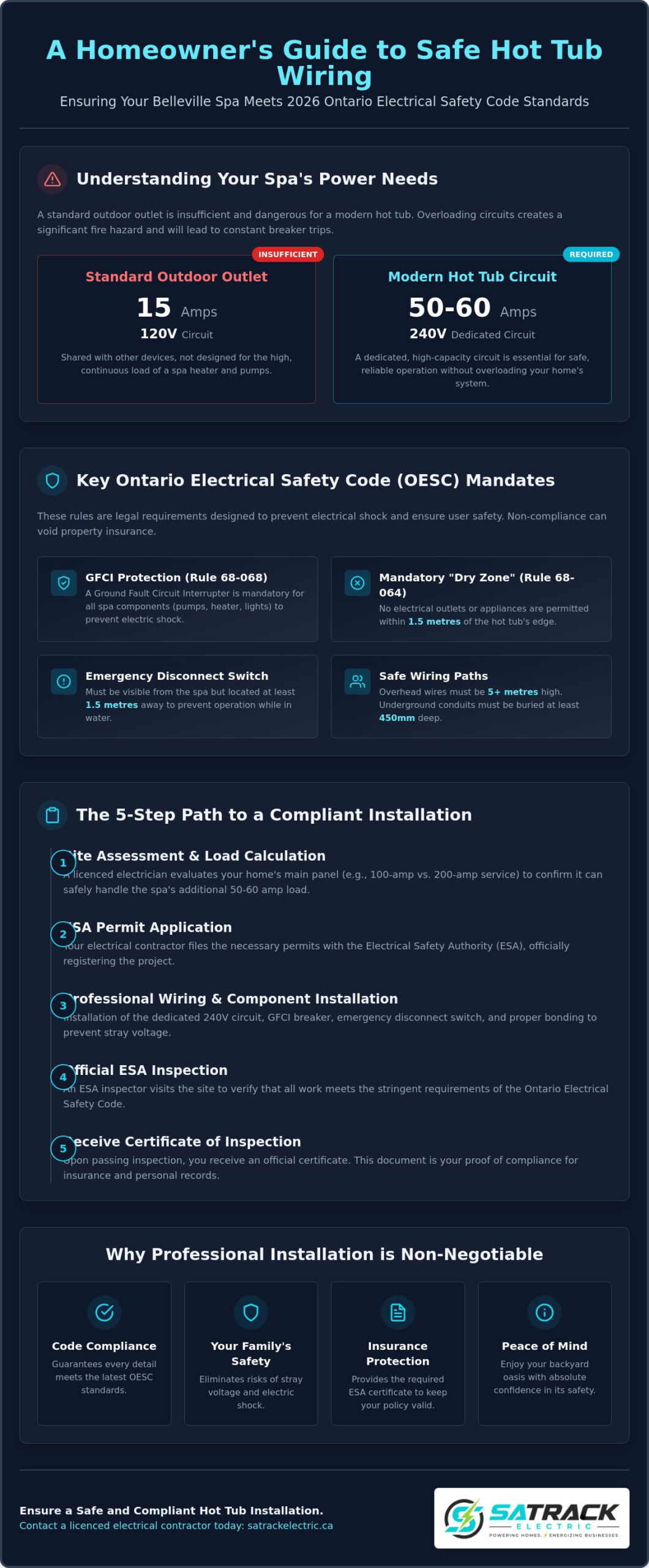
Professional hot tub wiring in Belleville is a specialized branch of residential electrical service that requires precise adherence to the Ontario Electrical Safety Code. While many homeowners assume they can simply plug their new spa into an existing outdoor outlet, this is rarely feasible for modern units. Most standard exterior receptacles are rated for 15 amps, but a high-performance spa typically requires a dedicated 240V circuit capable of handling 50 to 60 amps. Attempting to use a shared outlet will result in frequent breaker trips and can create significant fire hazards if the circuit is overloaded. A dedicated circuit ensures that the spa’s pumps and heaters have a consistent power supply without interfering with your home’s other electrical needs.
Before any work begins, we perform a detailed load calculation for your home. This process evaluates the total electrical demand of your existing appliances, lighting, and HVAC systems to ensure your main service panel can accommodate the additional draw of a hot tub. Many older homes in the Quinte area operate on 100-amp service. If your household already uses a significant amount of power, the addition of a 50-amp spa could exceed your system’s safe capacity. Understanding these foundational electrical wiring principles is the first step in creating a safe backyard environment. We prioritize these calculations to prevent system failures before the installation even starts.
Why Professional Wiring Matters for Safety
The combination of high-voltage electricity and water is inherently dangerous. Improper grounding or bonding can lead to “stray voltage,” where a small electrical current is present in the water or on nearby metal surfaces. This creates a risk of electric shock that is often invisible until someone enters the tub. Professional installation ensures that all components are correctly bonded to create an equal potential plane, which neutralizes these risks. Furthermore, most Canadian insurance providers require proof of professional installation and a passed inspection to maintain your property coverage. Without this documentation, you may face liability issues or denied claims in the event of an electrical incident.
The Role of the Electrical Safety Authority (ESA) in Ontario
Every hot tub installation in Ontario must be registered with the Electrical Safety Authority (ESA). This regulatory body ensures that the work meets the highest safety standards through a mandatory permit and inspection process. For residents in Belleville and the surrounding Quinte West area, this involves a site visit from an ESA inspector once the wiring is complete. Satrack Electric manages this entire process for you. We handle the permit filing and coordinate the inspection schedule. This ensures your project is fully documented and compliant with provincial law, providing you with a certificate of inspection for your records.
Key Ontario Electrical Safety Code (OESC) Standards for Spas
Adhering to the Ontario Electrical Safety Code (OESC) is not optional; it’s a legal requirement designed to prevent fatal accidents. When planning hot tub wiring in Belleville, you must account for more than just the power source. The code dictates exactly where electrical components can sit in relation to the water. Rule 68-064 specifies that no electrical receptacles or appliances can be located within 1.5 metres of the hot tub’s edge. This creates a mandatory dry zone to prevent accidental contact with energized devices while you are in the water. Rule 68-068 focuses on protection, mandating Ground Fault Circuit Interrupter (GFCI) protection for all spa components, including heaters, pumps, and integrated lighting.
A critical safety feature is the emergency disconnect, often referred to as a “spa pack.” The OESC requires this switch to be visible and accessible from the hot tub. However, it must be located at least 1.5 metres away to prevent a person from touching it while still in the water. This “line of sight” requirement ensures that in an emergency, power can be cut immediately without a person having to search for a breaker in the basement. If you are unsure about your current deck layout, our team provides professional residential electrical services to help you plan a code-compliant space.
Wiring paths also face strict regulations. Overhead wires must maintain specific clearances, often five metres or more, to prevent contact with maintenance tools like skimmers. Underground conduits must be buried at depths determined by the soil type and conduit material, typically ranging from 450 mm to 600 mm. These rules prevent accidental contact from gardening tools or shifting ground conditions.
Placement and Distance Regulations
Measuring your safety zone is the first physical step of installation. The 1.5m to 3m range is a critical buffer where existing outdoor lighting must be either moved or specially shielded. Any metallic objects, such as aluminum fences or steel railings within 1.5 metres of the water, must be bonded to the electrical system. This follows the OESC bonding requirements to eliminate stray voltage risks. Proper bonding ensures that all metal parts stay at the same electrical potential, removing the risk of shock.
GFCI Protection: Your Primary Safety Net
A Ground Fault Circuit Interrupter (GFCI) is a sophisticated safety device that monitors the flow of electricity. It detects even tiny leaks of current that could cause a shock. A standard circuit breaker only protects against overloads and short circuits; it won’t react fast enough to save a life from a ground fault. A GFCI breaker is designed to shut off power in as little as 25 milliseconds if it detects a current imbalance. This rapid response is what makes hot tub wiring in Belleville safe for your family.
The Step-by-Step Electrical Installation Process
A successful installation begins long before the first wire is pulled. We start with a comprehensive site assessment to determine the most efficient path for the conduit and to perform a precise load calculation of your existing electrical panel. This step is vital for hot tub wiring in Belleville, as it ensures your home’s infrastructure can safely support the significant demand of a modern spa without overloading the main service. Once we verify your capacity, we handle the permit acquisition through the Electrical Safety Authority (ESA) to ensure every aspect of the project is documented and legal.
The physical installation involves mounting a dedicated GFCI breaker in your main electrical panel and installing an exterior sub-panel, often called a spa pack. This sub-panel serves as the required emergency disconnect. From there, we run the electrical lines through protective conduit, either by trenching through the yard or mounting securely along a deck or patio structure. After the conduit is in place, we pull the appropriate gauge of copper wire to the tub’s location. The final phase involves making the terminal connections and conducting a thorough walkthrough before the ESA inspector arrives to verify the work.
120V vs. 240V: Which is Right for Ontario?
While “plug-and-play” 120V hot tubs are available, they often struggle with the harsh winters we experience in the Quinte area. A 120V heater generally cannot run at the same time as the high-speed pump, which leads to rapid heat loss during a soak. In contrast, a 240V hardwired system provides the power necessary to maintain water temperature even when the jets are on full blast. For year-round enjoyment in Ontario, a 240V installation is the professional standard. It offers faster heating recovery times and better overall energy efficiency during the coldest months of the year.
Trenching and Conduit Requirements
Protecting the electrical lines from physical damage and moisture is a top priority. For underground runs, Ontario regulations typically require a burial depth of 450 mm to 600 mm, depending on the conduit material and the location of the trench. If the wiring must pass under an existing deck, it must be securely fastened and protected from potential rodent damage or shifting boards. We use rigid PVC or EMT for the main runs and transition to liquid-tight flexible conduit for the final connection to the spa. This flexibility is essential for hot tub and spa installations, as it allows for slight movement of the tub and simplifies future maintenance. Proper conduit selection is a hallmark of high-quality hot tub wiring in Belleville.
Evaluating Your Home’s Electrical Capacity and Panel Needs
Most modern hot tubs require a dedicated 50 to 60-amp circuit to operate both the heater and the pumps simultaneously. This represents a substantial increase in demand for a residential electrical system. In many older neighbourhoods throughout Belleville and Picton, homes were originally equipped with 100-amp service. While this was sufficient for decades, it often leaves very little room for a high-demand appliance like a spa. If you own a local bed and breakfast or a small hospitality business, you’ll need to consider how this affects your overall operations. We often recommend commercial electrical upgrades in Belleville for business owners who need to ensure their property can handle increased loads safely and without interruption.
Identifying an Overloaded Panel
You’ll often spot the signs of an overloaded panel before a total failure occurs. Common symptoms include flickering lights when large appliances turn on, breakers that feel warm to the touch, or circuits that trip for no apparent reason. If your home still utilizes an old fuse box, you shouldn’t attempt to add a hot tub. These older systems weren’t designed for the sustained high current that a heater and pump demand; adding such a load is a major safety hazard and will likely void your property insurance. Upgrading from 100-amp to 200-amp service is the most reliable way to provide the power your spa needs while future-proofing your home for other upgrades like electric vehicle chargers. This process involves a coordinated effort to replace the main breaker, the panel itself, and often the meter base on the exterior of your home to meet modern safety standards. For businesses facing similar capacity constraints, our detailed guide on commercial electrical panel upgrades in Ontario outlines the full regulatory and logistical steps required to modernize your power infrastructure safely.
The “Sub-Panel” Solution
A sub-panel is a practical way to manage hot tub wiring in Belleville when your main panel is full but has enough overall capacity. This secondary panel is installed near the hot tub and houses the mandatory GFCI breaker. It provides a convenient and visible emergency disconnect within the required line-of-sight of the water, which is a key safety regulation in Ontario. A sub-panel organizes the load for the spa without the need to replace the entire main service if your house has the amperage to spare. This configuration simplifies the wiring process and ensures that the safety shut-off is always within reach in case of an emergency. It also helps isolate the spa’s high-demand circuit from the rest of your home’s lighting and electronics, reducing the chance of interference. If you’re unsure if your system can handle the load, schedule an electrical panel upgrade assessment with our team to review your options.
Why Professional Installation is Essential for Belleville Homeowners
Choosing a licensed and insured contractor is the most important decision you’ll make for your backyard project. Satrack Electric operates as a Licensed Electrical Contractor (LEC) in Ontario, meaning we possess the specific qualifications required to pull permits and perform complex hot tub wiring in Belleville. While the physical installation is the visible part of the job, the true value lies in the “passed” ESA certificate of inspection you receive upon completion. This document is your legal proof that the installation meets the 2026 Ontario Electrical Safety Code. It protects your property insurance and ensures that your family is safe from the risks of improper bonding or grounding.
Many homeowners are tempted by the DIY myth, believing they can save money by handling the wiring themselves. However, the hidden costs of uncertified work are significant. Improperly sized wires can damage your spa’s expensive control board or pumps, leading to repairs that far exceed the cost of a professional installation. Additionally, uncertified electrical work can negatively impact your home’s resale value. Savvy buyers in the Quinte area will ask for ESA documentation during the home inspection process. Having a professional record of your hot tub wiring in Belleville demonstrates that you have maintained the property to a high standard, which can simplify the closing of a sale. Before finalizing your project budget, reviewing a detailed breakdown of hot tub wiring cost Ontario homeowners can expect in 2026 will help you plan for permit fees, panel upgrades, and conduit runs without any surprises.
Local Expertise in the Quinte Region
Our team understands the unique building styles found throughout Belleville, Trenton, and Brighton. Whether you are installing a spa at a historic home in the Old East Hill or a new build in a modern subdivision, we adapt our methods to suit your property’s specific layout. We prioritize reliable scheduling to ensure our work aligns with your hot tub delivery date. Our licensed electricians arrive on site with the right tools and materials to complete the job efficiently, respecting your time and your property.
Booking Your Installation with Satrack Electric
Timing is critical for successful electrical planning. We encourage you to reach out early in the process. Ideally, you should have an electrical plan in place before any concrete is poured or decks are constructed. An early consultation allows us to identify the best route for conduit and ensure your spa pack is placed in a code-compliant location that doesn’t interfere with your landscaping. This proactive approach prevents costly errors and ensures your project stays on track. Contact Satrack Electric today for a professional hot tub wiring consultation in Belleville.
Prepare Your Backyard for Year-Round Relaxation
Installing a hot tub is a significant investment in your home’s comfort and value. Achieving a safe and functional setup requires careful attention to the 2026 Ontario Electrical Safety Code and a clear understanding of your home’s total electrical capacity. From ensuring proper perimeter bonding to managing a full 50-amp load, professional hot tub wiring Belleville services provide the technical expertise needed to avoid common installation pitfalls. By securing a passed ESA certificate, you protect your property insurance and gain the peace of mind that comes with a job done correctly.
Our team is ready to help you transition from the planning phase to your first soak. As a licensed and insured Ontario contractor, we specialize in ESA-compliant installations that prioritize your family’s safety. We serve Belleville and the Quinte region with reliable workmanship that you can trust for years to come. Request a Quote for Your Hot Tub Wiring Today and take the first step toward a worry-free relaxation experience. We look forward to helping you build a safe and beautiful backyard retreat.
Frequently Asked Questions
Do I really need a permit for a hot tub in Belleville?
Yes, every hot tub installation in Ontario requires an electrical permit issued by the Electrical Safety Authority (ESA). This permit is a legal requirement that ensures the work is logged for inspection and complies with the Ontario Electrical Safety Code. Only a Licensed Electrical Contractor can apply for this permit on your behalf; this process provides you with the official certificate of inspection needed for insurance purposes.
How much does it cost to wire a hot tub in Ontario?
The total investment for hot tub wiring in Belleville varies based on the specific requirements of your property and the distance from your main electrical panel. Factors such as the need for a panel upgrade, the length of the conduit run, and whether trenching is required through your yard will influence the final cost. For a comprehensive breakdown of every expense involved, our guide on hot tub wiring cost in Ontario covers permit fees, labour, and material estimates to help you budget accurately. We provide detailed site assessments to help homeowners understand the specific infrastructure needs for their chosen spa model.
Can I use my existing outdoor outlet for a hot tub?
Most full-sized spas require a dedicated 240V circuit and cannot be powered by a standard 120V outdoor outlet. While certain “plug-and-play” models are designed for 120V use, they still require a dedicated circuit that isn’t shared with other appliances or lights. Using a standard shared outlet often leads to frequent breaker trips and insufficient heating during the colder months in the Quinte region.
What is the minimum distance a hot tub must be from electrical lines?
Ontario safety regulations require a minimum horizontal distance of 1.5 metres between the hot tub water and any electrical receptacles or switches. For overhead power lines, the vertical clearance must typically be at least 5 metres to prevent accidental contact with maintenance equipment. These distances are critical for maintaining a safe “dry zone” around your spa and are strictly enforced during ESA inspections.
Will I need to upgrade my electrical panel for a new spa?
You may require an electrical panel upgrade if your home currently operates on a 100-amp service that is already near its capacity. High-demand appliances like central air conditioners, electric ranges, and dryers consume significant power; adding a 50-amp hot tub could overload a smaller system. We perform a precise load calculation during our consultation to determine if your existing panel can safely support the new spa.
How long does the electrical installation typically take?
The physical installation of the wiring and spa pack usually takes one business day to complete. This timeframe includes mounting the disconnect switch, running the protective conduit, and pulling the heavy-gauge wire to the tub’s location. After the wiring is finished, the mandatory ESA inspection is scheduled; this typically occurs within a few days depending on the inspector’s availability in the Belleville area.
What happens if I wire my hot tub without a licensed electrician?
Performing your own hot tub wiring or hiring an unlicensed individual is illegal in Ontario and poses a significant safety risk. Beyond the danger of fire or electric shock, uncertified work can void your home insurance policy. If an electrical fire occurs and there is no record of a passed ESA inspection, your insurance provider may deny your claim entirely, leaving you responsible for all damages. To understand what licensed professionals charge and why transparent pricing matters, reviewing the cost to hire electrician Belleville homeowners should expect in 2026 can help you make an informed decision.
Is a GFCI breaker mandatory for all hot tubs?
Yes, a Ground Fault Circuit Interrupter (GFCI) is mandatory for every hot tub installation under OESC Rule 68-068. This device is your primary defence against electrocution; it’s designed to sense minute current leaks and shut off the power in milliseconds. The GFCI must be housed in a weather-proof enclosure, such as a spa pack, and must remain accessible for regular testing to ensure continued safety.