
That sudden “click” from your kitchen or bathroom outlet isn’t actually a sign of equipment failure. It’s a signal that your home’s safety systems are working exactly as intended to prevent electrical shock. While the immediate loss of power is inconvenient, a Ground Fault Circuit Interrupter (GFCI) trips to protect your family from dangerous current leaks. Understanding Why Your GFCI Outlet Keeps Tripping (And What to Do) is essential for any homeowner in the Quinte region who wants to maintain a functional and secure living environment.
We recognize how frustrating it can be when essential appliances lose power or when you’re unsure if your wiring meets modern safety standards. You might feel a mix of confusion and anxiety about whether the issue lies with a faulty device or a deeper electrical problem. This guide provides a clear, methodical approach to troubleshooting these common issues. You’ll learn how to identify the root cause of the trip, how to safely attempt a reset, and when the complexity of the situation requires the expertise of a licensed Ontario electrician. By the end of this article, you’ll have the knowledge needed to restore your power and ensure your home’s electrical system remains reliable and compliant.
Key Takeaways
- Understand that a tripping GFCI is a vital safety feature designed to prevent electrical shock by monitoring the balance of electrical current.
- Identify the primary environmental and technical reasons Why Your GFCI Outlet Keeps Tripping (And What to Do), ranging from moisture to loose connections.
- Follow a methodical troubleshooting guide to safely isolate faulty devices and determine if the issue lies with the outlet itself.
- Recognize the specific warning signs, such as persistent tripping or physical discolouration, that require the expertise of a licensed Ontario electrician.
- Implement simple maintenance routines and circuit upgrades to enhance the overall electrical safety and reliability of your Quinte home.
Understanding the Role of Your GFCI Outlet
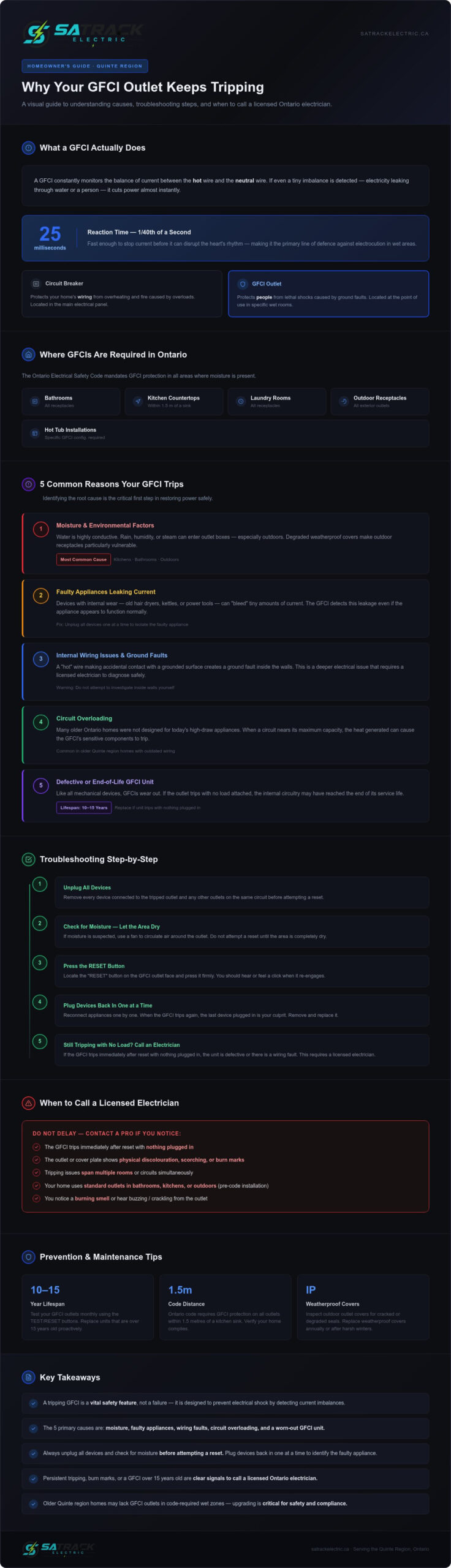
A Ground Fault Circuit Interrupter (GFCI) isn’t a standard outlet. It acts as a sensitive safety device that constantly monitors the flow of electricity. It measures the balance of the current leaving the “hot” wire and returning through the “neutral” wire. If these two values differ by even a tiny amount, the device assumes electricity is leaking elsewhere, potentially through a person, and cuts power instantly. This high level of sensitivity is precisely Why Your GFCI Outlet Keeps Tripping (And What to Do) when conditions aren’t perfect. It’s important to recognize that a GFCI serves a different purpose than a standard circuit breaker:
- Circuit Breakers: These protect your home’s wiring from overheating and fire caused by overloads or short circuits. They are located in your main electrical panel.
- GFCI Outlets: These protect people from lethal shocks caused by ground faults. They are usually located at the point of use in specific rooms.
How a GFCI Protects Your Home
A ground fault occurs when electricity escapes its intended path and seeks a shortcut to the ground. This often happens through water or human contact. A GFCI reacts in as little as 25 milliseconds, which is roughly 1/40th of a second. This rapid response time is designed to stop the flow of current before it can cause a fatal heart rhythm disruption. In areas like kitchens and bathrooms, where water and electricity are in close proximity, this protection is the primary line of defence against accidental electrocution.
Where GFCIs Are Required in Ontario
The Ontario Electrical Safety Code mandates GFCI protection in any area where moisture is present. These “wet” zones include bathrooms, kitchen countertops within 1.5 metres of a sink, laundry rooms, and all outdoor receptacles. Specialized installations, such as hot tub wiring Belleville, require specific GFCI configurations to handle higher loads while maintaining rigorous safety standards. Many older homes throughout the Quinte region were built before these strict regulations were in place. If your home still uses standard outlets in these areas, upgrading to modern GFCI receptacles is a critical step in ensuring your family’s safety and bringing your property up to current code requirements.
Five Common Reasons for a Tripping GFCI
A tripping outlet is rarely a random event. Because these devices are engineered to detect minute changes in electrical flow, several environmental and mechanical factors can trigger their safety mechanism. Identifying the specific cause is the first step in determining Why Your GFCI Outlet Keeps Tripping (And What to Do) to restore your home’s functionality. While moisture is the most frequent culprit, issues ranging from internal component failure to faulty household appliances can also be responsible.
- Faulty Appliances: Devices with internal wear, such as an old hair dryer or a kettle with a slight heating element leak, can “bleed” current. Even if the appliance seems to work, the GFCI detects this leakage and cuts power.
- Circuit Overloading: Many older Ontario electrical systems weren’t designed for the high-draw appliances we use today. If a GFCI is protecting a circuit that is nearing its maximum capacity, the heat generated can sometimes cause the sensitive internal components to trip.
- Defective GFCI Units: Like any mechanical device, GFCIs eventually wear out. Most units have a lifespan of approximately 10 to 15 years. If an outlet trips without any load attached, the internal circuitry may have simply reached the end of its service life.
Moisture and Environmental Factors
Water is highly conductive, making moisture ingress the primary reason for “nuisance” tripping in kitchens, bathrooms, and outdoor areas. In regions like Brighton or Picton, heavy rain or high humidity can allow dampness to enter the outlet box. Outdoor receptacles are particularly vulnerable if they lack proper weather-proof covers or if the seals have degraded over time. If you suspect moisture is the cause, it’s vital to let the area dry completely. You can often resolve this by using a fan to circulate air around the outlet before attempting a reset. If these issues persist across multiple rooms, you may benefit from a professional electrical maintenance check to ensure your home’s seals are intact.
Internal Wiring Issues and Ground Faults
Internal faults occur when a “hot” wire makes contact with the ground wire or a grounded portion of the junction box. This can happen due to loose terminal screws or frayed insulation. In many older properties in the Quinte area, homeowners must also consider the risks associated with aluminum wiring replacement Belleville. Aluminum wiring can expand and contract more than copper, which often leads to loose connections that trigger GFCI safety responses. Persistent tripping that occurs even when nothing is plugged in is a strong indicator of a hidden wiring hazard that requires immediate attention from a qualified professional.
Troubleshooting Your GFCI: A Step-by-Step Guide
When an outlet stops providing power, your first instinct might be to simply press the reset button. However, troubleshooting requires a methodical approach to distinguish between a minor nuisance trip and a potentially life-threatening ground fault. Before you begin, prioritize your physical safety. Ensure your hands are completely dry and you aren’t standing on a damp floor or near a pool of water. Understanding Why Your GFCI Outlet Keeps Tripping (And What to Do) starts with isolating the electrical load to see if the fault lies within your appliances or the home’s wiring itself.
Follow these steps to safely identify the source of the interruption:
- Clear the Circuit: Unplug every device connected to the tripping GFCI. You must also unplug devices from any “downstream” standard outlets that receive protection from this master unit.
- Perform a Manual Reset: Firmly press the “Reset” button. If the button clicks and stays in, the circuit is restored. If it immediately pops back out with nothing plugged in, you likely have a persistent wiring issue or a failed outlet.
- Isolate the Faulty Device: If the reset holds, begin plugging your appliances back in one at a time. If the outlet trips the moment a specific toaster, kettle, or power tool is connected, you’ve identified a ground fault within that device.
Testing the Reset and Test Buttons
The physical feedback of the outlet buttons provides vital clues about its internal health. A functional GFCI should have a crisp, audible click when you engage the reset mechanism. If the button feels “mushy” or fails to catch despite firm pressure, the internal spring or electronic latch has likely failed. You should also use the “Test” button periodically. Pressing it should cause the reset button to pop out instantly. If the outlet doesn’t respond to the test button, it’s no longer providing the protection required by Ontario safety standards and needs professional replacement.
Identifying Downstream Faults
In many Quinte area homes, a single GFCI outlet is wired to protect multiple standard receptacles “downstream” in a series. This means a fault in a standard outlet in your dining room or an outdoor light fixture can cause the GFCI in your kitchen or garage to trip. If the master outlet won’t reset, check for moisture or damage in these connected areas. Outdoor water pumps, festive lighting, or engine block heaters are frequent causes of downstream trips during Ontario winters. If you’ve cleared all visible devices and the master unit still fails, the fault is likely hidden within the junction boxes or the walls.
Preventing Future Trips and Enhancing Electrical Safety
Preventing recurring issues is the most effective way to manage your home’s electrical health. While we’ve discussed Why Your GFCI Outlet Keeps Tripping (And What to Do) in the short term, long-term stability often requires a more systemic approach. You should establish a habit of testing your GFCI outlets once every month. This simple action ensures the internal sensing mechanism hasn’t seized up or failed due to dust, moisture, or age. A device that fails the monthly test must be replaced immediately to maintain the safety of your household.
In the Quinte West region, our winters place unique stress on outdoor electrical systems. Ice buildup and melting snow can easily penetrate standard outlet covers, leading to persistent ground faults. Ensure that any extension cords or holiday lighting used during the colder months are specifically rated for outdoor use and remain properly plugged into receptacles with heavy-duty weatherproof covers. If your system frequently struggles with modern power demands, a professional electrical panel upgrade Belleville can provide the necessary capacity to stabilize your home’s entire grid and reduce the strain on individual circuits.
The Importance of Dedicated Circuits
High-draw appliances like space heaters, hair dryers, and microwaves pull significant current. When these devices share a circuit with a sensitive GFCI, they often cause “nuisance” trips even without a ground fault. We recommend installing dedicated circuits for these power-hungry items to isolate their load from the rest of the room. Satrack Electric provides specialized electrical installation Belleville to help homeowners separate these loads. This ensures your bathroom or kitchen outlets don’t cut out every time you use a high-wattage appliance.
Professional Maintenance and Inspections
A whole-home safety inspection is a proactive step that goes beyond simple troubleshooting. Licensed electricians can identify loose terminal screws, corroded wiring, or degraded insulation that a standard reset test won’t reveal. These small issues often evolve into fire hazards if left unaddressed. By scheduling regular electrical repairs Belleville, you can ensure your connections remain tight and your safety devices are fully operational. If you’re concerned about the age or reliability of your current wiring, contact Satrack Electric to schedule a comprehensive safety audit for your property.
When to Call a Licensed Electrician in Belleville
While the troubleshooting steps previously discussed help isolate simple appliance faults, some electrical issues are far too complex for a homeowner to manage safely. If you’ve followed the isolation process and still find yourself asking Why Your GFCI Outlet Keeps Tripping (And What to Do), the problem likely resides deep within your home’s infrastructure. Certain symptoms indicate that the outlet isn’t just “tripping” but is actively failing in a way that could lead to a structural fire or severe injury. Professional intervention ensures that the root cause is addressed rather than just the symptom.
You should immediately stop using an outlet and contact a professional if you observe any of the following:
- The outlet remains unable to reset even when every single device on the circuit has been unplugged.
- You hear a faint buzzing, sizzling, or popping sound coming from behind the wall plate.
- The plastic casing of the receptacle feels hot to the touch or shows visible signs of melting.
- Your home uses older ungrounded wiring or aluminum connections that require specialized terminal handling.
Red Flags That Require Immediate Professional Attention
Physical discolouration or a distinct burning smell aren’t typical signs of a standard ground fault. These are indicators of “arcing,” a dangerous condition where electricity jumps across a gap between loose or damaged wires. Arcing generates intense heat that can ignite nearby insulation or wooden studs long before a standard breaker might trip. If you detect a metallic or ozone-like scent near your electrical fixtures, treat it as an emergency and shut off the power at the main panel. For residents needing expert intervention, our residential electrical services Belleville ensure that these hidden hazards are identified and repaired according to the latest Ontario safety codes.
The Satrack Electric Commitment to Safety
Hiring a licensed and insured contractor provides a level of security that DIY repairs can’t match. At Satrack Electric, we prioritize the integrity of your home’s electrical system by using high-quality components and precise workmanship. Our team serves the broader Quinte region, including Trenton, Picton, and Greater Napanee, providing reliable solutions for complex wiring issues. We don’t just replace the outlet; we investigate the underlying cause to ensure your family’s peace of mind. To protect your property and restore your power safely, contact us today to organize a professional inspection and repair of your home’s electrical system.
Securing Your Home’s Electrical Safety
A tripping GFCI is your home’s way of preventing serious electrical accidents. By following a methodical troubleshooting process, you can often determine if the issue is a faulty appliance or a more complex wiring problem. Understanding Why Your GFCI Outlet Keeps Tripping (And What to Do) allows you to take control of your home’s safety while recognizing when a situation exceeds a simple reset. Whether the cause is moisture ingress or a faulty internal component, addressing the root problem is essential for long-term reliability.
When troubleshooting doesn’t resolve the trip, or if you notice signs of heat and discolouration, it’s time to seek professional assistance. Satrack Electric is a licensed and insured Ontario electrical contractor specializing in safety-first residential repairs throughout Belleville, Trenton, and the Quinte region. We ensure your system meets current safety codes and operates reliably. Contact Satrack Electric today to organize your professional electrical repair in Belleville. We are here to provide the expertise needed to keep your household safe and powered correctly.
Frequently Asked Questions
Why does my GFCI trip even when nothing is plugged in?
A GFCI that trips without an active load usually indicates a ground fault in the permanent wiring or moisture inside the junction box. It could also be caused by a fault in a “downstream” outlet that is linked to the master GFCI. If the unit trips immediately after a reset with nothing connected, it’s a clear sign that the internal circuitry or the hidden wiring requires professional inspection.
Can a GFCI outlet go bad and need to be replaced?
Yes, GFCI outlets are mechanical devices with sensitive electronic components that typically last between 10 and 15 years. Over time, environmental factors like dust or humidity can degrade the internal trip mechanism. If your outlet fails the monthly manual “Test” or if the reset button won’t stay depressed, the unit has reached the end of its service life and requires a complete replacement.
Is it safe to keep resetting a GFCI that keeps tripping?
It is not safe to repeatedly reset an outlet that won’t hold power, as the device is actively responding to a detected hazard. Forcing a reset against a persistent fault can cause electrical components to overheat or lead to damage within your home’s wiring. If you are unsure Why Your GFCI Outlet Keeps Tripping (And What to Do) after one or two attempts, you should leave the power off and consult an expert.
Does a GFCI outlet protect against electrical fires?
GFCI outlets are primarily designed to prevent lethal shocks rather than electrical fires. While they can prevent a fire by stopping current leaks to the ground, they don’t detect the dangerous arcing between wires that often causes house fires. For comprehensive fire protection, the Ontario Electrical Safety Code often requires Arc Fault Circuit Interrupters (AFCI) in specific areas like bedrooms to complement your GFCI protection.
Why does my outdoor GFCI trip whenever it rains?
Outdoor GFCIs often trip during rain because moisture has penetrated the receptacle box or the plug connection. Even a small amount of dampness can create a path for electricity to leak to the ground, triggering the safety mechanism. To prevent this, ensure your outdoor outlets have “extra-duty” weatherproof covers that remain sealed even while a cord is plugged in, and check that the caulking around the box is intact.
What is the difference between a GFCI and an AFCI?
The main difference lies in the specific hazard they detect. A GFCI monitors current balance to protect people from electrocution, while an AFCI monitors for dangerous electrical arcs that cause fires. Both are essential safety components in modern Ontario homes. While GFCIs are required in “wet” areas like kitchens, AFCIs are now mandated for most general purpose circuits to provide a higher standard of overall fire safety.
How much does it cost to have an electrician replace a GFCI in Ontario?
The total cost for professional replacement in Ontario depends on factors like the number of units, the condition of the existing wiring, and the specific labour requirements. While we don’t quote specific prices without an inspection, hiring a licensed contractor ensures that the work complies with the Ontario Electrical Safety Code. This investment provides the assurance of high-quality components and the safety of a professional installation that protects your property.
Can I replace a standard outlet with a GFCI myself?
While Ontario law allows homeowners to perform their own electrical work, it must be done to code and often requires a permit and inspection from the Electrical Safety Authority (ESA). Incorrectly wiring a GFCI can leave you without shock protection or even create a fire hazard. For most residents, hiring a licensed and insured professional is the most reliable way to ensure the installation is safe, compliant, and fully functional.