
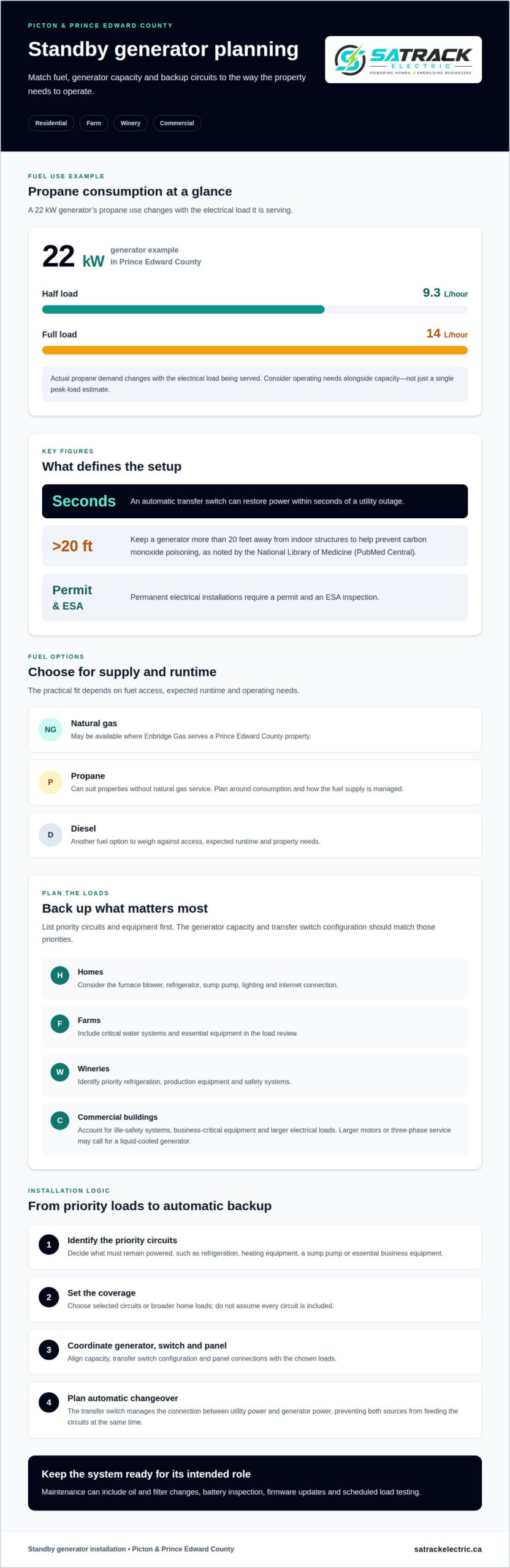
For standby generator installation in Picton, a permanent system may use natural gas, propane or diesel, depending on fuel availability, expected runtime and operating needs. An automatic transfer switch can restore power within seconds of a utility outage. The electrical work requires a permit and ESA inspection. Generator capacity should match the property’s electrical load and the circuits or equipment that need backup.
Choosing a generator involves more than selecting a fuel or capacity. A home, farm, winery or commercial property may have different backup priorities, from essential household circuits to business equipment and life-safety systems. Understand how the generator, fuel supply and transfer switch work together before deciding on a configuration.
This guide explains which properties and loads standby systems can support, how natural gas, propane and diesel compare, and what to expect from transfer switch installation and an ESA inspection. It also covers the factors involved in sizing a generator for a property in Picton or Prince Edward County.
Key Takeaways
- Match generator fuel to what is available at the property, expected runtime and operating needs; natural gas, propane and diesel are common options.
- Plan backup around the equipment and circuits that matter most, whether the property is a home, farm, winery or commercial operation.
- An automatic transfer switch connects a standby generator to the electrical system and can restore power within seconds of a utility failure.
- Permanent installations involve an electrical permit and ESA inspection. Generator placement also matters: the National Library of Medicine (PubMed Central) notes that keeping generators more than 20 feet away from indoor structures can help prevent carbon monoxide poisoning.
- Satrack Electric provides residential and commercial generator installation as part of its electrical installation services.
Residential, farm, winery and commercial backup power
For homes across Eastern Ontario, backup planning starts with the circuits that matter during an outage. Hydro One distributes electricity in Picton and Prince Edward County. A household might prioritize the furnace blower, refrigerator, sump pump, lighting and internet connection. A farm may also need power for water systems or essential equipment. Listing priority loads helps define what the generator needs to support.
Consumption is one planning factor for propane. In Prince Edward County, a 22 kW generator uses about 9.3 litres per hour at half load and about 14 litres per hour at full load. Actual demand changes with the electrical load being served. This example shows why a farm or winery should consider operating needs alongside generator capacity, rather than choosing equipment based on a single peak-load estimate.
- Homes: Identify essential circuits, such as refrigeration, heating controls and sump pumps.
- Farms: Include critical water systems and equipment in the load review.
- Wineries: Consider which refrigeration, production or safety systems need backup.
- Commercial buildings: Account for life-safety systems and larger electrical loads.
Automatic transfer switch installation
A standby generator connects to a property’s electrical system through a transfer switch. An automatic transfer switch can restore power within seconds of a utility outage. It manages the connection between the utility supply and generator, helping prevent both sources from feeding the property’s circuits at the same time. This automatic operation distinguishes a permanent standby setup from a portable generator, which requires manual setup.
Start by listing the loads the generator will serve. A household might prioritize a furnace blower, refrigerator and sump pump, while a small business may include refrigeration or essential operating equipment. The transfer switch configuration determines which circuits receive generator power. Matching it to your priorities helps avoid expecting the generator to support every circuit when the plan covers only selected loads.
Installation coordinates the generator, transfer switch and existing electrical system. The electrical panel layout and chosen backup circuits shape how the switch connects to the property. The plan also accounts for generator capacity, since the selected loads must fit the available power. These decisions are linked: changing the circuits served can affect the required configuration and how backup power is distributed.
- Identify priorities: Select the circuits or equipment that need backup, such as refrigeration or a sump pump.
- Set the coverage: Decide whether the plan serves selected circuits or broader home loads.
- Coordinate the equipment: Align generator capacity, transfer switch configuration and panel connections.
- Plan automatic operation: Connect the switch so it can manage the changeover after utility power fails.
Portable and standby systems suit different situations. A portable generator requires manual setup during an outage. A permanently installed standby generator connects to the electrical system through a transfer switch. An automatic switch can respond without someone manually connecting the generator, which is useful when power needs to be restored while occupants are away.
For a Picton home, choosing a transfer switch does not replace deciding what must remain powered. A carefully selected group of circuits can meet essential needs without treating the whole house as one load. For example, a homeowner might prioritize heating equipment and refrigeration, then decide whether additional comfort systems belong in the plan. Farms and businesses can use the same approach for their operating priorities.
Before installation, the electrical plan should account for the panel, intended circuits and generator connection as one system. This gives the installation a clear scope and supports the later permit and inspection process. For a coordinated approach to generator installation planning, the transfer switch and selected loads should be considered together, not as separate equipment decisions.
Transfer switch installation and ESA inspection
Most municipalities require an electrical permit and inspection for a permanent generator installation. In Prince Edward County, the installation plan includes an electrical permit and an ESA inspection. These steps apply to the electrical work connecting the generator, transfer switch and property wiring.
The permit process defines the project scope before installation begins. That scope can identify the generator connection, transfer switch configuration and circuits selected for backup. A home plan might serve a furnace blower, refrigerator and sump pump, while a business plan may include essential operating equipment. The planned loads influence how the transfer switch connects to the electrical system.
During installation, the transfer switch is integrated with the generator and the property’s electrical system. The equipment must be coordinated to manage utility and generator power correctly. Panel layout, selected circuits and generator capacity all affect the design. If the panel needs an upgrade to support the planned connection, include that work in the electrical installation plan.
An ESA inspection is an important part of the process, not an optional finishing detail. It follows the permitted electrical work and supports review of the permanent installation. Account for the permit and inspection in the installation schedule rather than treating them as separate tasks after the generator is connected. Inspection timing can affect when the project is ready for completion.
- Define the scope: Document the generator connection, transfer switch and circuits intended for backup.
- Arrange the permit: Include the electrical permit in the project plan before permanent installation.
- Complete the electrical work: Connect the switch and generator to the property’s electrical system.
- Allow for inspection: Include the ESA inspection in the installation sequence.
For a Picton property, permit and inspection requirements go hand in hand with practical installation decisions. A home with selected backup circuits has a different electrical scope from a commercial building with broader operating needs. In either case, plan for the panel, generator connection and transfer switch as one coordinated system. This helps define the permitted work and makes the inspection a planned project stage.
Permitting and inspection also distinguish a permanent standby system from a portable generator used for temporary backup. Permanent wiring connects equipment directly to the property, so the electrical work needs formal oversight. Once the electrical permit and ESA inspection are part of the plan, the remaining steps can be scheduled around the site, equipment and required connections.
Standby generator installation costs depend on generator capacity, transfer switch configuration, fuel connection requirements, and whether panel upgrades are needed. These factors define the cost considerations for a permanent system. Considering them together gives the installation plan a fuller view of the work involved, rather than focusing on the generator alone. Generator capacity, switch configuration, fuel connection requirements and potential panel upgrades each form part of the overall cost picture.
Standby generator installation in Picton and Prince Edward County
In Picton and Prince Edward County, installation planning brings together the property, generator location, fuel supply and electrical work. Site conditions and permit steps shape the schedule and final setup.
Generator placement, noise and clearances
Place the generator outdoors, with attention to indoor structures, exhaust direction, service access and nearby occupied areas. The National Library of Medicine (PubMed Central) says keeping generators more than 20 feet away from indoor structures can help prevent carbon monoxide poisoning.
Properties in Prince Edward County vary, so the site layout guides generator placement. A rural lot may offer more separation than a compact residential property, but access for maintenance still matters. Consider where operating noise could affect rooms, outdoor living areas or neighbours. The installation plan should account for these practical factors rather than assume one location suits every property.
Choosing a suitable generator size
For year-round homes in Prince Edward County with central air or electric appliances, homeowners often compare 18 kW and 22 kW generators. Larger rural homes and small inns may consider 26 kW or 28 kW units.
Capacity depends on the property’s total electrical load, including heating and cooling, refrigeration, lighting and essential equipment. A home backing up selected circuits has different needs from one seeking broader coverage. A load assessment connects the generator rating to the intended circuits, so equipment is selected for actual use rather than a general assumption based on home size.
Installation timing
Most residential standby generator installations take 1-3 days to complete. Permitting, electrical upgrades and fuel-line installation can affect the schedule.
A project requiring only the planned generator and electrical connections has a different scope from one that also needs panel work or a new fuel connection. The installation timeline must also account for the permit and ESA inspection. Planning these steps together gives the project a clearer sequence, from site preparation through testing and completion.
Site assessment, permits and commissioning
The process begins with a site assessment of the property, electrical panel, proposed generator location and fuel connection. The installation plan then defines the generator, transfer switch and circuits, followed by the electrical permit and installation.
Most municipalities require permits and inspections before approving permanent generator installations. In Prince Edward County, the installation includes an electrical permit and ESA inspection. Commissioning follows installation: the system is started and checked against the planned setup, including the transfer switch and selected loads.
Permanent standby generator installation is not a do-it-yourself project. Electrical connections, fuel work and inspection require coordinated planning. Rebates or financing are separate from installation, and each program’s eligibility and terms determine whether it applies to a property.
What size standby generator is suitable for a home in Picton?
Generator size depends on the home’s total electrical load and the backup coverage you want. In Picton, the calculation considers heating and cooling equipment, refrigeration, lighting and essential devices. A system serving selected circuits has different demands from one intended to support broader household use. Start with a load review that identifies which equipment needs to operate during an outage.
For essential circuits, the options often include generators in the 10-14 kW range. A smaller home in Prince Edward County with a short circuit list may suit a 14 kW generator. Typical priorities can include a furnace blower, refrigerator, sump pump, lights and internet. The chosen circuits matter: adding equipment increases the load the generator must support.
Homes seeking more appliance and comfort-system coverage often consider 18-22 kW generators. Central air conditioning or electric appliances can affect the calculation, particularly if several systems may run at once. Rather than sizing by floor area alone, the assessment weighs the electrical demand of the equipment and the circuits included in the backup plan.
For more complete automatic whole-home backup, homeowners may consider 22-26 kW or larger generators. That broader goal needs a careful review of the home’s combined loads. A generator selected for essential circuits may not support every appliance simultaneously. Defining the intended coverage first helps connect the capacity decision to how the household plans to use backup power.
- Essential circuits: Consider 10-14 kW for a focused list of household priorities.
- Broader home coverage: Compare 18-22 kW when more appliances and comfort systems matter.
- More complete automatic backup: Assess 22-26 kW or larger against the home’s total electrical load.
These ranges are planning examples, not a substitute for assessing the property. A home with a furnace blower, refrigerator and sump pump has different priorities from one that also needs central air and additional electric appliances. The electrical panel and transfer switch configuration also affect how the selected generator serves the chosen circuits.
For a practical sizing decision, first define the backup outcome: essential circuits, expanded coverage or a more complete whole-home arrangement. Then have the property’s loads assessed against that goal. To discuss a generator installation based on your home’s planned coverage, arrange generator installation planning.
Standby generator sizing depends on the property’s total electrical load, including HVAC systems, refrigeration, lighting and critical equipment. Make the intended backup outcome clear before choosing capacity. Separate equipment that needs to remain available from devices that can be left off, then consider which items may need power at the same time. This keeps capacity decisions tied to household priorities rather than a broad estimate based on the home alone.
During planning, include the household’s priority equipment in the total load assessment, then compare that assessment with the circuits and coverage you want. If priorities change, revisit the review before choosing a generator, since a different group of equipment changes the intended backup demand. Clear priorities also help determine whether essential service or broader household coverage is the better fit.
Satrack Electric: Electrical Installations
Satrack Electric provides generator installation for homeowners and businesses planning standby power in Picton. Its residential and commercial electrical services cover the work involved in connecting a generator to a property’s system. If your plan includes a transfer switch, selected backup circuits or an electrical panel upgrade, Satrack Electric can handle the related installation work.
Turn to Satrack Electric when you’re ready to move from sizing and fuel decisions to planning the electrical installation. The project can be tailored to the property’s backup priorities and the equipment it needs to support. Contact Satrack Electric to discuss your generator installation.
Plan the next step for your property
Planning a standby generator installation in Picton is an opportunity to decide what dependable backup means for your household or business. Consider how your needs may change over time, such as when adding electrical equipment or adapting a space. For property owners also considering renewable power resilience alongside conventional standby setups, solarman.co.ke offers examples of how solar PV systems can be designed and installed for reliable backup. A clear picture of your priorities gives the installation plan a practical starting point.
Satrack Electric offers residential electrical services, commercial electrical services and electrical repairs. These services can support electrical work for a home or business project. Discuss your property’s goals with Satrack Electric as a straightforward next step towards a suitable plan.
Contact Satrack Electric to discuss your electrical installation needs. Take the next step with a clear plan for your property’s backup power.
Frequently Asked Questions
Which companies provide standby generator installation in Picton, Ontario?
Satrack Electric provides generator installation for residential and commercial properties in Picton and surrounding communities. The electrical work can support a standby project, including connecting the generator to the property’s electrical system. The installation plan depends on the building’s backup priorities, fuel arrangement and electrical requirements. A home might prioritize essential household circuits, while a commercial property may need to plan around different operational loads.
Does a standby generator require an ESA inspection in Ontario?
For permanent generator installations in Prince Edward County, plan for an electrical permit and ESA inspection. These steps are part of the installation process and apply to the electrical work connecting the generator and transfer switch. Including them in the project schedule helps account for inspection before the system is considered ready for use. Permit and inspection requirements can vary by municipality.
Are natural gas or propane generators better for homes in Picton, Ontario?
Neither fuel is automatically the better choice. Consider what is available at the property, expected runtime and fuel-supply planning. Natural gas may be available where Enbridge Gas service reaches a Prince Edward County property. Propane is another common standby fuel, and its supply arrangements should be part of the operating plan. A home’s location and expected backup use help guide the comparison.