
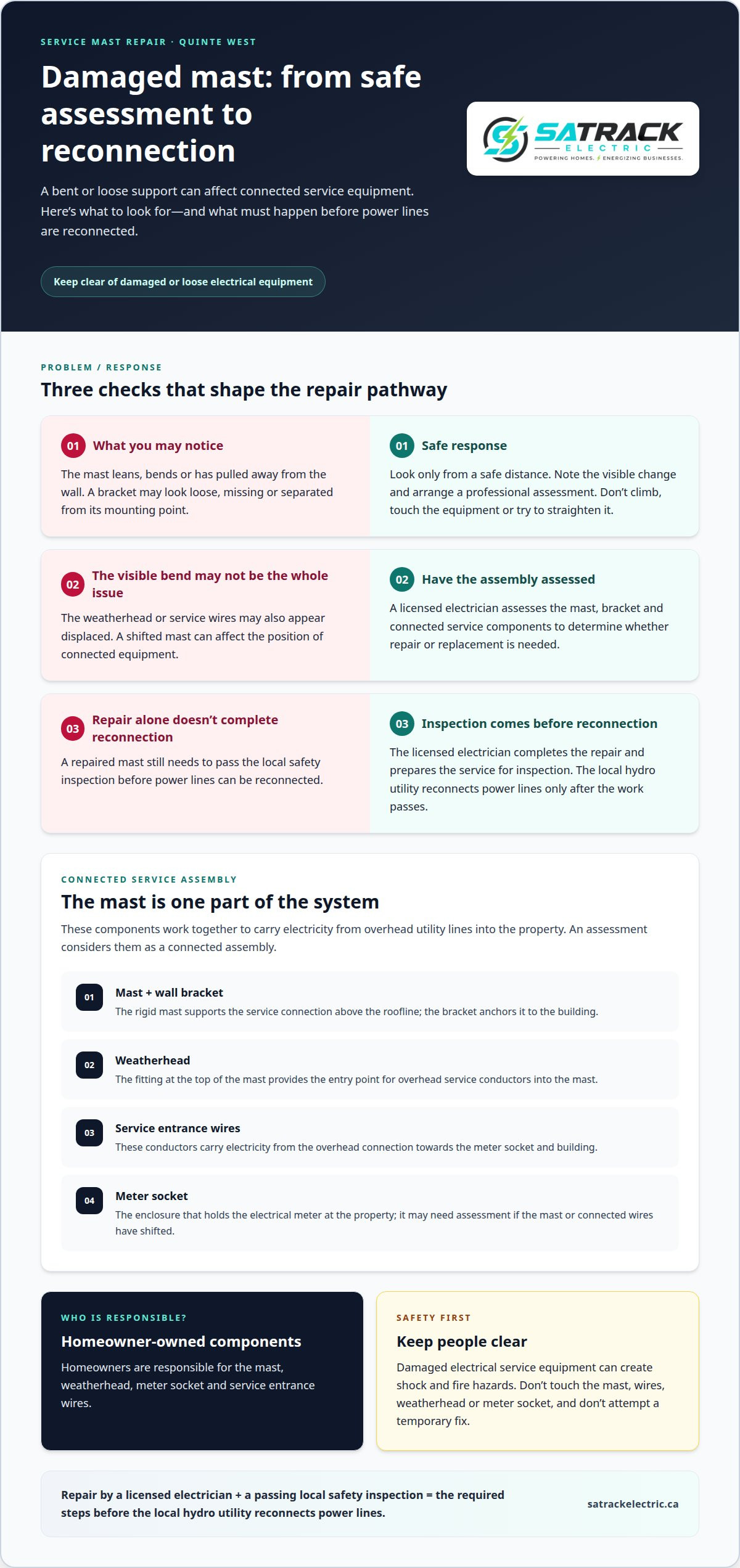
A damaged electrical mast is more than a bent pipe: it can affect the connection between overhead utility lines and a home. For service mast repair in Quinte West, it helps to understand that the mast supports the service wires and works with the weatherhead, meter socket and service entrance wires to bring electricity into the property. Homeowners are responsible for these components, and the local hydro utility won’t reconnect power lines to a damaged or loose mast until a licensed electrician repairs it and it passes a local safety inspection.
It’s reasonable to want to know which part needs attention, what the damage could mean for your home, and who handles the repair. A mast or bracket may bend or loosen, and other service components can also be affected. Damage can interrupt the electrical connection and create a safety concern, so don’t touch the equipment or attempt a repair yourself.
This article explains what the mast does, which parts may need repair, what warning signs to take seriously, and how responsibility is divided. You’ll also learn how Satrack Electric’s electrical repair services can help when a residential or commercial service mast needs professional attention.
Key Takeaways
- A bent mast or loose wall bracket can affect how securely the overhead service is supported; the repair depends on which parts are damaged.
- The mast works with the weatherhead, meter socket and service entrance wires to carry electricity into a property.
- Damage to electrical service equipment can create shock and fire hazards, so keep clear of damaged or loose components.
- Homeowners are responsible for the mast, weatherhead, meter socket and service entrance wires; the local hydro utility won’t reconnect power lines until repairs pass a local safety inspection.
- Understanding whether the mast, meter base or service entrance cable is affected helps clarify what needs professional electrical repair.
Bent mast and wall bracket repairs
A bent mast or loose wall bracket can affect how overhead service wires are supported at a property. Repair planning starts by identifying the damage and the affected connection points.
For mast repairs in Quinte West, the key checkpoint is a local safety inspection: the local hydro utility won’t reconnect power lines until a licensed electrician has repaired a damaged or loose mast and it passes inspection. The repair and inspection must happen before reconnection.
Signs of Mast Damage
From a safe distance, look for a mast that leans, bends or has pulled away from the wall. A bracket that appears loose, missing or separated from its mounting point may also need attention. If the mast’s position changed after a storm or impact, arrange a professional assessment.
Check from a safe distance whether the weatherhead or service wires appear displaced along with the mast. These components connect and support the overhead service, so the damage may extend beyond the visible bend. Don’t climb, touch the equipment or try to straighten it. Keep clear and describe what you can see when arranging service.
Repair and Replacement Process
The electrician starts by assessing the mast, wall bracket and connected service components. This helps determine whether the bracket can be secured, the mast repaired or a component replaced. Because a bent support can affect alignment, the electrician also considers the position of connected equipment before deciding on the work.
Next, the damaged components are repaired or replaced, and the service is prepared for the local safety inspection. The hydro utility reconnects power lines only after a licensed electrician completes the repair and the work passes inspection. Restoring the mast’s support alone doesn’t complete the reconnection process.
Repair Timing and Emergency Service
Repair time depends on the damage, whether the mast or wall bracket needs replacement, and the coordination required for inspection and reconnection. A loose bracket with limited damage may call for different work than a shifted mast that has affected connected components.
If the mast is visibly unstable, keep people away and don’t attempt a temporary fix. The time needed to address the issue depends on the situation and the steps required to make the equipment safe. Power reconnection still depends on repair by a licensed electrician and a passing local safety inspection.
Don’t assume that the inspection rule alone establishes a permit requirement. The confirmed step in this repair pathway is a safety inspection before reconnection. A careful assessment also determines whether the damage is limited to the support or involves other service components.
For service mast repair in Quinte West, note the visible change, keep clear of the mast and wires, and arrange a professional assessment. This helps direct attention to the damaged support and the inspection required before reconnection.
Electrical service mast components
An overhead electrical service uses connected components to carry power from utility lines into a building. In Quinte West, understanding the parts can help identify where a repair assessment should begin. The visible mast is only one part of the service assembly, so a problem near the roofline may involve nearby components too.
A licensed electrician repairs electrical service masts in Quinte West, Ontario. The homeowner is responsible for the mast, weatherhead, meter socket and service entrance wires. If a damaged or loose mast needs repair, the local hydro utility won’t reconnect power lines until the repair passes a local safety inspection.
The mast is the rigid support that rises from the building and carries the service connection above the roofline. Its position helps support overhead wires as they approach the property. The wall bracket secures the mast to the building, so the assessment includes its attachment points, not just the visible length of conduit.
- Weatherhead: The fitting at the top of the mast provides the entry point for overhead service conductors into the mast. Its position and condition matter because it connects the exposed service to the equipment below.
- Service entrance wires: These conductors carry electricity from the overhead connection toward the meter socket and building. Damage or displacement can mean the issue extends beyond the mast itself.
- Meter socket: This is the enclosure that holds the electrical meter at the property. It forms part of the service assembly and may need assessment if the mast or connected wires have shifted.
- Wall bracket: This support anchors the mast to the building. Its condition and attachment help determine whether the mast remains properly supported.
These parts work as a connected assembly, not as isolated pieces. For example, a shifted mast can change the position of the weatherhead and service wires. An electrician assesses the support, entry point, conductors and meter socket together to distinguish a repair limited to one component from damage affecting several parts.
Keep clear of the equipment while arranging an assessment. Don’t touch the mast, wires, weatherhead, or meter socket, and don’t try to reposition them. A clear description of the visible component and its location can help explain the concern. For an electrical assessment of the service assembly, arrange an electrical repair assessment.
Fire and shock hazards from damaged masts
A damaged service mast can affect the overhead conductors and electrical equipment attached to a building. The risk depends on what has shifted, whether conductors are exposed and whether nearby materials have been affected. Treat a visibly damaged mast as an electrical hazard, not a routine exterior repair.
Shock is a concern if damaged insulation exposes a conductor or displaced wiring becomes accessible. A metal mast or nearby surface may also be hazardous if electrical parts are damaged. Don’t touch the mast, meter socket, service wires or anything in contact with them. Keep other people away from the area, including children and anyone using a nearby doorway.
Fire risk can arise if damaged conductors make unintended contact or a poor electrical connection generates heat. For example, an impact that shifts the mast may pull connected wires out of position. Visible scorching, smoke, a burning smell or unusual crackling near service equipment requires prompt attention. Don’t investigate by opening an enclosure or moving a wire.
Weather can make a damaged assembly harder to assess safely. Rain or snow around a displaced weatherhead, meter socket or service entrance wires can bring moisture near electrical equipment. Wind can also move loose components or overhead conductors. Don’t inspect the damage from a ladder or by hand, even in these conditions.
If you notice smoke or fire, move away from the building and contact emergency services. If there’s no active fire, stay clear of the mast and describe its visible condition when arranging professional electrical help. Don’t cover exposed parts, brace the mast or remove a branch touching the equipment. Handling it could bring you into contact with energized components.
Keep people and vehicles away from the immediate area while the hazard is assessed. Avoid parking beneath a visibly displaced mast, and don’t let anyone approach fallen or sagging wires. If the equipment is near an entrance, use another route that avoids it. These precautions reduce the risk of contact without requiring anyone to inspect the equipment closely.
A professional assessment considers the mast, bracket, conductors and nearby service equipment as a connected system. The electrician can determine whether the damage is limited to external support or involves wiring and connections. Don’t treat a bent mast as a cosmetic issue: visible movement can signal that attached components also need inspection before the service is considered safe.
Homeowner responsibility for mast repairs
For a damaged service mast in Quinte West, the homeowner is responsible for the mast, weatherhead, meter socket and service entrance wires. A licensed electrician must repair a damaged or loose mast before the local hydro utility will reconnect power lines, and the repair must pass a local safety inspection.
This responsibility covers several connected parts of the home’s electrical service, not just the mast visible above the roof. If a bracket has shifted, the mast is bent or service wires appear displaced, the repair assessment should consider the affected equipment together. Identifying the damaged components helps clarify what the homeowner needs to arrange for repair.
The local hydro utility’s role in reconnection is separate from the homeowner’s responsibility for the listed equipment. A utility connection doesn’t replace repairs to a damaged mast or meter socket. The repair and inspection must be completed before power lines can be reconnected, which matters when a home has lost service after damage.
For a homeowner, the practical steps are straightforward:
- Keep people away from damaged or loose service equipment, and don’t touch the mast or wires.
- Arrange an assessment and repair by a licensed electrician.
- Allow the repair to proceed through the local safety inspection required before reconnection.
These steps don’t mean the homeowner should inspect the equipment closely or attempt a temporary repair. A mast is connected to overhead power lines, and its condition can’t be judged safely by climbing a ladder or handling a bracket. Describe the concern from a safe distance, such as a mast that appears tilted or a displaced-looking meter socket.
Responsibility can be easy to misunderstand when damage affects more than one part. For example, a storm may leave the mast leaning while the service entrance wires remain attached. The mast may be the first visible concern, but the electrician’s assessment determines whether other homeowner-responsible components also need repair. A utility reconnection alone doesn’t resolve damage to the property’s service equipment.
Keep any inspection or repair documentation provided during the work. It can help clarify what was assessed and whether the required inspection has been completed before reconnection. The distinction is clear: the homeowner arranges repairs to the mast and listed service components, while the local hydro utility reconnects power lines only after the licensed electrician’s repair passes the local safety inspection.
That responsibility applies to the electrical service equipment described above. Other household utility lines have their own boundaries. Residential property owners in Quinte West are responsible for the portions of their water and sewer service lines located on their property. Those lines are separate from the mast, meter socket and service entrance wires, so a water or sewer issue isn’t part of an electrical mast repair.
Homeowners insurance policies generally do not cover the cost of repairing the failed utility line itself, although many cover damage caused by the failure. When arranging work, the distinction between repairing a failed line and addressing resulting damage may matter when reviewing coverage. Identifying which equipment failed and whether it caused other damage helps clarify what needs attention.
Meter base and service entrance cable repairs
The meter base and service entrance cable connect the overhead service to a property’s electrical system. Damage near the mast can affect one or several components, so an assessment considers their condition together. A shifted meter base, pulled cable or visible damage near a connection can indicate where further attention is needed.
The local hydro utility handles reconnection of overhead power lines. It won’t reconnect lines to a damaged or loose mast until a licensed electrician completes the repairs and the work passes a local safety inspection. This applies whether the repair involves the mast alone or connected service equipment.
A meter base that appears loose, displaced or damaged should be assessed along with its mounting and cable connections. A service entrance cable that looks pulled, exposed or out of position also needs professional attention. These visible signs don’t establish the full extent of the problem, since other connected components may be affected.
During an assessment, the electrician considers the condition and position of the meter base, service entrance cable, mast and related connections. The work depends on which parts are damaged and how they connect. For example, a shifted meter base may need attention beyond the mast, while visible cable damage means the conductors also need assessment. Don’t open the meter base or move the cable.
Repair work depends on the condition of the equipment. The electrician determines whether an affected component can be repaired or needs replacement, then completes the necessary work before the safety inspection and reconnection process. A visual check from the ground can’t determine whether a cable or connection is safe to handle, so leave that assessment to a licensed electrician.
If the power is off, don’t try to restore it by touching the meter base, cable or overhead wires. Keep clear of visibly damaged equipment and describe what you observed when arranging service. Details such as a displaced meter base or a cable that appears pulled away can help explain the concern without requiring a close inspection.
For a repair involving a meter base or service entrance cable, arrange an electrical repair assessment. The electrician can assess the affected components and complete the work required before the local hydro utility reconnects power lines following a passing safety inspection.
Satrack Electric: Electrical Repairs
Satrack Electric provides electrical repairs for residential and commercial properties, including repairs involving damaged service equipment. If a mast, meter base or service entrance cable needs attention, an electrical repair assessment can help identify the affected components and the work required.
For a home or business with a damaged mast, keep clear of the equipment and arrange professional repair. Satrack Electric also provides electrical installations when the work involves installing equipment as part of a project. The right next step depends on the condition of the service assembly and the repairs needed.
For help with a service mast or related electrical repair, contact Satrack Electric.
Plan the next step for your property
Addressing a mast issue promptly gives you a clear path from visible damage to a suitable repair plan. For service mast repair in Quinte West, describe the affected property and the concern, such as a leaning mast or damage near the meter base. Keep away from the equipment while arranging professional help.
Satrack Electric provides electrical repairs for residential and commercial properties, along with Residential Electrical Services and Commercial Electrical Services. An assessment can help determine which service components need attention and what repairs are appropriate for your home or business.
Take the next step with a clear description of the issue. Contact Satrack Electric about mast repairs to discuss the electrical repair your property needs.
Frequently Asked Questions
What Does an Electrical Mast Do?
An electrical mast supports the overhead service connection as it enters a building. It provides a route and mounting point for the service conductors, connecting the utility’s overhead lines with the property’s electrical equipment. For example, the mast extends above the roofline so conductors can connect at the weatherhead before continuing toward the meter. Its condition can affect the support and position of those connected parts.
Who is responsible for service mast repairs: the homeowner or the utility?
The homeowner is responsible for the service mast and related property-side components, including the weatherhead, meter socket and service entrance wires. The utility reconnects power lines after a damaged mast has been repaired and passed the local safety inspection. For example, the homeowner arranges repairs if the mast is damaged, and reconnection follows the completed repair and inspection.
What safety risks come with a damaged service mast, and what should homeowners do before repair?
A damaged mast can leave electrical components displaced or exposed, creating potential shock and fire hazards. Before repairs, keep people away from the equipment and don’t touch the mast, meter or nearby wires. If you see smoke or fire, move away and contact emergency services. Otherwise, describe the visible damage from a safe distance when arranging professional help, rather than climbing up to inspect it.