
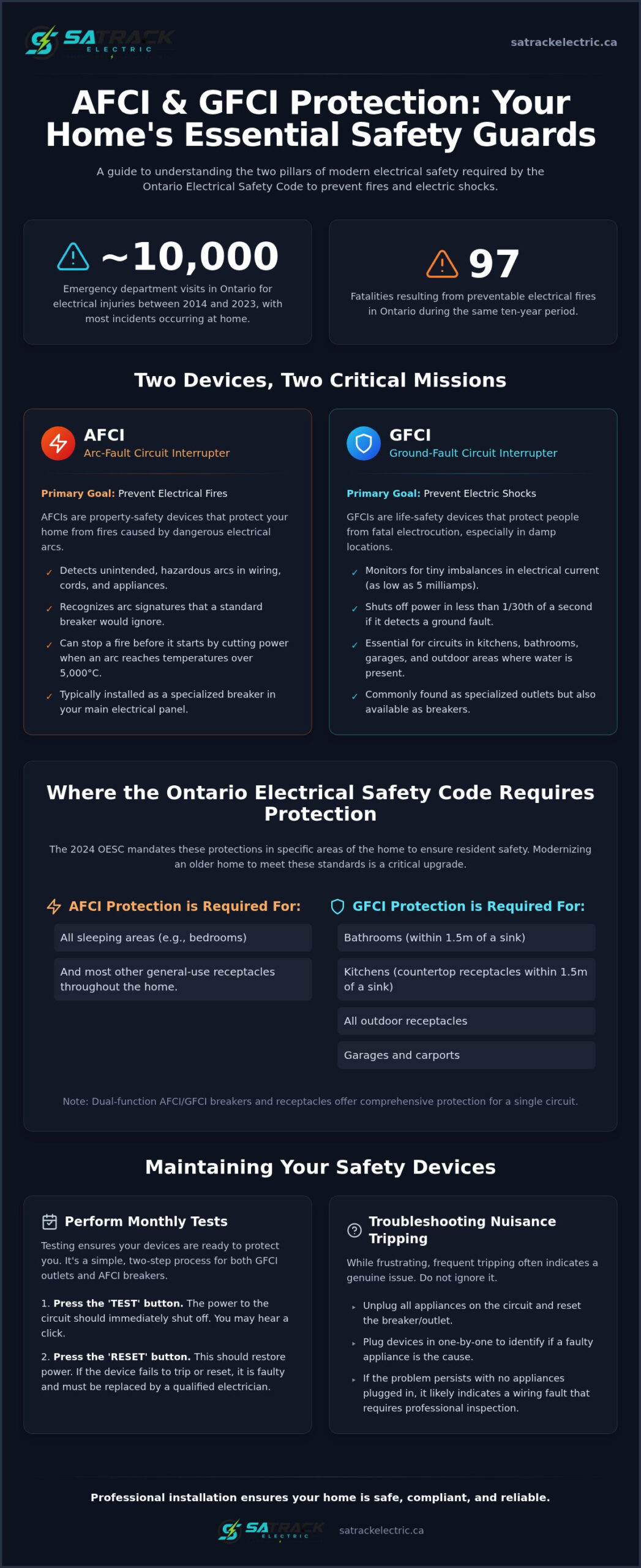
Did you know that between 2014 and 2023, Ontario recorded nearly 10,000 emergency department visits for electrical injuries, with most of these incidents occurring at home? These numbers underscore The Importance of AFCI and GFCI Protection for families throughout Belleville and the Quinte region. It’s natural to feel frustrated when a breaker trips unexpectedly or confused by the technicalities of the 2024 Ontario Electrical Safety Code (OESC), but these standards exist to prevent the fire-related fatalities that have impacted our province over the last decade.
We’ll help you realize how these specialized devices act as silent sentries, protecting your household from both electrical fires and life-threatening shocks. This guide breaks down the specific roles of Arc-Fault and Ground-Fault Circuit Interrupters, explaining exactly where the law requires them and how they differ in function. You’ll gain the confidence to plan your next home upgrade, ensuring your electrical system is both compliant and reliable without the headache of frequent nuisance tripping.
Key Takeaways
- Understand the distinct roles of AFCI and GFCI devices in preventing electrical fires and life-threatening shocks within your home.
- Identify the specific areas where the Ontario Electrical Safety Code mandates these protections, including bedrooms, bathrooms, and outdoor receptacles.
- Recognize The Importance of AFCI and GFCI Protection for modernizing older electrical systems and ensuring long-term safety in the Quinte region.
- Learn how to troubleshoot nuisance tripping and perform essential monthly maintenance to ensure your safety devices remain fully functional.
- Gain confidence in the value of professional installation for complex electrical upgrades and maintaining code compliance.
Understanding Electrical Fire and Shock Hazards in Your Home
Many homes in the Quinte region, particularly in the historic neighbourhoods of Belleville and Picton, feature electrical systems that predate modern safety standards. While these systems might seem functional, they often harbour hidden risks like brittle insulation, loose terminal connections, or outdated fuse panels. Understanding The Importance of AFCI and GFCI Protection starts with recognizing that a traditional circuit breaker’s primary job is to protect the house wiring from melting, not necessarily to protect your family from subtle, life-threatening hazards.
A standard breaker trips when it detects a massive thermal overload or a direct short circuit. However, it’s often blind to low-level arcing or tiny current leaks. Between 2014 and 2023, Ontario saw 97 fatalities specifically resulting from electrical fires. Many of these incidents could have been prevented by modern detection technology that identifies hazards long before a traditional breaker even notices a problem.
The Silent Threat of Arc Faults
Arcing occurs when electricity jumps across a gap, creating high-intensity heat. This happens frequently in older homes when insulation becomes cracked or when a cord is pinched behind heavy furniture. These arcs can reach temperatures exceeding 5,000 degrees Celsius, yet because the current draw remains low, a standard breaker won’t trip. An Arc-Fault Circuit Interrupter (AFCI) uses advanced electronics to recognize the specific digital signature of a dangerous arc. Without this technology, a silent arc can smoulder behind a wall for hours before erupting into a full-scale structure fire.
The Reality of Ground Faults and Water
While arc faults cause fires, ground faults are the primary cause of household electrocutions. In high-risk areas like kitchens, bathrooms, and outdoor patios, moisture provides a lethal path for electricity to “leak” out of its intended circuit. If your body provides a path to the ground, even a tiny leakage current of five milliamps is enough to cause a painful shock or cardiac arrest.
Standard grounding is a vital safety feature, but it doesn’t stop the flow of electricity during a fault. GFCI devices constantly monitor the balance of current moving through a circuit. If they detect even a minuscule loss, they disconnect the power in less than a thirtieth of a second. This rapid response is essential because it stops the current before it can cause permanent physical harm or death. For homeowners in our community, integrating these protections is a fundamental step in modernizing a residential electrical system.
AFCI vs. GFCI: Defining the Two Pillars of Modern Electrical Safety
While both devices are designed to save lives, they perform entirely different functions. A Ground-Fault Circuit Interrupter (GFCI) is a life-safety device meant to prevent fatal shocks. Conversely, an Arc-Fault Circuit Interrupter (AFCI) is a property-safety device meant to prevent structure fires. Recognizing The Importance of AFCI and GFCI Protection requires realizing that one cannot substitute for the other. They monitor different electrical frequencies and signatures to identify specific hazards.
Physical implementation also varies between these two technologies. GFCIs are frequently seen as specialized outlets in kitchens and bathrooms, though they are also available as breakers. AFCIs are almost exclusively installed at the electrical panel as specialized circuit breakers because they must protect the entire branch circuit from the source. Homeowners who prioritize The Importance of AFCI and GFCI Protection often choose to integrate both during residential electrical services to ensure total coverage.
How AFCI Technology Prevents Fires
AFCIs utilize advanced electronics to continuously analyze the flow of electricity. They look for specific digital signatures that indicate an unintended arc. Not all arcs are dangerous; for instance, the motor in your vacuum cleaner or a light switch being flicked creates a “normal” arc. The internal logic of an AFCI breaker can distinguish these from a dangerous, high-intensity arc caused by a loose wire or a damaged cord. According to the Consumer Product Safety Commission on AFCIs, these devices are a critical advancement in preventing the thousands of fires caused by arcing every year. By cutting power the moment a dangerous pattern is recognized, the device stops heat from building up before a fire can ignite.
How GFCI Technology Prevents Electrocution
GFCIs operate on a simple principle of balance. They measure the amount of electricity leaving the device and the amount returning. In a safe circuit, these two numbers should be identical. If the device detects a difference as small as 5 milliamps, it assumes the missing current is “leaking” through an unintended path, possibly through a person. The device reacts with incredible speed, often cutting the circuit in as little as 25 to 30 milliseconds. This rapid response is what makes GFCIs essential in wet areas. It stops the heart-stopping current before it can cause permanent physical damage.
Ontario Electrical Safety Code: Where and Why These Protections Are Required
The Ontario Electrical Safety Code (OESC) is a living document that evolves alongside safety technology. For homeowners in Belleville and Trenton, staying current with these changes is about more than just passing a mandatory inspection. It’s about fundamental life safety. The 2024 OESC (29th Edition), effective May 1, 2025, reinforces The Importance of AFCI and GFCI Protection by expanding their mandatory application in new builds and renovations. Understanding The Importance of AFCI and GFCI Protection is vital for any homeowner planning a renovation or electrical upgrade.
OESC Requirements for Residential AFCI
Code cycles since 2015 have seen a dramatic expansion of AFCI requirements. Originally limited to bedrooms, OESC Rule 26-658 now requires combination-type AFCIs for almost all 125V branch circuits rated 20A or less. This includes living rooms, hallways, dens, and dining areas. This “entire home” strategy ensures that arcing hazards are detected regardless of where they originate. While there are narrow exceptions for dedicated circuits like sump pumps or refrigerators, most general outlets now require this technology. Homeowners often find the AFCI Safety FAQs helpful for understanding how these rules apply to specific household appliances and legacy wiring.
OESC Requirements for Residential GFCI
GFCI protection remains the standard for any location where moisture is present. Rule 26-700 specifies that any receptacle within 1.5 metres of a sink, bathtub, or shower must have GFCI protection. This rule is strictly enforced in kitchens, bathrooms, and laundry rooms. Outdoor safety is equally prioritized; any outlet within 2.5 metres of finished grade must be protected and fitted with a weatherproof “in-use” cover to prevent water ingress.
This level of safety is particularly vital for high-risk installations like GFCI protection for hot tubs and spas. In older Quinte region homes, adding these devices to damp basements or crawl spaces is a critical step in bringing a legacy system up to modern safety expectations. While the code is not retroactive for existing wiring, any modification or addition to these circuits requires the installation of modern protection to meet current legal standards.
Troubleshooting and Maintaining Your AFCI and GFCI Devices
Installing these devices is only the first step in a comprehensive safety strategy. To ensure ongoing reliability, you must commit to regular maintenance. Every AFCI breaker and GFCI outlet features a “Test” button. Pressing this button once a month is a simple yet critical task. It mechanically exercises the internal components to ensure they haven’t seized or failed over time. If a device fails to trip during a test, it has reached the end of its functional life and requires immediate replacement. Most of these units have a service life of 10 to 15 years, so realizing when they’ve aged out is a key part of The Importance of AFCI and GFCI Protection.
A Step-by-Step Guide to Nuisance Tripping
Nuisance tripping occurs when a safety device cuts power without an obvious hazard. While frustrating, it’s often a sign that an appliance is “electrically noisy” rather than a fault in the breaker itself. To isolate the cause, follow this methodical approach:
- Unplug every device currently connected to the affected circuit.
- Reset the breaker or outlet at the source.
- Plug devices back in one at a time, testing each one for several minutes to see if it triggers a trip.
- Pay close attention to older motor-driven items, such as vacuum cleaners or power tools, as worn internal brushes can mimic the signature of a dangerous arc.
If the breaker trips immediately when nothing is plugged in, you likely have a “series arc” within your home’s permanent wiring. Look for signs like flickering lights, buzzing sounds from switches, or warm cover plates. These are not nuisance trips; they are active warnings of a fire risk that require professional attention.
Maintaining Safety Standards
When a trip occurs, always investigate the root cause before simply resetting the power. To reset a GFCI outlet, press the “Reset” button firmly until you hear a distinct click. For an AFCI breaker, you must usually move the handle to the full “Off” position before flipping it back to “On.” Never attempt to bypass a tripping device or replace it with a standard breaker just to stop the interruptions. This removes your primary line of defence and creates a significant fire liability, which ignores The Importance of AFCI and GFCI Protection in a modern household. If you notice discolouration, a persistent burnt smell, or if a device feels hot to the touch, the unit itself may be failing. For a thorough inspection of your system, contact a licensed professional for electrical repairs to ensure your home remains compliant and safe.
Professional Installation and Upgrades in the Quinte Region
Attempting a DIY installation of AFCI breakers is a significant risk that often leads to persistent electrical issues. These devices are far more complex than standard breakers, requiring precise wiring configurations to function correctly. In many older homes across Picton and Brighton, shared neutrals or improper grounding can cause an AFCI to trip immediately upon installation. For an unlicensed individual, troubleshooting these nuances is nearly impossible and can inadvertently create new fire hazards. Hiring a professional ensures that your system adheres to the 2024 Ontario Electrical Safety Code, providing a level of security that DIY attempts cannot match.
Integrating these advanced safety measures is most efficient when performed during a residential electrical service upgrade. This approach allows for a comprehensive review of your home’s circuitry, ensuring that The Importance of AFCI and GFCI Protection is fully realized throughout your living space. A professional safety inspection is particularly valuable for heritage properties, where aging cloth wiring may interact poorly with modern sensitive electronics.
The Panel Upgrade Connection
Older electrical panels often lack the physical space or the busbar compatibility required for modern safety breakers. When you opt for an electrical panel upgrade, you gain the ability to install “Dual Function” breakers. These innovative devices combine AFCI and GFCI protection into a single unit, saving valuable panel space while providing total coverage against both fires and shocks. This integration is a cornerstone of a professional electrical repair strategy, as it addresses multiple safety vulnerabilities simultaneously. Modern panels are designed to handle these larger components, ensuring your system remains organized and easy to maintain.
Local Expertise for Quinte West Homeowners
Satrack Electric serves as a dependable local authority for homeowners in Belleville, Trenton, Greater Napanee, and Cobourg. We understand the specific challenges posed by the Quinte region’s diverse housing stock, from modern developments to century-old estates located in the town centre. As a licensed and insured contractor, we prioritize your peace of mind by delivering thorough, code-compliant results. The Importance of AFCI and GFCI Protection extends beyond simple compliance; it is an investment in the long-term stability of your home. We invite you to realize the benefits of a safer, modernized electrical system that protects your family for years to come.
Secure Your Home With Modern Electrical Safety Standards
Prioritizing the electrical safety of your household involves more than just following regulations; it’s about proactive protection against the leading causes of residential fires and shocks. By understanding The Importance of AFCI and GFCI Protection, you ensure that your property is equipped with the latest technology to detect hazards that standard breakers might overlook. Whether you’re planning a comprehensive panel upgrade or simply updating the outlets in your kitchen and bathroom, these devices provide the silent vigilance your family deserves.
As a licensed and insured electrical contractor specializing in OESC compliance, Satrack Electric is committed to helping homeowners throughout Belleville, Trenton, and the Quinte region maintain a secure environment. We take pride in delivering professional results that eliminate the frustration of nuisance tripping while meeting the highest safety standards. Ensure your home is safe and compliant by contacting Satrack Electric for a professional safety inspection today. Taking this step now provides long-term peace of mind and a more reliable electrical system for the years ahead.
Frequently Asked Questions
What is the difference between AFCI and GFCI protection?
AFCI and GFCI devices address two distinct safety risks. AFCI protection is designed to detect unintended electrical arcs that cause fires, while GFCI protection identifies current leaks to ground that cause lethal shocks. They use different internal logic to monitor your home’s electrical flow. In older Quinte region properties, utilizing both technologies is the most effective way to modernize your safety standards and protect your family from diverse electrical hazards.
Why does my AFCI breaker keep tripping when I use my vacuum?
Vacuum cleaners often cause nuisance tripping because their motors create electrical signatures that mimic dangerous arcs. As the brushes in a motor wear down, they produce sparks that an AFCI breaker might interpret as a fire hazard. If you experience frequent trips in your Belleville home, try testing the vacuum on a different circuit or consult a licensed professional to determine if the breaker or the appliance itself is the primary issue.
Is it mandatory to have AFCI breakers in older Ontario homes?
The Ontario Electrical Safety Code is not retroactive for existing homes in Trenton or Brighton. You aren’t legally required to upgrade your entire panel unless you are undertaking significant renovations or adding new circuits. However, many homeowners choose to install these devices voluntarily. Realizing The Importance of AFCI and GFCI Protection is a proactive step toward preventing electrical fires in heritage homes where aging wiring may pose a higher risk to occupants.
Can I replace a GFCI outlet with an AFCI breaker?
While you can install an AFCI breaker at the panel to protect a circuit that previously used a GFCI outlet, they aren’t interchangeable. An AFCI breaker protects against fire, but it won’t necessarily provide the shock protection required in kitchens or bathrooms. For total safety, many modern installations in Belleville now use dual-function breakers that provide both AFCI and GFCI protection in a single unit, ensuring compliance with current OESC safety standards.
How often should I test my GFCI outlets and AFCI breakers?
You should test your safety devices once every month. Both AFCI breakers and GFCI outlets feature a dedicated test button that mechanically trips the device to ensure it’s still functional. If the device fails to trip when the button is pressed, it means the internal protection has failed. Given that these devices have a typical lifespan of 10 to 15 years, regular testing is essential for maintaining safety in your Quinte West home.
Do I need a GFCI outlet if I already have a GFCI breaker in my panel?
If your circuit is already protected by a GFCI breaker at the main electrical panel, you don’t need additional GFCI outlets on that same circuit. The breaker provides protection for every receptacle downstream. Installing both can lead to confusion during a trip, as you may have to reset both the outlet and the breaker. For residents in Napanee or Cobourg, it’s often more efficient to use a single point of protection for the entire branch.
What happens if an AFCI breaker fails to trip during an arc fault?
If an AFCI breaker fails to trip during an actual arcing event, the high-intensity heat generated can quickly ignite surrounding building materials behind your walls. This failure allows a fire to smoulder undetected for hours. This risk underscores The Importance of AFCI and GFCI Protection and why hiring a licensed contractor for regular safety inspections is vital. Professional maintenance ensures these critical safety components are operational and capable of protecting your Belleville property.
Are AFCI and GFCI requirements the same for commercial properties in Belleville?
Commercial electrical requirements in Belleville follow different sections of the Ontario Electrical Safety Code compared to residential dwellings. While GFCI protection is strictly required in commercial kitchens and outdoor areas, AFCI requirements are currently more focused on residential sleeping quarters and living areas. Our team provides specialized commercial electrical services to ensure your business remains compliant with the specific regulations that apply to your industry and property type in the Quinte region.