
A panel upgrade or recurring electrical fault calls for more than a quick fix; the workmanship behind the repair matters. Quinte West electrical services can help homeowners and businesses address panel concerns, troubleshoot electrical problems, and complete installations with safety and care in mind.
If you need an electrician in Trenton or elsewhere in Quinte West, it helps to understand what the work may involve and when to arrange an assessment. Flickering lights, repeatedly tripping breakers, or a panel that no longer suits the property are reasons to have the issue examined rather than guess at the cause.
This guide explains what to expect from electrical troubleshooting and panel upgrades, how repairs are approached, and what to look for in quality workmanship. You’ll also learn how Satrack Electric supports residential and commercial electrical needs in Quinte West and nearby communities, helping you decide on a practical next step.
Key Takeaways
- Know when recurring electrical issues or panel concerns call for a professional assessment.
- Understand the factors an electrician considers when troubleshooting a fault or planning a panel upgrade.
- See how clear communication and careful workmanship support electrical projects in homes and commercial properties.
- Learn why an electrician’s qualifications matter when arranging electrical work.
- Explore the types of electrical repairs, installations, and services available for properties in Quinte West.
Need an Electrician in Trenton or Quinte West?
Call an electrician when a problem affects safe operation, reliable power, or a building’s intended use. At a Quinte West workplace, that could mean a fault affecting equipment, lighting that disrupts daily operations, or electrical work for a new commercial space. A professional assessment helps define the problem and the work required.
Electrical permits and inspections in Quinte West depend on the work and applicable requirements. Before an installation, alteration, or repair begins, an electrician can identify the relevant process so permitting is included in project planning.
Emergency or 24-hour service is distinct from scheduled commercial electrical work. A description of electrical contracting alone does not establish round-the-clock response, so urgent coverage should not be assumed from a repair or installation listing.
If you spot an electrical hazard, keep people away from exposed wiring, damaged equipment, or a panel showing signs of trouble. A qualified electrician can assess the equipment, trace the fault, and carry out repairs. If an outage affects one building, a professional can examine its electrical system to help determine whether the cause is on the property.
EV chargers, generators, and smart-home systems each have different installation requirements. An assessment should account for the equipment, the building’s existing electrical system, and how you plan to use it. Generator hookups are among Satrack Electric’s commercial services; EV charger wiring and installation are available for residential properties. Smart-home controls have their own design and connection considerations.
Commercial electrical services can include maintenance, repairs, installations, and upgrades. A lighting fault in an office, for example, differs from an equipment connection in a restaurant or retail space. The electrician reviews the issue and site conditions, then identifies the work needed to support the building’s intended use.
Commercial electrical design and installation bring planning and construction together. The design stage defines the electrical requirements for the space and its equipment. The installation follows that plan, with the project sequence shaped by site conditions, operating needs, and the work involved.
Commercial and industrial electrical contracting can involve new installations, upgrades, repairs, or maintenance. A contractor coordinates the electrical work with the project’s schedule and the building’s requirements. Clear planning helps identify which systems are affected, what work must be completed, and how the finished installation will serve the space.
Before work starts, the electrician defines the project scope and explains the repair or installation steps. For a commercial site, useful details include the affected area, equipment involved, and operating needs. These specifics help focus the assessment and align the work with the building’s use.
Professional coordination ensures that every phase of the project aligns smoothly with the building’s schedule. Other construction may trigger separate permits: in Quinte West, decks over 10m² and more than 600 millimetres above grade need a building permit; decks more than 600 millimetres above grade need one when a listed permit condition applies. Tents larger than 60m², attached to a building, or assembled close to other buildings require permits. New homes and additions need permits and may need planning or engineering approval. Multi-residential, various non-residential buildings, and demolitions, including interior demolitions, require permits.
Panel upgrades and troubleshooting
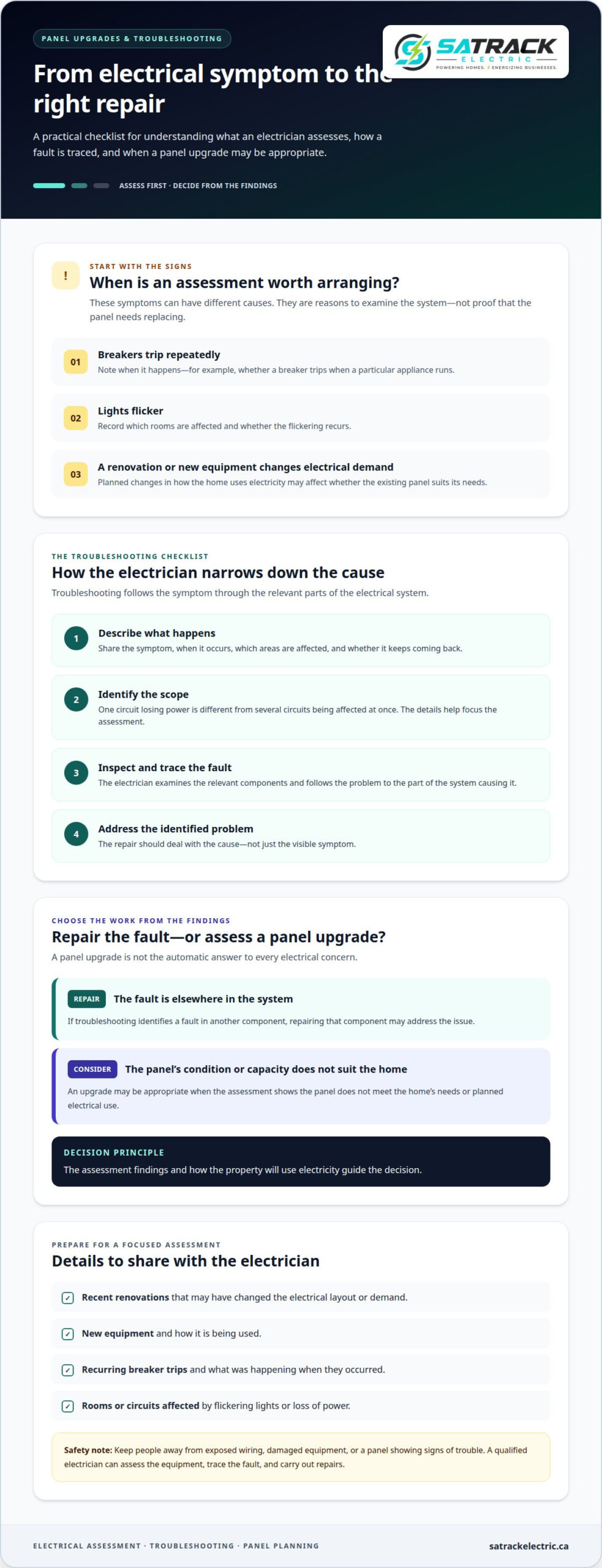
A residential electrical panel distributes power to circuits throughout a home. An electrician may assess it if breakers trip repeatedly, lights flicker, or planned renovations add electrical demand. These symptoms can have different causes, so troubleshooting starts with examining the panel and affected circuits rather than assuming an upgrade is needed.
For a panel upgrade, the electrician considers the home’s existing electrical system and the reason for the project. A growing household, new equipment, or a renovation may change how the property uses electricity. An assessment helps determine whether the panel is the issue and what work would support the planned use.
Troubleshooting follows a deliberate process. The electrician asks about the symptom, such as whether a breaker trips when a particular appliance runs or whether one room loses power. They then inspect relevant components and trace the fault. The repair should address the identified problem, not just the symptom.
Different symptoms can point to different parts of the system. One circuit losing power is not the same as several circuits being affected at once, and flickering lights can have multiple causes. Share when the problem occurs, which areas are affected, and whether it recurs; those details give the electrician useful context.
A panel upgrade is not the automatic answer to every electrical concern. If troubleshooting identifies a fault elsewhere, repairing that component may address the issue. If the panel’s condition or capacity does not suit the home’s needs, an upgrade may be appropriate. The assessment findings and planned electrical use guide the decision.
During an upgrade, the electrician plans the work around the property’s electrical layout and project scope. They assess the existing panel, identify the circuits involved, and determine how the upgrade or replacement will serve the home. A clear explanation of affected areas helps the household understand the work.
Preparation helps focus the assessment. Share details such as recent renovations, new equipment, recurring breaker trips, and rooms affected by flickering lights. A fault that appears only when one circuit is in use, for example, gives the electrician a different starting point from a concern affecting the whole home.
Electrical upgrades and repairs should be based on the diagnosed condition, not guesswork. A professional can explain whether the issue calls for a targeted repair, further troubleshooting, or panel work. For a home assessment, residential panel upgrade service is a relevant next step when the panel itself needs attention.
Customer service and workmanship
Compare local electrical contractors through specific review details, written warranty terms, and stated response expectations. These help assess service quality, while the appropriate response depends on whether work is planned, urgent, or an emergency.
Reviews and Warranties
Reviews are most useful when they describe the work and communication, not just give a general rating. A detailed account of a panel upgrade, repair, or installation can show how the contractor explained the scope and answered questions. Ask for clear information about the work and any applicable warranty terms so you understand what they cover and for how long.
Response Times
Scheduling depends on the type of request. A planned installation differs from a recurring fault or electrical hazard. Emergency availability is a separate commitment, so do not infer it from general repair services. Clear communication about scheduling, arrival expectations, and updates helps households and businesses plan around electrical work.
Good customer service starts with understanding the issue. For a repair, the electrician can ask which room or equipment is affected and when the problem occurs. Those details help focus the assessment. For an installation, discussing the intended use and location helps define the work before it begins.
A clear scope supports quality workmanship. The electrician should explain which areas or systems are involved, what the repair or installation is intended to address, and what project conditions affect the sequence. Lighting installation in a commercial space, for example, has different requirements from replacing a fixture at home.
Communication should continue throughout the work. If an assessment identifies a related issue, the electrician can explain its relevance before undertaking additional work. This helps the property owner understand any change in scope. For a panel project, explaining which circuits are affected can help occupants plan around the work.
At completion, a useful handoff explains what was done and any relevant operating details. After electrical work in a business, for example, staff may need to know which area or equipment was affected. A clear summary links the original concern to the completed work and gives the owner a practical record of the project.
Reviews, warranty terms, and scheduling information each answer a different question. Reviews describe customer experiences, warranty language sets coverage boundaries, and scheduling details clarify expectations. Considering all three gives a more balanced picture than relying on a general rating alone.
Licensed electricians and electrical workmanship
Electrical work calls for careful assessment, clear planning, and a qualified electrician. The professional’s licensing and the steps taken on a project help explain how the work is approached.
Licensed Electricians
A 309A or 442A designation appears as a requirement in electrician job postings for licensed electricians and apprentices. These identifiers provide specific terms readers may encounter when learning about electrical roles. For a project, the important point is understanding who will assess the work, complete it, and explain its scope and outcome.
Before work begins, a professional assessment connects the reported issue to the task required. For an installation, the electrician can identify the area involved and clarify the project scope. The explanation should distinguish a repair from an upgrade or new installation, so the property owner understands what is planned.
Electrical Workmanship
Good workmanship is reflected in how an electrician organizes and completes each task. A panel project, for instance, involves more than fitting equipment; the electrician considers the existing electrical layout and affected circuits. Clear communication about the sequence, work area, and intended result helps the property owner follow the project from assessment to completion.
For a repair, the work should address the fault identified during troubleshooting. If a circuit serves a particular room, the electrician can explain the affected area and the repair’s purpose. This connects the completed work to the original concern instead of leaving a recurring symptom unexplained.
Installation work also benefits from a defined scope. Installing a light fixture, for example, differs from an electrical upgrade to meet changing property needs. The electrician can review the intended use, identify the work area, and describe the planned installation. That discussion helps align the result with how the household or business will use it.
A practical handoff closes the process. The electrician can summarize the work, explain relevant operating details, and note any areas affected by the project. For a commercial installation, this can help staff understand which equipment or space was involved. For a residential repair, it gives the owner a clear account of how the reported issue was addressed.
These details make workmanship easier to assess: the scope is explained, the work responds to the identified need, and the result is communicated clearly. Whether the project involves a repair, installation, or upgrade, these steps connect professional skill with a useful outcome for the property.
What electrical services are available in Quinte West, Ontario?
Electrical work in Quinte West can range from a single repair to planned upgrades across a home or business. The right service depends on the property, the issue, and the intended use of the equipment or space.
Residential projects can include troubleshooting, repairs, installations, maintenance, and upgrades. A homeowner might need a faulty circuit assessed, a light fixture installed, or a panel upgraded to suit the property’s needs. The electrician defines the scope by assessing the existing system and requested work.
Commercial properties have different operating demands. A business may need electrical maintenance, repairs to equipment connections, new installations, or upgrades as its space changes. For example, renovating an office can involve electrical work for its revised layout. A contractor considers how the work relates to the building’s use and coordinates the project scope accordingly.
Electrical repairs address identified problems, while installations add or connect electrical equipment. Upgrades change existing parts of a system to meet project or property needs. Maintenance supports the ongoing condition of electrical systems. These categories can overlap: an assessment may identify a repair as well as a separate need for an upgrade.
- Repairs: Investigate and address an electrical fault affecting a home or business.
- Installations: Complete electrical work for new fixtures or other planned equipment.
- Upgrades: Assess existing systems when property needs or project plans change.
- Maintenance: Carry out electrical work intended to support the property’s systems.
- Panel upgrades: Review the panel as part of a project or electrical concern.
A panel upgrade is one type of electrical upgrade. It may be considered when the panel’s condition or the home’s plans warrant professional assessment. The electrician reviews the existing setup, the circuits involved, and what the property needs the panel to support. This helps distinguish panel work from a repair elsewhere in the system.
For a business, electrical contracting can cover installation, repair, upgrade, and maintenance work. A planned project starts by defining the affected area and intended outcome. This helps align the electrical work with the property’s operations and the project sequence.
To choose the appropriate service, describe the issue or planned change, identify which rooms or areas are involved, and explain how the space is used. Those details help an electrician assess whether the work calls for troubleshooting, repair, installation, maintenance, or an upgrade. Arrange electrical service for your property when a project or electrical concern needs professional attention.
Satrack Electric
Satrack Electric helps homeowners and businesses plan electrical work and address repair needs in Quinte West, Belleville, Trenton, Picton, Brighton, Greater Napanee, Cobourg, and nearby communities. Residential and commercial services include electrical repairs, installations, and upgrades, from a faulty fixture to planned work in a business space.
When arranging a project, describe the issue or planned change, the affected area, and how the space is used. These details help define the work and guide the next steps. For a repair, explain what is happening and when; for an installation, describe what the property needs the equipment to do.
For electrical work in your home or business, contact Satrack Electric to discuss your project.
Move Your Electrical Project Forward
The next step is to turn an electrical concern or planned change into a clearly defined project. For Quinte West electrical services, the property type and work required shape the conversation, whether the need is residential or commercial. Satrack Electric provides services for both, including electrical repairs.
A concise description of the affected space, the issue, and the outcome you need is a practical starting point. Explain whether you’re addressing a fault or planning electrical work for a home or business. This gives the project a clear beginning without assuming the solution before the work is assessed.
Electrical decisions are easier to manage when the scope is clear and the work is suited to the property. Contact Satrack Electric to discuss your electrical needs and take the next step with confidence.
Frequently Asked Questions
Which licensed electricians serve Quinte West and nearby areas?
Satrack Electric serves Quinte West, Trenton, Belleville, Picton, Brighton, Greater Napanee, Cobourg, and surrounding Ontario communities. It is a licensed and insured electrical contractor, and its Electrical Safety Authority licence number is 7009789. Residential and commercial customers can turn to the company for electrical work, including repairs, installations, and panel upgrades. The project’s scope helps determine which service applies.
How much does electrical panel replacement or upgrade cost in Quinte West?
The work required depends on the panel’s condition, the project scope, and any related electrical work. Replacing a panel may involve different tasks from an upgrade that is part of a broader property project. Satrack Electric provides project-specific pricing after a quote request. Sharing the property type, panel concern, and planned changes helps frame the estimate for your Quinte West electrical services.