
If the power goes out during the next major storm, do you know exactly what it takes to keep your lights on, or are you concerned about the “hidden” expenses of a professional setup? It’s common to feel overwhelmed by technical jargon and the strict regulatory requirements surrounding home backup systems. You likely recognize the need for a permanent power solution, but the total generator installation cost Ontario homeowners encounter often involves more than just the price of the unit itself.
We’ve prepared this 2026 budgeting guide to offer a clear, professional breakdown of every expense, from mandatory ESA permits to the specialized wiring required for a safe standby system. Our goal is to replace uncertainty with a logical framework for your project. You’ll learn how to navigate the latest Ontario Electrical Safety Code updates, understand the impact of TSSA fuel line inspections, and identify how a licensed professional ensures your paperwork is compliant. By the end of this guide, you’ll have a thorough understanding of how to achieve a reliable installation that protects your property for years to come.
Key Takeaways
- Understand the three primary pillars that define a project budget: equipment selection, professional labour, and mandatory safety compliance.
- Learn why an approved transfer switch is critical for preventing dangerous backfeeding and maintaining alignment with the Ontario Electrical Safety Code.
- Factor in necessary expenses such as ESA permit fees, TSSA fuel line inspections, and site preparation to calculate an accurate total generator installation cost Ontario homeowners should expect.
- Follow a structured process to identify your essential electrical loads, ensuring you invest in a system sized correctly for your home’s most critical appliances.
- Recognize the legal and safety advantages of partnering with a Licensed Electrical Contractor to manage complex paperwork and professional standby generator wiring.
What Influences Generator Installation Cost in Ontario?
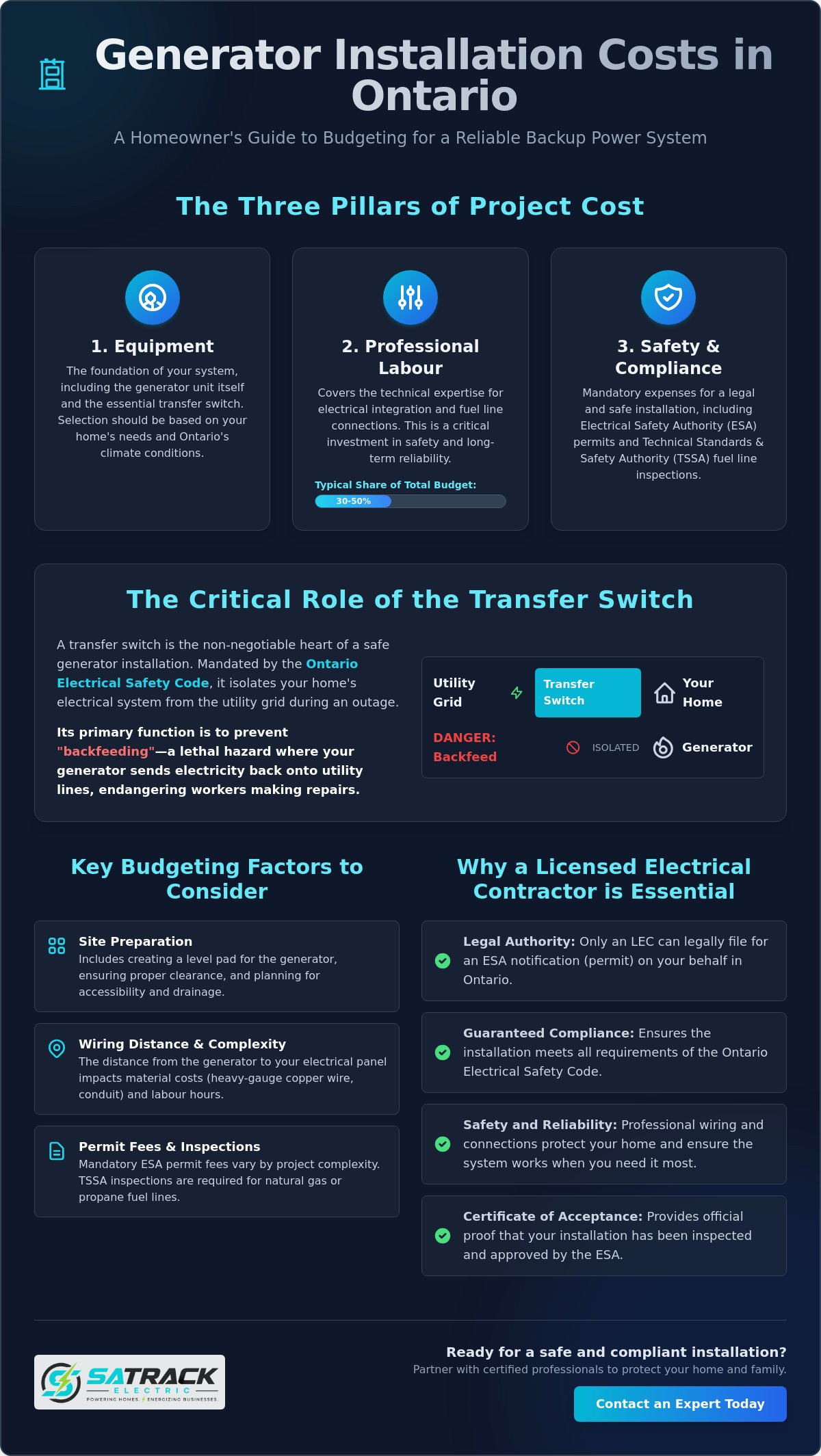
Identifying the total investment for a backup power system requires looking past the sticker price of the unit. The generator installation cost Ontario residents encounter is built upon three distinct pillars:
- Equipment: The generator unit itself and the required transfer switch.
- Labour: Technical hours for electrical integration and fuel line connections.
- Compliance: Mandatory ESA permits and TSSA safety inspections.
Total Installed Cost is the cumulative sum of the generator unit, the transfer switch, all necessary wiring, and the legal permits required by provincial authorities. Each of these components is vital for a system that functions reliably when the utility grid goes down. Skipping any of these steps might save money initially, but it compromises the safety and legality of your home electrical system.
Many homeowners research prices online and find American averages that don’t reflect the local reality in our province. Ontario maintains higher safety standards and different labour rates that influence the final quote. Our province requires specific certifications for technicians handling both electricity and fuel lines, ensuring that every installation is safe for the long term. In regions like Quinte West and Belleville, the local climate also plays a role in equipment selection. A standby generator in this area must endure heavy ice, wind, and fluctuating temperatures. Choosing a unit rated for these conditions ensures the system remains operational for its full expected lifespan despite the harsh weather.
Labour vs. Equipment: The Cost Breakdown
In a typical project, labour often accounts for 30% to 50% of the total budget. This isn’t just for the hours spent on-site; it covers the technical expertise needed to integrate the system with your existing electrical panel. The physical distance between your electrical service entrance and the generator’s location significantly impacts material costs. Longer runs require more heavy-gauge copper wiring and conduit, which adds to the final tally. Choosing a licensed professional is a safety investment that guarantees your system won’t fail during the very emergencies it was designed to handle.
The Role of the Electrical Safety Authority (ESA)
Every generator installation in Ontario must be reported to the Electrical Safety Authority through a process called notification. This isn’t a mere suggestion; it’s a legal requirement designed to protect your home and the utility workers on the grid. Permit fees vary based on the complexity of the residential electrical services involved, such as whether a full panel upgrade is needed to support the new load. This is a major factor in the overall generator installation cost Ontario residents should expect when planning their backup power strategy. Only a Licensed Electrical Contractor (LEC) is legally authorized to pull these permits for you. This ensures that a qualified inspector reviews the work, confirming it meets the Ontario Electrical Safety Code and providing you with a Certificate of Acceptance upon completion.
Standby Generator Wiring in Ontario: Technical Requirements
The technical configuration of your backup system is the most significant factor in ensuring long-term safety and reliability. A central requirement in the Ontario Electrical Safety Code is the installation of a transfer switch. This device acts as a gateway between your home, the generator, and the utility grid. Its primary purpose is to prevent “backfeeding,” a dangerous situation where your generator sends electricity back into the power lines. Backfeeding poses a lethal risk to utility workers attempting to repair the grid during an outage. The Electrical Safety Authority (ESA) maintains strict oversight on these installations to protect both homeowners and the public infrastructure.
While the unit price of a generator is easy to find, the generator installation cost Ontario residents pay is often determined by the complexity of the wiring method chosen. Beyond the transfer switch, your system must adhere to specific grounding and bonding rules that are unique to provincial standards. These rules ensure that any electrical faults are safely directed into the ground rather than through your home’s appliances or structure. For larger properties or businesses, commercial generator installation in Ontario may be necessary to handle the increased load requirements of a high-capacity system.
Automatic Transfer Switches (ATS) vs. Manual Interlocks
An Automatic Transfer Switch (ATS) is the standard choice for whole-home standby systems. It detects a power loss and triggers the generator to start without any human intervention. This “set and forget” approach requires more intensive wiring, as the switch must be integrated directly into your main service entrance. In contrast, a manual interlock kit is a cost-effective alternative typically used with portable units. It requires you to physically flip a switch to engage backup power. While an interlock kit is simpler to install, an ATS generally requires double the wiring hours due to the control logic and sensory circuits involved.
Integrating with Your Electrical Panel
Many older homes in Ontario were built with 100-amp electrical services that may not have the physical space or capacity for a large generator. In these cases, a professional electrical panel upgrade in Belleville is often a prerequisite for a safe installation. If a full upgrade isn’t within your current budget, we often recommend a “sub-panel” approach. This involves moving your most critical circuits, like the furnace, sump pump, and refrigerator, into a dedicated panel powered by the generator. This method requires meticulous circuit mapping to ensure you don’t overload the system during a transition. If you’re unsure about your current capacity, consulting a licensed electrical contractor can clarify your home’s readiness for backup power.
Hidden Costs: Permits, Gas Lines, and Site Preparation
A successful project involves more than just selecting a unit and connecting wires. The physical environment where your equipment resides is a primary factor in its long-term performance. A standby generator is a heavy piece of machinery that requires a stable, level, and non-combustible base. Most professional installations utilize a poured concrete pad or a specifically engineered gravel bed. This foundation prevents the unit from shifting or sinking over time, which could otherwise put dangerous stress on your electrical conduits and fuel connections. Neglecting site preparation can lead to mechanical failure or safety hazards that far outweigh the initial savings of a DIY approach.
Local regulations also play a significant role in your planning process. Municipalities like Trenton and Picton have specific bylaws regarding noise levels and setbacks from property lines or windows. These rules ensure that exhaust fumes don’t enter your home and that the sound of the engine doesn’t disturb your neighbours. Navigating these requirements is a standard part of the generator installation cost Ontario homeowners must account for. It’s also important to understand that a generator installation is a dual-trade effort. While a licensed electrician manages the power integration, a certified gas technician must handle the fuel supply. Gas line installation is usually a separate but concurrent cost that must be coordinated precisely to ensure the system is ready for testing on the same day the electrical work is completed.
Fuel Source Logistics: Natural Gas vs. Propane
Choosing between natural gas and propane depends largely on your property’s location. For homes in urban Quinte West, tapping into an existing natural gas line offers a superior long-term ROI since you never have to worry about fuel deliveries or running out during an extended outage. Propane is the standard for rural properties, though it requires the additional cost of tank rentals or purchases and a concrete pad for the tanks. A critical but often overlooked expense in our climate is the “cold weather kit.” These kits, which include battery warmers and oil heaters, are essential for ensuring your generator starts reliably when temperatures drop to -20°C. Without these components, the thick oil and cold battery may fail to crank the engine during a winter ice storm.
The Price of Compliance and Safety
Provincial law requires every installation to pass a safety review. As of April 1, 2026, the Electrical Safety Authority (ESA) increased its wiring and licensing fees by 1.9%, which directly impacts the permit costs for your project. These fees cover the professional inspection that validates your system’s safety. Hiring a licensed insured electrician Ontario residents trust is the only way to ensure these permits are filed correctly. This status protects you from liability and ensures your home insurance policy remains valid. In Ontario, performing DIY electrical work on a standby system or using an unlicensed contractor can void your insurance coverage, leaving you unprotected in the event of a fire or electrical mishap.
How to Budget for Your Ontario Generator Installation
Designing a budget for backup power starts with a clear assessment of your home’s electrical priorities. It’s not just about the generator’s price tag; it’s about matching the system to your lifestyle and property needs. By following a structured approach, you can avoid the common pitfalls of under-sizing or over-spending.
- Step 1: Identify “Must-Run” Appliances: Determine which systems are non-negotiable for your safety and comfort. For most Ontario homes, this list includes the sump pump, furnace blower, and refrigerator to prevent food spoilage during a summer blackout.
- Step 2: Calculate Total Wattage: Add up the starting and running wattage for your essential items. High-draw appliances like well pumps require a significant “surge” of power to start, which must be factored into your total load calculation.
- Step 3: Choose Your System Type: Decide if a portable unit with a manual interlock meets your needs or if the seamless transition of a permanent standby unit is the right fit. This choice is the largest variable in the generator installation cost Ontario residents face during the planning phase.
- Step 4: Request a Site Assessment: Invite a local Belleville electrical expert to evaluate your home’s infrastructure. A professional can identify if your current panel or gas service requires modifications before the new equipment arrives.
- Step 5: Review the Final Quote: Ensure the estimate is comprehensive and transparent. A professional quote should clearly outline ESA permit fees, HST, and site cleanup so there’s no surprise on the final invoice.
Sizing Your System for Value
“Oversizing” a generator is a common mistake that leads to wasted fuel and higher upfront costs. Instead of trying to power the entire house at once, we recommend an “essential loads” strategy. Modern load-shedding technology allows a smaller, more efficient generator to manage larger loads by temporarily pausing non-essential circuits like a water heater or clothes dryer. This approach keeps the initial generator installation cost Ontario homeowners pay much lower while still providing complete protection for your home’s core functions.
Evaluating the Long-Term ROI
A permanent generator installation is often viewed as “outage insurance.” In Ontario, where winter storms can lead to multi-day outages, a reliable system prevents thousands of dollars in damages from frozen pipes or flooded basements. Beyond immediate protection, a professionally installed standby unit increases your property value and provides peace of mind for potential buyers. If you’re ready to secure your home’s power, consult our experts for a professional generator installation quote today.
Professional Generator Installation in Belleville and Quinte West
Satrack Electric stands as a dependable local authority for backup power solutions across the Quinte region. We understand that the total generator installation cost Ontario residents invest represents a significant commitment to their family’s safety and property integrity. Our status as a Licensed Electrical Contractor (LEC) is the cornerstone of our professional assurance. This designation ensures that every project we undertake is fully insured and strictly adheres to the Ontario Electrical Safety Code. By managing the technical complexities from start to finish, we allow homeowners to realize the benefits of a turnkey solution without the stress of navigating regulatory hurdles alone.
A professional installation is only the first step in securing your home’s resilience. Once your system is operational, ongoing care is vital for long-term reliability. Scheduling regular home generator maintenance Ontario homeowners can depend on ensures your generator remains in peak condition, ready to engage the moment utility power fails. This proactive approach protects your investment and provides the peace of mind that comes from knowing your backup system is truly dependable.
The Satrack Electric Professional Process
Our team follows a disciplined, step-by-step workflow that prioritizes safety and competence. It begins with a thorough site evaluation to determine the optimal placement and capacity for your specific needs. We take pride in maintaining organized job sites and delivering workmanship that meets the highest industry standards. We handle all the “red tape,” including filing mandatory ESA notifications and coordinating with municipal inspectors. This methodical approach guarantees that your installation is not only functional but fully compliant with provincial law. We focus on clear communication, ensuring you understand each phase of the project as it moves toward final certification.
Get a Professional Quote Today
Every property has unique requirements that influence the final generator installation cost Ontario homeowners should expect. We focus on providing reliable, tailored electrical solutions that respect your budget and power priorities. Whether you are protecting a small residence or a large commercial facility, we provide the steady expertise needed for a successful project. Our on-site assessments provide a logical breakdown of equipment, labour, and permit requirements. Contact Satrack Electric for your generator installation quote to begin your journey toward total power reliability.
Secure Your Home’s Power for 2026 and Beyond
Reliable backup power is more than a luxury; it’s a strategic investment in your property’s safety and continuity. We’ve explored how the total generator installation cost Ontario homeowners encounter is shaped by technical wiring requirements, provincial safety permits, and precise system sizing. Prioritizing a compliant installation ensures your home remains protected during severe weather while maintaining the validity of your insurance policy. Choosing a system that balances your essential loads with modern technology provides the best long-term value for your investment.
Satrack Electric provides the professional expertise needed to manage these complexities with integrity. As a Licensed Electrical Contractor (LEC), we’re fully insured for both residential and commercial work. We’ve served the communities of Belleville, Trenton, and Quinte West since our inception, delivering thorough results that prioritize customer peace of mind. Our methodical approach ensures every job site is organized and every connection meets the highest standards of workmanship. Request a Professional Generator Installation Quote today for a personalized assessment of your backup power needs. We’re ready to help you build a more resilient home.
Frequently Asked Questions
Do I need a permit to install a generator in Ontario?
Yes, a permit from the Electrical Safety Authority (ESA) is legally required for all hard-wired generator installations in Ontario. A Licensed Electrical Contractor must file this notification on your behalf before work begins. This process ensures that a provincial inspector reviews the installation to confirm it meets the Ontario Electrical Safety Code, which is essential for maintaining your home insurance coverage.
How much does it cost to wire a portable generator to a house in Ontario?
The price for wiring a portable unit is determined by the complexity of your electrical panel and the chosen connection method. While a manual interlock kit is often the most budget-friendly option, the total generator installation cost Ontario homeowners pay also includes professional labour and mandatory ESA inspection fees. If your electrical panel is located far from the generator’s outdoor inlet, material costs for heavy-gauge copper wiring will increase.
Can I install a backup generator myself to save on costs?
No, you cannot legally perform the electrical installation of a standby generator yourself in Ontario. Provincial law mandates that only a Licensed Electrical Contractor (LEC) can perform this work and pull the required permits. DIY installations pose significant safety risks, including electrical fires and dangerous backfeeding into the utility grid, and will likely result in the denial of insurance claims if a mishap occurs.
What is the difference between a manual transfer switch and an interlock kit?
A manual transfer switch is a separate electrical sub-panel that contains only the specific circuits you want to power during an outage. An interlock kit is a mechanical sliding plate installed directly on your existing main panel that prevents the generator and utility power from being active at the same time. Interlock kits are generally less expensive to install but require more active management of your home’s electrical load.
Is a standby generator worth the investment for a home in Belleville?
A standby generator is a valuable investment in Belleville due to the regional risk of extended outages caused by ice storms and high winds. It serves as “outage insurance” that prevents costly damages such as frozen pipes or basement flooding from sump pump failure. Most homeowners realize a return on this investment through increased property resale value and the elimination of hotel or repair costs during emergencies.
How long does a typical generator installation take from start to finish?
The physical installation usually takes one to two days of on-site work by a coordinated team of electricians and gas technicians. However, the entire process typically spans several weeks when you account for the initial site assessment, equipment delivery, and scheduling the final ESA inspection. Planning your installation during the spring or summer helps ensure your system is fully certified before the winter storm season arrives.
Does my electrical panel need an upgrade before I install a standby generator?
Your electrical panel might need an upgrade if it is an older 100-amp service or if it lacks the physical space for the required double-pole breakers. A professional load calculation is necessary to determine if your current infrastructure can handle the additional demand of a standby system. If your panel is outdated, combining the installation with an electrical panel upgrade is a logical and cost-effective way to modernize your home’s safety.
What maintenance is required for a standby generator in the Ontario climate?
Standby generators require annual oil and filter changes, battery testing, and a thorough inspection of the enclosure for debris or pests. In the Ontario climate, it’s vital to ensure your cold weather kit is operational so the engine starts reliably in sub-zero temperatures. Most units are programmed to perform a weekly exercise cycle, which keeps the engine lubricated and identifies potential issues before a real power failure occurs. For a complete overview of service intervals and ESA-compliant upkeep, review our detailed guide on home generator maintenance in Ontario to keep your system performing at its best year-round.