
A GFCI that keeps tripping after the rain has stopped may still be responding to moisture, damage or an electrical fault on the circuit. If your outdoor GFCI outlet isn’t working in Picton, don’t treat repeated trips as a nuisance or keep pressing RESET. The cause should be identified before power is restored.
It’s understandable to expect the outlet to work again once everything looks dry, but a continuing fault may point to a problem inside the receptacle or elsewhere on the circuit. This guide explains where the RESET button may be, why a GFCI can keep tripping after rain, and when weather damage may call for replacement. It also explains what affects repair scope in Picton, so you know what an electrician may assess before recommending next steps.
Key Takeaways
- If an outdoor GFCI keeps tripping after rain, repeated resets can hide an unresolved fault; identify the cause before restoring power.
- The reset button may be on a GFCI elsewhere in the home, since one receptacle can also protect outdoor outlets downstream.
- Cracks, discolouration, warping, loose-fitting plugs or water exposure are signs that an outdoor GFCI may need replacement.
- A repair assessment can help distinguish a failed receptacle from a tripped breaker, an affected device or a wiring issue.
- Repair costs depend on the fault, the condition of the outlet and circuit, and the work needed to restore safe operation.
Can rain make an outdoor outlet stop working?
Yes. Moisture can contribute to an electrical imbalance, causing an outdoor GFCI to trip after rain or remain without power. In Ontario, outdoor receptacles should have GFCI protection, and the Ontario Electrical Safety Code governs installation requirements for the receptacle and its location.
-
Have an electrician reset the outdoor GFCI safely
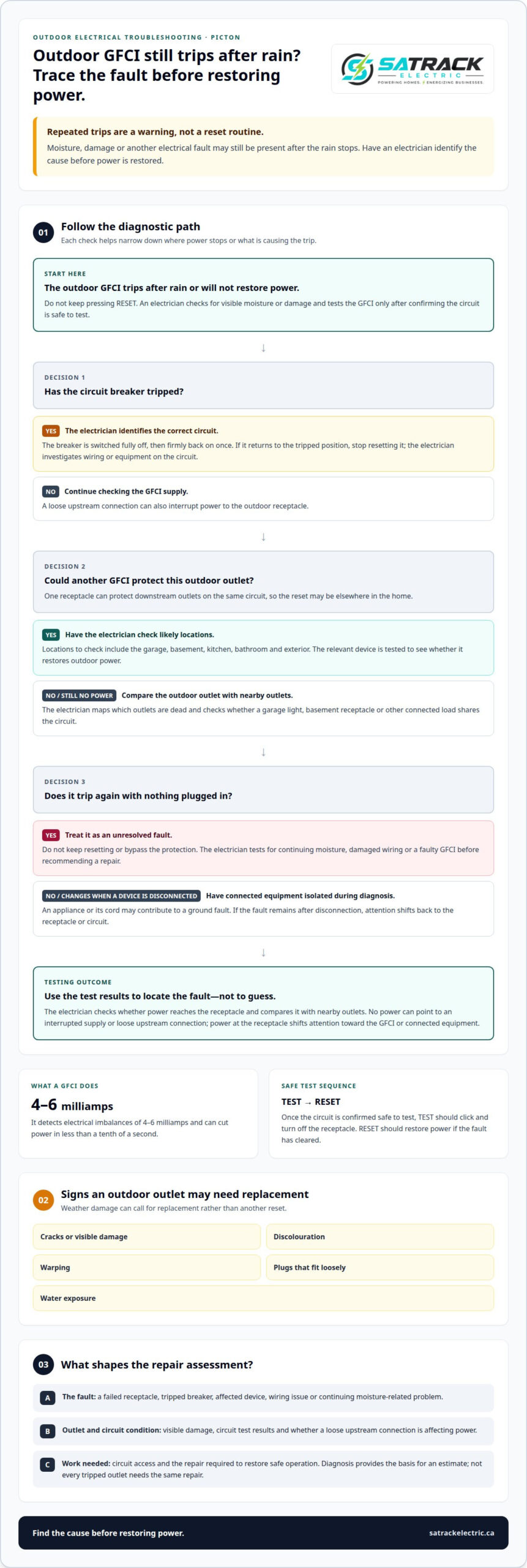
Arrange for an electrician to assess the outlet before trying another reset, especially if it trips repeatedly after rain. The electrician checks for visible moisture or damage and tests the GFCI only after confirming the circuit is safe to test. The TEST button should click and turn off the receptacle; pressing RESET should restore power if the fault has cleared.
A GFCI detects electrical imbalances of 4-6 milliamps and can cut power in less than a tenth of a second. If it trips again with nothing plugged in, repeated resets are not a safe solution. The electrician investigates the cause rather than bypassing the protection.
-
Have an electrician check for a tripped circuit breaker
If the GFCI has no power or will not reset, have an electrician inspect the electrical panel. A tripped breaker can leave the receptacle without power. The electrician identifies the correct circuit, switches its breaker fully off, then firmly back on once.
If the breaker returns to the tripped position, the electrician stops resetting it and investigates a wiring problem or an issue with equipment on the circuit. A loose upstream connection can also interrupt power to the GFCI. The breaker’s response helps distinguish a supply problem from a failed receptacle.
-
Have an electrician diagnose common outdoor GFCI reset problems
Have an electrician determine whether the outlet has power, whether the GFCI has failed, or whether an electrical imbalance persists. A reset lockout can prevent power restoration when conditions remain unsafe. Moisture-related faults, damaged wiring and a faulty GFCI are different problems, so the electrician tests the circuit before recommending a repair.
If a newly replaced GFCI will not reset, reversed line and load wires may be the cause. The electrician checks the connections and corrects the wiring where needed. A reset button that trips immediately, even with nothing plugged in, signals a problem that needs diagnosis, not repeated pressing.
- Have an electrician locate an upstream GFCI. Another GFCI on the same circuit may protect the outdoor receptacle. The electrician checks likely locations, including the garage, basement, kitchen, bathroom and exterior, then tests the relevant device to see whether it restores outdoor power.
- Ask for a repair-time estimate after diagnosis. The time required depends on whether the electrician can restore power with a safe reset or finds a failed receptacle, wiring fault or continuing moisture-related problem. Circuit access and the repair needed also affect the work. Diagnosis provides a basis for an estimate, rather than assuming every tripped outlet needs the same repair.
Where is the reset button for my outdoor outlet?
An outdoor receptacle can lose power because of another outlet or device on the same circuit. An electrician traces the circuit from the outdoor receptacle, checking affected outlets and appliances before determining where the fault lies.
- Have the electrician map which outlets have lost power. The electrician tests the outdoor receptacle and nearby outlets, then checks whether the same circuit supplies a garage light, basement receptacle or other connected load. A GFCI trip can cut power to downstream outlets, so several dead receptacles may share one cause. Mapping the circuit helps distinguish a local outlet problem from a fault affecting multiple locations.
- Have the electrician isolate connected devices. Devices connected to the GFCI or downstream outlets may contribute to a ground fault. The electrician identifies appliances or equipment on the affected circuit and isolates them during diagnosis. If the outlet remains powered after a device is disconnected, that comparison helps determine whether the device or its cord is involved. If the fault remains, the investigation turns back to the receptacle or circuit.
- Ask for power testing at the outdoor receptacle. After checking the breaker and GFCI, the electrician tests whether power reaches the outlet. No power can indicate an interrupted supply or loose upstream connection; power at the receptacle shifts attention toward the GFCI or connected equipment. The electrician compares the outdoor point with nearby outlets to locate where power stops, rather than assuming the exterior receptacle has failed.
- Have the electrician inspect connections only after isolating power. Before examining outlet connections, the electrician turns off the circuit breaker and verifies that the circuit is de-energized. The inspection includes stab-in connections, where wires enter the back of a receptacle, and wire connectors joining conductors. A loose connection can interrupt power to the outdoor outlet and other receptacles farther along the circuit. The electrician secures or corrects the connection as required, then tests the circuit again.
- Use the test results to guide the repair. If the outdoor receptacle and nearby outlets remain dead after the breaker and GFCI checks, the electrician traces the wiring between the last working point and the first dead one. That comparison can narrow the fault to a connection, receptacle, or connected device. If the issue requires electrical repair, professional electrical repair addresses the fault at its source instead of relying on repeated resets.
When to replace a weather-damaged outlet
Visible damage may mean an outdoor GFCI needs replacement, not another reset. An electrician can assess the receptacle, box, cover and wiring together.
- Note what changed before arranging an assessment. Share whether the GFCI stopped working after heavy rain, yard work or an impact. Tell the electrician whether the reset button stays in, trips immediately or will not engage. These details help distinguish a damaged receptacle from damage to its box or wiring and guide the inspection.
-
Look for yard-work damage
Have an electrician inspect the outlet if a mower, trimmer or shovel strikes its enclosure or nearby wiring. A cracked box, displaced cover or exposed conductor may indicate impact damage beyond the receptacle itself. Don’t use the outlet or press RESET if you see damaged parts. The electrician can trace affected wiring and check whether the box still protects its connections.
-
Replace a damaged GFCI
Ask an electrician to replace a GFCI with discolouration, cracks, warping, loose-fitting plugs or signs of water exposure. These conditions can compromise the receptacle or its safe operation. Repeatedly pressing RESET won’t correct physical damage. The replacement assessment should include the outlet box and wiring, not just the reset button.
- Consider the outlet’s age alongside its condition. An outdoor GFCI that is more than 10 years old and showing wear is a candidate for replacement. Age alone does not establish the cause of a failure, so the electrician considers visible wear, water exposure and how the receptacle responds during testing. A new device also needs correctly connected wiring to reset and operate as intended.
- Have the electrician assess outdoor protection. Outdoor receptacles should be weather-resistant and have a cover suited to their location. If a cord remains plugged in outdoors, an in-use cover protects the outlet while connected. The electrician can determine whether damage extends to the cover, box or wiring, then restore the receptacle’s protection as part of the repair.
- Keep damaged equipment out of service until assessed. A GFCI that trips after rain may have been exposed to water or may have another electrical fault. If its face is cracked, warped or discoloured, or plugs no longer fit securely, leave it unused and describe these signs during the repair visit. This gives the electrician a clear starting point for deciding whether replacement is needed.
Locating GFCI outlets that may protect outdoor receptacles
Yes. An outdoor receptacle may be protected by a GFCI elsewhere on the same circuit, and a tripped breaker can also interrupt its power. An electrician traces the circuit and tests likely protection points instead of assuming the outdoor outlet is the source.
- Have the electrician check the panel and map the affected circuit. The electrician identifies whether the breaker is tripped and which receptacles have lost power. A tripped breaker can leave an outdoor GFCI without power, so resetting the outdoor device alone may not restore it. Comparing working and dead outlets on the circuit helps narrow down where the interruption begins.
- Ask the electrician to inspect likely GFCI locations. GFCIs that protect outdoor receptacles may be in a bathroom, kitchen, basement, garage or on the home’s exterior. The electrician checks these locations for TEST and RESET buttons, then tests devices that may be connected to the outdoor circuit. This systematic search is useful when the exterior receptacle has no visible reset button.
- Have the electrician account for missing labels. Downstream receptacles should be labelled as GFCI-protected, but labels may fall off. The electrician doesn’t rely on a label alone. They compare outlets that lose power together, test a possible upstream GFCI and determine whether resetting that device restores power to the outdoor receptacle.
- Ask for connected devices to be isolated during diagnosis. The electrician identifies devices plugged into the GFCI and downstream outlets, then unplugs them as needed to help locate a possible ground fault. If the circuit responds differently with a device disconnected, that result can show whether the equipment is contributing to the trip. This avoids assumptions based only on the outdoor outlet’s condition.
- Have the electrician test the suspected GFCI in sequence. After identifying a likely upstream device, the electrician presses its TEST button and confirms that it turns off, then presses RESET. The electrician checks whether the outdoor receptacle and other affected outlets regain power. If they do not, the investigation continues through the circuit instead of repeatedly pressing buttons.
- Use the circuit results to identify the next check. If the electrician finds a tripped breaker, an upstream GFCI or a connected device linked to the outage, that finding guides further diagnosis. If resetting does not restore power, the electrician checks for an interrupted connection or a faulty receptacle. Recording which outlets respond helps distinguish a single failed point from a wider circuit issue.
Outdoor outlet repair and installation costs
Repair scope in Picton depends on the fault and the work needed to restore safe operation. Replacing a receptacle, repairing wiring and installing a new outdoor circuit each involve different work, so diagnosis matters.
- Request a diagnosis before deciding on the repair. For an outdoor GFCI outlet that isn’t working in Picton, an electrician determines whether the issue involves the receptacle, its wiring, a connected device or the circuit supplying it. A ground fault that clears after isolating a device differs from a failed receptacle or damaged terminals. The findings establish the work required and provide a basis for an estimate.
- Distinguish a receptacle replacement from circuit repair. A failed GFCI may need replacement, while a loose connection or damaged conductor may require additional work. The electrician assesses the box, wiring and connections, not only the device visible outdoors. If other outlets are affected, tracing the circuit involves more work than changing one receptacle.
- Determine whether a new circuit is necessary. Installing a dedicated outdoor circuit involves more than replacing an existing outlet. The estimate depends on the route from the electrical panel, access through finished spaces or exterior walls, and the wiring and protective devices required. Difficult access can change the scope compared with a straightforward connection.
- Include weather protection and site conditions in the assessment. The electrician considers whether the outdoor receptacle needs a suitable cover, whether water exposure has damaged the box, and whether yard-work damage extends into the wiring. A cracked enclosure with intact wiring calls for a different scope than a damaged cable requiring repair. These conditions affect the work and materials involved.
- Ask for a written scope of work. The price depends on the situation and is provided after a quote request. Relevant factors include the diagnosed fault, receptacle and wiring condition, access to the circuit, materials, and whether the work involves replacement, repair or a new circuit. In Ontario, if the work requires Electrical Safety Authority notification and inspection, these should be included in the written job scope.
- Arrange an assessment if the fault persists. If an outdoor GFCI outlet is not working in Picton and keeps tripping or won’t reset, it needs diagnosis before power is restored. To arrange an outdoor electrical repair assessment, share what happened, such as rain exposure, visible damage or other outlets losing power. Those details help establish the issue and the work to be estimated.
Satrack Electric
Satrack Electric can help when an outdoor GFCI keeps tripping, won’t reset or shows weather or impact damage. Its electrical repair and installation services cover residential and commercial needs, including assessing the receptacle, related wiring and circuit to determine the work required.
Share what you’ve observed, such as whether the fault followed rain, whether nearby outlets also lost power and whether the outlet has visible damage. These details help describe the electrical issue and its next steps. If the assessment points to a wider circuit concern rather than the outlet alone, the repair scope can address that too.
For professional help with an outdoor GFCI issue, contact Satrack Electric.
Move from repeated resets to a clear repair plan
If your outdoor GFCI outlet isn’t working in Picton, treat a recurring trip as a reason to pause and arrange a professional assessment, not keep restoring power. Describe what you noticed: whether the problem followed rain, whether other outlets lost power, and whether the receptacle or cover appears damaged. These details help focus attention on the right part of the electrical system.
A clear diagnosis can distinguish a receptacle issue from a problem elsewhere on its circuit and establish what work is needed. Satrack Electric provides residential and commercial electrical repairs, with the assessment focused on the reported fault and the work required to address it.
Contact Satrack Electric for help with your outdoor outlet concern and take the next step toward a properly assessed repair.
Frequently Asked Questions
Why does my outdoor GFCI outlet keep tripping even after it’s dry?
An ongoing electrical imbalance can keep the GFCI tripping after the surface appears dry. Moisture may have reached the receptacle, box or wiring, or a connected device may be causing a ground fault. For example, an outdoor light or extension cord connected to the circuit could be involved. If the outlet trips again with nothing plugged in, stop resetting it and arrange an electrical assessment.
What is Reset Lockout?
Reset lockout is a safety function that prevents a GFCI from restoring power when conditions remain unsafe. An ongoing electrical imbalance can keep the outlet locked out, even when you press RESET. This differs from a button that simply feels stiff: the device is preventing power from returning until the underlying fault is addressed. Don’t try to bypass the lockout or force the reset button.
How does an electrician troubleshoot an outdoor GFCI outlet that has no power?
An electrician traces the supply to determine where power stops. They check the relevant breaker, look for an upstream GFCI, and test the outdoor receptacle and connected outlets. If other receptacles on the circuit are also dead, the fault may be upstream rather than at the exterior outlet. The electrician can investigate a loose connection, wiring problem or failed device instead of replacing parts without a diagnosis.
How does an electrician reset an outdoor GFCI outlet and check its TEST and RESET buttons?
An electrician first assesses whether the circuit is safe to energize, then operates the GFCI buttons. Pressing TEST should make the device click and turn off; pressing RESET afterward should restore operation if the fault has cleared. The electrician confirms the result at the receptacle and checks whether connected outlets regain power. If the device trips again, they investigate instead of repeatedly resetting it.
How does an electrician safely check an outdoor GFCI outlet for moisture, corrosion, or damage?
An electrician examines the receptacle, cover and box for water exposure, corrosion, cracks, warping or discolouration. Before inspecting outlet connections, the electrician isolates the circuit and verifies it is safe to work on. This helps determine whether moisture or physical damage affects only the GFCI or also the wiring and enclosure. A damaged outlet should not be opened or handled while energized.
When should an electrician replace a nonworking outdoor GFCI outlet?
Replacement is appropriate when the GFCI has water exposure, cracks, warping, discolouration or plugs that fit loosely, or when testing shows the device is faulty. An outdoor GFCI more than 10 years old and showing wear is also a replacement candidate. The electrician assesses the wiring and box as well, since installing a new receptacle alone won’t address damage elsewhere in the assembly.
What are the electrical safety risks of troubleshooting an outdoor outlet?
Contact with energized wiring can cause electric shock, and moisture around an outdoor receptacle increases the concern. Repeatedly resetting a GFCI that trips immediately may restore power while an unresolved fault remains. Opening the outlet or handling its wiring without isolating the circuit can expose you to electrical hazards. Keep damaged or wet equipment unused and have an electrician assess persistent faults.
How much does an electrician charge to repair or replace an outdoor GFCI outlet in Picton, Ontario?
The price depends on the diagnosis and repair scope, and is provided after a quote request. Replacing a failed receptacle differs from tracing a wiring fault or installing a new circuit. The electrician considers the condition of the outlet and box, circuit access, wiring work and materials needed. Share whether rain preceded the fault, whether other outlets lost power and what visible damage you noticed to help describe the job.