
What if the standard home inspection you paid for missed the exact liabilities that could make your prospective home uninsurable? Many buyers assume a general property walkthrough evaluates every system thoroughly, yet standard inspectors only observe visible surfaces and test a small sampling of outlets. Arranging a specialized pre-purchase electrical inspection Trenton homebuyers can rely on eliminates this blind spot before your purchase conditions expire.
It’s natural to feel uneasy about whether an older home harbours uninsurable knob-and-tube wiring, active aluminum circuits, or unpermitted basement renovations that fail insurance underwriting. You shouldn’t have to face surprise panel replacement expenses after receiving the keys. Discover how a specialized pre-purchase electrical inspection protects your investment and provides vital negotiation leverage when buying a home in Trenton. This guide outlines the essential safety checklist to uncover latent hazards, verify Ontario Electrical Safety Code compliance, and turn documented deficiencies into meaningful purchase credits before closing.
Key Takeaways
- Understand why securing a dedicated pre-purchase electrical inspection Trenton buyers rely on exposes concealed hazards that standard visual walkthroughs frequently overlook.
- Identify high-risk legacy materials such as knob-and-tube or unbonded aluminum wiring before they cause insurance underwriting refusals.
- Distinguish between routine electrical maintenance and serious safety non-compliance issues in finished basements, additions, and garages.
- Transform documented technical deficiencies into defensible repair scopes to negotiate purchase credits or price reductions prior to closing.
- Assess panel capacity early to verify whether the property can support modern high-draw loads such as electric vehicle chargers and heat pump systems.
Why a Dedicated Pre-Purchase Electrical Inspection Matters in Trenton
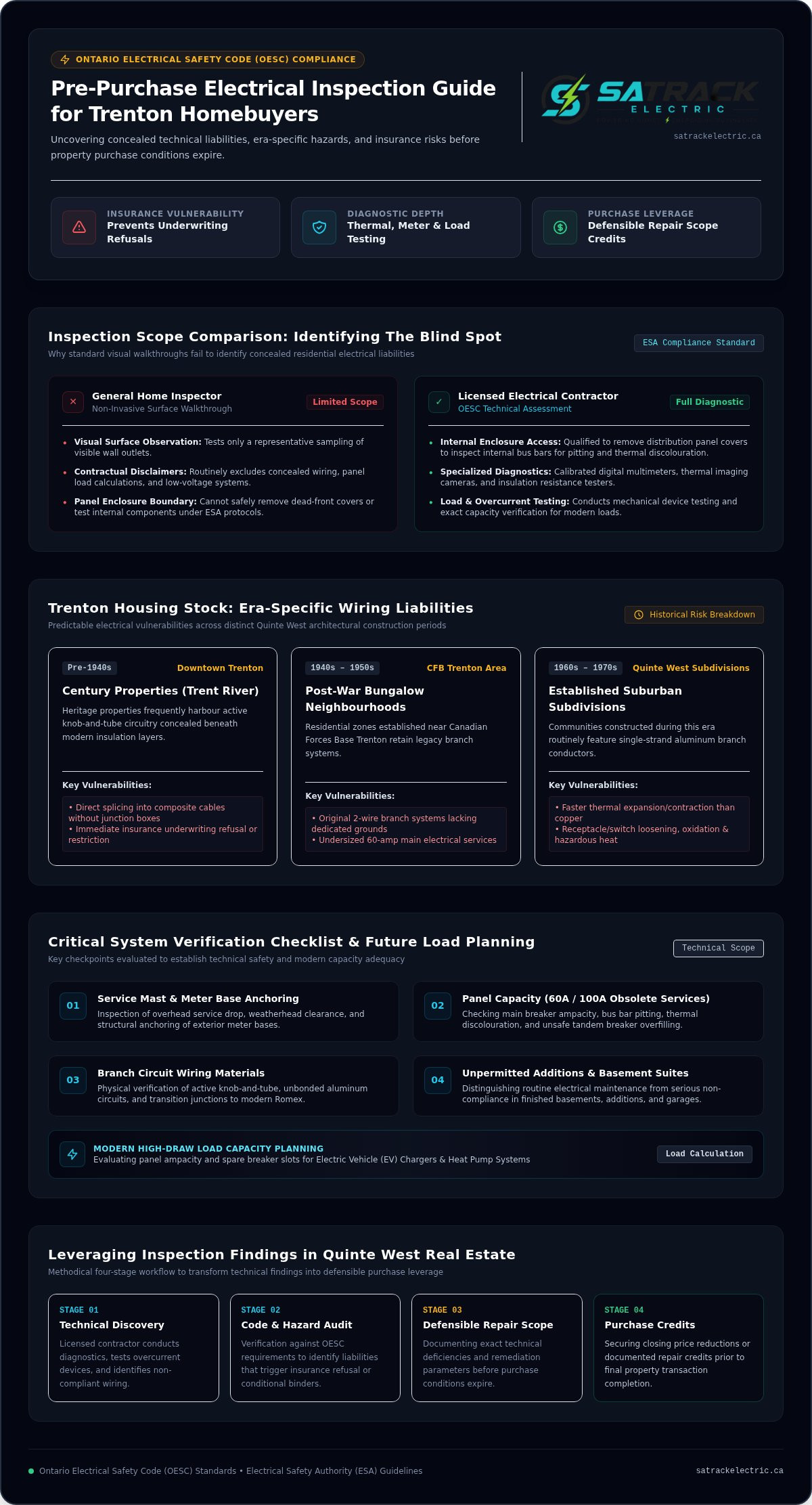
A specialized pre-purchase electrical inspection Trenton buyers commission is an exhaustive technical assessment conducted by a licensed electrical contractor operating under Ontario Electrical Safety Code (OESC) standards. While crucial to any real estate purchase, a home inspection is a limited, non-invasive examination of overall property condition. Standard home inspectors routinely carry contractual disclaimers that exclude concealed wiring, panel load calculations, and low-voltage systems from their scope. For purchasers navigating the Trenton market, relying solely on surface observations creates serious financial exposure. Canadian property insurance underwriters regularly deny coverage or issue restrictive conditional binders when properties present unverified legacy wiring, unbonded circuits, or outdated service distribution equipment.
General Home Inspector vs. Licensed Electrical Contractor
General home inspectors perform non-invasive assessments governed by standard real estate inspection protocols. They look for obvious external damage, verify that a representative sampling of outlets has power, and confirm the presence of main disconnects. Under Electrical Safety Authority (ESA) guidelines, however, only a licensed electrical contractor has the qualification to remove the distribution panel cover safely, inspect internal bus bars for thermal damage, and perform mechanical testing on overcurrent devices. Licensed contractors utilize specialized diagnostic equipment, including calibrated digital multimeters, thermal imaging cameras, and insulation resistance testers, to identify hidden hazards behind walls and inside enclosures.
Trenton Housing Stock and Era-Specific Wiring Vulnerabilities
Trenton’s architectural development spans distinct construction eras, each presenting predictable electrical liabilities:
- Post-war bungalows: Many residential neighbourhoods established near Canadian Forces Base Trenton during the 1940s and 1950s retain original two-wire branch systems lacking dedicated equipment grounds, frequently coupled with undersized 60-amp services.
- 1960s and 1970s subdivisions: Established suburban communities across Quinte West frequently feature single-strand aluminum branch wiring. Aluminum expands and contracts faster than copper, causing connections at receptacles and switches to loosen, oxidize, and generate hazardous heat.
- Century properties along the Trent River: Heritage homes in downtown Trenton often contain active knob-and-tube runs concealed beneath modern insulation or spliced directly into modern composite cabling without junction boxes.
Securing a comprehensive pre-purchase electrical inspection Trenton purchasers depend on reveals these hidden vulnerabilities long before closing conditions expire.
The Buyer’s Electrical Inspection Checklist: 5 Critical Systems to Evaluate
A methodical evaluation follows electricity’s direct pathway into the house, tracing power from municipal utility feeds down to individual wall switches. Reviewing this systematic progression alongside an electrician helps purchasers spot concealed liabilities that trigger electrical fires or shock hazards. To supplement on-site testing, buyers can consult an official safety checklist while touring each living area. Conducting a thorough pre-purchase electrical inspection Trenton buyers arrange covers five interconnected systems, beginning at the building’s exterior point of entry.
1. Service Mast, Meter Base, and Main Distribution Panel
Assess the overhead service drop, weatherhead clearance, and exterior meter base attachment for structural anchoring. Inside, verify the main breaker ampacity. Many older Trenton residences still run on obsolete 60-amp or 100-amp services that buckle under modern appliance loads. Licensed contractors inspect internal bus bars for pitting, thermal discolouration, and unsafe tandem breaker overfilling. Homeowners weighing replacement timelines can reference this guide for an electrical panel upgrade in Belleville to evaluate aging infrastructure.
2. Wiring Materials: Knob-and-Tube, Aluminum, and Modern Romex
Branch circuits require careful physical verification in unfinished areas. Electricians search uninsulated attics, floor joists, and crawlspaces for ungrounded knob-and-tube runs spliced into modern circuits without protective junction boxes. For properties built between 1965 and 1976, inspectors evaluate single-strand aluminum conductors. They verify that connections use approved anti-oxidant compound alongside specialized CO/ALR receptacles or AlumiConn pigtail connectors. Modern non-metallic sheathed cable is also checked for mechanical crushing, heat degradation, and physical support.
3. Grounding, Bonding, and Receptacle Safety Controls
A reliable electrical system requires robust grounding paths to safely divert stray current. Inspectors confirm unbroken copper bonding tied back to incoming metallic water services or exterior ground electrodes. Branch circuits must also incorporate proper life-safety interrupters. Ground Fault Circuit Interrupters (GFCIs) are tested across kitchens, bathrooms, and exterior locations where moisture is present. Modern Arc Fault Circuit Interrupters (AFCIs) protect living rooms and bedrooms against spark-induced fire hazards.
If you’re evaluating a prospective property in Quinte West, scheduling professional residential electrical services ensures every panel, conductor, and safety device receives complete diagnostic testing before purchase conditions expire.
Spotting Costly Red Flags: Unpermitted Renovations and Outdated Equipment
Concealed electrical defects carry significant financial and safety liabilities for real estate buyers. When touring properties, consulting an established home electrical safety checklist helps identify visible warning signs, but complex infractions remain buried behind drywall and subflooring. An unpermitted basement suite or a hastily wired workshop might look functional on the surface, yet underlying wiring shortcuts violate the Ontario Electrical Safety Code (OESC). In Ontario, property owners inherit all existing municipal and electrical violations upon closing, including full financial liability for rectifying non-compliant work. A specialized pre-purchase electrical inspection Trenton homebuyers schedule separates minor maintenance issues from urgent structural safety risks.
| Issue Category | Defect Description | Operational Risk | Insurance & Financial Impact |
|---|---|---|---|
| Immediate Hazard | Exposed flying splices in attic spaces or drop ceilings | High fire and arc-flash ignition risk | Underwriting refusal; mandatory immediate repair |
| Immediate Hazard | Outdated 60-amp fuse panels or unapproved split-bus gear | Panel overload and sustained overcurrent failure | Denial of standard policy coverage without upgrade |
| Immediate Hazard | Improperly terminated single-strand aluminum circuits | Terminal overheating and structural wall fire risk | Requires specialized remediation certificate |
| Routine Maintenance | Cracked cover plates or worn decorative switches | Minor contact hazard | Negligible underwriting impact; simple fix |
| Routine Maintenance | Unlabelled branch circuit breakers in service panel | Inconvenience during isolated circuit shutoff | Requires basic circuit mapping and tracing |
Unpermitted DIY Basements, Outbuildings, and Secondary Suites
Finished basements and detached garages across Quinte West frequently conceal amateur electrical additions. Common violations include flying wire splices tucked into floor joists without protective enclosures, severely overcrowded junction boxes, and unanchored cables draped across drop ceilings. Detached workshops often pull power through undersized underground feeders that cannot handle high-amperage equipment. When addressing non-compliant modifications, scheduling certified residential electrical services in Belleville ensures all unpermitted circuits are properly documented, rewired, and brought into full compliance under ESA standards.
Insurance Blockers: Fuse Panels and Problematic Distribution Brands
Canadian underwriters scrutinize main service panels before issuing property insurance binders. Many insurers completely refuse coverage for properties relying on vintage cartridge or plug-fuse panels due to their susceptibility to over-fusing. Similarly, specific legacy panel brands manufactured throughout past decades present elevated failure rates where breakers seize and fail to trip during direct overloads. You can review our electrical repairs in Belleville resource to distinguish critical system hazards from elective cosmetic updates. Conducting a pre-purchase electrical inspection Trenton purchasers rely on protects you from inheriting uninsurable distribution systems.
How to Leverage Inspection Findings During Quinte West Property Negotiations
Technical diagnostic findings are only as valuable as your ability to translate them into binding real estate solutions. When buying property in Trenton, conditional inspection clauses typically provide a short window of five business days. Navigating this deadline requires moving quickly from problem identification to quantified resolution. A specialized pre-purchase electrical inspection Trenton buyers commission delivers the objective documentation your real estate lawyer and realtor require. Rather than relying on vague impressions about aging wiring, buyers can approach the seller with verified deficiencies rooted directly in provincial safety standards.
Obtaining Itemized Estimates Before Waiving Conditions
Never present informal notes or verbal contractor opinions during contract negotiations. Sellers and their listing agents will quickly dismiss undocumented requests. Secure an itemized scope of work signed by an insured, licensed electrical contractor before waiving your inspection condition. This documentation must explicitly separate mandatory safety corrections, such as resolving ungrounded circuits or active aluminum terminations, from optional modernization desires. Explicitly citing relevant Ontario Electrical Safety Code infractions establishes that the requested remedies address legitimate safety requirements rather than cosmetic preferences.
Negotiating Purchase Credits vs. Seller Completed Repairs
Once defects are documented, buyers face a choice between demanding seller-completed repairs or negotiating financial remedies before closing:
- Seller remediation risks: Permitting the seller to manage repairs often results in minimum-standard fixes. Property vendors naturally seek the cheapest possible resolution, potentially hiring uncertified labour or executing temporary patches that fail subsequent inspections.
- Purchase price reductions: Adjusting the gross purchase price lowers your total acquisition cost, though it does not provide immediate liquidity to fund critical electrical work on possession day.
- Closing credits: Securing a direct repair credit at closing is frequently the cleanest solution. Your real estate lawyer writes these funds into escrow terms, giving you full control over hiring certified contractors and supervising remediation standards.
Gaining real financial leverage requires speed and authoritative documentation during your conditional purchase period. Schedule your comprehensive pre-purchase electrical inspection Trenton assessment with Satrack Electric to secure the technical evidence needed to protect your transaction.
Planning Future Electrical Capacity for Your New Trenton Home
Evaluating an electrical system involves more than identifying existing hazards; it requires confirming that the property can support your future lifestyle demands. Many older homes across Trenton operate on 100-amp service drops that are already nearing total capacity with everyday baseload requirements. A comprehensive pre-purchase electrical inspection Trenton buyers book provides an exact load calculation under the Ontario Electrical Safety Code. This technical calculation clarifies whether your electrical infrastructure can accommodate upcoming home improvements or if an incoming utility service upgrade will be required after closing.
Electrification Preparedness: EV Chargers and Heat Pumps
Modern residential electrification places significant demand on electrical distribution equipment. Installing a dedicated Level 2 electric vehicle supply circuit requires a 40-amp or 50-amp, 240-volt double-pole breaker. Concurrently, converting an aging fossil-fuel heating system to a cold-climate heat pump with supplementary electric resistive elements introduces another massive continuous load. When these loads are combined with an electric range, clothes dryer, and water heater, older 100-amp panels face frequent tripping and severe overcurrent bottlenecks. Upgrading to a 200-amp service provides the breaker space and ampacity needed to electrify safely.
Secondary Power, Generators, and Outdoor Living Installations
Properties situated along the Trent River, Bay of Quinte, or rural Quinte West fringes face unique operational demands. Winter ice storms and severe weather events make auxiliary backup power an essential consideration for property resilience. Evaluating manual or automatic transfer switch connections alongside a dedicated generator installation in Belleville and Trenton ensures your essential heating and sump pump circuits remain energized during grid outages.
Outdoor leisure additions introduce further load variables. Dedicated 50-amp or 60-amp GFCI-protected circuits are mandatory for hot tub and spa wiring installations. Outlining your long-term mechanical goals during a pre-purchase electrical inspection Trenton evaluation allows a licensed electrician to map out a clear modernization schedule, preventing expensive utility and service rework down the road.
Secure Your Investment Before Waiving Purchase Conditions
Purchasing a home is a major milestone, but hidden electrical liabilities shouldn’t complicate your investment. Securing a specialized pre-purchase electrical inspection Trenton buyers trust delivers an uncompromised assessment of service panel health, legacy branch wiring, and long-term electrical capacity. Having certified technical documentation during your conditional review period allows you to negotiate closing credits effectively and protect your household from hazardous unpermitted work before keys change hands.
As an insured, licensed electrical contractor serving Trenton, Belleville, and Quinte West, Satrack Electric conducts meticulous evaluations aligned strictly with Ontario Electrical Safety Code standards. We provide the objective evidence required to ensure your prospective home qualifies for immediate property insurance coverage without unexpected expenses after closing. Book a pre-purchase electrical inspection with Satrack Electric today to navigate your property purchase with complete confidence.
Frequently Asked Questions
What is the difference between a home inspector and an electrician during a pre-purchase inspection?
A home inspector conducts a general, non-invasive visual survey, whereas a licensed electrical contractor performs comprehensive diagnostic testing. Home inspectors cannot legally disassemble panels or test concealed internal wiring components under ESA standards. A specialized pre-purchase electrical inspection Trenton buyers commission involves removing the dead front cover, calculating service loads, and inspecting branch conductors for code compliance.
Can I get home insurance in Trenton if the house has aluminum wiring?
Yes, but standard Canadian insurers generally require an ESA Certificate of Acceptance or a verification letter from a licensed electrical contractor before issuing a policy. Underwriters often refuse coverage or apply steep surcharges if single-strand aluminum wiring hasn’t been properly remediated with approved pigtails or CO/ALR devices. Having an electrician verify these terminations prevents unexpected insurance rejections right before closing day.
Will an outdated 100-amp electrical panel pass a pre-purchase electrical inspection?
An older 100-amp electrical panel can still pass an inspection if it remains in safe mechanical condition and isn’t overfused. The Ontario Electrical Safety Code grandfathers existing systems that met historical standards when installed. However, the inspector will calculate your load demands to determine whether that 100-amp service can support modern electrical additions like heat pumps, hot tubs, or Level 2 EV charging stations without continuous breaker trips.
What happens if unpermitted electrical work is discovered in a home I want to buy?
Discovering unpermitted wiring means you inherit full financial and legal responsibility once title transfers unless the defect is resolved in negotiations. The City of Quinte West and the ESA hold the current property owner liable for non-compliant installations. You can use these documented infractions during your conditional period to negotiate a price discount, closing repair credits, or formal ESA certification completed by the seller prior to move-in.
How long does a professional pre-purchase electrical inspection take in Trenton?
A comprehensive pre-purchase electrical inspection Trenton contractors perform usually takes between two to four hours depending on the property’s size and age. Older heritage houses near the Trent River or expanded rural properties with outbuildings require more time to trace concealed wiring, inspect attic spaces, and test subpanels. Your electrician then prepares an itemized evaluation detailing all safety findings and code discrepancies for your transaction team.
Can a seller refuse to fix electrical defects uncovered by a licensed contractor?
Yes, sellers have no legal obligation to complete requested repairs unless stipulated in the Agreement of Purchase and Sale. If the seller refuses to remediate severe safety hazards or lower their price, your options depend on your conditional clauses. You can choose to accept the property as-is, negotiate an escrow repair credit through your lawyer, or exercise your inspection condition to safely walk away from the transaction.
Does Satrack Electric provide written inspection reports for real estate negotiations?
Yes, Satrack Electric delivers clear, documented inspection reports outlining exact safety deficiencies, code references, and required remediation scopes. As a licensed and insured electrical contractor serving Trenton, Belleville, and Quinte West, our objective assessments give your realtor and legal team the concrete technical evidence needed to defend price reductions or purchase credits during conditional real estate negotiations.