
A dead electrical outlet is rarely an isolated failure; it is almost always a clear warning sign of an upstream trip, a degraded wire termination, or a concealed safety hazard behind the drywall. When considering dead outlet repair Quinte West homeowners shouldn’t have to guess whether an unpowered plug poses an active fire risk.
It’s deeply frustrating when an essential appliance or work computer suddenly stops running, especially when cycling the breaker panel does nothing to resolve the issue. That anxiety quickly grows when you wonder if hidden electrical arcing is quietly occurring inside your wall box.
You’ll discover why your receptacle abruptly lost power, how to spot urgent red flags that demand professional attention, and the methodical diagnostic process a licensed electrical contractor follows to resolve the fault. We’ll examine the primary causes of dead circuits across our local Bay of Quinte communities and outline how to restore power safely in full compliance with Ontario standards.
Key Takeaways
- Learn how tripped breakers, upstream GFCI devices, and branch circuit interruptions cause sudden receptacle failure across your home.
- Follow safe, non-invasive troubleshooting steps to isolate common problems without exposing yourself to live electrical components.
- Recognize critical hazard signs, such as warm wall plates, buzzing sounds, and discolouration, that indicate dangerous arcing behind the wall.
- Understand the diagnostic standards for dead outlet repair Quinte West homeowners trust to pinpoint faults and preserve property insurance validity.
- See how a Licensed Electrical Contractor systematically tests circuit integrity and upgrades legacy wiring under the Ontario Electrical Safety Code.
Understanding Dead Outlets: Common Causes in Quinte West Homes
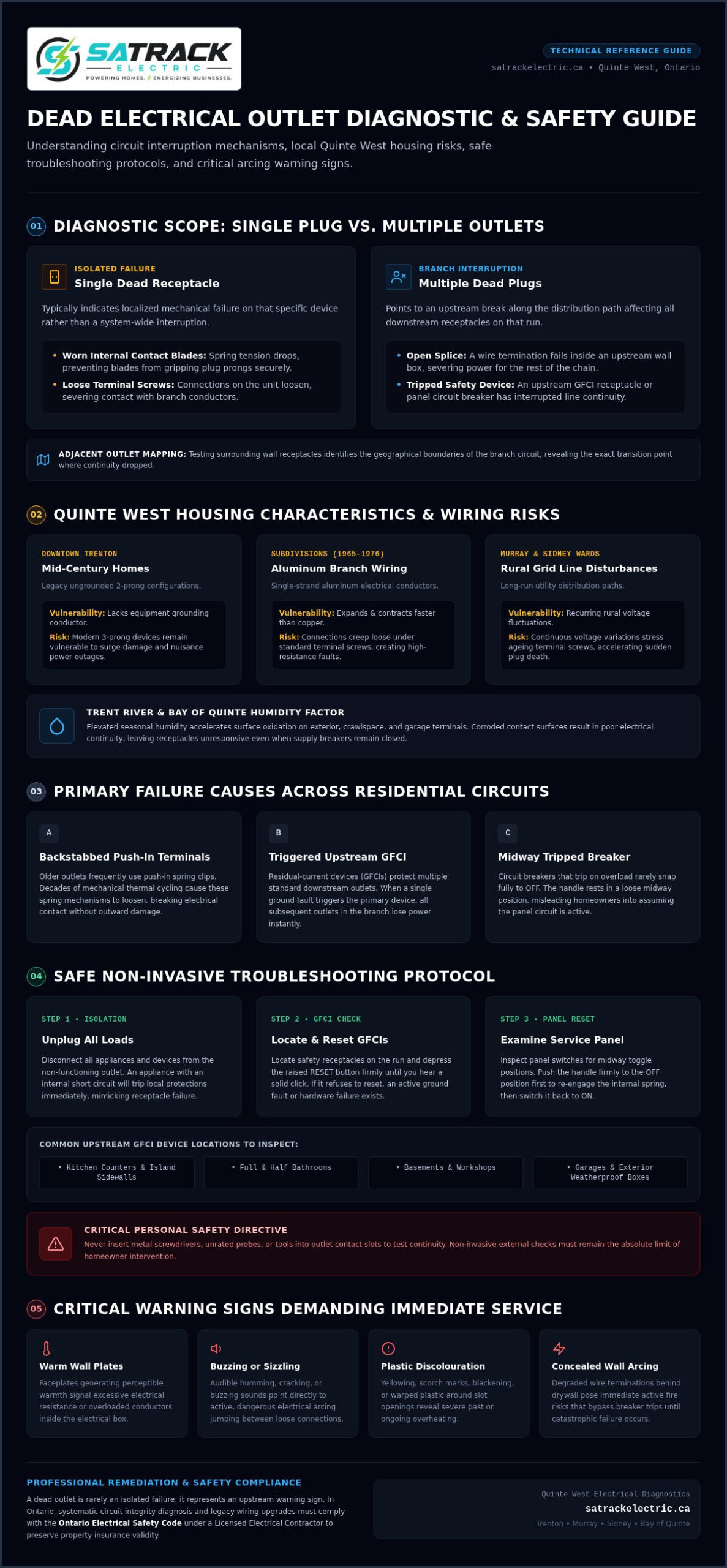
A dead wall outlet indicates an interruption in electrical current along that circuit. While many property owners assume a failed plug is simply broken hardware, receptacles operate as interconnected links in a broader distribution path. Sudden power losses frequently stem from tripped breakers, blown fuses, or triggered residual-current devices (commonly known as GFCIs) that shut down downstream power to protect against ground faults.
In older homes, backstabbed wire connections behind receptacles represent another common failure point. These push-in spring terminals loosen after decades of mechanical thermal cycling, breaking the circuit unexpectedly. Along the Trent River and throughout the Bay of Quinte, elevated seasonal humidity also accelerates surface oxidation on exterior and garage terminals, resulting in poor electrical continuity that leaves plugs completely unresponsive.
The Difference Between an Isolated Dead Plug and Circuit Failure
Determining whether a problem affects one outlet or several helps narrow down the root cause:
- Single dead receptacle: Usually points to worn internal contact blades that no longer grip plug prongs, or loose terminal screws on that specific unit.
- Multiple dead plugs: Indicates an open splice inside an upstream electrical box or a tripped safety interrupter higher up the line.
- Adjacent outlet mapping: Testing surrounding wall plugs reveals the geographic boundaries of the affected branch circuit, helping identify where continuity dropped off.
How Local Quinte West Home Construction Impacts Receptacle Longevity
Electrical issues often correlate directly with the construction era of your neighbourhood. Mid-century homes near downtown Trenton frequently contain ungrounded two-prong branch wiring systems. These legacy configurations lack an equipment grounding conductor, leaving modern three-prong electronics vulnerable to surge damage and nuisance outages.
Subdivisions developed between 1965 and 1976 often feature single-strand aluminum branch wiring. Aluminum expands and contracts at higher rates than copper, causing connections under standard terminal screws to creep loose over time. In rural wards like Murray and Sidney, line disturbances can deliver voltage fluctuations that stress these older terminals further. When seeking reliable dead outlet repair Quinte West residents must address these localized building characteristics rather than relying on generic hardware swaps.
Safe Homeowner Troubleshooting Steps Before Calling an Electrician
Before booking professional services, property owners can perform basic non-invasive checks to isolate obvious issues. Start by unplugging all devices from the non-functioning receptacle. An appliance with an internal short circuit will instantly trip local protection devices, mimicking an outlet failure. Disconnecting connected loads rules out equipment malfunctions right away.
Personal safety must remain the absolute priority throughout this initial check. Never insert metal screwdrivers, probes, or unrated tools into outlet contact slots to test for continuity. To evaluate warning signs methodically without putting yourself at risk, review the CPSC Home Electrical Safety Checklist. For broader context on maintaining home circuits safely, you can also explore insights on home electrical repairs in Belleville.
Locating and Resetting Upstream GFCI Devices
In modern residential wiring, a single Ground Fault Circuit Interrupter frequently shields standard downstream outlets along the same run. If an upstream device trips, every regular receptacle connected downstream loses power instantly. Check common locations where these safety units reside, including:
- Kitchen countertops and island sidewalls
- Full and half bathrooms
- Basement utility areas and workshops
- Attached garages and exterior weatherproof boxes
Look for a raised button on the receptacle faceplate. Firmly depress the RESET button until you hear a solid click. If the mechanism refuses to engage, the unit is either detecting an active ground fault or has suffered internal component failure.
Inspecting Your Main Electrical Service Panel
Next, examine your electrical breaker panel. Breakers designed to trip on overloads or short circuits rarely snap completely to the OFF position. Instead, the toggle handle typically rests in a loose midway position between ON and OFF, often showing a small red or orange indicator window.
To restore the connection properly, switch the toggle handle firmly into the full OFF position first. Once you feel the internal spring catch, push it steadily back to the ON position. If the breaker snaps back to the centre immediately, stop resetting it. Forcing a tripped switch can induce dangerous conductor heating and thermal damage.
If simple resets fail to restore current, you likely need professional dead outlet repair Quinte West specialists provide. When facing persistent breaker drops or unpowered branch circuits, reviewing the fundamentals of residential electrical services in Belleville can help you decide when to schedule on-site service with a licensed contractor at Satrack Electric.
Critical Warning Signs That Signal an Electrical Safety Hazard
A dead outlet accompanied by heat or odour indicates dangerous active electrical resistance. When a receptacle ceases to deliver power, current may still be energized up to the point of failure. Loose connections inside the wall box force electrical current to jump tiny air gaps, degrading surrounding wire insulation and sharply escalating residential structural fire risks. If severe symptoms arise, walk directly to your service panel and switch off the branch breaker immediately.
Thermal Discolouration, Scorching, and Melting Faceplates
Physical evidence of excessive heat demands urgent intervention. Watch for these high-risk physical indicators:
- Surface scorching: Brown, black, or yellowish burn marks flanking the plug slots point to sustained electrical micro-arcing.
- Distorted faceplates: Warped, bubbled, or softening plastic cover plates mean temperatures inside the junction box reached extreme levels.
- Chemical odours: A distinctive fishy, acrid, or burning plastic smell indicates polyvinyl chloride (PVC) wire insulation is actively decomposing under high heat.
Audible Buzzing, Popping, and Intermittent Operation
Functional anomalies often precede complete electrical failure. Sizzling, crackling, or low-frequency humming sounds coming from behind the wall indicate current is arcing across damaged conductors. Plugs that fall out easily or only deliver electricity when nudged sideways suffer from collapsed internal contact tension springs. This mechanical looseness generates high-resistance contact points that standard circuit breakers rarely detect until extensive localized thermal breakdown has already occurred.
Aluminum Wiring Complications in Older Properties
Homes built across Quinte West throughout the late 1960s and 1970s often contain single-strand aluminum branch lines. Aluminum expands and oxidises far more rapidly than copper conductor metals. This characteristic causes mechanical connections under terminal screws to loosen gradually, causing oxidation buildup that insulates the wire and cuts off current delivery.
Installing standard modern replacement receptacles directly onto aluminum conductors causes severe chemical corrosion through galvanic reactions. Ontario Electrical Safety Code regulations strictly prohibit connecting untreated copper-rated devices to aluminum wire. Resolving these failures requires professional dead outlet repair Quinte West contractors deliver, utilizing CSA-approved mechanical connectors with antioxidant compounds or specialized CO/ALR-rated devices. Never attempt to draw power through a cracked, scorched, or unstable receptacle, as continuing to load damaged conductors risks igniting surrounding wall framing.
How a Licensed Electrical Contractor Diagnoses and Repairs Outlets
Restoring a failed circuit requires methodical troubleshooting rather than trial-and-error part swapping. A Licensed Electrical Contractor (LEC) approaches every non-functioning receptacle systematically, using calibrated testing tools to trace current paths, measure circuit resistance, and confirm system integrity. This thorough diagnostic workflow ensures repairs adhere strictly to the Ontario Electrical Safety Code (OESC) and eliminate concealed hazards inside structural cavities.
Comprehensive Circuit Tracing and Voltage Testing
Diagnostics begin by measuring physical electrical properties at the dead receptacle using a digital multimeter and circuit analyzer. Technicians evaluate three primary parameters:
- Voltage and continuity: Checking line-to-neutral, line-to-ground, and neutral-to-ground potentials isolates open hot feeds or broken return paths.
- Polarity verification: Confirming active conductors connect to correct terminal screws prevents dangerous reverse polarity shocks.
- Ground path resistance: Verifying equipment grounding conductors provide an unbroken low-impedance route back to the service panel.
If continuity is lost upstream, technicians isolate circuit segments sequentially to find loose splices or failed backstabbed joints behind wall boxes.
Safe Receptacle Replacement and Terminal Securing
Once the fault point is confirmed, the electrician disconnects damaged hardware and inspects conductor insulation for heat degradation. Brittle or oxidised wire ends are cleanly trimmed, stripped to precise OESC lengths, and prepared for retermination. Commercial-grade, tamper-resistant receptacles replace failed devices, featuring heavy brass terminal clamps that withstand frequent plugging cycles. Each conductor is looped securely clockwise around side-screw terminals and torqued to manufacturer specifications, ensuring low-resistance mechanical seating that prevents heat accumulation under heavy loads.
ESA Compliance and Upstream Circuit Protection
When completing professional dead outlet repair Quinte West electricians also assess overall circuit capacity and safety margins. If wiring shows signs of chronic thermal strain or multiple high-draw devices share a single branch, modern Arc-Fault Circuit Interrupter (AFCI) breakers may be installed in the distribution panel to safeguard the entire run. If your existing electrical infrastructure lacks capacity for modern living demands, explore electrical panel upgrade options in Belleville to modernize your service safely.
For dependable diagnostics and code-compliant electrical maintenance, schedule an electrical inspection with Satrack Electric to restore safe, reliable power across your home.
Securing Dependable Dead Outlet Repair Across Quinte West
Hiring a qualified specialist for branch circuit faults ensures your home remains safe, operational, and fully compliant with provincial standards. Under Ontario law, any technician advertising or conducting trade work for hire must be a Licensed Electrical Contractor (LEC) authorized by the Electrical Safety Authority (ESA). Entrusting your wiring to an unlicensed handyman can compromise property insurance validity should an electrical event occur. Satrack Electric holds ESA Licence #7009789, maintaining complete liability protection and Workplace Safety and Insurance Board (WSIB) standing for residential and light commercial properties.
Serving Quinte West, Trenton, and Belleville since 2013, our certified electricians deliver methodical diagnostic services designed to resolve root causes rather than mask symptoms. Professional fault finding eliminates recurring breaker trips, isolates deteriorated junctions, and restores daily functionality without disruption.
What to Expect During a Satrack Electric Service Appointment
When you book an evaluation, our team follows a structured protocol designed for transparency and long-term safety:
- Systematic on-site diagnosis: A licensed electrician traces the dead receptacle, inspecting associated upstream feeds, panel connections, and grounding systems.
- Clear diagnostic reporting: Homeowners receive a straightforward, technical explanation outlining exactly why the device failed before any physical work starts.
- Precise mechanical repairs: Worn receptacles and degraded wiring joints are rebuilt using trade-grade materials torqued to exact terminal specifications.
- Full load testing: The circuit undergoes multi-point operational testing under sustained load to confirm continuous, heat-free delivery.
Preventative Electrical Care for Homes in Trenton and Quinte West
Routine maintenance protects against unexpected failures before appliances suddenly lose power. If you are purchasing or renovating an older home across the Bay of Quinte region, arrange a thorough electrical inspection to evaluate legacy conductors and service panel health. Upgrading dated two-prong receptacles to child-safe, tamper-resistant models ensures household protection and code adherence across all living spaces.
Similarly, inspect outdoor, garage, and basement receptacles before seasonal temperature swings set in. Ensuring these locations feature functioning GFCI protection and weatherproof “while-in-use” covers prevents moisture-induced short circuits. When you need dependable dead outlet repair Quinte West homeowners can rely on, methodical troubleshooting from an ESA-licensed professional protects your property value and everyday peace of mind.
Restore Safe, Reliable Power to Your Home’s Branch Circuits
A dead receptacle is rarely a simple cosmetic issue; it often signals tripped upstream safety devices, loosening terminal screws, or concealed conductor wear. Identifying warning signs like scorched plastic or faint buzzing early protects your living space from hidden electrical risks. When managing branch circuit faults, investing in professional dead outlet repair Quinte West residents rely on ensures every box complies with the Ontario Electrical Safety Code.
Satrack Electric brings decades of combined field experience to residential properties across Trenton, Belleville, and neighbouring communities. As a fully insured contractor holding ESA Licence #7009789, we perform meticulous diagnostic testing that resolves the underlying issue while maintaining your home insurance validity. You don’t have to live with unpowered rooms or worry about concealed hazards behind your drywall. Take control of your home’s safety and schedule professional outlet diagnostics with Satrack Electric to restore steady power with complete confidence.
Frequently Asked Questions
Why did one outlet stop working when all the other outlets in the room work?
An isolated dead receptacle typically points to loose terminal screws, worn internal contact blades, or a failed backstabbed spring connection on that individual unit. Because branch circuits route power from one box to the next, a severed wire right at that receptacle leaves downstream plugs working if pigtailed correctly, while isolating that specific plug. A licensed electrician can inspect the junction box to re-establish secure terminal contact safely.
Can a tripped GFCI outlet in another room kill power to my bedroom outlet?
Yes, an upstream Ground Fault Circuit Interrupter in a bathroom, garage, or hallway can de-energize downstream standard bedroom receptacles if they share a common branch circuit. Older home additions across Quinte West sometimes share multi-room circuits. Resetting every tripped GFCI device across adjacent living spaces often restores continuity to unresponsive downstream wall plugs without requiring panel changes.
Is a dead wall outlet considered an immediate fire hazard in my home?
A dead outlet is not automatically an active fire hazard, but it warrants cautious professional inspection. If the circuit dropped due to an unseated neutral or loose terminal screw, the electrical current may continue arcing behind the wall plate under vibration or load. If the dead plug feels warm, smells acrid, or shows surface discolouration, turn off the circuit breaker immediately to prevent conductor ignition.
What causes an electrical outlet to show burn marks or feel warm to the touch?
Thermal discolouration and warm cover plates are caused by high electrical resistance and localized arcing across loose conductor terminations. When wires detach from terminal screws or internal brass contacts lose spring tension, electricity jumps the resulting gap. This process generates extreme localized heat that steadily melts plastic components. Stop using the receptacle and schedule professional dead outlet repair Quinte West contractors recommend to replace the damaged enclosure components.
Why does my circuit breaker keep tripping immediately after I reset it?
A circuit breaker that snaps off instantly upon reset indicates a hard direct short circuit, a severe ground fault, or a failed breaker mechanism. Forcing the breaker toggle to stay on can melt wire insulation inside wall framing. Leave the breaker toggle in the full OFF position and arrange diagnostic troubleshooting with an ESA-licensed contractor to locate the short along the branch run.
Can I replace a defective electrical outlet myself under Ontario regulations?
Ontario law permits homeowners to replace an existing receptacle like-for-like within their own primary residence. However, work involving circuit alterations, older aluminum wiring, or subpanel additions requires an ESA Notification of Work. Because improper terminations void property insurance coverage after an electrical mishap, hiring a Licensed Electrical Contractor ensures verified compliance with the Ontario Electrical Safety Code.
How long does a professional electrician take to diagnose and repair a dead outlet?
A standard diagnosis and single receptacle replacement usually takes between 30 and 60 minutes for a qualified electrician. When providing comprehensive dead outlet repair Quinte West technicians spend additional time mapping circuit pathways, tightening intermediate junction splices, and conducting post-installation load tests. Complex branch runs involving concealed aluminum wire connections or multiple downstream faults may require longer diagnostic testing to ensure lasting safety.