
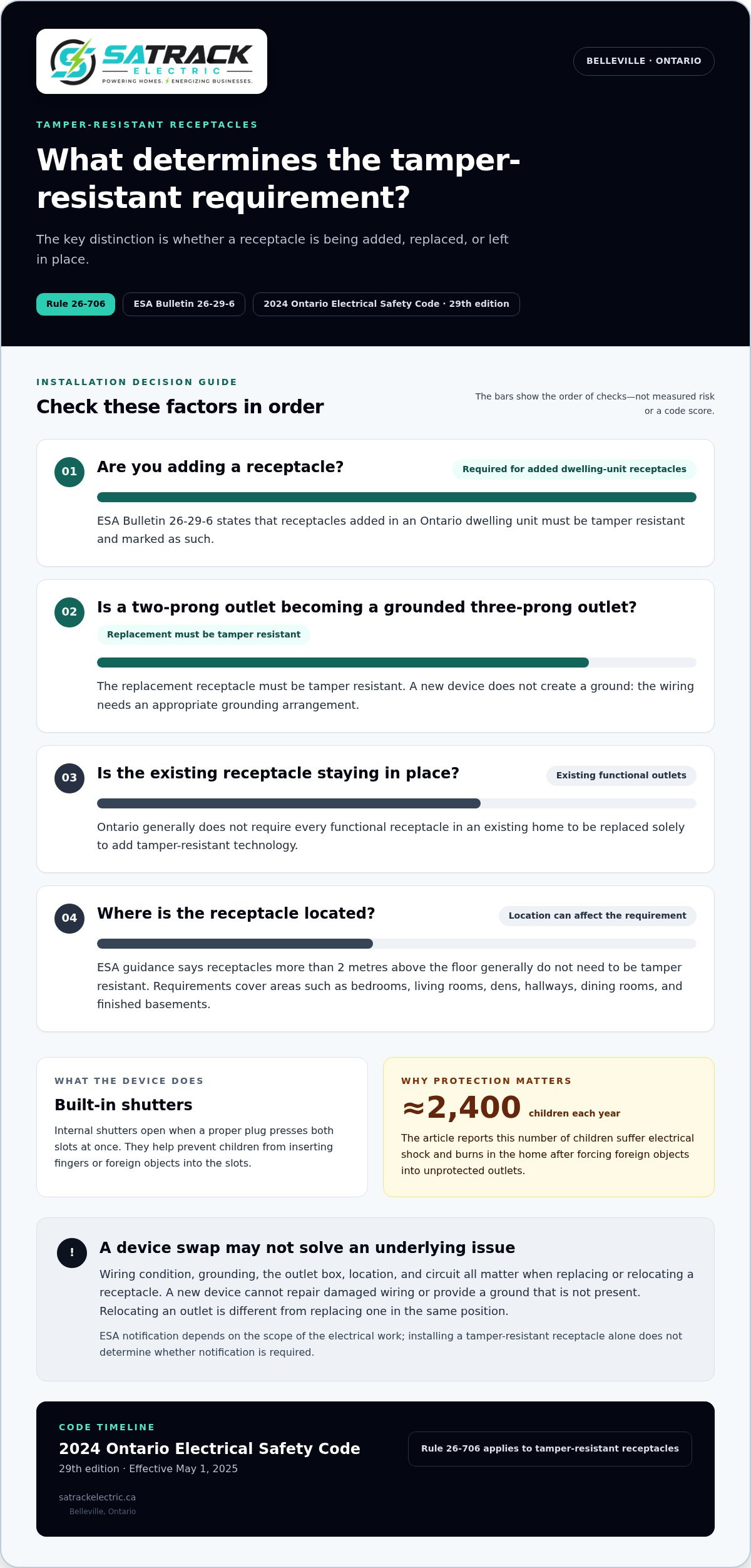
For tamper resistant outlet installation in Belleville, Ontario’s Electrical Safety Code Rule 26-706 applies, and added receptacles in a dwelling unit must be tamper resistant and marked as such under ESA Bulletin 26-29-6. A replacement outlet used when upgrading a two-prong receptacle to a grounded three-prong version must also be tamper resistant. That doesn’t mean every functional outlet in an existing home must be replaced just to add this feature.
It’s reasonable to want clear guidance before planning an electrical upgrade, especially when requirements depend on whether an outlet is new, being replaced, or already in place. Tamper-resistant receptacles have built-in shutters that help prevent children from inserting fingers or objects into the slots while allowing a proper plug to operate them.
This article explains when Ontario code requires tamper-resistant receptacles, what to consider when replacing outlets or renovating, and how to plan new outlet locations. It also covers how placement can affect other electrical protections, helping you understand the decisions involved in a safe, code-conscious installation.
Key Takeaways
- Understand when Ontario’s electrical code calls for tamper-resistant receptacles, including when adding outlets in a dwelling unit.
- Recognize why these receptacles help reduce the risk of children inserting objects into outlet slots.
- Learn when a replacement outlet needs to be tamper resistant, including during a two-prong to grounded three-prong upgrade.
- Plan outlet locations around how each space is used and whether other electrical protections may apply.
- See what to consider when arranging new outlet installation for a home renovation or commercial project.
Are Tamper-Resistant Outlets Required by Code?
Ontario’s Electrical Safety Code Rule 26-706 applies to tamper-resistant receptacles, with requirements depending on the installation. For Belleville homeowners, the distinction between adding an outlet, replacing one, and keeping an existing receptacle matters.
Child Safety and Receptacle Protection
A tamper-resistant receptacle has internal shutters that open when a proper plug presses both slots at once. The shutters help prevent children from inserting fingers or foreign objects, reducing the risk of electrical shock and burns.
Approximately 2,400 children suffer electrical shock and burns in the home each year after forcing foreign objects into unprotected outlets. That figure makes receptacle protection a practical consideration in spaces children use, including bedrooms, hallways, living rooms, and finished basements.
Plastic outlet plugs and faceplates are not a permanent substitute for a compliant tamper-resistant receptacle. For example, a nursery outlet used regularly may be better protected by built-in shutters than by a removable cover.
Ontario Electrical Safety Code Compliance
The 2024 Ontario Electrical Safety Code, also called the 29th edition, became effective on May 1, 2025. Rule 26-706 applies to tamper-resistant receptacles, and ESA Bulletin 26-29-6 states that added receptacles in an Ontario dwelling unit must be tamper resistant and marked as such.
Requirements cover residential living areas such as bedrooms, living rooms, and dens, as well as hallways, dining rooms, and finished basements. Under ESA guidance, receptacles more than two metres above the floor generally do not need to be tamper resistant.
Ontario generally does not require homeowners to replace every functional outlet in an existing home solely to add tamper-resistant technology. However, an outlet added during an upgrade must meet applicable requirements. Replacing a two-prong receptacle with a grounded three-prong version also requires a tamper-resistant receptacle.
Installing a tamper-resistant outlet does not, by itself, determine whether ESA notification is required; the scope of the electrical work matters. Replacing a receptacle can involve more than fitting a new device, particularly when grounding or existing wiring is involved.
DIY installation risks include contact with energized conductors and loose connections behind the receptacle. Loose connections can cause outlet faults, so safe work means assessing the circuit and connections, not just matching wires to a new device. In Ontario, homeowners planning electrical work should understand applicable notification requirements and whether they are legally permitted to do the work.
Replacement receptacle installation requirements
Replacing a receptacle involves more than matching its shape and rating. In an Ontario home, the existing wiring, grounding, outlet box, and location all affect whether the replacement can be installed as planned.
A tamper-resistant receptacle can replace an existing device without rewiring if the conductors are suitable and the connections are compatible. But a new device cannot repair damaged wiring or create a ground that isn’t present. For example, replacing an old two-prong outlet with a grounded three-prong receptacle requires an appropriate grounding arrangement, not simply a different faceplate.
Ontario requirements also depend on the replacement work. A replacement installed when upgrading a two-prong receptacle to a grounded three-prong version must be tamper resistant. ESA Bulletin 26-29-6 says receptacles added in an Ontario dwelling unit must be tamper resistant and marked accordingly. During a renovation, distinguish a new receptacle from an existing one being replaced.
A loose or cracked receptacle needs attention because movement can affect its connections and stability. A warm faceplate, visible damage, or a plug that no longer sits firmly are practical reasons to stop using the outlet and arrange an assessment. Replacing the device without checking the box and wiring can leave the underlying fault unresolved.
Replacing an outlet and relocating one are different jobs. A direct replacement uses the existing position; relocation involves a new position and may require extending or rerouting conductors. For example, moving a receptacle away from a planned cabinet can affect the outlet box, wiring route, and applicable code requirements. Assess the new location as an added receptacle, not a simple device swap.
Electrical conditions vary across residential spaces. A receptacle near a sink, in a finished basement, or on an older two-wire circuit may require considerations beyond tamper resistance. The device’s rating must suit its circuit, and the box must accommodate the connections without crowding or strain.
A licensed electrical professional can assess whether existing conductors, grounding, and the outlet box support a straightforward replacement. That assessment is especially useful when a home has older wiring, repeated outlet faults, or renovation plans that include relocation. Satrack Electric’s residential electrical installation service fits projects involving receptacle replacement or new outlet positions.
Before work begins, identify whether you plan to replace, upgrade, or relocate the receptacle. This distinction helps clarify which tamper-resistant requirements apply and whether existing wiring can remain in use. It also helps prevent installing a new outlet without addressing the condition of the circuit behind it.
Choosing outlets for renovations and electrical upgrades
During a renovation, choose receptacles with the room, existing circuit, and planned use in mind. ESA recommends replacing existing receptacles in Ontario dwelling units with tamper-resistant types. That recommendation can guide an upgrade, even when an older, functional outlet is not being replaced to meet a specific code requirement.
A tamper-resistant device has internal shutters. Both open when the blades of a two- or three-prong plug press into the slots. A new receptacle may feel stiff at first. If inserting a plug feels unusually difficult, check for bent prongs or plug damage rather than forcing it. This can help distinguish a plug problem from an issue with the receptacle.
Map receptacle locations according to how each space will be used after the work. A finished basement used as a family room has different everyday needs from a storage area. ESA specifically recommends tamper-resistant outlets for bedrooms, hallways, family rooms, living rooms, nurseries, playrooms, and finished basements. Planning tamper-resistant outlet installation in Belleville around each room’s use helps connect outlet choices to daily routines.
Consider other protection requirements alongside the receptacle type. In Ontario, outlets within 1.5 metres of a sink must be GFCI-protected. For example, a kitchen renovation may involve a receptacle near a sink, so the choice must address both the location’s protection and tamper resistance. These features serve different purposes and should not be treated as interchangeable.
AFCI protection is another circuit consideration. AFCI-protected receptacles can reduce home-fire risk by interrupting power when they detect an electrical arc behind walls. The required protection depends on the circuit and installation. Planning outlet changes as part of a renovation helps account for the receptacle, circuit protection, and wiring together.
Match the device to the existing electrical setup, not just its appearance. A new outlet location may require a different circuit route, while existing wiring or a box may affect installation at the current position. For example, adding a receptacle beside a planned desk means considering how the space will be used and how the device connects to the circuit. Tamper-resistant outlet installation in Belleville should also account for the room’s planned use and the circuit serving it.
Before finalizing a renovation layout, identify where people will plug in lamps, electronics, and other equipment. Then distinguish outlets being replaced from those being added or moved. This gives the electrical plan a clear scope and helps determine which receptacle and protection requirements apply at each location.
New outlet installation and placement
Plan a new receptacle around the task it will serve, the room layout, and the electrical circuit. In Belleville homes, a desk, bedside table, or television location can each call for a different outlet position. New receptacles added in an Ontario dwelling unit must be tamper resistant and marked as such under ESA Bulletin 26-29-6.
Start with the room’s everyday use. A bedroom layout may place a bed on one wall today and a desk there later, so consider furniture and cord routes before choosing an outlet position. In a living room, plan for lamps and media equipment. This helps reduce reliance on extension cords across walkways.
Next, consider the connected appliance or equipment. A range, dryer, EV charger, or workshop tool may need a dedicated circuit rather than sharing an existing general-use circuit. The electrical load and equipment requirements guide that decision. Adding a receptacle does not mean the existing circuit can support every intended device.
Placement also affects exposure to objects, moisture, and physical damage. A receptacle behind a large cabinet may be hard to reach, while one in a busy work area may be repeatedly struck by furniture or equipment. In a basement used for storage, avoid locations where stored items could block access or put strain on plugs.
Pay attention to grounding when adding an outlet to an older home. A grounded receptacle needs a suitable grounding path; a ground-shaped opening on its face does not establish one. For example, installing a three-prong outlet on older wiring without appropriate grounding can give a misleading impression of protection.
The outlet box and wiring route also shape placement. A proposed location beside a doorway, built-in shelf, or finished wall may need a different conductor path than an open wall during renovation. The box must accommodate the device and its wiring connections. Existing framing and concealed services can limit where a new opening can be made.
Protection requirements can overlap. A tamper-resistant device addresses access to the receptacle slots, while GFCI or AFCI protection serves a different purpose. For instance, a new outlet for a particular appliance may need circuit protection suited to its location and use. Consider these requirements together rather than relying on the receptacle’s appearance.
Before work starts, mark proposed outlet positions on the renovation plan and note the equipment each will serve. This gives the electrical installer a clear picture of furniture, appliances, circuit needs, grounding, and wall conditions. Careful planning helps ensure each new receptacle is useful, accessible, and suited to its space.
Tamper-resistant outlet installation
In Belleville, installation involves selecting a compliant receptacle and confirming that the circuit, box, conductors, and location suit the work. A tamper-resistant device is more than a faceplate swap. The connections behind it and the electrical conditions at the outlet matter too.
Start by identifying whether the work adds a receptacle, replaces an existing one, or changes its location. Each situation can affect the requirements and the amount of wiring work involved. For example, adding an outlet to a dwelling unit requires a tamper-resistant receptacle marked as such under ESA Bulletin 26-29-6.
The equipment itself must be suitable for installation. Ontario Electrical Safety Code Rules 2-022 and 2-024 concern electrical equipment approval and its requirements. A properly selected device must also match the circuit and intended use. Tamper resistance protects against objects entering the slots; it does not replace other required electrical protection.
The outlet box and conductor enclosure need attention as well. Rule 12-3034 concerns outlet boxes and conductor enclosures. A box that cannot accommodate the device and conductors may affect the installation. For instance, a crowded box behind an older receptacle needs assessment before fitting a replacement.
Connections and circuit protection are part of the same job. Ontario Electrical Safety Code Rules 14-100 and 14-104 address conductor overcurrent protection and its rating and coordination. Those requirements matter when new wiring or circuit changes are involved. A new receptacle should not be treated as an isolated device if its circuit also needs review.
After installation, the receptacle should sit securely and work as intended. Both shutters should open when a suitable plug presses both slots. If a plug is difficult to insert, don’t force it; check for bent prongs or plug damage. A damaged plug can make a correctly installed device seem faulty.
Which licensed electricians install tamper-resistant outlets in Belleville? In Ontario, a Licensed Electrical Contractor can legally perform electrical work. Involve one early when planning a home renovation or upgrade, particularly if the job adds receptacles or changes wiring.
When replacing an outlet, assess its location, wiring condition, box, and any applicable protection. A crack, loose fit, or unusual heat can point to an issue beyond the receptacle itself. Installing another device without addressing a damaged connection may leave the underlying problem unresolved.
For a planned receptacle replacement or addition, arrange electrical installation support so the device and its circuit are considered together. That approach helps connect the correct receptacle choice with the conditions at the outlet and the requirements for the work.
Satrack Electric: Commercial Electrical Services
Satrack Electric provides commercial electrical installations, upgrades, and repairs for businesses planning receptacle upgrades or new outlet locations. For Belleville homeowners, its residential electrical services and installations can support tamper-resistant outlet work during renovations or when existing receptacles need attention.
Turn to Satrack Electric when a project involves more than replacing a device, such as assessing outlet placement or coordinating receptacles with other electrical work. The company also handles electrical repairs for issues that require attention beyond a cracked or loose faceplate. Share the rooms involved and intended outlet locations to help define the work.
For receptacle installation or repair in your home or business, contact Satrack Electric or visit satrackelectric.ca.
Plan your next outlet upgrade with confidence
A useful next step is to note which outlets need attention and how each space is used. Record any loose receptacles, planned furniture changes, or new equipment before work begins. These details help define the project and connect outlet placement to everyday needs.
For tamper-resistant outlet installation in Belleville, include the existing wiring and intended locations in your project discussion. This context helps distinguish a straightforward replacement from work involving new wiring, a changed outlet position, or a broader renovation. Satrack Electric provides residential and commercial electrical services, as well as repairs for outlet issues that need attention beyond a device change.
Whether you’re planning work at home or at a business, take the next step with a clear description of the outlets involved. Contact Satrack Electric for outlet help and move ahead with a well-defined electrical project.
Frequently Asked Questions
Are They Required for Retrofits?
Not every existing outlet must be replaced solely because a home is being retrofitted. The scope of work matters: adding a receptacle in an Ontario dwelling unit requires a tamper-resistant device, while replacement requirements depend on the circumstances and work involved. For example, changing a two-prong outlet to a grounded three-prong version requires a tamper-resistant replacement.
Do you install outlets in commercial spaces?
Yes. Satrack Electric provides commercial electrical installations and repairs for businesses. In Belleville, Trenton, Picton, Brighton, Quinte West, Greater Napanee, and Cobourg, commercial projects can include planning receptacle locations for offices, retail spaces, or restaurants. The installation must suit the building’s wiring and intended equipment. All services are subject to availability and may vary depending on project requirements, location, scheduling, and applicable regulations.
How Much Do Tamper Resistant Receptacles Cost?
The receptacle’s purchase price is separate from installation. The installation price depends on the project and is provided after a quote request. Factors include whether the work replaces an existing device or adds a location, the condition of the wiring and outlet box, and whether circuit or protective-device changes are needed. A straightforward replacement and a newly wired outlet involve different work.
What if the outlet is for a large appliance or equipment?
A large appliance or piece of equipment may need a dedicated circuit, depending on its electrical requirements and the circuit serving it. An EV charger, range, dryer, or workshop tool are examples. The outlet type alone does not determine whether a circuit is suitable. Equipment specifications, wiring, circuit capacity, and installation location all factor into the design.
Why Are They Crucial for Safety?
Tamper-resistant receptacles help prevent children from inserting fingers or foreign objects into outlet slots. Their internal shutters open when a proper plug presses both slots at once, helping reduce the risk of electrical shock or burns from objects pushed into an outlet. For households with young children, this built-in barrier adds protection at everyday plug-in locations.
Are tamper-resistant outlets required by the Ontario Electrical Safety Code?
Yes, Ontario Electrical Safety Code Rule 26-706 applies to tamper-resistant receptacles. ESA Bulletin 26-29-6 states that added receptacles in an Ontario dwelling unit must be tamper resistant and marked as such. Requirements also depend on the type of work and outlet location. For instance, adding a receptacle is different from leaving an existing, functional outlet in place.
Do all new and replacement outlets in Ontario need to be tamper-resistant?
New receptacles added in an Ontario dwelling unit must be tamper resistant and marked accordingly. Not every functional receptacle in an existing home must be replaced just to add this feature. Replacement requirements depend on the circumstances. For example, a receptacle used to change a two-prong outlet to a grounded three-prong version must be tamper resistant.
How much does it cost to install a tamper-resistant outlet in Belleville, Ontario?
Installation pricing depends on the work and is provided after a quote request. In Belleville, key cost factors include whether the outlet is being replaced or newly added, the condition of the wiring and outlet box, and any required circuit or protection changes. Moving an outlet can involve more wiring work than replacing a device in its current position, so the project scope affects the quote.