
Could the device meant to save your life actually be silent when you need it most? Many homeowners in Belleville and the Quinte region assume that if their unit isn’t making an annoying chirping sound, it’s still functional. However, a working battery doesn’t always mean a working sensor. You might find yourself asking, When Should You Replace Smoke and Carbon Monoxide Alarms? to ensure your family remains protected. In Ontario, the answer isn’t just about convenience; it’s a matter of legal compliance and household safety.
We recognize the frustration of late-night chirping and the common confusion between hardwired and battery-operated units. With the Ontario Fire Code update effective January 1, 2026, requiring carbon monoxide alarms on every storey of a home, staying informed is more critical than ever. This article provides the exact replacement timelines and warning signs for your safety devices. We will outline the specific lifespans of different sensors, explain the latest provincial requirements, and help you achieve the peace of mind that comes from a properly maintained system. Following these standards ensures your property remains compliant while prioritizing the well-being of everyone inside.
Key Takeaways
- Understand the critical 10-year limit for smoke detectors and the specific manufacturer intervals that dictate when you should replace smoke and carbon monoxide alarms to maintain protection.
- Identify the physical and audible indicators, such as casing discolouration and persistent chirping, that signal a sensor has reached the end of its reliable service life.
- Review the updated Ontario Fire Code requirements to ensure your property remains compliant with the latest mandates for alarm placement on every storey of your home or business.
- Discover a simple maintenance schedule, including monthly testing and semi-annual cleaning, to prevent false alarms and ensure your sensors remain clear of debris.
- Learn why professional installation of interconnected, hardwired systems provides a superior level of safety and reliability for modern Ontario dwellings.
Understanding the Lifespan of Smoke and Carbon Monoxide Alarms
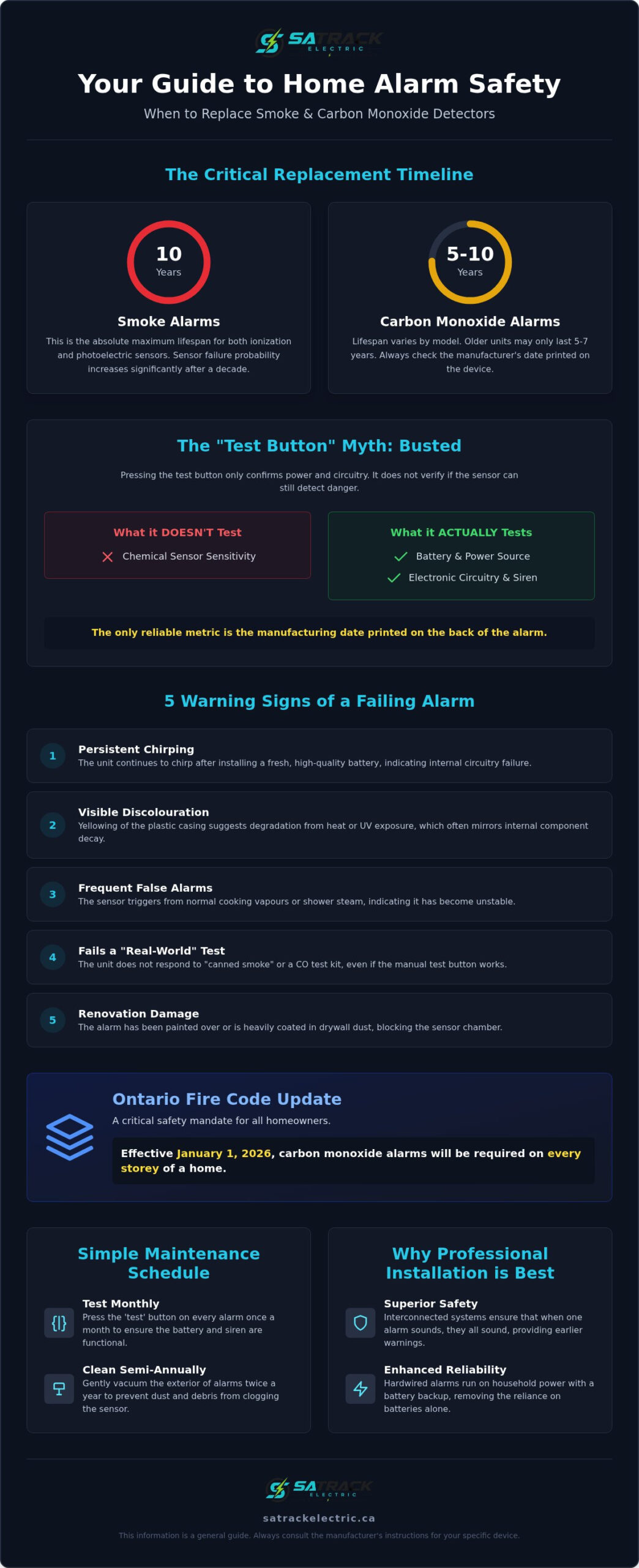
Many homeowners believe that as long as an alarm sounds when tested, it remains effective. This is a dangerous misconception. The primary question of When Should You Replace Smoke and Carbon Monoxide Alarms? depends on the age of the internal sensors rather than just the battery life. Generally, smoke alarms require replacement every 10 years. Carbon monoxide units typically last between 5 and 10 years depending on the specific model and manufacturer standards.
The “test button myth” is a critical point of confusion for many property owners. Pressing this button only confirms that the battery is providing power and the electronic circuitry is functional. It does not verify the actual sensitivity of the chemical sensing chamber. Over time, these sensors suffer from chemical degradation. This process eventually makes them unable to detect smoke particles or gas molecules even if the siren sounds perfectly during a manual test. Sensors simply wear out. This is why When Should You Replace Smoke and Carbon Monoxide Alarms? is a question that must be answered by looking at the date on the device.
Always check the manufacturing date printed on the back of the unit. This date is the only reliable metric for replacement. If you installed a unit in 2024 that sat on a warehouse shelf since 2022, its 10-year lifespan ends in 2032, not 2034. Professional electrical maintenance often reveals devices that have been in service for 15 years or more, leaving occupants unprotected despite a green status light.
Smoke Alarm Replacement Timelines
Whether your home uses ionization or photoelectric sensors, the 10-year maximum remains absolute. The National Fire Protection Association sets this limit because the probability of sensor failure increases significantly after a decade of continuous operation. In the Quinte region, specific environmental factors can shorten this window. High humidity levels and dust common in Ontario basements or crawlspaces can lead to buildup inside the sensing chamber. This debris can cause nuisance alarms or, more dangerously, prevent the sensor from reacting to a real fire. If your unit is older than 10 years, it is no longer a reliable safety device.
Carbon Monoxide Alarm Longevity
A carbon monoxide detector relies on sophisticated biomimetic or electrochemical sensors that are more delicate than those found in smoke alarms. Older models often had a lifespan of only 5 to 7 years. While modern technology has introduced 10-year sealed units, many homes in Belleville still use older devices that may be nearing expiration. Most modern units will emit a specific, recurring beep pattern that differs from a low-battery chirp to signal that the sensor has reached its end of life. When this signal occurs, the unit must be replaced immediately to ensure continued protection against this odourless, colourless gas.
5 Warning Signs Your Alarms Need Immediate Replacement
Determining When Should You Replace Smoke and Carbon Monoxide Alarms? often involves looking for subtle physical cues and functional failures. While the ten-year rule is a standard benchmark, several warning signs indicate that a device has become unreliable before its official expiration date. Identifying these issues early is vital for maintaining a safe environment. If you notice any of the following signs, the unit should be decommissioned immediately:
- Persistent Chirping: If a device continues to chirp after you have installed a fresh, high-quality battery, the internal sensor or circuitry is likely failing.
- Visible Discolouration: Yellowing of the plastic casing is more than an aesthetic issue; it indicates that the plastic has become brittle due to heat or UV exposure, which often mirrors the degradation of internal components.
- Frequent False Alarms: Sensors that trigger regularly due to shower steam or normal cooking vapours have often become overly sensitive or unstable, suggesting they can no longer distinguish between a threat and everyday activity.
- Test Failure: A unit that fails to respond to “canned smoke” or a CO test kit, even if the manual test button works, has a compromised sensing chamber.
- Renovation Damage: Alarms that have been accidentally painted over or heavily coated in drywall dust during home improvements cannot “breathe” properly to detect hazards.
Adhering to Ontario Fire Code smoke alarm requirements ensures your home remains a safe space, but local environmental factors often accelerate the need for new equipment. If you are unsure about the state of your current system, scheduling professional electrical maintenance can provide a definitive assessment of your home’s safety devices.
Recognizing Physical Deterioration
Environmental conditions in the Quinte region can take a toll on safety hardware. Homes with large sunrooms in Quinte West often see higher levels of UV exposure, which breaks down the polymers in alarm casings and makes them yellow and brittle. Similarly, properties located near gravel roads or active construction sites in Belleville may experience premature sensor failure. Fine particulate matter and dust can settle deep within the sensing chamber, either blocking the sensor entirely or causing it to malfunction. A yellowed or dusty alarm is a clear signal that the device’s internal integrity is at risk.
Electronic Failure Signals
Hardwired units provide a higher level of reliability, but they are not immune to electronic failure. Look for intermittent power light failures; if the green “on” LED flickers or remains dark while your home has power, the unit’s connection or internal transformer may be failing. In multi-storey homes, a critical sign of trouble is the failure of interconnected units to trigger the rest of the house during a test. An end-of-life signal is a specific beep sequence, often two chirps every thirty seconds, that is distinct from the single chirp of a low battery. When you hear this specific rhythm, it is a definitive answer to the question of When Should You Replace Smoke and Carbon Monoxide Alarms?
Ontario Fire Code and Safety Regulations
Compliance with the Ontario Fire Code is a legal obligation for every property owner in the Quinte region. These regulations are designed to provide the earliest possible warning of a life-threatening event. Currently, provincial law requires a working smoke alarm on every storey of a home and outside all sleeping areas. Failure to meet these standards is a serious offence. Individuals can face tickets of $295 or fines up to $50,000, while corporations may be fined up to $500,000 for non-compliance.
Effective January 1, 2026, the requirements for carbon monoxide (CO) protection will become even more stringent. All Ontario homes with a fuel-burning appliance, fireplace, or attached garage must have a working CO alarm on every storey, including levels without sleeping areas. This update expands on the existing mandate for alarms adjacent to each sleeping room. For commercial properties in Belleville and Brighton, standards vary based on building classification, but the core principle remains the same: functional detection is mandatory. Landlords bear the responsibility for installing and maintaining these devices in rental units, while tenants must notify the owner if a unit malfunctions.
Where to Install Alarms for Maximum Compliance
Proper placement is just as critical as knowing When Should You Replace Smoke and Carbon Monoxide Alarms? to ensure your system actually works. Ontario law specifies that CO alarms must be installed within five metres of any sleeping room door. Unlike smoke alarms, which must be mounted on the ceiling to catch rising smoke, CO alarms can be installed at any height because carbon monoxide mixes evenly with the air. When mounting smoke alarms, you must avoid “dead air” spaces. These are the pockets in vaulted ceilings or tight corners where air does not circulate, potentially delaying detection by several minutes.
Hardwired Requirements in Newer Homes
The Ontario Building Code introduced significant changes for homes constructed after 1997. These properties are required to have hardwired, interconnected smoke alarms. This means that if one alarm detects a threat, every unit in the house sounds simultaneously. You cannot legally replace a hardwired unit with a battery-only model, as this would violate the building’s original safety certification. All new installations and upgrades to these systems must adhere to Electrical Safety Authority (ESA) standards. Ensuring your home meets these modern requirements is a key part of When Should You Replace Smoke and Carbon Monoxide Alarms? because older, non-interconnected systems may no longer provide the level of safety required by current building standards.
How to Properly Test and Maintain Your Safety Devices
Rigorous maintenance is the only way to ensure your safety system remains functional between replacement cycles. While you now understand When Should You Replace Smoke and Carbon Monoxide Alarms? based on manufacturer dates, consistent testing prevents unexpected failures. A proactive approach to maintenance ensures that your sensors are clear and your sirens are ready to sound when seconds matter most. Follow these four essential steps to keep your devices in peak condition:
- Step 1: Monthly Button Test. Press and hold the test button once every month. This verifies that the battery is providing power and the internal circuitry can trigger the siren.
- Step 2: Semi-Annual Cleaning. Use a vacuum with a soft brush attachment to clean the exterior of every alarm twice a year. This removes dust, lint, and cobwebs that can block the sensor or cause false alarms.
- Step 3: Battery Replacements. For units that use standard 9V batteries, replace them every six months. Coordinating this with the seasonal time change is an effective way to stay on schedule.
- Step 4: Annual Functional Test. Once a year, use an approved aerosol smoke to conduct a “real-world” test. This confirms that the internal sensor is actually detecting particles, moving beyond the simple electronic check of the test button.
If your devices fail any of these tests or appear physically damaged, don’t delay in seeking help. You can schedule professional electrical maintenance to have your entire system inspected and updated by a licensed expert.
Seasonal Maintenance Checklist
Coordinating your safety checks with daylight savings time changes ensures you never miss a critical update. During these checks, take a moment to look at the “replace by” date printed on the side or back of every unit in your home. It’s also vital to verify that your alarms remain unobstructed. New furniture, tall bookshelves, or heavy curtains can inadvertently block airflow to a sensor, significantly delaying the time it takes for an alarm to trigger during an emergency. Ensure there is at least a foot of clear space around every device.
Dealing with Nuisance Alarms
It can be tempting to disable an alarm that seems to trigger for no reason, but this leaves your household entirely unprotected. If an alarm regularly sounds due to shower steam, move the unit further away from the bathroom door rather than removing its power source. Most modern units include a “hush” button designed to silence the alarm for several minutes while you clear the air. Use this feature instead of removing batteries. If nuisance alarms persist despite cleaning, it’s often a sign that the sensor is unstable and requires a full replacement to restore reliable protection.
Why Professional Installation is Essential for Interconnected Systems
While battery replacement is a straightforward task, managing hardwired systems requires the expertise of a licensed electrical contractor. Modern hardwired systems are integrated directly into your home’s 120V electrical circuit, which provides a constant power source and allows for seamless communication between units. Knowing When Should You Replace Smoke and Carbon Monoxide Alarms? is essential, but the physical installation of these units is not a task for the average homeowner. Working with line voltage presents significant safety risks and requires adherence to strict Ontario Building Code standards.
A significant advantage of professional installation is ensuring proper interconnection. In a multi-storey home, an alarm triggered in the basement must instantly signal the units in the upstairs bedrooms. This life-saving feature ensures that occupants are alerted regardless of where the hazard originates. Mixing different brands of hardwired alarms can lead to system failure, as different manufacturers often use proprietary communication protocols. Satrack Electric takes a methodical approach to these installations, performing a comprehensive safety audit during every service to ensure all devices are compatible and the wiring is secure.
The Benefits of Interconnected Alarms
For residents in larger homes in Picton or Trenton, interconnection is a vital safety layer. Professional wiring ensures the signal travels instantly across the entire circuit, providing those extra seconds needed for a safe evacuation. If you experience “phantom” alarms, where the system sounds without an obvious cause, it is often due to loose wiring or a single failing unit in the chain. Identifying When Should You Replace Smoke and Carbon Monoxide Alarms? often leads to the realization that your entire system requires a professional assessment to locate and resolve these electrical inconsistencies.
Upgrading Your Home’s Safety Infrastructure
Modernizing your home’s safety infrastructure often involves integrating smoke and carbon monoxide detection into a single, streamlined system. This reduces the number of devices on your ceilings while increasing overall protection. Many homeowners choose to replace outdated battery units with hardwired models during electrical panel upgrades, as this allows for easier routing of new dedicated circuits. Furthermore, understanding how routine electrical maintenance prevents alarm malfunctions can save you from the frustration of middle-of-the-night chirps. Ensure your home is protected by working with a seasoned expert who values integrity and thorough results. Ensure your home is protected. Contact Satrack Electric for professional alarm installation today.
Securing Your Home with Reliable Detection
Understanding the specific timelines for sensor replacement is the first step in maintaining a safe household. While batteries require semi-annual attention, the sensors themselves have a definitive expiration date that dictates When Should You Replace Smoke and Carbon Monoxide Alarms? to ensure they remain effective. By recognizing physical signs of wear and adhering to the updated Ontario Fire Code mandates, you can protect your property from undetected hazards. A proactive approach to these systems prevents emergencies before they occur.
Reliable safety systems depend on more than just functional batteries; they require professional oversight and precise installation. As licensed and insured Ontario electricians serving Belleville, Quinte West, and Prince Edward County, we possess the expertise to ensure your home meets all provincial safety standards. Don’t leave your family’s safety to chance or an outdated device. Our team provides the professional assurance needed to keep your interconnected systems operating flawlessly.
Protect your family with professional alarm installation from Satrack Electric and enjoy the peace of mind that comes with a compliant, interconnected system. Taking these proactive steps today ensures your home remains a secure environment for years to come.
Frequently Asked Questions
Is it better to have separate smoke and CO alarms or a combination unit?
Combination units offer a streamlined solution by housing two sensors in one device, which reduces the total number of units you need to maintain. However, separate units allow for more precise placement. Smoke alarms must be on the ceiling to catch rising heat, while carbon monoxide detectors can be placed at any height. To determine When Should You Replace Smoke and Carbon Monoxide Alarms?, check the manufacture date on each specific sensor, as combination units may have different lifespans for each detection type.
Why does my smoke alarm chirp even after I changed the battery?
Persistent chirping after a battery change often indicates that the unit has reached its end of life or that dust has contaminated the sensing chamber. It could also mean the battery was not installed correctly or is of poor quality. If cleaning the unit with a vacuum doesn’t stop the sound, the internal circuitry is likely failing. This audible signal is a clear answer to When Should You Replace Smoke and Carbon Monoxide Alarms? and requires immediate unit replacement.
What is the Ontario law for carbon monoxide detectors in houses?
Ontario law mandates that every home with a fuel-burning appliance, fireplace, or attached garage must have a working CO alarm. Effective January 1, 2026, these devices must be installed on every storey of the dwelling, including those without sleeping areas. This is an expansion of the previous requirement that only focused on areas adjacent to bedrooms. Failure to comply can result in significant fines under the Ontario Fire Code, making regular compliance audits essential for local homeowners.
Can I replace a hardwired smoke alarm myself in Ontario?
While homeowners may be tempted to handle replacements themselves, hardwired alarms are part of your home’s 120V electrical system. In Ontario, any work involving permanent wiring should be performed by a licensed electrical contractor to ensure compliance with the Electrical Safety Authority standards. A professional ensures that interconnected units communicate correctly across the entire circuit. This professional oversight prevents wiring errors that could lead to system failure or electrical fires during a real emergency.
How do I know if my smoke alarm is expired if there is no date on it?
If you cannot find a manufacture or expiry date on the back of the device, it is almost certainly older than ten years. Manufacturers only began consistently stamping these dates on units in the early 2000s. An undated alarm is an unreliable alarm. You should replace it immediately with a modern, dated unit to ensure your household is protected by a sensor that meets current safety standards and has a verifiable lifespan.
What should I do if my carbon monoxide alarm starts sounding?
If your CO alarm sounds, you must treat it as a life-threatening emergency. Immediately evacuate all occupants from the building and move to fresh air. Once outside, call 911 or your local fire department. Do not re-enter the property or attempt to find the source of the leak yourself. Carbon monoxide is an odourless, colourless gas that can cause permanent injury or death before you even realize it is present in your home.
Do 10-year sealed battery alarms really last a full decade?
These units are designed to function for ten years without a battery change, but environmental factors can affect their performance. While the lithium battery is rated for a decade, the sensors can still degrade if exposed to high humidity or heavy dust. You must still perform monthly button tests to verify the electronics are functional. If the unit begins its end-of-life chirping before the ten-year mark, it must be replaced to maintain safety.
Are landlords in Belleville required to provide carbon monoxide alarms?
Landlords in Belleville, Trenton, and across the Quinte region are legally responsible for installing and maintaining smoke and CO alarms in rental properties. This includes ensuring units are functional at the start of every new tenancy and replacing them when they expire. Tenants are responsible for testing the alarms monthly and must notify the landlord immediately if a unit is not working. Tampering with or removing these safety devices is a violation of provincial law.