
What if the most significant risk to your Belleville home is the one system you can’t actually see? For many residents in our community, the wiring behind the walls remains a mystery until a flickering light or a tripped breaker signals a deeper problem. Understanding the health of your electrical system is vital, especially since the 29th edition of the Ontario Electrical Safety Code comes into effect on May 1, 2025. This guide covers everything you need to know about electrical safety inspections to help you maintain a secure and compliant property.
We understand that worrying about potential electrical fires in older homes or insurance policy cancellations due to an outdated panel can be exhausting. You deserve to feel confident that your home or business is operating safely and efficiently. By reading this article, you’ll discover how a professional electrical safety inspection protects your Ontario property, ensures strict code compliance, and provides total peace of mind. We will outline the differences between mandatory ESA notifications and private assessments, explain how inspections can lead to lower insurance premiums, and provide a clear roadmap for your necessary electrical upgrades.
Key Takeaways
- Learn how proactive safety assessments identify hidden hazards in your wiring before they develop into costly emergencies or fire risks.
- Explore Everything You Need to Know About Electrical Safety Inspections, from evaluating your main electrical service to testing essential life-saving devices.
- Understand the distinction between mandatory ESA notifications for new work and voluntary audits that provide a clear roadmap for necessary upgrades.
- Discover how to properly prepare your Belleville home or business to ensure a thorough and efficient professional evaluation.
- See why working with a licensed Ontario electrical contractor is a vital step in maintaining insurance validity and achieving total peace of mind.
What is an Electrical Safety Inspection and Why is it Essential?
A professional electrical safety assessment is a systematic evaluation of a property’s electrical infrastructure. It goes beyond a cursory glance at your light switches or outlets. This process involves a deep dive into the components that power your daily life, from the service mast down to the individual branch circuits. By performing rigorous electrical safety testing, a licensed contractor can determine if your system is operating within safe parameters or if it’s struggling under modern loads.
The primary goal of this assessment is to identify hidden hazards before they transform into costly emergencies. Many homeowners assume their system is healthy because the lights turn on without issue. However, problems like loose terminations or degraded wire insulation often hide behind drywall or inside junction boxes. These faults generate heat silently. A technical audit uncovers these risks, providing the clarity needed to prevent electrical fires or sudden power failures. This guide provides Everything You Need to Know About Electrical Safety Inspections to help you protect your investment.
In 2026, standards require a more thorough look at power demands than in previous decades. Our homes now support electric vehicles, smart appliances, and high-efficiency heat pumps that older systems weren’t designed to handle. A comprehensive audit involves opening the electrical panel, checking for thermal damage, and verifying that the grounding system is intact. This is significantly more involved than a visual check, which only identifies obvious surface-level defects.
The Role of the Ontario Electrical Safety Code
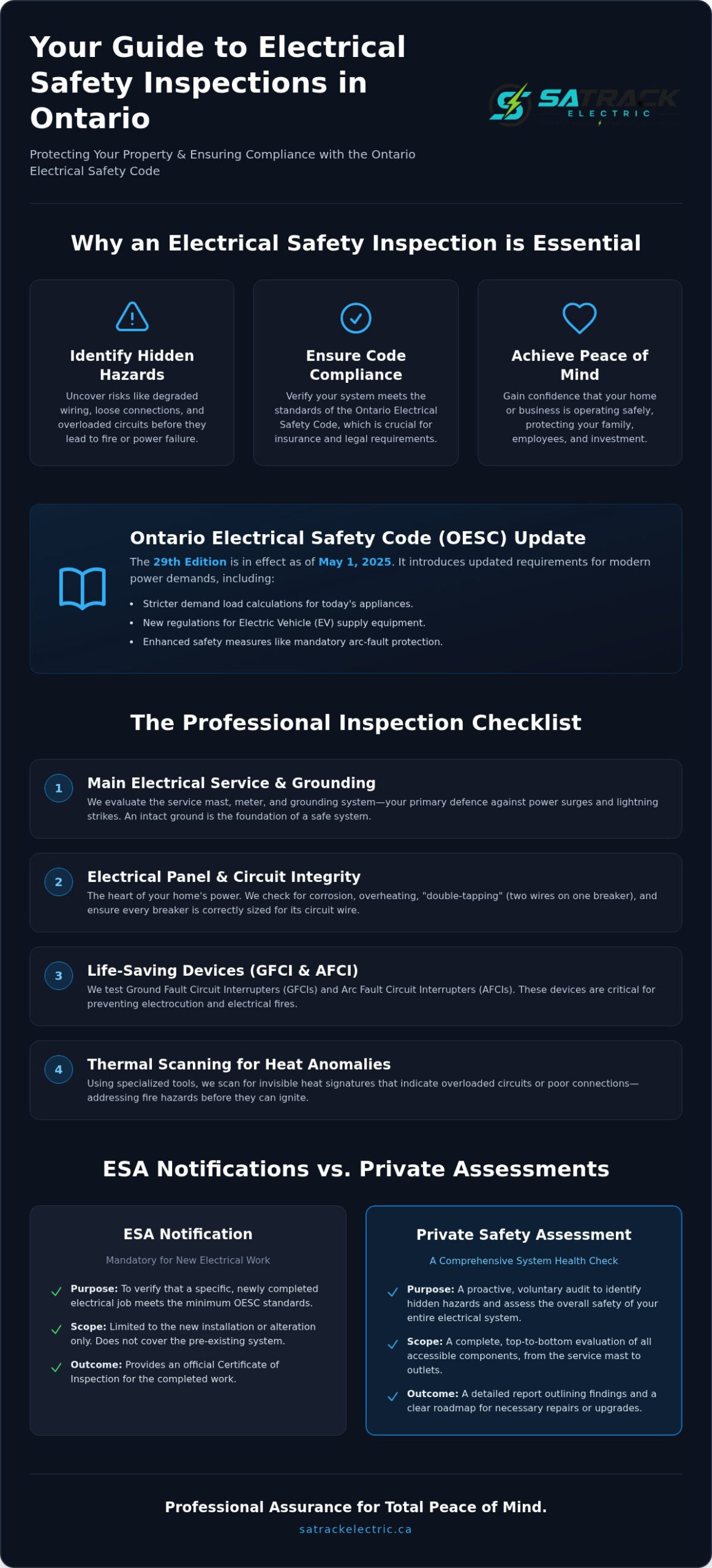
The Ontario Electrical Safety Code (OESC) sets the safety benchmark for every licensed contractor in the province. The 29th edition of the OESC became effective on May 1, 2025, introducing updated requirements for demand load calculations and electric vehicle supply equipment. While “grandfathered” systems may have been legal when they were first installed, they often lack the safety features of modern code, such as arc-fault protection. Understanding these regulations is a core part of Everything You Need to Know About Electrical Safety Inspections.
Common Triggers for a Safety Inspection
Specific life events often necessitate a professional assessment to ensure continued reliability. If you’re buying or selling a property in the Belleville, Trenton, or Quinte West area, an inspection ensures there are no hidden liabilities for the new owner. Insurance providers also frequently mandate these audits before they’ll issue or renew a policy for older homes or those with legacy wiring. Additionally, if your neighbourhood has experienced a significant power surge or a major weather event, an inspection can verify that your home’s surge protection and main service remained resilient.
The Professional Inspection Checklist: What We Evaluate
A comprehensive safety audit follows a structured protocol to ensure no component is overlooked. This process provides Everything You Need to Know About Electrical Safety Inspections by focusing on the hidden infrastructure that supports your property. We begin by evaluating the main electrical service mast and the grounding system. A secure ground is your primary defence against lightning strikes and power surges, yet it’s often neglected in older Belleville properties. Ensuring the integrity of this foundation is the first step in any technical assessment.
Beyond the main service, we test the functionality of life-saving devices like Ground Fault Circuit Interrupters (GFCIs) and Arc Fault Circuit Interrupters (AFCIs). These components are designed to shut down power instantly when they detect a current leak or a dangerous spark. We also scan for thermal anomalies using specialized tools. These scans identify heat signatures that indicate overloaded circuits or loose connections before they cause a fire. For homeowners looking to do a preliminary sweep, the Home Electrical Safety Checklist offers a helpful starting point for identifying visible hazards.
Electrical Panel and Circuit Integrity
The electrical panel is the heart of your home’s power distribution. During an inspection, we look for signs of corrosion, overheating, or “double-tapping,” where two wires are improperly connected to a single breaker. We also verify that every circuit breaker is correctly sized for the wire gauge it protects. If your panel is crowded or shows signs of thermal stress, a professional electrical panel upgrade in Belleville might be necessary to restore safety and capacity. Proper clearance and clear labelling are also checked to ensure the panel is accessible during an emergency.
Wiring Systems and Device Safety
Legacy wiring remains a significant concern in the Quinte area. We prioritize identifying dangerous aluminum wiring or knob-and-tube remnants that may still be energized. These older systems often lack the resilience needed for modern electronics. We also check outlet tension and switch condition throughout the building; loose outlets can cause arcing and heat buildup. Outdoor installations require special attention, so we ensure wiring for lighting or hot tubs meets the latest weatherproofing and grounding standards. If you suspect your wiring is outdated, scheduling professional electrical maintenance can help mitigate these risks before they escalate.
ESA Inspections vs. Private Safety Assessments
Understanding the distinction between a regulatory inspection and a professional safety audit is a key part of Everything You Need to Know About Electrical Safety Inspections. While both processes aim to minimize risk, they serve different masters. An ESA inspection is a compliance check designed to ensure that specific new work meets the minimum requirements of the Ontario Electrical Safety Code. A private safety assessment, however, is a comprehensive health check of your entire system, regardless of whether recent work was performed.
Canadian insurance providers often require a detailed report from a licensed contractor before they’ll renew a policy on an older home. While an ESA certificate proves that a specific installation was done correctly, it doesn’t necessarily speak to the overall condition of your legacy wiring or the integrity of your panel’s internal components. A private audit helps you avoid ESA “defects” by identifying issues early. This allows you to address them before a formal regulatory visit, potentially saving you from the costs of rework and multiple filing fees.
When to Call the Electrical Safety Authority
In Ontario, the law requires that most electrical work be reported through the process of electrical notifications and inspections. This includes renovations, service upgrades, and major electrical repairs in Belleville. The ESA inspector ensures the work aligns with the latest standards, including the 29th edition of the Ontario Electrical Safety Code that came into effect in May 2025. Failing to obtain the necessary permits can lead to legal complications, property sale delays, or the denial of insurance claims if an incident occurs.
The Value of a Preventative Contractor Audit
A contractor-led audit provides a deeper look at your system’s longevity and performance. We evaluate your current capacity and help you plan for future-proofing, such as assessing if your current service can handle a backup generator installation or a new electric vehicle charger. This type of assessment results in a prioritized list of repairs based on safety risk versus cost. It gives you a clear roadmap for upgrades that fits your budget while ensuring your property remains a safe, reliable environment for your family or employees.
How to Prepare Your Property for an Electrical Inspection
Preparing your home for a professional visit is a straightforward process that ensures the assessment is both thorough and efficient. Access is everything. When you understand Everything You Need to Know About Electrical Safety Inspections, you’ll realize that the quality of the audit often depends on the level of entry provided to the technician. Taking a few minutes to clear the way allows the contractor to focus on technical integrity rather than moving boxes or furniture. It also helps in identifying and documenting known issues like flickering lights or warm outlets that might indicate loose connections behind your walls.
Ensuring Unobstructed Access
The Ontario Electrical Safety Code requires specific working space around electrical equipment to ensure safety during testing. You should clear a three-foot radius around the main electrical panel and the external meter base. If your property has wiring that needs to be traced through an attic or crawlspace, ensure these entries are accessible and not blocked by storage bins or seasonal items. Unlocking side gates or utility rooms for external service inspections is also essential. This allows for a seamless flow during the visit and ensures every component is scrutinized without delay.
Documenting Your System History
Providing a clear picture of your system’s past helps the inspector pinpoint potential vulnerabilities. Create a list of any recent renovations or DIY repairs for the professional to review. It’s also helpful to find the location of all GFCI-protected outlets in the kitchen and bathrooms beforehand. If you have circuits that frequently trip during normal use, note these specifically. Gathering any previous electrical permits or documentation shows a history of compliance and helps verify that previous work was performed by a licensed contractor. This documentation is especially valuable if you’re preparing for a property sale or an insurance renewal.
Don’t forget to secure pets in a separate room and clear clutter away from major appliances like the furnace or water heater. When the environment is safe and organized, the inspection moves faster and provides more accurate results. A clear workspace isn’t just about convenience; it’s a safety requirement that allows the technician to work without distraction. If you’re ready to secure your property’s future and ensure total compliance, you can book your professional electrical maintenance with our team today.
Why Professional Assurance Matters: The Satrack Advantage
Choosing a partner for your property’s electrical health is a decision that impacts your long-term integrity and safety. It’s about more than just meeting a minimum code requirement; it’s about establishing a relationship with a licensed and insured Ontario electrical contractor who understands the specific nuances of our region. Satrack Electric provides methodical, safety-first assessments across the Quinte West area, ensuring that every wire, breaker, and connection is scrutinized with professional precision. We prioritize technical accuracy to give you the confidence that your system can handle today’s power demands.
If an assessment reveals deficiencies, we view the results as a clear roadmap for improvement rather than a setback. Our team works with you to prioritize repairs, moving your system from a state of hidden risk to total compliance. This transition is a vital component of Everything You Need to Know About Electrical Safety Inspections, as it transforms technical observations into actionable safety solutions. By addressing these issues through professional channels, you ensure your home or business remains a stable environment while maintaining the validity of your insurance policy.
Expertise in Local Property Challenges
Belleville and its surrounding communities, such as Picton and Brighton, feature a diverse mix of historical residential architecture and modern commercial facilities. Older homes in these areas often present unique challenges, including legacy grounding issues or deteriorating insulation that requires a seasoned eye to detect. We also provide specialized knowledge in commercial facility maintenance for Belleville businesses, where power demands are significantly higher and regulatory standards are more complex. Our commitment to professional integrity ensures you receive an honest evaluation of your infrastructure’s current state.
Your Next Steps Toward Electrical Safety
Booking a comprehensive safety audit is the most effective way to protect your investment and ensure the well-being of those inside your property. Once our assessment is complete, you’ll receive a final inspection report that includes a detailed recommendation list. This document serves as your guide for future upgrades and provides a record of professional diligence for your insurance provider. Maintaining this standard year-round through long-term maintenance plans ensures your property remains resilient against power surges and equipment wear. When you’re ready to secure your property’s future, Contact Satrack Electric for a professional safety inspection today to begin the process.
Securing Your Property’s Electrical Future
Maintaining a safe home or business environment in Belleville requires a proactive approach to electrical health. We’ve explored how professional audits identify hidden thermal risks and ensure your wiring meets the latest Ontario Electrical Safety Code standards. By distinguishing between mandatory ESA notifications and preventative private assessments, you can effectively manage your property’s maintenance roadmap and protect your insurance validity.
This guide provides Everything You Need to Know About Electrical Safety Inspections to help you make informed decisions for your residential or commercial infrastructure. As a licensed and insured Ontario contractor, Satrack Electric specializes in Belleville residential and commercial safety. Our team serves as your local ESA compliance experts, providing the methodical assessments needed for total peace of mind.
Book Your Professional Electrical Safety Inspection with Satrack Electric to ensure your system is resilient, efficient, and fully compliant. Taking this small step today prevents costly emergencies tomorrow and ensures your property remains a safe place for everyone.
Frequently Asked Questions
How often should a home have an electrical safety inspection in Ontario?
Generally, residential properties in Ontario should undergo a safety assessment every 10 years. However, if you own an older home in Belleville, more frequent checks are advisable. Providing Everything You Need to Know About Electrical Safety Inspections is part of our commitment to local safety. Scheduling an audit after a renovation or when purchasing a property ensures your system handles modern loads safely and identifies deteriorating components before they lead to fire risks.
Will an electrical inspection lower my home insurance premiums?
Many Canadian insurance providers recognize professional safety audits as a way to mitigate property risk. By providing a report from a licensed contractor, you demonstrate that your system is free of high-risk defects and fully compliant with provincial codes. This documentation often leads to lower premiums or prevents policy cancellations for older homes. It’s an investment that pays for itself through improved safety and long-term savings on your annual insurance costs.
What are the most common reasons for failing an electrical inspection?
Inspections frequently identify issues such as ungrounded outlets, overcrowded panels, or “double-tapped” breakers where two wires share a single connection. The presence of outdated aluminum wiring or a lack of GFCI protection in bathrooms and kitchens are also common points of failure. Understanding these vulnerabilities is central to Everything You Need to Know About Electrical Safety Inspections, as it allows homeowners to address hidden hazards before they transform into costly, dangerous emergencies.
Do I need an ESA permit for a simple safety inspection?
A standalone safety inspection or voluntary audit does not require an ESA permit. However, if the assessment identifies the need for electrical repairs or a panel upgrade, a notification must be filed with the Electrical Safety Authority. As a licensed contractor, we manage the permit process for any remedial work we perform. This ensures that all changes to your system are officially recorded and verified by an inspector for legal and insurance purposes.
How long does a typical residential electrical safety inspection take?
A thorough residential evaluation typically requires two to four hours to complete. The exact timeframe depends on the size of your home and the age of the electrical system. We take the time to inspect the main service mast, the electrical panel, and a representative sample of devices throughout the property. This methodical approach ensures we gather all the data needed to provide a comprehensive report on your system’s current health and safety.
Can I perform my own electrical safety check instead of hiring a professional?
While a homeowner can perform a basic visual check for cracked plates or flickering lights, they cannot replace a professional technical audit. Licensed contractors use specialized diagnostic equipment, such as thermal scanners and circuit testers, to identify risks that aren’t visible to the naked eye. Relying on a professional ensures that your assessment meets the rigorous standards of the Ontario Electrical Safety Code and provides the formal documentation required by most insurance companies.
What is the difference between a home inspection and an electrical safety inspection?
A general home inspection covers many systems at a surface level, whereas an electrical safety inspection is a deep, technical dive into your power infrastructure. We open the electrical panel, check wire terminations, and test the integrity of your grounding system. This specialized focus provides a level of detail that a standard home inspection cannot match. It’s the most effective way to ensure your property’s electrical system is safe and fully compliant.
Does Satrack Electric provide inspections for commercial properties in Quinte West?
Satrack Electric provides specialized commercial electrical services to businesses in Belleville, Trenton, and the surrounding Quinte West area. We recognize that commercial properties have unique power requirements and must adhere to specific safety regulations. Our team performs detailed assessments of commercial panels, machinery wiring, and lighting systems to ensure your facility remains safe and operational. We help local business owners maintain a reliable environment while meeting all provincial electrical safety standards.