
A single flickering panel in a production facility is rarely just a minor nuisance; it’s often the first indicator of a systemic fault that could halt your entire operation. When you’re responsible for commercial electrical troubleshooting in Belleville, the pressure to maintain uptime while managing the complexities of 3-phase industrial power is constant. You understand that unexpected power outages don’t just disrupt your schedule; they directly impact your revenue and raise concerns about strict regulatory oversight. Managing these risks requires a methodical strategy rather than a trial and error approach.
Effective troubleshooting is a forensic process designed to identify root causes and ensure your site adheres to the 2024 Ontario Electrical Safety Code, which became effective on May 1, 2025. By following a structured diagnostic path, you can protect your equipment and avoid the penalties associated with non-compliance, particularly as the Plan Review threshold increases to 12 kW in July 2026. This guide outlines the essential steps to resolve complex electrical faults efficiently. We’ll examine how to handle industrial power fluctuations, maintain safety standards, and work with licensed contractors to keep your facility running at peak performance.
Key Takeaways
- Master the forensic approach to commercial electrical troubleshooting in Belleville to identify root causes and avoid the hazards of trial-and-error repairs.
- Ensure facility compliance by aligning your troubleshooting protocols with the 2024 Ontario Electrical Safety Code and preparing for the 2026 Plan Review threshold changes.
- Learn which visual-only assessments facility managers can safely conduct to help licensed contractors restore power more efficiently.
- Recognize the specific indicators of phase imbalances and driver failures to resolve persistent issues with high-capacity LED lighting and industrial breakers.
- Transition from reactive repairs to a proactive maintenance program using annual infrared scanning to identify potential faults before they cause downtime.
What is Commercial Electrical Troubleshooting?
Commercial electrical troubleshooting in Belleville is best understood as a forensic investigation rather than a simple repair task. While residential work often relies on a “trial and error” approach to find a faulty switch or outlet, commercial environments require a higher level of analytical rigour. In a facility setting, an electrician must trace the root cause of a disturbance through complex distribution networks to prevent a recurrence. This methodology is essential for maintaining safety across the Quinte region, where industrial infrastructure demands precise adherence to the Ontario Electrical Safety Code.
A significant differentiator in commercial work is the presence of 3-phase power systems. These systems provide the consistent, high-capacity energy needed for heavy machinery, but they also introduce variables like phase imbalance and harmonic distortion. Identifying common types of electrical faults in these environments requires specialized tools and a deep understanding of how load distribution affects the entire grid. Without this forensic mindset, a technician might replace a component only to have it fail again because the underlying voltage issue was never addressed.
The High Stakes of Industrial Power Faults
In Belleville’s manufacturing and commercial sectors, the financial impact of an electrical failure is measured by the minute. Operational downtime can quickly lead to thousands of dollars in lost productivity and missed shipping deadlines. Beyond the balance sheet, minor faults in high-voltage circuitry can escalate into catastrophic equipment failures if left unaddressed. High-voltage systems carry an inherent risk of arc flashes and thermal damage, making accurate commercial electrical troubleshooting in Belleville a critical component of your facility’s safety and risk management strategy.
Troubleshooting vs. Reactive Repair
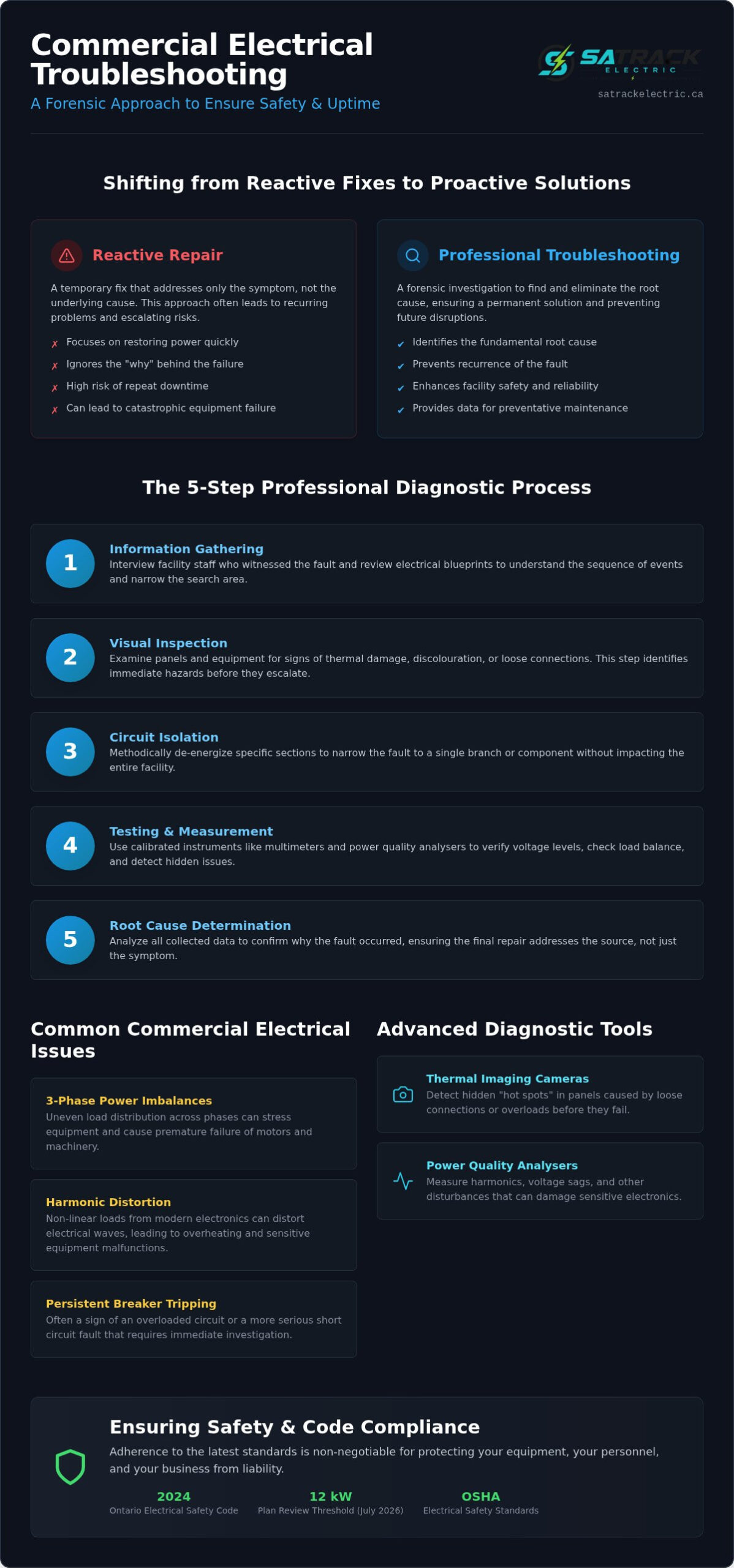
There is a fundamental difference between reacting to a blown fuse and performing a comprehensive diagnostic. Reactive repair focuses on restoring power as quickly as possible, often ignoring the “why” behind the failure. Professional troubleshooting, however, occurs before the repair begins to ensure the solution is permanent. This process results in detailed diagnostic reports that help facility managers make informed decisions about long-term upgrades and preventative maintenance. The goal of troubleshooting is to eliminate the root cause of a fault entirely, ensuring that the symptoms do not return to disrupt your operations.
The 5-Step Professional Troubleshooting Process
Executing a systematic framework is the only way to ensure commercial electrical troubleshooting in Belleville remains efficient and safe. Relying on guesswork in a high-voltage environment is dangerous and often leads to prolonged downtime. A professional diagnostic process follows five distinct stages to move from initial fault detection to a confirmed root cause.
- Information gathering: The process begins by interviewing facility staff who witnessed the fault and reviewing current electrical blueprints. Understanding the sequence of events helps narrow the search area.
- Visual inspection: Technicians examine panels and equipment for obvious signs of thermal damage, discolouration, or loose connections. This step often identifies hazards before they escalate.
- Circuit isolation: By methodically de-energizing specific sections, an electrician can narrow the fault to a single branch or component without affecting the entire facility.
- Testing and measurement: Using calibrated instruments, the technician verifies voltage levels and load balance. Adhering to OSHA’s electrical standards ensures these measurements are taken safely under load.
- Root cause determination: The final stage involves analyzing the data to confirm why the fault occurred, ensuring the subsequent repair addresses the source rather than just the symptom.
Advanced Diagnostic Tools Used by Licensed Contractors
Modern commercial systems require more than just a standard voltmeter. Licensed contractors utilize thermal imaging cameras to detect hidden “hot spots” within panels that indicate loose connections or overloaded circuits before they fail. Power quality analysers are also employed to detect harmonics and voltage sags that can damage sensitive electronics. Using calibrated multimeters is a requirement for maintaining Ontario Electrical Safety Code compliance, as precise data is necessary for identifying subtle phase imbalances in 3-phase systems.
Documenting the Fault for ESA Compliance
Maintaining a detailed log of all electrical faults is a vital practice for facility managers. This documentation provides a clear history of the building’s electrical health, which is essential for insurance claims and liability protection. During a future ESA inspection, having professional diagnostic reports on hand demonstrates a commitment to safety and code compliance. These records also assist in long-term facility planning by identifying recurring issues that may necessitate professional electrical upgrades to your existing infrastructure. Clear documentation ensures that every intervention is transparent and builds a reliable roadmap for future maintenance needs.
Common Commercial Electrical Issues in Belleville
Commercial facilities in the Quinte region face a unique set of electrical challenges that differ significantly from residential concerns. Nuisance tripping of high-capacity circuit breakers is a frequent issue in production environments. This often occurs when machinery start-up currents exceed the breaker’s calibrated threshold or when internal components begin to degrade. When you engage in commercial electrical troubleshooting in Belleville, identifying whether the trip is caused by a genuine overload or a ground fault is the first priority for restoring operations.
Flickering LED lighting systems are another common symptom in local businesses. While individual bulb failure is possible, it’s more likely that a driver has failed or there is a significant phase imbalance. Overheating transformers and distribution panels also present serious risks, particularly in facilities that have expanded their power needs without updating their core infrastructure. These components can reach dangerous temperatures, leading to intermittent power losses in specific zones that disrupt productivity and safety.
3-Phase Power Imbalances and Motor Issues
A phase imbalance occurs when the voltage across the three lines of a commercial system is unequal. This imbalance forces motors to run at higher temperatures, which can quickly destroy expensive commercial equipment. Total phase loss is even more catastrophic; it can cause a motor to stall and burn out within seconds. Troubleshooting these issues involves checking for “brownout” conditions where voltage drops below the required level for sensitive electronic equipment. Often, recurring glitches that seem random are actually linked to poor grounding, which introduces electrical noise into the system and compromises equipment reliability.
The Impact of Aging Infrastructure in the Quinte Region
Many businesses in downtown Belleville operate out of historic buildings with electrical systems that were never designed for modern industrial loads. Troubleshooting in these locations frequently reveals obsolete components that no longer meet 2026 safety standards. When the existing system can no longer safely distribute power, a comprehensive electrical panel upgrade is often the most cost-effective way to ensure long-term reliability. Upgrading older infrastructure allows facility managers to incorporate modern monitoring technology and ensure compliance with the latest Ontario Electrical Safety Code requirements, protecting both the building and the business.
Safe Troubleshooting: What Can Business Owners Do?
While you shouldn’t attempt technical repairs, your role in the initial stages of commercial electrical troubleshooting in Belleville is invaluable. A facility manager’s primary responsibility is to gather data safely without exposing themselves or their staff to high-voltage hazards. You can often identify the scope of a problem through sensory observations and administrative checks before a contractor even arrives on site.
The most important safety guideline is the “Hands-Off” rule. You should never open high-voltage enclosures, distribution panels, or transformer housings. These components carry lethal current levels and require specific arc-flash protection to access. Instead, focus on these visual and sensory assessments:
- Identify unusual smells: A distinct scent of ozone or burning plastic often indicates overheating insulation or a failing component.
- Listen for sounds: Persistent buzzing, humming, or crackling noises from a panel suggest loose connections or arcing.
- Review circuit directories: Check your panel schedules to see which specific zones are affected. This helps determine if the fault is localized or systemic.
- Check external factors: Confirm if neighbouring businesses in Belleville or Quinte West are also experiencing power fluctuations, which may point to a utility-side outage rather than an internal fault.
When to Call a Licensed Belleville Electrician
Certain warning signs demand an immediate professional response. If you see sparks, visible smoke, or if a high-capacity breaker trips immediately after being reset, stop all attempts to restore power. In Ontario, it’s a legal requirement that a licensed electrical contractor performs all commercial repairs. Attempting a DIY fix doesn’t just risk your safety; it can also void your commercial property insurance policy. Insurance providers often deny claims for fire or equipment damage if the work wasn’t completed by a licensed professional with a valid ESA notification.
Preparing for the Electrician’s Arrival
You can minimize downtime by preparing your facility for the technician. Ensure all electrical rooms and panels are clear of storage or debris so the electrician has immediate, unobstructed access. Collect as much information as possible about the event. Note the exact time the fault occurred, what machinery was running, and if there were any recent weather events. This data helps the expert determine if you need a simple repair or more comprehensive commercial electrical upgrades to handle your facility’s current load. To ensure your system is handled with professional assurance, you can contact a licensed commercial electrician to begin a formal diagnostic assessment.
Preventing Future Faults with Systematic Maintenance
Transitioning from reactive commercial electrical troubleshooting in Belleville to a proactive maintenance schedule is the most effective way to protect your facility’s operational budget. While identifying a fault after it occurs is necessary, the goal should be to prevent the fault from ever manifesting. A systematic approach ensures that small irregularities are corrected before they evolve into expensive emergency shutdowns or safety hazards. This shift in strategy transforms electrical care from a recurring headache into a managed business process.
One of the most critical tools in this proactive strategy is annual infrared scanning. This non-invasive diagnostic technique identifies abnormal heat patterns in distribution panels and transformers, allowing technicians to spot loose connections or overloaded circuits that are invisible to the naked eye. By addressing these hot spots during scheduled downtime, you avoid the chaos of an unplanned power loss. It’s equally important that all electrical repairs are meticulously logged and verified. This record-keeping builds a reliable history of your system’s performance, which is essential for both insurance compliance and long-term facility planning.
The 2026 Commercial Maintenance Checklist
To maintain high standards of safety and efficiency, your facility should adhere to a rigorous maintenance checklist. This is particularly vital as infrastructure ages and power demands increase. Key tasks include:
- Tightening connections: Thermal cycling can cause wires to loosen over time, leading to arcing and potential fire hazards.
- Testing GFCIs and emergency lighting: Regular verification ensures these life-safety systems function correctly during a crisis, maintaining 2026 code compliance.
- Reviewing load calculations: As new equipment is added, a professional must ensure the existing system isn’t overtaxed, which prevents premature component failure.
Partnering with a Local Authority
Working with a contractor who understands the specific characteristics of the local grid in Belleville, Trenton, and Quinte West provides a distinct advantage. Local expertise allows for a more nuanced approach to commercial electrical troubleshooting in Belleville, as the technician is already familiar with common regional infrastructure issues. Establishing a long-term relationship with a licensed professional also leads to faster response times and a deeper understanding of your facility’s unique electrical layout. Satrack Electric prioritizes these partnerships, focusing on delivering thorough results that provide peace of mind for business owners. To ensure your facility remains safe and efficient, contact Satrack Electric for a professional commercial assessment and begin building a more reliable electrical future today.
Securing Your Facility’s Electrical Reliability
Managing a commercial facility requires a constant balance between immediate problem solving and long term planning. You’ve learned that effective commercial electrical troubleshooting in Belleville relies on a forensic approach to identify root causes rather than simply treating symptoms. By moving from reactive repairs to a systematic maintenance schedule that includes annual infrared scanning, you can significantly reduce the risk of catastrophic downtime. This proactive stance ensures your infrastructure remains a stable asset for your business.
Entrusting your high voltage systems to a qualified professional ensures your site remains safe and compliant with the latest Ontario Electrical Safety Code requirements. Satrack Electric is an ESA Licensed Contractor (#7009789) specializing in complex 3-phase power and high voltage commercial systems across the Quinte region. Our team provides the technical expertise and professional assurance necessary to keep your operations running smoothly and safely.
Don’t wait for a flickering light to become a total power failure. Book a Professional Commercial Electrical Assessment with Satrack Electric to verify your system’s health and prevent future faults. Taking this proactive step today protects your equipment, your staff, and your bottom line.
Frequently Asked Questions
How long does commercial electrical troubleshooting typically take?
Diagnostic timelines vary based on the complexity of the fault and the size of your facility. A localized issue in a single branch circuit might be resolved within one to two hours. However, complex commercial electrical troubleshooting in Belleville involving 3-phase power distribution or intermittent motor failures may require a full day of forensic testing. Our priority is a thorough investigation to ensure the root cause is eliminated, preventing a recurrence of the fault.
Is it safe for my maintenance staff to troubleshoot 3-phase panels?
No, opening high-voltage enclosures is extremely hazardous for staff without specialized training and arc-flash protection. 3-phase industrial power carries significant energy levels that can result in lethal shocks or catastrophic equipment damage if handled incorrectly. For the safety of your personnel and to maintain your insurance coverage, all diagnostic work on commercial panels should be performed by a licensed electrical contractor who follows rigorous safety protocols and Ontario regulations.
Why do my circuit breakers keep tripping even when the load seems low?
Nuisance tripping often stems from internal component wear or electrical noise rather than simple overloads. In commercial environments, harmonic distortion from variable frequency drives or a phase imbalance can cause breakers to trip unexpectedly. Additionally, a loose connection within the panel can generate heat that triggers the thermal protection in the breaker. A professional diagnostic visit can identify these hidden issues using specialized measurement tools to verify the actual load levels accurately.
Do I need an ESA permit for electrical troubleshooting in Ontario?
A notification of work with the Electrical Safety Authority is generally not required for the diagnostic phase of troubleshooting. However, once the fault is identified, almost all subsequent electrical repairs or upgrades in Ontario require a permit. As a licensed contractor (ESA #7009789), we handle the notification process for you. This ensures the final repair is inspected and certified, which is a critical requirement for maintaining your business’s property insurance and liability protection.
Can thermal imaging really find electrical faults before they happen?
Thermal imaging is a highly effective tool for identifying electrical hot spots before they lead to a system failure. By detecting heat signatures caused by high resistance or overloaded circuits, we can pinpoint specific components that are at risk of failing. This allows facility managers to schedule repairs during planned downtime rather than reacting to an emergency shutdown. It’s a non-invasive way to maintain high safety standards and ensure equipment longevity in industrial settings.
What is the most common cause of electrical failure in Belleville businesses?
Loose electrical connections and aging infrastructure are the primary drivers of electrical failures in the Quinte region. Over time, the repeated heating and cooling of wires causes connections to loosen, leading to arcing and thermal damage. In many downtown Belleville buildings, older panels are also struggling to keep up with the increased power demands of modern machinery. Regular preventative maintenance is the best way to identify these vulnerabilities before they cause commercial electrical troubleshooting in Belleville sessions.
How much does a commercial electrical diagnostic visit cost in Ontario?
The cost of a diagnostic visit depends on the duration of the investigation and the specific tools required for the job. Specialized equipment, such as power quality analyzers or thermal imaging cameras, may be necessary for complex industrial faults. While we don’t provide flat-rate pricing for troubleshooting due to the unique nature of every facility, we provide clear estimates based on the scope of the forensic work required to restore your power safely and efficiently.