
That weekend DIY project could become the most expensive mistake you ever make, and it isn’t because of the price of materials. Many homeowners in the Quinte area assume that minor electrical changes are private matters, yet skipping a formal notification of work can lead to voided insurance and significant fines. You might be asking, Do You Need an ESA Permit for Electrical Work in Ontario? for a basement renovation or a simple panel upgrade. The answer is almost always yes, and understanding these legal requirements is essential for your safety and long-term financial security.
We recognize that the Ontario Electrical Safety Code can feel like a complex maze of technical standards. This guide provides a clear roadmap through the 2026 regulations, ensuring you know exactly when a permit is mandatory and how to verify a contractor’s licence. You’ll learn about the recent fee adjustments, the risks of unpermitted work, and how to secure a Certificate of Acceptance that protects your home’s value. Our goal is to provide the professional assurance you need to manage your property with confidence and total compliance.
Key Takeaways
- Understand which specific residential projects, from light fixture installations to panel upgrades, require a formal notification of work to remain compliant with provincial safety standards.
- Discover the definitive answer to “Do You Need an ESA Permit for Electrical Work in Ontario?” and why this document serves as your primary proof of electrical safety.
- Identify the significant risks associated with unpermitted installations, including the potential for insurance claim denials and legal roadblocks when selling your property.
- Learn how to verify a Licensed Electrical Contractor (LEC) by identifying their unique seven-digit ECRA/ESA licence number before any work begins.
- Gain a clear understanding of the step-by-step ESA inspection process to ensure your home renovation meets all Ontario Electrical Safety Code requirements.
What is an ESA Permit and Why is it Mandatory in Ontario?
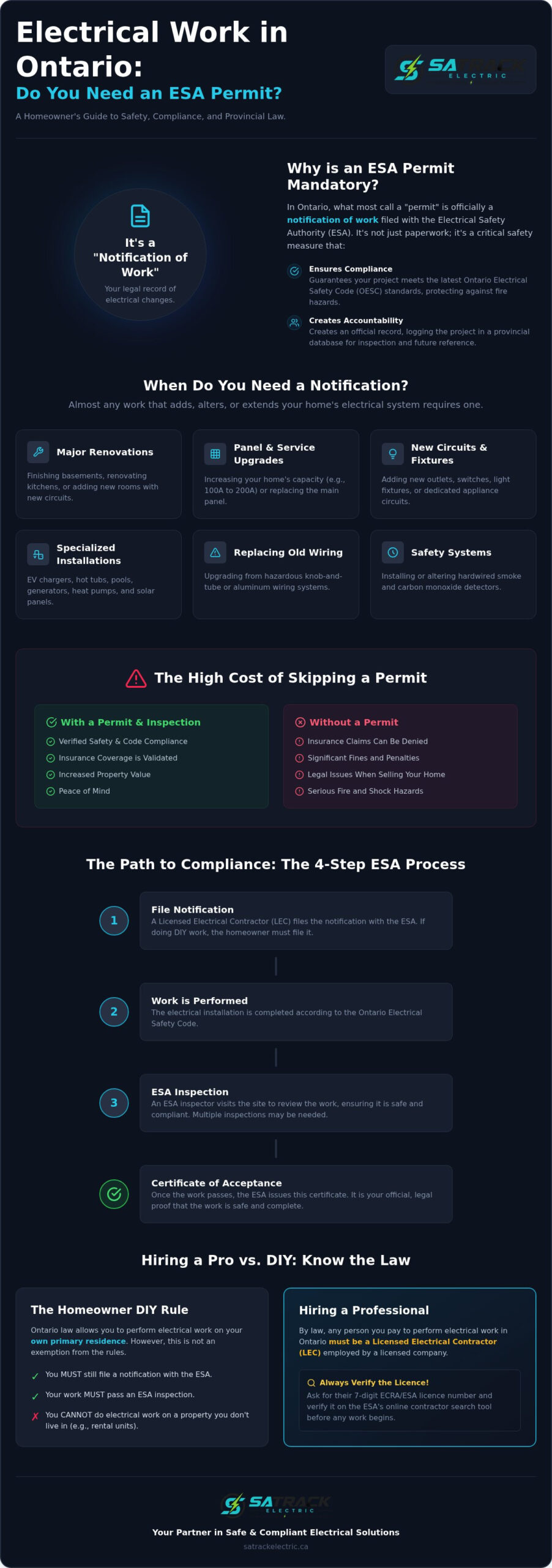
In Ontario, the Electrical Safety Authority (ESA) acts as the administrative body responsible for enforcing safety regulations and protecting the public from electrical harm. When homeowners ask, Do You Need an ESA Permit for Electrical Work in Ontario? for a home renovation, the answer is grounded in provincial law. What most people call a “permit” is officially termed a notification of work. This document isn’t just a piece of paper; it’s a formal record that establishes a trail of accountability for every wire pulled and every circuit installed in your property. By filing this notification, you ensure that your project is logged in a provincial database and slated for a professional review to confirm it meets the Ontario Electrical Safety Code (OESC).
The Role of the Ontario Electrical Safety Code
The OESC is a living document that undergoes regular updates to address new risks and evolving technologies. It is largely based on the Canadian Electrical Code, which sets the foundational safety standards for the entire country. These updates are vital because modern electrical demands have changed significantly. For instance, 2026 standards now include specific requirements for high-draw devices like EV chargers and heat pumps that older codes never envisioned. Some homeowners believe their existing wiring is “grandfathered” in, but this doesn’t mean it’s safe for modern loads. Adhering to the current code is a commitment to community fire safety, as faulty wiring remains a leading cause of residential fires across the Quinte region.
Homeowner Rights vs. Legal Obligations
Ontario law allows homeowners to perform electrical work on their own primary residence. However, this “DIY rule” doesn’t exempt you from the law. Even if you’re doing the work yourself, you must still file a notification and pass an inspection. A critical distinction exists here: you cannot hire a general handyman or a “friend who knows electricity” to perform electrical tasks. Hiring anyone other than a Licensed Electrical Contractor (LEC) for paid electrical work is illegal in Ontario. Whether you’re planning electrical panel upgrades or simply adding a few light fixtures, the process only concludes when the ESA issues a Certificate of Acceptance. This certificate is your only legal proof that the work is safe, compliant, and won’t complicate your future insurance claims or property sales.
Which Electrical Projects Require an ESA Permit?
While many residents believe only large-scale construction requires official oversight, the scope of the Ontario Electrical Safety Code is quite broad. If you’re asking, Do You Need an ESA Permit for Electrical Work in Ontario? for a specific renovation, it’s helpful to categorize the project by its impact on the home’s electrical system. Generally, any work that involves adding, altering, or removing electrical components requires a notification. This ensures that the installation is safe and won’t lead to future hazards.
Residential Projects That Always Need Notification
For homeowners in Belleville and Trenton, certain projects are non-negotiable. This includes finishing a basement or renovating a kitchen where new circuits are added to support modern appliances. You must also file a permit when replacing outdated systems like aluminum wiring or knob-and-tube circuits, as these pose specific fire risks. The ESA provides a detailed list regarding When You Need a Notification (Permit) for residential settings. Safety-critical items like hardwired smoke and carbon monoxide detectors also fall under this requirement to ensure they’re installed correctly for emergency situations.
Major Upgrades and Specialized Installations
High-demand electrical work requires specialized expertise and mandatory inspections. If your home’s power needs have outpaced its capacity, electrical panel upgrades are essential for both safety and efficiency. Similarly, outdoor projects like hot tub wiring involve complex grounding and GFCIs that must be verified. For those seeking reliability during local power outages, a professional generator installation with a proper transfer switch is another area where a permit is legally required. If you’re planning any of these upgrades, consulting a licensed professional ensures the paperwork is handled correctly from the start.
Commercial and Industrial Permit Requirements
Commercial environments face even stricter standards. Tenant improvements in office spaces or retail renovations almost always require a permit due to the complexity of shared building systems. Industrial settings involving machinery hookups or three-phase power upgrades often require rigorous engineering reviews before the ESA will grant approval. These projects demand a high level of technical precision to maintain workplace safety and operational continuity.
What You Can Do Without a Permit
There are limited exceptions where a permit isn’t necessary. You don’t need one to replace a light bulb, a faceplate, or a plug-in appliance. You can also replace an existing light fixture with a similar one, provided the wiring isn’t altered and the electrical box is suitable for the weight. However, even these simple tasks require caution. If you’re ever unsure if a project qualifies for an exemption, it’s safer to check with a professional rather than risking a code violation.
The Hidden Risks of Skipping Electrical Permits
Choosing to bypass the notification process might seem like a shortcut, but it introduces significant vulnerabilities to your property and finances. When homeowners ask, Do You Need an ESA Permit for Electrical Work in Ontario?, they often focus on the immediate cost. However, the true expense lies in the potential for insurance denial, legal liability, and government fines that far exceed the price of a standard inspection. This record of safety is your primary defence against the long term complications of faulty wiring.
Voiding Your Home Insurance Policy
Most Ontario insurance contracts contain a “material change in risk” clause. This provision allows providers to void coverage if you’ve made significant alterations to the home without following safety regulations. If an electrical fire occurs, adjusters will look for a Certificate of Acceptance from the ESA during their investigation. Without this document, they may argue that the unpermitted work increased the risk beyond the agreed terms, leading to a complete claim denial. The financial difference between a covered restoration and a total loss of your investment is staggering, making the permit a vital form of financial protection.
Resale Complications in the Quinte Region
Real estate transactions in Belleville and the surrounding Quinte area have become increasingly rigorous regarding electrical compliance. Modern home inspectors specifically look for the ESA sticker on the electrical panel to verify that recent upgrades were inspected and approved. If unpermitted work is discovered during a sale, it can lead to the need for “retroactive permits,” which often require opening walls to show the wiring to an inspector. This process is expensive, time consuming, and frequently kills a deal before it can close. Documenting your compliance protects your property value and ensures a smooth transition for future buyers.
Legal Liability and ESA Fines
Beyond property damage, you carry a heavy burden of legal liability for any injuries caused by faulty, unpermitted wiring. If a guest or tenant is harmed, the lack of a permit serves as evidence of negligence in a court of law. Additionally, the ESA has the authority under Ontario Regulation 89/06 to issue significant fines to both homeowners and unlicensed individuals performing work. To mitigate these risks, you should Always hire a Licensed Electrical Contractor who will manage the notification process and ensure your work is fully compliant. This professional assurance is the only way to guarantee peace of mind for your family and your business.
The Step-by-Step ESA Inspection Process
Understanding the inspection sequence helps demystify the regulatory requirements for your home or business. The process begins with filing a notification, which should ideally happen within 48 hours of commencing the project. When you ask, Do You Need an ESA Permit for Electrical Work in Ontario?, you’re initiating a safety partnership that involves a structured review of your electrical system. This formal oversight ensures that every component is installed to protect the occupants of the building.
The first major milestone is the rough-in inspection. This occurs after the wiring and boxes are installed but before the walls are closed with drywall or insulation. The inspector examines the “skeleton” of the system to ensure everything is positioned correctly and meets code. The final inspection takes place once the project is finished, all devices are installed, and the system is fully energized. Upon successful completion, the ESA issues a Certificate of Acceptance, which serves as your permanent proof of safety and compliance.
Preparing for the Inspector’s Visit
A smooth inspection requires careful preparation. You must ensure the inspector has clear, unobstructed access to the electrical panel, all junction boxes, and every outlet involved in the work. The inspector will verify technical details such as proper grounding, secure bonding, and the use of the correct wire gauge for specific circuits. They also check that boxes are securely fastened and that cables are protected from physical damage by metal plates where they pass through studs. If a deficiency notice is issued, it means a correction is required. You must fix the identified issue and potentially pay a re-inspection fee before the work can receive final approval.
Authorized Contractor Program (ACP)
Some contractors in the Quinte region operate under the Authorized Contractor Program (ACP). This is a voluntary program for Licensed Electrical Contractors who consistently demonstrate high levels of code compliance. Because these professionals have a proven track record of safety, the ESA may perform selective inspections rather than checking every single project. For those wondering, Do You Need an ESA Permit for Electrical Work in Ontario? when using an ACP contractor, the answer remains yes, though the inspection frequency may differ. Hiring an ACP-status contractor can significantly speed up your renovation timeline by reducing the wait times for site visits. To maintain this status, contractors must adhere to rigorous ongoing standards and regular audits.
If you want to ensure your project moves through these stages without delays, book a consultation with our licensed team today.
Why Hiring a Licensed Electrical Contractor (LEC) is Essential
In Ontario, the legal framework is clear: only a Licensed Electrical Contractor (LEC) is authorized to file a notification of work for a client. If you’re asking, Do You Need an ESA Permit for Electrical Work in Ontario? when hiring professional help, the LEC status of your contractor is the most critical factor. These businesses are the only entities permitted to perform electrical work for hire in the province. Every legitimate LEC must display their seven-digit ECRA/ESA licence number on their vehicles, business cards, and contracts. This number is your guarantee that the contractor is registered with the Electrical Safety Authority and carries the required qualifications to manage your project safely.
Professional assurance goes beyond technical skill. Every LEC must carry at least $2 million in professional liability insurance and maintain active WSIB coverage for their employees. This protection ensures that you, as the property owner, aren’t held liable for workplace injuries or accidental damage during the installation. Satrack Electric manages every aspect of this process, from the initial filing to the final scheduling of the inspector. By handling the permit paperwork and coordination, we provide a stable, hassle-free experience that keeps your project on schedule and in total compliance with provincial law.
The Danger of the “Under-the-Table” Electrician
One of the most common red flags is a contractor asking you to pull the permit in your own name. This is often a sign they aren’t licensed to operate in Ontario. While a “cash deal” might seem like a way to save money, it often results in dangerous work that never receives an official inspection. Hiring an unlicensed individual can lead to significant fines for the homeowner and leaves you with no legal recourse if a fire occurs. The ESA actively investigates these cases, and the legal consequences for bypassing the licensing system can be severe for everyone involved.
Satrack Electric: Your Local Compliance Partner
Our team is deeply rooted in the Belleville, Trenton, and Quinte West communities. We understand the specific needs of local properties and ensure that every residential electrical service we provide is fully compliant with the latest safety codes. By integrating permit management into our workflow, we provide a seamless experience that prioritizes your safety. If you’re planning a project and want to ensure it meets every provincial standard, contact us for a professional assessment. We take pride in delivering results that stand up to the most rigorous inspections and provide you with lasting peace of mind.
Securing Your Home with Professional Compliance
Maintaining a safe and legal home in the Quinte region requires more than just functional wiring. It demands adherence to provincial standards that protect your family and your financial investment. As we have explored, the answer to Do You Need an ESA Permit for Electrical Work in Ontario? is nearly always yes for any significant alteration. From specialized hot tub wiring to essential panel upgrades, these notifications ensure your work is verified by the Electrical Safety Authority and remains valid for insurance purposes.
Satrack Electric provides the professional assurance you need to navigate these regulations without stress. As a fully licensed and insured ECRA/ESA contractor, we bring local Belleville expertise to every project, handling all the necessary paperwork and coordination on your behalf. Our specialized experience in complex residential installations ensures your home remains safe and fully compliant with the Ontario Electrical Safety Code. Ensure your project is code-compliant—contact Satrack Electric for a professional consultation today. We look forward to helping you build a safer, more reliable home.
Frequently Asked Questions
How much does an ESA permit cost in Ontario for 2026?
ESA permit fees are subject to annual adjustments to account for inflation and operational costs. On April 1, 2026, the Electrical Safety Authority implemented a 1.9% increase across their wiring and licensing fee schedules. The total cost for your project depends on the volume of outlets, the complexity of the circuits, and whether a panel upgrade is involved. These regulatory fees are paid to the ESA to cover the administrative and inspection process.
Does a landlord need an ESA permit for repairs in a rental unit?
Yes, landlords must obtain an ESA permit for electrical work in rental properties. Unlike a primary residence, where a homeowner may perform their own work, rental units require a Licensed Electrical Contractor (LEC) to handle most electrical tasks. This ensures the safety of tenants and protects the property owner’s liability. Failing to secure a permit for repairs can result in legal penalties and may invalidate the landlord’s property insurance coverage.
How long does it take to get an electrical inspection in Belleville?
Inspection timelines in Belleville and the Quinte region typically range from 48 hours to five business days after the request is filed. The Electrical Safety Authority prioritizes safety-critical inspections, but seasonal demand can influence wait times. Hiring a contractor with Authorized Contractor Program (ACP) status can often streamline this process. We recommend scheduling your inspection as soon as the rough-in or final work is ready to avoid project delays.
Can I pull an ESA permit for work someone else is doing?
No, you cannot legally pull a permit for electrical work performed by another person. If you’re wondering, Do You Need an ESA Permit for Electrical Work in Ontario? when hiring a contractor, the law requires that the individual or company doing the work files the notification. If a contractor asks you to pull the permit yourself, it’s a major red flag that they aren’t a Licensed Electrical Contractor (LEC) and lack the proper provincial credentials.
What happens if I bought a house with unpermitted electrical work?
If you discover unpermitted work after a purchase, you should apply for a general inspection or a retroactive permit from the ESA. An inspector will review the visible wiring and may require you to open walls to verify compliance with the Ontario Electrical Safety Code. You’ll be responsible for any costs associated with correcting deficiencies. It’s best to address these issues immediately to ensure your home insurance remains valid and to avoid complications during future resale.
Do I need a permit to change a light fixture or a ceiling fan?
You don’t usually need a permit to replace an existing light fixture or ceiling fan with a similar model, provided the wiring remains unchanged. However, if you’re installing a new fixture where one didn’t exist before, a permit is mandatory. This involves adding a new box and running new wire, which falls under the safety code requirements. Always ensure the existing electrical box is rated to support the weight of a ceiling fan before installation.
Is an ESA permit the same as a building permit from the city?
No, an ESA permit is separate from a municipal building permit issued by the City of Belleville. Building permits cover structural, plumbing, and zoning requirements, while the ESA notification focuses exclusively on electrical safety and compliance with provincial regulations. Many renovation projects require both permits to be fully legal. You must pass your electrical inspection before the city will typically close out your overall building permit for a renovation.
Who is responsible for scheduling the final ESA inspection?
The person who pulled the permit is responsible for scheduling the final inspection. If you’ve hired Satrack Electric, our team manages all coordination with the ESA, including the rough-in and final visits. If you’re performing the work yourself as a homeowner, you must contact the ESA once the project is finished to request the inspection. The process isn’t complete until you receive the official Certificate of Acceptance for your permanent records.