
Imagine you are preparing dinner in your Quinte West kitchen when the microwave stops and the lights suddenly vanish. It is a common frustration for many local residents; when a circuit breaker keeps tripping Trenton homeowners often discover that their older electrical systems struggle to meet the demands of modern appliances. You might feel a sense of unease as you stare at a confusingly labelled breaker box, wondering if this is a minor glitch or a serious safety hazard. It is natural to worry about the integrity of your wiring and the potential risk of an electrical fire.
We understand that you value a reliable home environment where safety is never in question. This guide will help you identify exactly why your breakers are failing and provide a clear path toward a functional electrical system. We will walk through the primary causes of circuit interruptions, from simple overloads to complex ground faults. You will also learn how to safely determine whether you can resolve the issue with a reset or if it is time to realize the necessity of a professional electrical upgrade to protect your property and provide lasting peace of mind.
Key Takeaways
- Understand that a tripping breaker is a critical safety mechanism designed to prevent electrical fires by cutting power during a fault or overload.
- Learn why a circuit breaker keeps tripping Trenton homes, especially when older electrical panels struggle to support the power demands of modern appliances.
- Master a safe, methodical troubleshooting process to identify whether your electrical issue is a simple circuit overload or a more complex short circuit.
- Discover how professional solutions, such as installing dedicated circuits or performing a panel upgrade, can restore reliability to your home’s electrical system.
- Identify the specific warning signs that signal when to stop DIY efforts and contact a licensed professional for advanced diagnostic testing and safety compliance.
Understanding Why Your Circuit Breaker Keeps Tripping in Trenton
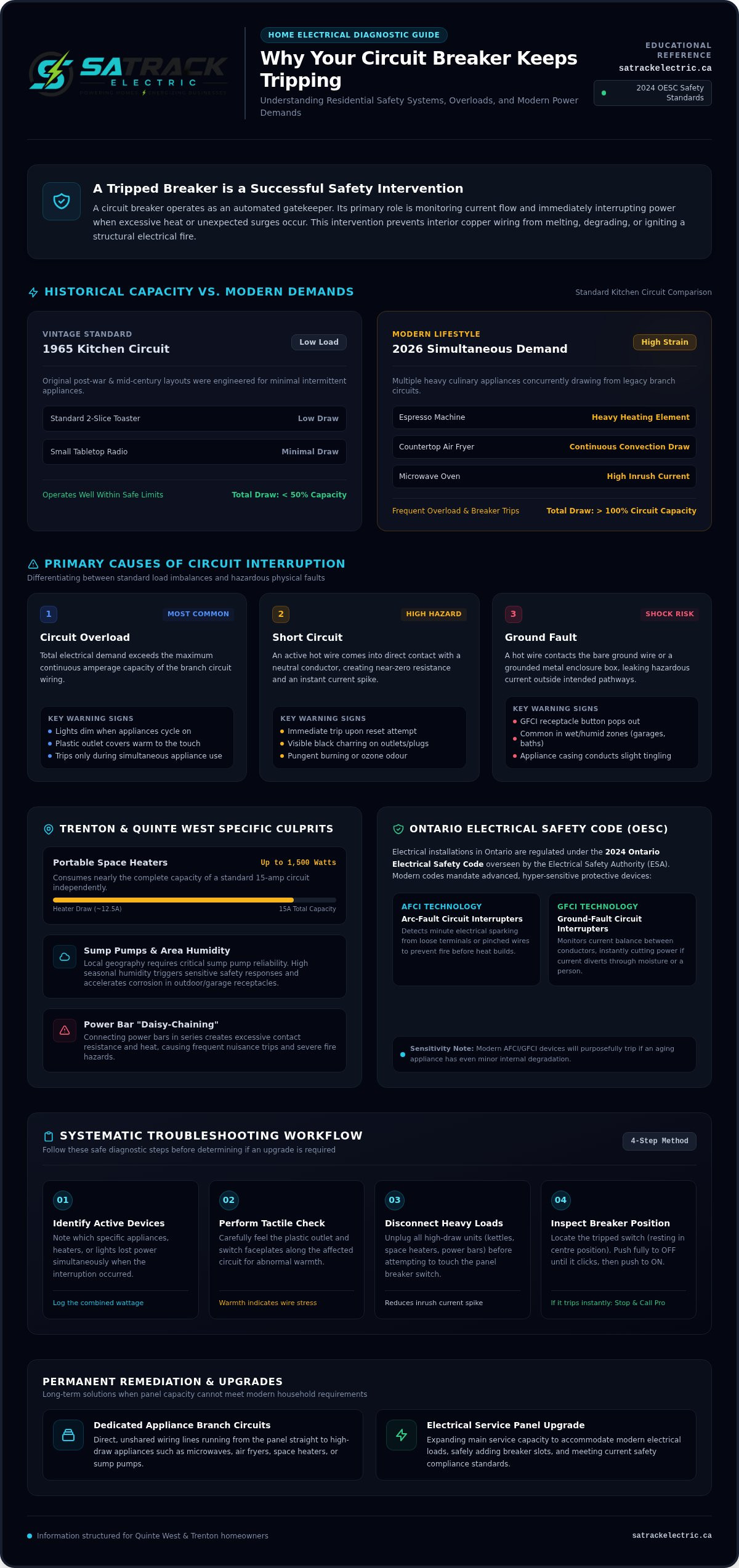
A circuit breaker is far more than a simple switch. It functions as a safety gatekeeper for your home. Its primary job is to monitor the electrical current and interrupt the flow if it detects a dangerous level of heat or a sudden surge. When a circuit breaker keeps tripping Trenton homeowners should view it as a sign of a properly functioning safety system. It prevents the copper wiring inside your walls from melting or igniting. Understanding how circuit breakers operate helps clarify that a “trip” is a successful intervention by a safety system designed to protect your family and property.
Many neighbourhoods in Trenton feature charming post-war bungalows and mid-century homes. While these houses have character, their original electrical systems were not built for the modern lifestyle of 2026. A kitchen circuit from 1965 was meant for a toaster and a radio; today, it might be expected to handle an espresso machine, an air fryer, and a microwave simultaneously. This creates a constant struggle between your modern power needs and your home’s original capacity. Additionally, the high humidity levels common in the Quinte West area can impact electrical components in garages or outdoor outlets, leading to corrosion or sensitive safety responses.
The Role of the Electrical Safety Authority (ESA) in Ontario
Electrical work in our region is strictly governed by the 2024 Ontario Electrical Safety Code (OESC). These regulations ensure that every component in your home meets rigorous safety standards. Modern homes or renovated spaces often utilize Arc-Fault Circuit Interrupters (AFCI) and Ground-Fault Circuit Interrupters (GFCI). These devices are significantly more sensitive than legacy breakers. They are designed to detect minute changes in electrical flow that could indicate a spark or a leak to ground. While this sensitivity improves fire safety, it also means that an aging appliance or a slightly damaged cord will cause a trip more easily than it would have in the past.
Common Local Culprits: From Space Heaters to Sumps
Trenton winters often see a surge in electrical issues as homeowners turn to portable space heaters. These units can draw up to 1,500 watts, which often consumes nearly the entire capacity of a standard 15-amp circuit. If you plug a heater into a circuit already powering a television or computer, a trip is inevitable. Additionally, the Quinte region’s geography makes reliable sump pumps essential. If your circuit breaker keeps tripping Trenton basements are at risk of flooding during heavy rain. We also frequently see issues caused by “daisy-chaining” multiple power bars together. This practice creates excessive resistance and heat, leading to frequent nuisance trips and potential fire hazards.
Identifying the Three Most Common Causes of Breaker Trips
When a circuit breaker keeps tripping Trenton families often feel frustrated, but identifying the specific cause is the first step toward a permanent fix. Most trips fall into three primary categories: overloads, short circuits, and ground faults. Additionally, modern Ontario homes are equipped to detect arc faults, which are dangerous sparks caused by loose or damaged connections. Each of these issues requires a different response to ensure your home remains safe and functional.
How to Spot a Simple Overload
An overload occurs when the demand for electricity exceeds the capacity of the circuit’s wiring. This is the most frequent reason for a trip in residential settings. You can often identify this by observing the warning signs of an overloaded electrical circuit, such as lights that dim momentarily when a high-wattage appliance starts up. If the power only cuts out when you use a kettle and a toaster at the same time, you have likely found the culprit.
A simple physical check can also provide valuable clues. Carefully feel the plastic outlet covers on the affected circuit. If they’re warm to the touch, the wiring is struggling to handle the current. This heat is a precursor to wire damage and should be addressed by redistributing your appliances to different circuits. Understanding these distinctions helps you communicate clearly with a technician when your circuit breaker keeps tripping Trenton property’s electrical system.
Signs of a Dangerous Short Circuit or Ground Fault
Short circuits and ground faults represent a significantly higher level of danger than a simple overload. A short circuit happens when a “hot” wire makes direct contact with a neutral wire, causing a sudden surge of energy. A ground fault is similar, but it occurs when electricity takes an unintended path to the ground. This is common in Trenton kitchens, bathrooms, or garages where moisture might compromise an outlet.
These faults typically cause what professionals call an “instant trip.” If you reset the breaker and it snaps back to the off or neutral position immediately, don’t try again. This persistent reaction is a clear sign of a hardware fault. You should also look for visible indicators of damage, such as brown or black discolouration on the outlet face or a faint burning smell near the panel. If you notice these hazards, it’s essential to seek professional electrical repairs immediately to prevent a potential fire. Never attempt to force a breaker to stay in the “on” position, as this bypasses the safety mechanism and can lead to catastrophic failure.
How to Safely Troubleshoot a Tripping Breaker Before Calling an Electrician
Before assuming a major repair is necessary, a methodical approach can often isolate a simple nuisance trip. When a circuit breaker keeps tripping Trenton homeowners should first turn off all lights and unplug every appliance on the affected circuit. This action removes the electrical demand entirely. Next, locate your electrical panel. A tripped breaker usually rests in a distinct “neutral” or middle position between ON and OFF. To reset it correctly, you must push the lever firmly to the full OFF position until it clicks; only then should you flip it back to the ON position.
The “Process of Elimination” Method
Restoring power is only half the task. Finding the source of the trip is essential for long-term safety. Gradually reconnect your devices one by one. This allows you to observe if a specific appliance acts as the “tipping point” for the circuit capacity. If the breaker trips immediately when a particular device is turned on, the issue is likely with that equipment rather than your home’s wiring. Keep a record of which outlets are involved and which device triggered the fault. This documentation is invaluable for an electrician, especially when dealing with complex ground-fault circuit interrupters that may be reacting to intermittent current leakage or faulty internal components in your electronics.
Safety Precautions Every Homeowner Must Realize
Safety is the most critical component of any electrical troubleshooting. When you operate the breaker switches, always stand to the side of the panel door to protect yourself from the unlikely event of an arc flash. Use only one hand to reset the breaker, keeping your other hand at your side or in your pocket. This practice reduces the risk of creating a path to ground through your body. You should also realize that some situations are too hazardous for DIY attempts. If you notice any visible sparks, hear a persistent buzzing sound, or detect the sharp smell of ozone, you must cease all troubleshooting efforts immediately. These symptoms indicate a hazardous condition that requires the expertise of a licensed professional to manage safely and effectively.
When to Consider an Electrical Panel Upgrade or Dedicated Circuit
While basic troubleshooting can resolve a one-time event, recurring issues often suggest that your home’s electrical infrastructure has reached its limit. Many older properties in the Quinte region still operate on 60-amp or 100-amp services. In 2026, these capacities are frequently insufficient for modern living requirements. If your circuit breaker keeps tripping Trenton households should evaluate whether the main panel can actually distribute the load you are demanding. Upgrading from an old fuse box to a modern breaker system is a critical safety step that also satisfies most modern insurance requirements. Investing in an electrical panel upgrade in Belleville and Trenton can significantly increase your property value by ensuring the home is ready for future electrification needs.
Dedicated Circuits for Modern Appliances
The most effective way to manage high-draw appliances is through dedicated circuit installation. This involves running a separate line from your panel directly to a single appliance, ensuring it doesn’t share power with lights or outlets in other rooms. This is essential for Level 2 EV chargers, modern kitchen suites, and specialized outdoor equipment. For instance, hot tub wiring in Belleville homes requires its own protected circuit to handle the significant amperage of pumps and heaters safely. By isolating these heavy loads, you reduce the annoying “flicker” in your LED lighting and prevent the common overloads that occur when a refrigerator and a microwave share the same branch.
The Hazards of “Tandem” Breakers and Overstuffed Panels
Sometimes, homeowners or unqualified contractors attempt to gain space in a full panel by using tandem breakers, often called “cheater” breakers. While these allow two circuits to fit into one slot, they’re often a temporary fix that can lead to overcrowding. A panel that lacks physical space for heat dissipation is a fire risk. When a circuit breaker keeps tripping Trenton residents often find that a crowded panel is the root cause of overheating. You should consult a licensed professional to ensure your electrical repairs in Belleville or Trenton comply with the 2024 Ontario Electrical Safety Code. If you’re concerned about your system’s capacity, we invite you to contact us for a professional electrical panel upgrade evaluation to ensure your home remains safe and efficient.
Professional Electrical Solutions for Quinte West and Trenton Residents
When basic troubleshooting fails to resolve why a circuit breaker keeps tripping Trenton homeowners need a partner who understands the specific electrical challenges of the Quinte region. Satrack Electric provides a steady, professional approach to residential diagnostics. We don’t rely on guesswork; instead, our team utilizes advanced diagnostic tools to identify the root cause of electrical faults. By using high precision multimeters and thermal imaging technology, we can detect heat signatures from loose connections or failing components behind your walls before they escalate into a fire hazard. This methodical process ensures that every repair is grounded in technical accuracy and safety.
Choosing a licensed and insured contractor is not just a matter of quality; it’s a legal and financial necessity in Ontario. Under provincial regulations, all residential electrical work must be performed by a Licensed Electrical Contractor (LEC) holding a valid ECRA/ESA licence. Our status as a fully insured provider, carrying the mandated minimum of C$2,000,000 in liability coverage, offers you essential protection. Following these standards ensures that your home remains compliant with the 2024 Ontario Electrical Safety Code, which is vital for maintaining your homeowner insurance validity and ensuring the long-term integrity of your system.
Why Local Expertise Matters in Trenton
Our deep roots in the Quinte West area provide us with a unique understanding of local infrastructure. We’re intimately familiar with the service standards of Hydro One, the primary utility provider for Trenton and its surrounding rural areas. This local knowledge allows us to coordinate service disconnects and panel reconnects efficiently. Whether you live in a historic home near the Trent River or a newer development in Brighton, we realize that quick response times and a clear understanding of regional building styles are essential for a hassle-free service experience. We take pride in delivering workmanship that stands the test of time, reflecting our commitment to the community we serve.
Your Next Steps for a Safe Home
If you find that a circuit breaker keeps tripping Trenton at your property more than once a month, it’s time to move beyond simple resets. Proactive maintenance is the most effective way to prevent a total system failure during peak winter or summer loads. We recommend booking a comprehensive electrical inspection to evaluate your system’s health. This is also an excellent time to discuss long-term energy goals, such as generator installation in Belleville and Trenton to ensure your family remains comfortable during seasonal power outages. Contact Satrack Electric today for a professional assessment and a transparent, detailed quote to secure your home’s electrical future.
Securing Your Home’s Electrical Future
Managing a home’s electrical system requires a balance of cautious troubleshooting and professional expertise. When a circuit breaker keeps tripping Trenton residents should prioritize identifying the underlying cause to prevent potential fire hazards. Whether the issue stems from a simple circuit overload or a complex ground fault, understanding the safety mechanisms at play provides the clarity needed to make informed decisions. Modern living often demands more power than original electrical panels can provide, making dedicated circuits and system upgrades a wise investment for long-term reliability.
As licensed and insured Ontario electrical contractors, we take pride in serving the Quinte region with high-quality workmanship. We specialize in panel upgrades and dedicated circuits that ensure your home meets the rigorous standards of the 2024 Ontario Electrical Safety Code. Taking proactive steps now prevents the stress of sudden power failures and protects your property’s value. Ensure your home is safe; contact Satrack Electric for professional troubleshooting in Trenton today. We look forward to helping you achieve total peace of mind regarding your home’s electrical safety.
Frequently Asked Questions
Is it dangerous if my circuit breaker keeps tripping?
Yes, repeated tripping signals a potential safety hazard within your home. While the breaker is doing its job by cutting power to prevent a fire, the underlying cause needs attention. Persistent trips often indicate a circuit overload, a short circuit, or a ground fault. Ignoring these warning signs can lead to wire damage, melted insulation, or an electrical fire if the safety mechanism eventually fails or is bypassed.
How many times can I reset a tripped breaker before it becomes a problem?
You should only attempt to reset a breaker once after you have identified and removed the likely cause of the overload. If the breaker trips again immediately or shortly after the reset, you must stop. Repeatedly forcing a reset on a faulty circuit can damage the breaker’s internal spring mechanism. This practice also risks overheating the conductors inside your walls, which significantly increases the chance of an electrical fire.
Why does my breaker trip even when nothing is plugged in?
When a circuit breaker keeps tripping Trenton homes with no appliances plugged in, the issue is typically a short circuit or a ground fault within the permanent wiring. This occurs when a “hot” wire contacts a neutral or ground wire inside a junction box or wall cavity. It could also mean the breaker itself has reached the end of its functional life. These internal faults require professional diagnostic tools to locate and repair safely.
Can a faulty appliance cause a whole circuit to fail?
A single faulty appliance can easily trip a breaker and shut down power to every outlet on that circuit. If a device has an internal short, a failing motor, or a damaged power cord, it can draw a massive surge of current. This surge exceeds the breaker’s amperage rating and triggers an immediate shutdown. You can confirm this by unplugging the suspect device and seeing if the breaker holds after a reset.
What is the difference between a short circuit and a ground fault?
A short circuit happens when a “hot” wire makes direct contact with a neutral wire, causing an instant surge of electricity. A ground fault is similar but occurs when the current escapes the intended path and touches a grounded surface, such as a metal pipe or a person. Both situations cause the breaker to trip instantly. Ground faults are particularly common in areas with moisture, such as kitchens, bathrooms, or damp basements.
How much does it cost to have an electrician diagnose a tripping breaker in Trenton?
The cost for a professional diagnosis depends on the complexity of the fault and the time required to trace the issue through your home’s wiring. A standard assessment usually involves a service call fee and an hourly rate for labour. In Ontario, any necessary repairs may also require Electrical Safety Authority notification fees. A licensed contractor will provide a clear breakdown of these costs after an initial inspection of your electrical panel.
Should I replace the breaker myself if it keeps flipping?
You should not attempt to replace a circuit breaker yourself. Working inside an electrical panel involves proximity to live busbars that remain energized even when the main breaker is turned off. This creates a severe risk of fatal electric shock or arc flash. Additionally, the Ontario Electrical Safety Code requires that a Licensed Electrical Contractor perform this work to ensure it meets provincial standards and maintains your homeowner insurance coverage.
Will a panel upgrade stop my breakers from tripping?
A panel upgrade is highly effective if your circuit breaker keeps tripping Trenton because your home’s total power demand exceeds its current capacity. Many older homes on 60-amp or 100-amp services struggle with modern appliances like EV chargers or heat pumps. Increasing your service to 200 amps provides the necessary headroom for these loads. However, an upgrade will not stop trips caused by faulty appliances or short circuits in your existing branch wiring.