
What if the very component meant to protect your home from electrical fires is actually the primary reason your insurance provider refuses to renew your policy? For many homeowners across the province, an outdated electrical panel has shifted from a vintage charm to a significant financial and safety liability. If you find yourself frequently trekking to the basement to swap out blown fuses, you already know that your home’s original wiring wasn’t designed for the high-draw appliances of 2026. Investing in a professional fuse box replacement Ontario is no longer just a matter of convenience; it’s a critical step in securing your property and complying with modern standards.
We understand the anxiety that comes with flickering lights and the complexity of navigating the latest Ontario Electrical Safety Code (OESC). This guide provides a clear roadmap for transitioning your home to a modern circuit breaker system. You will learn about the essential safety benefits of AFCI protection, the typical costs associated with 100-amp and 200-amp upgrades, and how a modernized panel can lead to lower insurance premiums and increased property value. We also cover the specific ESA permit requirements and available provincial rebates to help you make an informed, confident decision for your home’s future.
Key Takeaways
- Understand how replacing an outdated panel improves home safety and ensures your property remains eligible for standard insurance coverage.
- Identify the critical warning signs of an overloaded system, such as flickering lights or discolouration around your electrical service.
- Learn the professional steps involved in a fuse box replacement Ontario, including mandatory load calculations and securing the required ESA permits.
- Discover why hiring a licensed electrical contractor with a valid ECRA/ESA licence number is essential for meeting the 2024 Ontario Electrical Safety Code.
- Explore the transition from 60-amp to 200-amp standards to support modern home technology and high-draw appliances safely.
Why Fuse Box Replacement is a Priority for Ontario Homeowners
Living in a historic Ontario home often means maintaining original features that add character, but your electrical system shouldn’t be one of them. For many residents, the transition to a modern breaker panel is no longer a luxury. It’s a necessity. A fuse box operates on a sacrificial principle. When a circuit overloads, a thin metal strip inside the fuse melts to stop the flow of electricity. Once this happens, the fuse is useless and requires replacement. In contrast, modern Circuit Breakers: Understanding the Safety Gap provide a resettable switch mechanism that is far better equipped to handle the sensitive electronics found in modern households.
Most homes built several decades ago were equipped with 60-amp or 100-amp services. This was sufficient for a time before high-draw appliances like electric vehicle (EV) chargers, heat pumps, and induction stoves became standard. Today, a 200-amp service is the recommended baseline for modern living. Without a professional fuse box replacement Ontario, your home’s electrical infrastructure remains a bottleneck. This prevents you from running multiple appliances simultaneously and creates a constant risk of overloaded circuits. If you are concerned that your current service cannot keep up with today’s demands, understanding the risks of an electrical panel too small for Ontario homeowners can help you determine whether a full service upgrade is necessary. Modern panels also offer better protection against surges, which can destroy expensive computers and home entertainment systems.
The Insurance Impact in Ontario
Insurance companies in Ontario have become increasingly strict regarding outdated electrical systems. It’s common for homeowners to receive a non-renewal notice or a significant premium hike simply because they still use a fuse box. Providers view these systems as a higher fire risk. This risk is often compounded when owners “over-fuse” by using a 20 or 30-amp fuse in a 15-amp slot to stop frequent blowing. This practice creates a massive fire hazard. Upgrading to a breaker panel often pays for itself through reduced annual premiums and the peace of mind that comes with a valid, secure policy.
Meeting the Ontario Electrical Safety Code (OESC)
The Ontario Electrical Safety Code (OESC) is updated regularly to reflect new safety technologies and energy demands. As of May 1, 2025, the 28th Edition is the governing standard for all new electrical work across the province. While older systems are often “grandfathered” in, this status disappears the moment you begin a renovation or a major repair. For homeowners planning a comprehensive home transformation, you can learn more about Meraki General Contracting to see how specialized firms coordinate these critical updates. Any new work must comply with current standards, which usually necessitates a fuse box replacement Ontario. The Electrical Safety Authority (ESA) oversees these changes, ensuring every installation meets rigorous provincial safety benchmarks to protect your family and your investment.
Fuses vs. Circuit Breakers: Understanding the Safety Gap
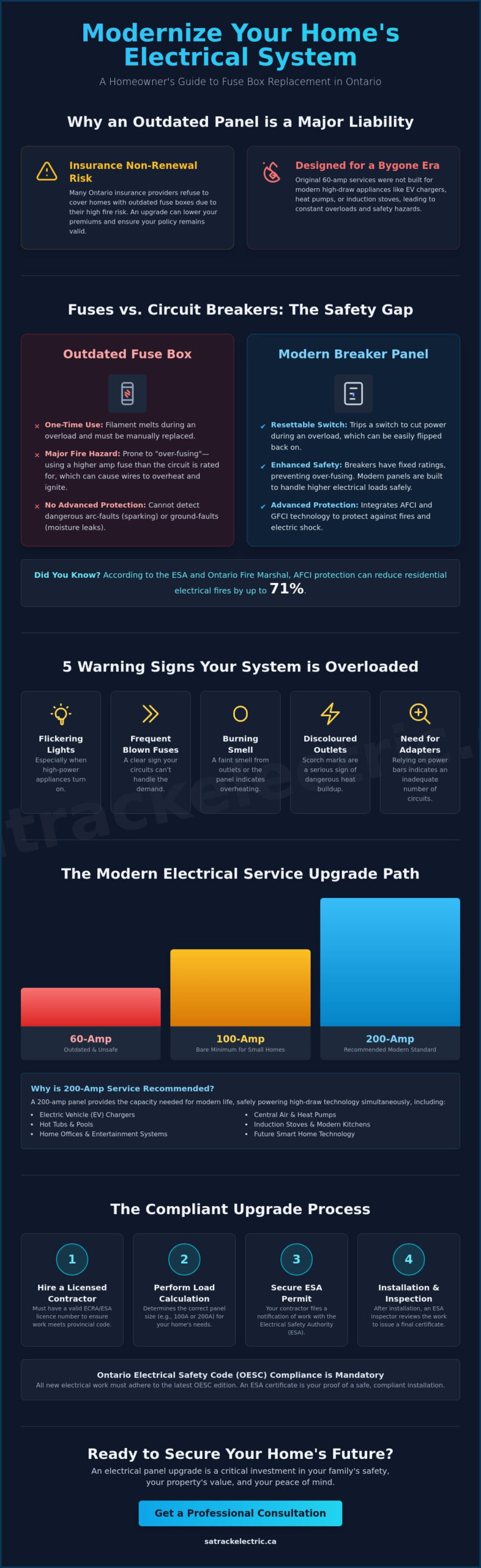
The fundamental difference between a fuse and a circuit breaker lies in how they respond to an electrical overload. A fuse contains a small filament that acts as a one-time sacrificial link. When the current exceeds the fuse’s rating, this filament melts, physically breaking the circuit to stop the flow of power. While effective in theory, this system is inherently limited. Once a fuse blows, it must be discarded and replaced with a new one. This often leads to a dangerous practice known as “over-fusing.” When a homeowner grows tired of a fuse blowing, they might install a 30-amp fuse on a circuit only rated for 15 amps. This allows the wires to overheat and potentially catch fire before the fuse ever reacts. A professional fuse box replacement Ontario eliminates this risk by using fixed-rating breakers that cannot be easily bypassed.
Circuit breakers offer a more sophisticated level of protection. Instead of melting, a breaker uses an internal switch that trips when it detects an overcurrent. You can restore power with a simple flip of a toggle. Beyond convenience, modern breakers provide advanced safety features that fuses simply cannot match. This includes Arc-Fault Circuit Interrupter (AFCI) and Ground-Fault Circuit Interrupter (GFCI) protection. According to data from the Ontario Fire Marshal and the ESA, AFCI protection could reduce residential electrical distribution fires by up to 71%. These devices detect dangerous sparking or moisture-related leaks that a standard fuse would ignore. If you are concerned about the age of your system, seeking guidance on Choosing a Licensed Electrician is the first step toward a safer home.
The Problem with Modern Appliance Loads
Traditional 60-amp fuse boxes were designed for a different era. In 2026, the average Ontario household relies on high-draw equipment like electric vehicle chargers, heat pumps, and powerful air conditioning units. These devices pull significant current, often causing heat buildup in aging fuse centres. This thermal stress can degrade wire insulation over time, creating hidden fire hazards behind your walls. Modern breaker panels manage these loads more effectively. They are designed to handle “nuisance tripping” from the initial power surge of a motor starting up, whereas a fuse might blow instantly under the same conditions. For those ready to modernize their infrastructure, a professional electrical panel upgrade ensures your system can handle today’s energy demands.
Technical Reliability and Longevity
A circuit breaker is a resettable safety switch designed to protect home wiring from overcurrent. Unlike fuses, which are increasingly difficult to source in specific ratings at local hardware stores, breaker parts are standard and widely available. Breakers are built for longevity and require minimal maintenance compared to the constant replacement cycle of a fused system. While standard breakers are affordable, homeowners should be aware that specialized AFCI breakers typically cost between C$40 and C$80 each. This investment is necessary to meet the 2024 Ontario Electrical Safety Code during any fuse box replacement Ontario. Modernizing your panel ensures that your home remains compliant with provincial safety standards for decades to come.
5 Warning Signs Your Current Electrical Service is Overloaded
Identifying the symptoms of an aging electrical system is essential for maintaining a safe home environment. Many Ontario residences built before the 1970s still rely on original equipment that was never intended to support the digital and mechanical demands of 2026. Recognizing these warning signs early allows you to plan for a fuse box replacement Ontario before a minor inconvenience turns into a significant safety hazard. If you notice any of the following issues, your electrical service is likely operating beyond its safe capacity. For a comprehensive evaluation of your system’s health, review this detailed checklist of signs your electrical panel needs an upgrade to determine whether a full replacement is necessary.
- Flickering or Dimming Lights: If your lights momentarily dim when the refrigerator compressor cycles or the furnace kicks on, it indicates a significant voltage drop. Your current service is struggling to supply the “inrush” current required by these motors.
- Scorch Marks or Discolouration: Inspect the exterior and the area around individual fuses. Any browning, charring, or soot-like residue suggests that heat is building up due to poor connections or overloaded circuits.
- The “Warm to the Touch” Test: An electrical panel should remain at room temperature. If the enclosure or the fuses themselves feel hot, this is a critical emergency. Excessive heat indicates that the internal components are failing or are dangerously overtaxed.
- Frequently Blown Fuses: While an occasional blown fuse is a sign the system is working, repeated failures in high-use areas like the kitchen or home office are a red flag. This is often a sign that you have too many modern devices on a single legacy circuit.
- Dangerous DIY Bypasses: Discovering a coin or a “penny” behind a fuse, or seeing fuses with higher amperage ratings than the circuit allows, is a major fire risk. These bypasses remove the only safety mechanism the system has.
Physical Deterioration in Older Panels
In many Ontario homes, electrical panels are located in basements where humidity levels can be high. Over several decades, this moisture leads to corrosion or visible rust on the metal casing and internal terminals. Corroded connections increase electrical resistance, which generates more heat. You should also listen for any unusual sounds. A persistent humming, buzzing, or crackling noise, often referred to as arcing, suggests electricity is jumping across gaps in damaged wiring. Messy, unorganized, or “spaghetti” wiring inside the box often hides these deeper safety issues and makes it difficult for a professional to perform routine electrical maintenance. To see how a professional team handles these challenges, visit Your Home Electrical and Handyman Services LLC for expert residential and commercial support.
Inadequate Power for Your Lifestyle
Modern families often find themselves performing a “power dance,” such as unplugging the toaster so they can use the microwave without blowing a fuse. This is a clear indicator that a 60-amp or 100-amp service is no longer sufficient. Many homeowners discover their electrical panel is too small for Ontario’s modern energy demands only when they attempt to add new appliances or plan a home renovation. As you consider future investments like hot tub and spa wiring or the installation of an EV charger, your existing fuse box will become a primary obstacle. Upgrading to a 200-amp breaker panel provides the necessary headroom to run multiple high-draw appliances simultaneously while ensuring your home remains compliant with the latest provincial safety standards.
The Step-by-Step Process of Converting Fuses to Breakers in Ontario
Upgrading your electrical infrastructure is a structured procedure that requires precision and strict adherence to provincial regulations. A professional fuse box replacement Ontario follows a methodical sequence to ensure your home transitions safely from an obsolete system to a modern breaker panel. This process begins with a comprehensive load calculation. An electrician evaluates your current energy consumption and future needs to determine if a 100-amp, 200-amp, or 400-amp service is required. This assessment prevents the risk of undersizing your new system.
Once the technical requirements are established, the project moves through these essential stages:
- Securing the ESA Permit: Your contractor must file a notification of work with the Electrical Safety Authority. As of April 1, 2026, the minimum fee for an ESA notification is C$92. This permit is a legal requirement that ensures the work is recorded and scheduled for inspection.
- Utility Coordination: We coordinate with your local utility provider, such as Hydro One or Elexicon, to schedule a power disconnect. This allows the work to be performed safely.
- Physical Installation: The old fuse box is removed, and the new breaker panel is mounted. This stage includes installing a proper grounding system, which often involves connecting to your home’s copper water main or installing grounding rods.
- Final Inspection: After the installation is complete, an ESA inspector visits the site to verify that every component meets the 2024 Ontario Electrical Safety Code.
Following these steps ensures your home remains compliant and safe. If you are ready to modernize your system, book your electrical panel upgrade with a qualified professional today.
Working with the Electrical Safety Authority (ESA)
In Ontario, you must use a Licensed Electrical Contractor (LEC) to perform a panel upgrade. Only an LEC can legally file the required notifications and provide the insurance coverage necessary for residential work. During the final walkthrough, the ESA inspector examines wire terminations, proper labelling, and the integration of required AFCI breakers. Once the work passes, you receive an ESA Certificate of Acceptance. This document is vital for your records; it proves to insurance companies that the work was done legally and protects your home’s resale value by confirming the electrical system is up to current standards.
What Influences the Replacement Timeline?
The duration of a fuse box replacement Ontario typically ranges from four to eight hours of active labour, but the overall timeline depends on external factors. Utility scheduling in regions like Quinte West or Brighton can vary based on local crew availability for the disconnect and reconnect. If you decide to move the panel to a more accessible location, such as moving it from a cramped crawlspace to a finished basement wall, additional wiring time will be required. You should prepare your household for a full day without power. We recommend keeping refrigerators closed and planning for alternative heating or cooling during the swap to ensure a smooth transition.
Choosing a Licensed Electrician for Your Panel Upgrade in Belleville and Quinte West
Selecting a contractor for a fuse box replacement Ontario requires more than just comparing quotes. In Eastern Ontario, local expertise is vital for navigating the specific requirements of regional utility providers like Hydro One and Elexicon. Each utility has distinct protocols for power disconnection and reconnection that can impact your project’s timeline. A local professional understands these nuances and maintains the necessary relationships to ensure your service is restored promptly and safely. When you choose an expert familiar with the Quinte region, you’re investing in a smoother, more predictable experience.
Safety and legal compliance are the most critical factors in any electrical upgrade. Every legitimate contractor in the province must display a valid ECRA/ESA licence number. This number is your proof that the business is authorized by the Electrical Safety Authority to perform electrical work for hire. It also confirms they carry the required liability insurance and WSIB coverage to protect you and your property. Before signing a contract, always verify this licence. Hiring an unlicensed individual not only risks your safety but can also lead to the denial of insurance claims if an electrical issue occurs in the future. If you are unsure whether your current setup warrants immediate action, reviewing the key signs your electrical panel needs an immediate upgrade can help you have a more informed conversation with your contractor.
The Satrack Electric Professional Standard
Satrack Electric is dedicated to providing high-quality residential electrical services that prioritize long-term reliability. We specialize in the unique challenges found in the historic homes of Picton, Trenton, and the surrounding areas. Older properties often feature complex wiring configurations that require a methodical approach to modernize correctly. Our team focuses on delivering clean, organized, and fully code-compliant installations. We believe in providing clear, upfront guidance throughout the fuse box replacement Ontario process. You can expect a professional assessment of your needs without high-pressure sales tactics, ensuring you feel confident in the stability of your home’s electrical system.
Ready to Upgrade Your Home’s Safety?
Modernizing your electrical system is a significant step toward protecting your investment and your family. To begin, you can request a professional evaluation of your current fuse box to determine the best path forward. For your initial consultation, it’s helpful to have a list of any recent electrical issues you’ve noticed, such as flickering lights or frequent blown fuses. We’ll examine your current load and discuss your future plans, such as installing heat pumps or EV chargers, to ensure your new electrical panel upgrade meets your needs for years to come.
Securing Your Home’s Electrical Future
Modernizing your home’s electrical system is a vital investment in both safety and property value. Transitioning from a legacy fuse box to a contemporary breaker panel addresses critical fire risks and ensures your property remains eligible for standard home insurance coverage. By upgrading to a 200-amp service, you provide your household with the capacity to run modern appliances and future technologies without the frustration of blown fuses. A professional fuse box replacement Ontario ensures that your installation meets the 2024 Ontario Electrical Safety Code, providing long-term protection for your family.
Satrack Electric is an ECRA/ESA Licensed Electrical Contractor dedicated to providing reliable service throughout Belleville, Trenton, and Quinte West. We are fully insured for residential and commercial work, bringing years of local experience to every project. Our team focuses on delivering clean, code-compliant upgrades that offer total peace of mind. Request a Professional Electrical Panel Assessment from Satrack Electric to begin your home’s transition to a safer, more efficient electrical system. We look forward to helping you modernize your home with confidence.
Frequently Asked Questions
Is a fuse box illegal in Ontario?
Fuse boxes are not illegal in Ontario, provided they were compliant with the electrical safety code at the time of their installation. They are considered “grandfathered” systems. However, if you perform a major renovation or your insurance provider requires an upgrade, the new installation must comply with the 2024 Ontario Electrical Safety Code (OESC). Many homeowners choose to modernize their panels voluntarily to improve safety and meet modern energy demands.
How much does it cost to replace a fuse box with a breaker panel in Ontario?
The total investment for a panel upgrade depends on several factors, including the desired amperage and the complexity of your home’s existing wiring. While costs vary across the province, homeowners should account for the price of the panel itself, labour for a Licensed Electrical Contractor, and mandatory Electrical Safety Authority (ESA) permit fees. Factors like moving the panel location or adding specialized AFCI breakers will also influence the final project cost.
Will replacing my fuse box lower my home insurance premiums?
Replacing an outdated fuse box often leads to lower home insurance premiums because modern breaker panels significantly reduce the risk of electrical fires. Many Ontario insurance providers view 60-amp fuse services as a liability and may even refuse to renew policies until a breaker panel is installed. Providing your insurer with an ESA Certificate of Acceptance confirms the system meets current safety standards and reduces your property’s risk profile.
How long does a fuse box replacement usually take?
A standard fuse box replacement Ontario typically takes between four and eight hours to complete. This timeline includes the physical removal of the old box, mounting the new breaker panel, and establishing a proper grounding system. Your power will be disconnected during this period; it is important to plan ahead for the temporary outage while the installation team completes the swap and prepares the system for its final inspection.
Do I need to upgrade to 200-amp service when I replace my fuse box?
Upgrading to 200-amp service is not strictly mandatory, but it is highly recommended for most modern Ontario households. While a 100-amp service may suffice for smaller homes with gas appliances, a 200-amp panel provides the necessary headroom for electric vehicle chargers, heat pumps, and hot tubs. Choosing a higher capacity during your initial upgrade prevents the need for another costly service increase as your energy needs grow.
Can I replace my own fuse box if I buy the parts at a hardware store?
You cannot legally or safely replace your own fuse box in Ontario. Provincial regulations require that a Licensed Electrical Contractor (LEC) perform any work involving a main service panel. Attempting this work yourself poses a severe risk of electrocution and fire. Additionally, work performed by an unlicensed individual will not receive an ESA Certificate of Acceptance, which is required for insurance compliance and future real estate transactions.
What happens if my fuse box fails the ESA inspection?
If a new installation fails an ESA inspection, the inspector will issue a notice of deficiency outlining the specific code violations that must be corrected. Your Licensed Electrical Contractor is responsible for addressing these issues promptly to ensure the system is safe and compliant. Once the corrections are made, a follow-up inspection is conducted to verify the work before the final Certificate of Acceptance is issued to the homeowner.
How do I know if my electrician is properly licensed in Ontario?
You can verify an electrician’s status by asking for their ECRA/ESA licence number and checking it against the Electrical Safety Authority’s online registry. Every contractor authorized to perform electrical work for hire in Ontario must display this number on their vehicles and official documents. A properly licensed contractor also carries full liability insurance and WSIB coverage, providing essential protection for your property during a fuse box replacement Ontario.