
A buzzing outlet is not a harmless quirk. In Picton, a common cause of a buzzing electrical outlet is a loose connection: loose wires can vibrate, and poor contact can create heat and increase fire risk. A warm outlet may also indicate loose wiring or an overloaded circuit.
It’s understandable to wonder whether the sound is simply an age-related nuisance, especially in an older home. Connections in outlets installed more than 20 years ago can be a source of buzzing, so the cause deserves attention rather than guesswork. This article explains the warning signs of circuit and wiring problems, what to do when an outlet buzzes or gets hot, and why older homes may need particular care. You’ll also learn when to stop using the outlet and have it assessed by a qualified electrician.
Key Takeaways
- A loose connection can make wires vibrate, create heat and increase fire risk, so buzzing or a warm cover plate deserves attention.
- Frequent breaker trips, dimming lights and several warm outlets can point to a circuit issue rather than a single faulty receptacle.
- Stop using a buzzing outlet, unplug connected devices if it’s safe to do so, and switch off the corresponding breaker when warning signs are present.
- Don’t remove the outlet cover or touch exposed wiring; a qualified electrician can diagnose the cause and carry out the repair.
- Older outlets, moisture and aging wiring can contribute to problems, making a professional assessment especially useful when buzzing returns or other warning signs appear.
Why is My Electrical Outlet Buzzing or Getting Hot?
A loose connection is a common reason an outlet buzzes: a wire may vibrate or make inconsistent contact. Heat, a warm cover plate, flickering lights or a burning-plastic odour can signal a more serious electrical issue.
The cause of a buzzing electrical outlet in Picton may be at the receptacle, in its wiring or elsewhere on the circuit. The sound, together with changes in temperature, odour or power, can help distinguish these possibilities.
Loose Connections and Electrical Arcing
A loose electrical connection can let current jump across a small gap, a process called arcing. The unstable contact may also cause wires to vibrate, producing a buzz at the outlet.
That matters because a poor connection can create heat and increase fire risk. A warm cover plate, crackling sounds or a hot-plastic smell are warning signs, not reasons to keep testing the outlet.
For example, a lamp that flickers while the outlet hums may point to an inconsistent connection. Stop using the outlet if the buzzing continues, especially if the plate feels warm or shows discolouration.
Faulty Wiring at the Outlet
Faulty wiring may involve a loose terminal, a damaged conductor or an incorrect connection inside the receptacle. A loose outlet wire can shift or vibrate, while a poor terminal connection may make intermittent contact.
These faults can affect power at the outlet and sometimes lights elsewhere on the same circuit. If a connected lamp flickers or power cuts in and out, the issue may involve the wiring rather than the lamp alone.
Do not remove the cover to inspect the terminals. A receptacle may be in a shared box, where another circuit can still energize wiring even after one breaker is switched off.
Tracing the Buzz to Its Source
To distinguish a device from an outlet, note whether the sound stops when the device is safely unplugged. If buzzing continues with nothing plugged in, the receptacle or its wiring may be the source.
Do not unplug a device if the outlet is hot, sparking or showing melted plastic. Avoid touching it and arrange an electrical assessment. A buzzing sound that follows a particular device to another outlet may come from the device, but don’t use a hot or damaged receptacle to test it.
In Picton, a licensed electrician from Satrack Electric can assess the outlet and related wiring. The electrician can determine whether the problem is local or involves another connection on the circuit.
Overloaded circuits and their warning signs
An overloaded circuit carries more electrical demand than it can safely support. Buzzing, heat and changes in lighting can signal that the circuit needs attention.
Recognizing Circuit Overload Warnings
An overloaded circuit may cause a combination of unusual sounds, lighting changes and power interruptions. For example, lights that dim when a space heater starts can indicate that the circuit is under strain.
Other warning signs include frequent breaker trips, several warm outlets or multiple receptacles losing power. Notice whether these symptoms affect one outlet or several points on the same circuit. Several affected outlets suggest the issue may extend beyond one receptacle, so don’t ignore a recurring pattern.
Overloads and Hot Outlets
An outlet can become hot when connected devices draw more power than the circuit can handle. A power bar serving several high-draw appliances, or a space heater and dehumidifier operating on the same circuit, can increase demand.
An outlet drawing 12+ amps continuously, such as with a space heater or dehumidifier, is a common overload cause. If overload is responsible, moving some devices to an outlet on a different circuit can disperse the electrical draw. But don’t transfer devices to another outlet if it’s also warm, discoloured or buzzing.
If the outlet feels warm or has a burning or fish-like smell, leave its breaker off. Don’t keep using the circuit to see whether the heat returns.
Overloaded Circuit Breakers
A circuit breaker interrupts power when a circuit draws too much current. Repeated trips can indicate an overload, while a scratchy buzz or hum from a breaker may signal a problem requiring professional attention.
A loud buzz from the breaker box calls for immediate contact with an electrician. Don’t touch or open a buzzing electrical panel. The sound may come from the main breaker or another part of the panel, and opening the enclosure can expose you to electrical hazards.
Look at the pattern, not just one symptom: lights dimming when an appliance starts, recurring trips and several warm outlets together point to a broader circuit concern. A single hot outlet can still need attention, particularly if it remains warm after connected devices are removed.
- Repeated breaker trips are a warning, not a reason to keep resetting it.
- Several affected receptacles can indicate a circuit-level problem.
- A warm, discoloured outlet or burning smell calls for leaving the breaker off.
If buzzing or heat continues, arrange an assessment rather than ignoring the signs. Electrical repair support can help identify the source and the repair needed.
Possible wiring problems behind a buzzing outlet
A buzzing or humming outlet can point to a wiring fault, not just a worn receptacle. The sound may come with inconsistent power, crackling or changes in how nearby appliances operate.
Faulty or Reversed-Polarity Wiring
Faulty wiring can include incorrect connections inside an outlet, such as reversed polarity. This means the intended connection of the conductors has been switched, which can create a dangerous electrical condition.
Don’t plug a device into an outlet that buzzes or may have a wiring fault. If a lamp loses power intermittently or makes the sound continue, stop using that receptacle. Don’t open it to identify the wiring; a qualified electrician can test the outlet and determine whether the fault is local or elsewhere on the circuit.
Damaged or Deteriorating Wires
Wires behind an outlet can become damaged or deteriorate, affecting the security of their electrical connections. A compromised conductor or terminal may make intermittent contact, creating buzzing or crackling sounds.
Look for clues around the outlet, such as discolouration, a burning-plastic odour or power that cuts in and out. These signs don’t reveal which internal component has failed, but they do make continued use unsafe. A damaged wire can be concealed behind the cover, so a normal-looking faceplate doesn’t rule out a wiring problem.
Temperature changes can affect how wiring problems present themselves. Conductive materials expand as they warm and contract as they cool, so an existing weak connection may behave differently as temperatures change. For example, a buzz that starts after an appliance has been running may coincide with warmth in the outlet or connected wiring. That pattern can help with diagnosis, but it doesn’t identify the fault by itself.
Note whether the sound changes with a device, a lighting control or how long an appliance has been operating. If the outlet hums even after a device is unplugged, the receptacle or wiring may still be involved. If the sound follows an appliance to another outlet, the appliance may be responsible. Don’t use a warm, damaged or buzzing receptacle to make this comparison.
Wiring connects an outlet to other electrical components, so a fault may affect more than one point. Flickering lights or intermittent power at nearby receptacles, for example, can indicate that the problem extends beyond the outlet face. A buzzing outlet may also share a box with another circuit, so switching off one breaker doesn’t make it safe to remove the cover.
Leave inspection and repair of internal wiring to a qualified electrician. Reversed polarity, loose or damaged conductors, and other wiring faults require proper diagnosis; touching exposed wiring can cause shock. Note the sound, any odour and which appliances were operating, then share those details during the assessment.
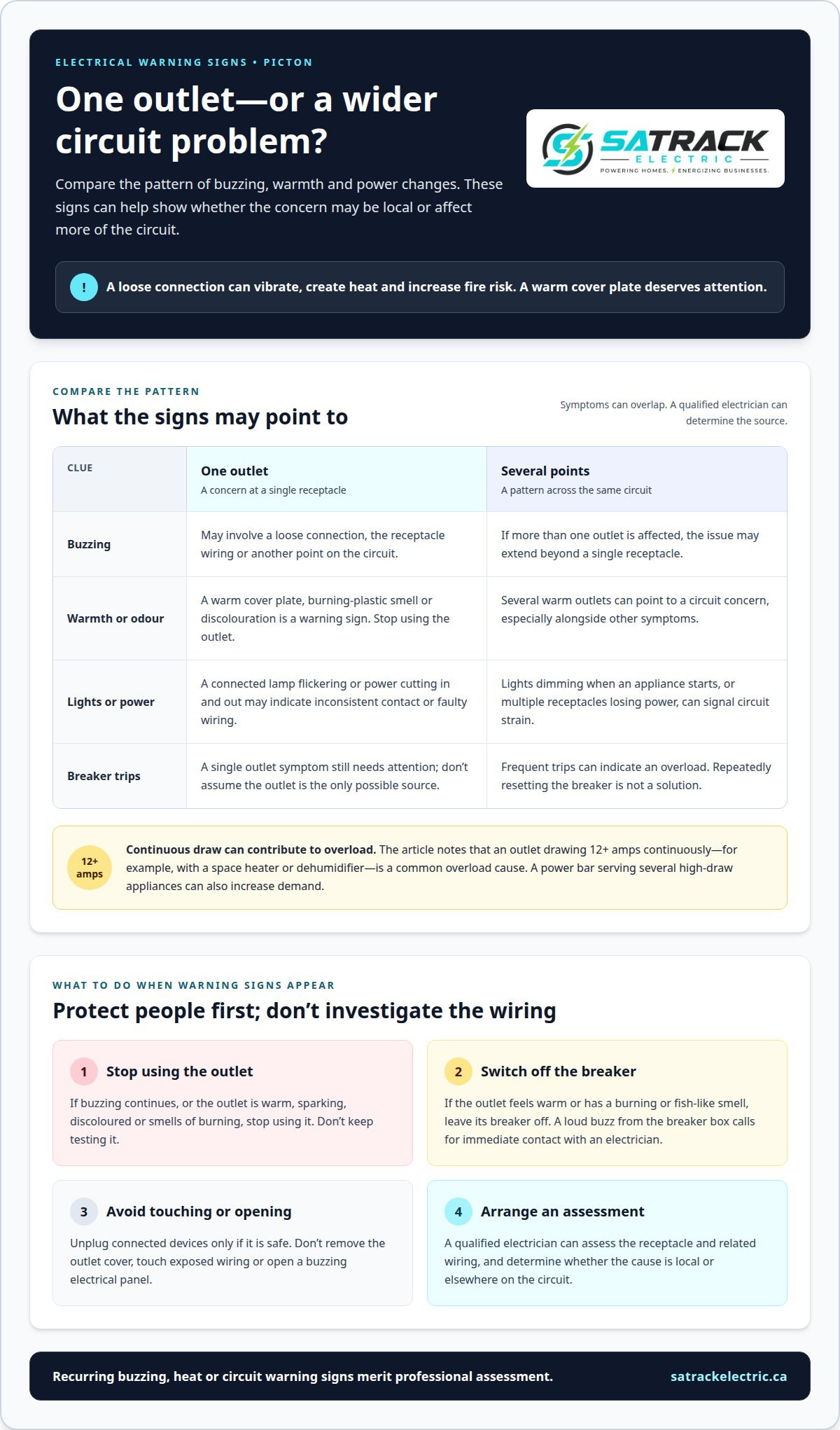
Steps to take when an outlet buzzes
Treat a buzzing outlet as an electrical problem, especially if it’s hot, discoloured or accompanied by an unusual smell. Keep people away from the receptacle while deciding whether the circuit can be safely switched off.
Immediate Steps for a Buzzing Outlet
Stop using the outlet and unplug connected devices only if you can do so safely. If the outlet is hot, sparking or damaged, don’t touch it or the plug.
Switch off the breaker supplying that area if you can reach the electrical panel without approaching smoke, sparks or other hazards. A burning smell, visible sparks, smoke, melted plastic or power cutting in and out calls for immediate attention from a licensed electrician.
Safety Steps to Take
In Ontario, have a licensed electrical contractor assess the outlet and determine permit requirements for the specific repair. Leave the buzzing receptacle unused until it has been inspected and the electrical problem addressed.
If the electrical panel itself is buzzing, don’t touch or open it. Keep clear and contact a qualified electrician. If you can’t identify the correct breaker safely, don’t guess or handle the panel while it’s making unusual sounds.
Electrical Safety Actions to Avoid
Don’t remove the outlet cover, probe the receptacle or touch exposed wiring. A shared electrical box may contain wiring supplied by another circuit, so switching off one breaker doesn’t necessarily make every wire inside safe to touch.
Don’t keep resetting a breaker that trips, and don’t plug another appliance into the outlet to test it. These steps can restore power to a fault or expose another device to the same problem.
Use this order to reduce exposure while arranging an assessment:
- Keep people and pets away from the buzzing outlet.
- Unplug devices only when the plug and receptacle are safe to handle.
- Switch off the relevant breaker if the panel is safe to approach.
- Leave the outlet and its cover untouched until it has been inspected.
If you notice smoke or visible sparks, move away from the outlet and avoid handling nearby electrical equipment. Don’t delay getting help for a buzzing outlet with unusual heat, scorch marks, melting or intermittent power.
Note what happened before the noise began, such as a light switching on or an appliance starting. Share those details with the electrician, along with any changes in sound, smell or power. This can help narrow down the fault without requiring you to investigate inside the outlet.
Buzzing outlets in older homes
In an older home, buzzing can point to outlet connections or wiring that need inspection. Age alone doesn’t identify the fault, but the outlet’s condition, moisture exposure and changes to the home’s wiring can help explain the sound.
Outlets installed more than 20 years ago may have back-stabbed connections, where wires push into openings at the back of the receptacle. These connections are a recognized possible source of buzzing. A sound that comes from an older outlet deserves attention, particularly if it occurs alongside warmth, flickering lights or intermittent power.
Renovations can also complicate diagnosis. A home may have newer wiring in one area while older components remain elsewhere. For example, an outlet replaced during a room update may still connect to wiring or other components that weren’t replaced. A new-looking cover plate doesn’t establish the condition of the wiring behind it.
Moisture is another consideration in older basements, garages and exterior outlets. It can corrode contacts, and arcing may occur before damage is visible. If an outdoor outlet hums after rain or a basement receptacle buzzes in a damp area, stop using it and arrange an inspection. Don’t wait for scorch marks to appear.
Aluminium wiring was popular in homes during the 1960s and 70s. If you know a home has aluminium wiring, mention that detail when arranging an assessment. The age of the house alone doesn’t tell you which wiring it contains, and opening an outlet cover isn’t a safe way to find out.
Pay attention to what changes along with the buzzing. Note whether it begins when a device is plugged in, whether lights flicker, and whether the outlet feels warm or smells unusual. These observations can help an electrician assess whether the issue involves the receptacle, wiring or another point in the circuit. Keep the outlet unused while it buzzes.
An inspection is especially relevant when buzzing returns, several outlets behave unexpectedly, or an older home has signs of moisture near electrical components. An assessment can identify whether the outlet or wiring is damaged and what repair is needed. Until then, don’t remove the cover or touch exposed wiring.
- Record when the sound occurs and whether a device is in use.
- Note any warmth, odour, discolouration or flickering lights.
- Keep a buzzing or damaged outlet out of use until it’s inspected.
For an outlet issue in an older home, arrange an electrical assessment to identify the cause and appropriate repair.
Satrack Electric
Satrack Electric helps homeowners and businesses address buzzing outlets through electrical assessment and repair. Its residential and commercial electrical services include repairs and installations to assess and address the underlying outlet or wiring issue.
Turn to an electrician when buzzing continues, the outlet feels hot, power cuts in and out, or you notice discolouration or an unusual smell. If you’ve switched off the breaker because of these warning signs, leave it off until the electrical problem has been assessed. Sharing when the sound occurs and which devices were in use can help explain what you’ve noticed.
For help with a buzzing outlet, contact Satrack Electric.
Choose a Clear Next Step
Finding the cause of a buzzing electrical outlet in Picton is the first step towards deciding what needs attention. If the sound returns or you’re unsure whether it comes from the outlet, wiring or another part of the circuit, an electrical assessment can clarify the issue and appropriate repair.
Until the outlet has been assessed, keep it out of use if it’s buzzing, warm or showing signs of damage. Avoid opening the receptacle or attempting repairs yourself. Note when the sound occurs and any changes you’ve noticed, then share those details with the electrician. This gives the assessment a useful starting point without putting you in contact with internal wiring.
For a professional next step, request help with a buzzing outlet. Taking action can help you move from uncertainty to a clearer plan for your home or business.
Frequently Asked Questions
Can I replace the outlet myself?
A like-for-like outlet replacement in a primary residence may be possible for a homeowner, but first establish whether the fault is at the outlet or elsewhere on the circuit. Buzzing, heat or intermittent power can point to wiring problems that a replacement receptacle won’t fix. Don’t open or replace an outlet that’s buzzing, hot or damaged. Have the cause assessed before deciding whether a simple replacement is appropriate.
Why is my outlet buzzing and making sounds?
A buzzing outlet can result from loose wiring or a poor connection that makes wires vibrate or contact intermittently. A plugged-in device or lighting control can also be the source. For example, if the sound changes with a dimmer setting, the dimmer and connected lighting may not be compatible. Note whether the sound continues after a device is safely unplugged, but don’t touch a warm or damaged receptacle.
When should you call a professional electrician?
Call an electrician if buzzing persists or returns, or comes with heat, discolouration, a burning smell, crackling or power cutting in and out. Smoke, sparks or melted plastic also require immediate attention. A professional can determine whether the fault is at the receptacle, in its wiring or elsewhere on the circuit. Flickering lights at another location, for example, may show that the issue extends beyond one outlet.
Why does my outlet buzz but the breaker does not trip?
A breaker that hasn’t tripped doesn’t mean a buzzing outlet is safe. A loose connection at the receptacle can produce vibration or heat without causing the breaker to trip. The breaker responds to circuit conditions, while a local wiring fault may need separate diagnosis. Don’t keep using the outlet just because power remains on; leave it unused and arrange an assessment if buzzing continues.
Why is it buzzing?
The sound may come from a loose connection, a plugged-in device or nearby equipment that sounds like an electrical buzz. A lamp, ceiling fan or fluorescent light can make similar noises. If the sound changes when a device runs, that’s a useful clue, but it doesn’t prove the outlet is sound. Avoid testing with a warm or damaged receptacle, and note whether the noise continues when nearby devices are off.
What causes an electrical outlet to buzz?
A loose terminal or wire is a common cause because the connection can vibrate or make intermittent contact. Other possibilities include damaged wiring, circuit overload, or a device producing the sound. In outlets installed more than 20 years ago, back-stabbed connections may be a factor. The sound alone can’t identify which component is at fault, so note other symptoms such as flickering lights or inconsistent power.
Is a buzzing outlet dangerous or a fire hazard?
It can be. Loose electrical connections can create heat and increase fire risk, while a persistent buzz may indicate an electrical fault. Treat it as more urgent if you notice a burning or hot-plastic odour, unusual warmth, scorch marks, smoke, sparks or melted plastic. Keep the receptacle unused, and don’t remove its cover to investigate. A normal-looking faceplate doesn’t rule out a problem behind it.
What should I do immediately if an outlet is buzzing?
Stop using the outlet and unplug a connected device only if the plug and receptacle are safe to handle. If the outlet is hot, sparking or damaged, don’t touch it. Switch off the corresponding breaker only if you can approach the electrical panel safely. Don’t open the outlet or panel. If there’s smoke or visible sparking, move away and seek immediate professional help.