
Did you know that an electrical system that was perfectly legal a few years ago could now be a significant liability under the current 2024 Ontario Electrical Safety Code? Maintaining electrical code compliance Ontario is no longer just about passing a one-time inspection; it’s a proactive safety strategy to protect your property and your peace of mind. We understand that the 800-page OESC document feels incredibly complex. It’s common to feel uncertain about when a permit is required or to worry about the legal risks if a fire or accident occurs due to non-compliant wiring.
This guide simplifies these regulations so you can manage your legal responsibilities with confidence. You’ll learn how to navigate the latest changes, including the April 1, 2026, fee updates and the expanded requirements for Arc-Fault Circuit Interrupter protection. We provide a clear roadmap for passing ESA inspections and reducing insurance risks through certified compliance. By the end of this article, you’ll have a practical understanding of how to keep your electrical installations up to date and fully compliant with provincial standards.
Key Takeaways
- Understand the legal authority of the Ontario Electrical Safety Code and how Regulation 164/99 dictates standards for all electrical installations.
- Learn the mandatory process for filing Notifications of Work to ensure your project maintains electrical code compliance Ontario from start to finish.
- Identify the critical differences in inspection requirements between industrial commercial sites and high-occupancy residential buildings.
- Recognize how to avoid common safety violations by identifying approved certification labels and preventing circuit overloads.
- Realize the importance of hiring a Licensed Electrical Contractor to manage technical filings and guarantee that your property meets all current safety regulations.
What is the Ontario Electrical Safety Code (OESC)?
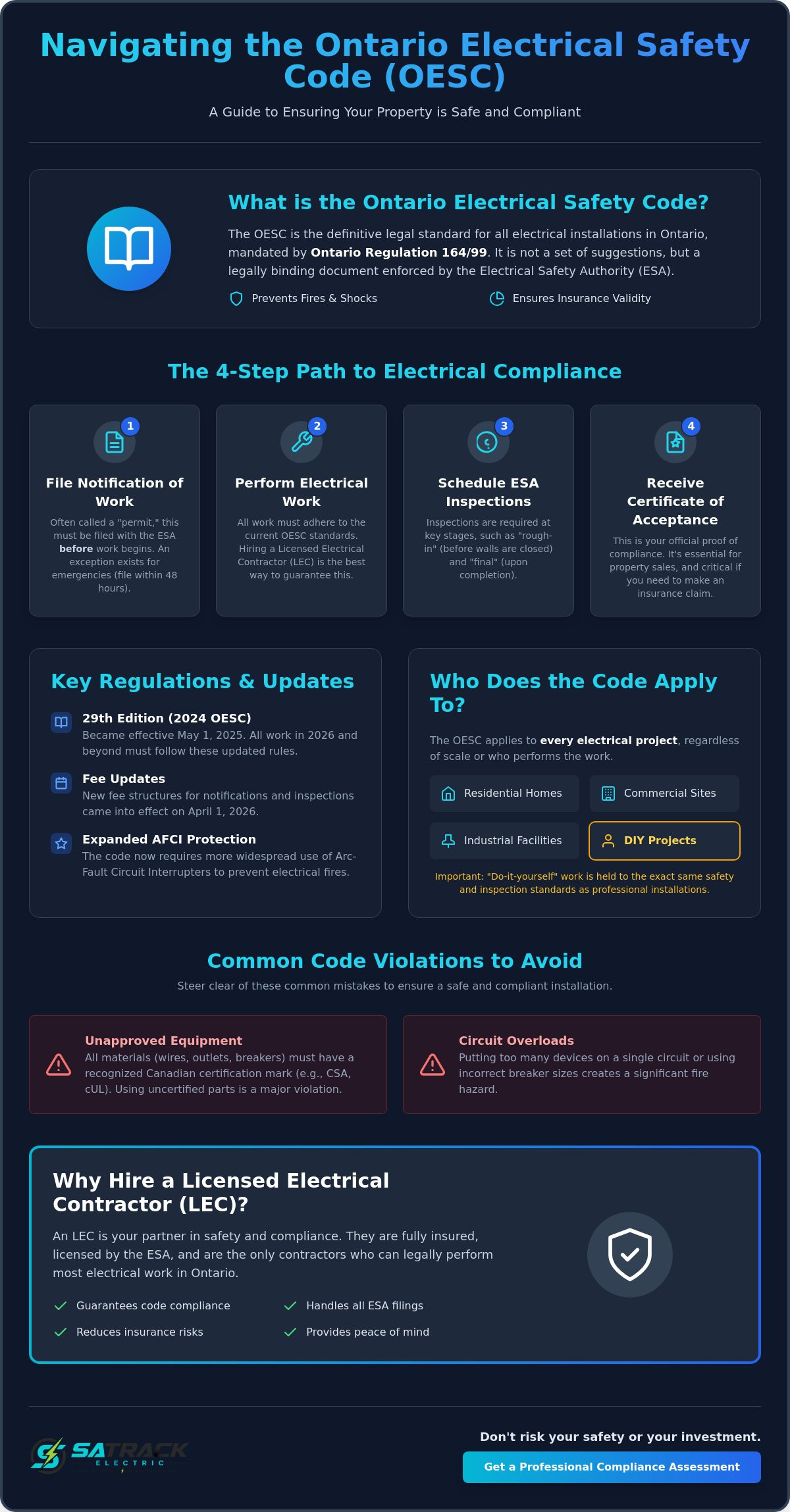
The Ontario Electrical Safety Code (OESC) serves as the definitive legal standard for all electrical installations across the province. It is not merely a set of suggestions; it is a strict regulation established under Ontario Regulation 164/99. This provincial law mandates that all electrical work must adhere to specific technical requirements to ensure the safety of people and property. The Electrical Safety Authority (ESA) acts as the administrative body responsible for enforcing these standards, conducting inspections, and managing the licensing of contractors. Staying current with these rules is essential for maintaining electrical code compliance Ontario.
The Legal Foundation of Electrical Safety
The OESC is primarily designed to mitigate the risks of electrical fires, shocks, and fatalities. While the document is based on the Canadian Electrical Code, it includes specific amendments that address the unique infrastructure and safety needs of Ontario. Ignoring these requirements can lead to severe legal consequences, including significant fines or orders to remove completed work at the owner’s expense. Beyond legal penalties, non-compliance often jeopardizes insurance coverage. Most insurance providers will deny claims for fire damage if the underlying cause was uncertified or non-compliant electrical work.
The code provides technical standards for several critical areas, including:
- Wiring methods and materials used in various environments.
- Protection of persons and property through grounding and bonding.
- Installation of electrical equipment in residential and commercial settings.
- Specific safety protocols for hazardous locations.
Who Does the Code Apply To?
The code applies to every electrical project regardless of its scale. Whether you are constructing a new commercial facility, renovating a residential basement, or performing minor electrical repairs, the OESC standards remain the same. Some property owners mistakenly believe that “do-it-yourself” projects are exempt from these rigorous requirements. In reality, the ESA holds DIY work to the exact same safety standards as professional installations; it’s a matter of public safety. This ensures a consistent level of protection across the province, regardless of who performs the labour.
Because technology and safety research evolve, the OESC is a living document that is updated every three years. The 29th edition, often referred to as the 2024 OESC, officially came into effect on May 1, 2025. This means that for any work conducted throughout 2026, these are the active regulations that must be followed. These updates often include higher standards for protective devices and revised calculations for modern loads like electric vehicle chargers. Staying informed about these changes is the only way to ensure your property remains a safe environment for occupants.
Key Compliance Requirements for Ontario Property Owners
Meeting the requirements for electrical code compliance Ontario begins with proper documentation before a single wire is stripped. The primary tool for this is the Notification of Work. Most people call this a “permit,” but it is technically a formal notification to the Electrical Safety Authority (ESA) that work is occurring. Under Ontario Regulation 164/99, you must file this notification before the project commences. However, the code provides a specific “48-hour rule” for certain scenarios. If work is started to address an immediate safety hazard or in other emergency circumstances, the notification must be filed within 48 hours of the start of the work.
Once the project is finished and passes inspection, the ESA issues a Certificate of Acceptance. This document is your definitive proof of legal compliance. It plays a critical role in insurance claims. If a fire occurs and you cannot produce this certificate for recent electrical changes, your insurer may refuse the claim. If you’re unsure about the status of your current system, scheduling Residential Electrical Services for a professional assessment is a sound first step toward safety.
Filing Notifications and Scheduling Inspections
Filing a notification involves submitting specific details about the scope of work and paying the required fees, which were updated as of April 1, 2026. Once filed, you must coordinate with an ESA inspector at key milestones. This typically includes a “rough-in” inspection before walls are closed and a “final” inspection once all fixtures are installed. A smooth timeline depends on clear communication and readiness. For business owners, adhering to a commercial electrical maintenance Ontario plan ensures that minor upgrades are handled through the proper channels without delaying your operations.
The Importance of Record Keeping
Rule 2-003 of the OESC mandates that owners of commercial or public buildings maintain a permanent record of all electrical installations and alterations. These records must be available on-site for review by an inspector at any time. In 2026, many property managers are moving toward digital archives to streamline this process. Storing scanned copies of your Notifications of Work and Certificates of Acceptance in a secure cloud environment allows for instant retrieval during an audit or real estate transaction. A clean, well-documented inspection history significantly increases property value. It proves the building’s safety and integrity to potential buyers and reduces future liability for the owner.
Residential vs. Commercial Compliance: What You Need to Realize
While the Ontario Electrical Safety Code applies to every building in the province, the practical application of electrical code compliance Ontario varies significantly between residential and commercial environments. The primary difference lies in the technical complexity and the frequency of inspections. Commercial facilities, particularly those with high-voltage systems or industrial machinery, often operate under a more rigorous oversight schedule than a detached single-family home. For businesses, the burden of proof regarding safety is constant. Maintaining compliance is an ongoing operational requirement rather than a one-time project hurdle.
High-occupancy residential buildings, such as apartments and condominiums, occupy a unique middle ground. These structures must meet stringent commercial-grade standards for fire alarm integration and emergency lighting while maintaining individual suite safety. Satrack Electric specializes in navigating these dual requirements for Belleville businesses and property managers, ensuring that every installation meets the specific legal thresholds for their sector.
Commercial Standards and High-Voltage Compliance
Commercial installations involve complexities that go far beyond standard household wiring. Systems utilizing three-phase power and industrial-grade machinery require specialized knowledge of load calculations and grounding techniques. For aging facilities, pursuing commercial electrical upgrades Belleville is often necessary to accommodate modern equipment while remaining compliant with current fire codes. Additionally, businesses are legally required to ensure their electrical work is overseen by a Master Electrician. This designation guarantees that the individual responsible for the work has the advanced training and regulatory knowledge to manage large-scale commercial distributions and emergency system integrations.
Residential Safety and Modern Home Upgrades
In the residential sector, compliance focus has shifted toward modern lifestyle upgrades. Installations for hot tub wiring and electric vehicle (EV) chargers are now among the most common reasons for ESA inspections. The 2024 OESC, which governs work through 2026, has introduced stricter requirements for Ground Fault Circuit Interrupter (GFCI) protection in outdoor and wet areas to prevent shock hazards. Many older homes in the Quinte West area were built before these safety devices were standard. Consequently, a basement renovation or a kitchen remodel often necessitates a comprehensive commercial electrical panel upgrade Belleville businesses and homeowners alike may require to support these new safety devices and the increased power demands of modern appliances. Ensuring these upgrades are performed correctly protects your family and secures your property’s future resale value.
Common Code Violations and How to Avoid Them
Maintaining electrical code compliance Ontario requires more than just following a wiring diagram; it involves a commitment to using the right people and the right parts. Many property owners encounter setbacks during inspections due to easily avoidable errors. Overloaded circuits remain a frequent issue in commercial offices where multiple high-draw devices share a single branch circuit. Similarly, using extension cords as permanent wiring is a direct violation of the OESC. These cords lack the durability for long-term use and pose a significant fire risk. In older Ontario properties, improper grounding and bonding are common findings. Without a clear path to ground, your system cannot safely discharge excess current, which endangers occupants and sensitive electronics. Business owners dealing with recurring faults like warm breakers or flickering lights should consult a specialist in commercial electrical repair Belleville to diagnose and resolve these issues before they escalate into costly operational shutdowns.
If you’ve discovered that previous work was done without a permit or if you suspect your system is outdated, scheduling professional Electrical Repairs is the safest way to rectify the situation and regain compliance. Addressing these issues early prevents the costly delays of a failed inspection.
The Risks of Unlicensed Electrical Work
Hiring an unlicensed individual for electrical tasks is one of the most dangerous decisions a property owner can make. While a general handyman might offer a lower price, they lack the specialized training required for complex wiring. It’s also illegal. In Ontario, only Licensed Electrical Contractors (LECs) can perform electrical work for hire. You should always verify a contractor’s seven-digit ESA/ECRA licence number before signing any contract. Reporting unlicensed activity isn’t just about following rules; it protects the entire community from substandard work that leads to house fires. A licensed professional ensures that every project is backed by the appropriate notification of work and a final certificate of acceptance.
Checking for Unapproved Equipment
The rise of global e-commerce has led to an influx of unapproved electrical components. Bargain-priced breakers or light fixtures sourced from international marketplaces often lack the necessary safety certifications. To maintain compliance, every product installed must bear a recognized certification mark such as CSA, Entela, or QPS. These labels prove that the equipment has been tested to rigorous Canadian safety standards. If an ESA inspector finds unapproved equipment during a site visit, they have the authority to order its immediate removal at your expense. This often results in project delays and wasted material costs that far exceed the initial savings of the bargain component. Always source your materials from reputable Canadian suppliers to ensure they meet provincial safety requirements.
Navigating Compliance with a Licensed Electrical Contractor
Achieving electrical code compliance Ontario is a complex process that extends from the initial planning phase to the final inspection. A Licensed Electrical Contractor (LEC) does more than perform the physical installation; they manage the entire compliance lifecycle. This includes assessing the technical feasibility of a project, filing the necessary notifications with the ESA, and ensuring all work adheres to the latest OESC standards. For property owners in Brighton and Napanee, Satrack Electric provides this comprehensive oversight, removing the burden of regulatory navigation from the client. By partnering with a professional who understands the local landscape, you ensure that your project remains on schedule and fully compliant.
One significant advantage of working with established professionals is participation in the Authorized Contractor Program (ACP). This program is reserved for LECs who consistently demonstrate high standards of workmanship and compliance. Being part of the ACP often results in faster project turnarounds, as the ESA may perform selective inspections based on the contractor’s proven track record. This efficiency is invaluable for commercial projects where downtime must be minimized. Ultimately, proactive Electrical Maintenance is the most effective path to maintaining perpetual compliance and preventing unexpected safety issues. Safety is the priority.
Why Credentials Matter in Ontario
It is essential to distinguish between a general electrician and a Licensed Electrical Contractor. While many individuals may hold an electrical licence, only an LEC is legally authorized to operate a business and perform electrical work for the public in Ontario. This distinction is critical for insurance purposes. Most insurance providers require documented proof that a licensed professional performed any electrical modifications. Satrack Electric’s commitment to safety and quality ensures that every project meets these strict requirements. This provides you with the necessary documentation to protect your investment and maintain your coverage. Documentation is key.
Taking the Next Step for Your Property
If you’re uncertain about the current state of your system, requesting an electrical safety audit is a prudent first step. This professional evaluation identifies potential hazards or code violations before they become liabilities. Preparing for an upcoming ESA inspection is much simpler when you have expert guidance to review your installations and documentation beforehand. Whether you’re managing a commercial facility or a residential home, professional support ensures a smooth inspection process. Ensure your property is up to code; contact Satrack Electric today.
Protecting Your Investment Through Professional Oversight
Maintaining electrical code compliance Ontario is a fundamental responsibility for every property owner. The latest OESC standards brought significant changes to safety requirements that directly impact your insurance coverage and legal standing. By prioritizing proper notifications of work and avoiding unapproved equipment, you protect your investment from unnecessary risks. Whether you’re managing a complex commercial facility or a family home, the peace of mind that comes from a certified electrical system is invaluable. It’s about more than just passing an inspection; it’s about ensuring the long-term safety of your occupants.
Satrack Electric is an ECRA/ESA Licensed and Insured contractor serving Belleville and the Quinte Region. We bring deep expertise in both commercial and residential OESC standards to every project we undertake. If you’re ready to ensure your wiring meets the latest provincial regulations, we’re here to help. Book a Professional Electrical Code Compliance Audit with Satrack Electric to verify your system’s integrity. Taking these proactive steps today ensures a safer, more reliable environment for years to come.
Frequently Asked Questions
Do I need an ESA permit for small jobs like changing a light fixture?
You generally don’t need a permit for simple like-for-like replacements, such as swapping an old light fixture for a new one in the same location. However, if the project involves installing new wiring, moving a fixture to a different spot, or adding a new circuit, you must file a Notification of Work. It’s best to check with the ESA if the scope of your project extends beyond basic cosmetic changes.
How often is the Ontario Electrical Safety Code updated?
The Ontario Electrical Safety Code is updated every three years to incorporate new safety findings and technological changes. The current 29th edition was released in 2024 and became the mandatory standard on May 1, 2025. All electrical work conducted throughout 2026 must comply with these specific regulations to ensure provincial safety standards are met.
What is the difference between a Master Electrician and a Licensed Electrical Contractor?
A Master Electrician is a designation for an individual who has demonstrated advanced technical knowledge and oversight capabilities. A Licensed Electrical Contractor is the actual business entity authorized by the ESA to perform work for the public. To ensure electrical code compliance Ontario, a business must hold a valid contractor licence and employ a designated Master Electrician to supervise all installations.
Can I do my own electrical work in my own home in Ontario?
Homeowners are legally allowed to perform electrical work in their own primary residence. Even if you do the work yourself, you’re still required to follow the OESC, file a Notification of Work, and pay for an ESA inspection. This exemption does not apply to income properties, cottages that aren’t your primary home, or commercial buildings; these must be handled by a licensed professional.
What happens if I sell my house and the electrical work was not inspected?
Uninspected work can cause significant delays during a real estate transaction. Buyers or their home inspectors often flag uncertified wiring, which can lead to demands for a retroactive inspection and costly repairs before the sale can close. Additionally, you may face liability issues if the uninspected work causes a fire or injury after the property has changed hands.
How do I check if an electrician is actually licensed in Ontario?
You can verify a contractor’s credentials by using the ESA’s online “Find a Licensed Electrical Contractor” tool. Every legitimate contractor is required to display their seven-digit ECRA/ESA licence number on their service vehicles and all written correspondence. If a person claims to be an electrician but cannot provide this licence number, they’re not legally permitted to perform work for hire.
What is a Certificate of Acceptance and why do I need it?
A Certificate of Acceptance is the formal document issued by the ESA once an electrical project passes final inspection. It provides permanent proof that your project has achieved electrical code compliance Ontario. You’ll need this certificate to satisfy insurance company requirements, close out building permits, and provide peace of mind to future property owners that the wiring is safe.
Does electrical code compliance affect my business insurance premiums?
Certified code compliance is a critical factor that insurance providers use to assess risk. Maintaining a clean inspection history and holding current Certificates of Acceptance can help keep your premiums stable by proving your facility is a low fire risk. If a fire occurs and is traced back to uncertified or non-compliant electrical work, your insurer has the right to deny your claim entirely.