
Most homeowners realize that the right lighting can completely redefine a room, yet the thought of cutting into a finished ceiling often prevents them from starting the project. It’s natural to worry about messy drywall repairs or whether your new LED fixtures will meet the strict 2024 Ontario Electrical Safety Code. You likely want a modern, energy-efficient home but feel overwhelmed by technical choices like 3000K versus 5000K colour temperatures or the fire safety requirements for insulated ceilings. Professional Pot Light Installation solves these concerns by balancing aesthetic design with technical precision.
We understand that peace of mind is just as important as the final visual result. This article outlines how to transform your space using professional recessed lighting, from the initial layout design to final safety inspections. You’ll learn about the importance of IC-rated fixtures for your attic, how to select the right LED technology for your needs, and what’s required to ensure your project remains fully compliant with provincial regulations. By following a methodical approach, you can achieve a sophisticated, layered lighting look that enhances your property’s value and safety.
Key Takeaways
- Learn the “Rule of Thumb” for layout design to ensure even light distribution based on your specific ceiling height.
- Understand why IC (Insulation Contact) ratings are mandatory for fire safety in insulated ceilings and how they prevent hazards.
- Discover how professional Pot Light Installation utilizes precision cutting and dust-collection tools to protect your home’s interior.
- Gain clarity on selecting appropriate colour temperatures and layering techniques to balance task and ambient lighting effectively.
- Recognize the value of hiring a licensed contractor to guarantee that all work meets the current 2024 Ontario Electrical Safety Code.
What is Pot Light Installation? Modernizing Your Ontario Home
A professional pot light installation is one of the most effective ways to modernize a home in Belleville or Quinte West. Recessed lighting, frequently referred to as pot lights in Canada, consists of light fixtures installed directly into a hollow opening in the ceiling. This design creates a streamlined appearance where the light source appears to shine from within the ceiling itself. Unlike traditional hanging fixtures or bulky surface mounts, these units don’t occupy physical space in the room. This makes them a preferred choice for homeowners who value a minimalist aesthetic and superior light distribution that eliminates dark corners.
Modern installations have transitioned almost exclusively toward LED technology. This shift is driven by a desire for energy efficiency and the impressive longevity of the components. A typical LED fixture can last up to 50,000 hours, which significantly reduces the need for frequent bulb changes and maintenance. While many homeowners focus on interior upgrades, pot light installation is also a popular choice for outdoor soffits. Installing these fixtures in the exterior overhangs of your home enhances curb appeal and provides an added layer of security by illuminating the perimeter of the property.
The Benefits of Recessed Lighting
Upgrading to recessed fixtures often increases property value because it aligns with current interior design standards. These lights are especially beneficial in areas with low ceiling clearances, such as finished basements in older Quinte region homes. In these spaces, traditional fixtures can feel intrusive or even pose a head-clearance hazard. By utilizing dedicated switches or dimmers, you can establish zoned lighting. This allows you to illuminate a kitchen prep station with bright, focused light while keeping the adjacent dining area soft and atmospheric.
Common Styles: Slim Panels vs. Traditional Cans
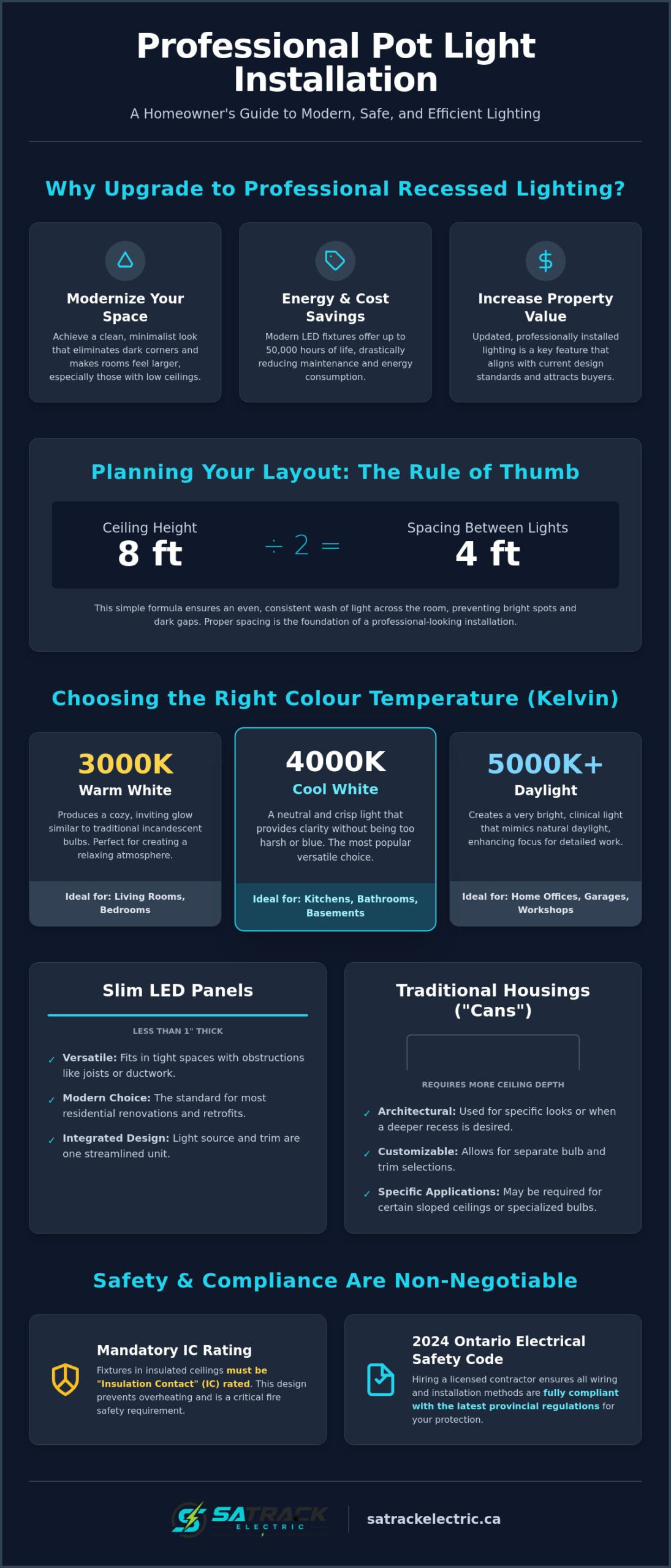
Slim LED panels have changed the industry’s approach to retrofitting. These fixtures are often less than an inch thick, which allows them to fit into tight ceiling spaces where joists, wiring, or ductwork would block a traditional fixture. They’re a versatile solution for most residential renovations. Traditional housings, or “cans,” are still used for specific architectural requirements where a deeper recessed look or specific bulb type is preferred. To finish the look, you can select from various trim colours. While white is the standard for blending into ceilings, black or brushed nickel trims are increasingly popular for adding a sophisticated, high-contrast detail to your decor.
Planning Your Layout: Spacing and Colour Temperature
Proper planning ensures your pot light installation delivers both functionality and style. A standard “Rule of Thumb” for spacing is to divide your ceiling height by two to determine the distance between fixtures. For a typical eight-foot ceiling, you should space the lights approximately four feet apart. This methodical approach prevents “pooling” where light creates bright circles on the floor with dark gaps in between. It ensures a consistent wash of light across the entire room, which is the hallmark of a professional layout.
The distinction between task lighting and ambient lighting determines where fixtures are placed. In a kitchen, lights should be positioned over work surfaces like islands and counters to provide clear visibility for food preparation. In a living room, the focus shifts to creating a comfortable environment. You must also consider the placement of tall furniture and cabinets. If you position a light too close to a wall or a tall cupboard, it can create distracting shadows or harsh glares that diminish the room’s appeal. Integrating dimmers is a practical way to control these levels, allowing you to reduce energy use while shifting the room’s mood from functional to relaxed.
Once you have established the perfect mood for your media room or living area, you can learn more about Edge IPTV to find premium streaming services that complement your home’s new look.
Choosing the Right Colour Temperature (Kelvin)
The colour of your light, measured in Kelvins (K), significantly impacts the feel of your home. We generally categorize these into three main groups:
- 3000K (Warm White): This produces a cozy, yellowish glow that mimics traditional incandescent bulbs. It’s the preferred choice for bedrooms and living areas where relaxation is the priority.
- 4000K (Cool White): Often called the “neutral” choice, this provides a crisp, clean light without being too blue. It’s ideal for kitchens, bathrooms, and laundry rooms.
- 5000K+ (Daylight): This creates a very bright, clinical light. It’s best suited for home offices, garages, or commercial spaces where high-detail tasks are performed.
Calculating How Many Lights You Need
While you might be tempted to install as many lights as possible, a “less is more” philosophy often works best to avoid a “Swiss cheese” appearance in your ceiling. A basic calculation involves multiplying your room’s square footage by the recommended foot-candles for that specific room type. However, ceiling joists and HVAC ducts often dictate where lights can actually go. Consulting a residential electrician in Belleville helps you navigate these structural challenges while maintaining a symmetrical design. If you’re ready to start your project, you can consult with a licensed professional for a layout assessment that ensures your home is both bright and balanced.
Safety Standards and IC Ratings: Protecting Your Property
Safety is the most critical aspect of any pot light installation, particularly when fixtures are placed in insulated ceilings. You must ensure your lights are IC-rated, which stands for Insulation Contact. These fixtures are specifically designed to remain cool enough that they can be in direct contact with ceiling insulation without posing a fire hazard. If you use non-rated fixtures, they require a physical clearance box to maintain a three-inch gap between the housing and any flammable materials. Neglecting this distinction is a common cause of electrical fires in residential attics.
In Ontario, the Electrical Safety Authority (ESA) mandates that almost all electrical work, including adding new recessed lighting, requires a permit. This process ensures that a qualified inspector reviews the work to confirm it meets the 2024 Ontario Electrical Safety Code. While DIY tutorials might make the process look simple, unpermitted work can lead to severe consequences. If an electrical issue causes damage to your home, many insurance providers will void your coverage if they discover the wiring wasn’t completed by a licensed contractor and inspected by the ESA.
Ontario Electrical Code Compliance
Adhering to the provincial code involves more than just making the lights turn on. For example, fixtures installed in damp locations, such as directly above a shower or in a humid bathroom, require specific wet-rated trims and gaskets to prevent moisture from entering the electrical components. Every connection must also be housed within a secure junction box to prevent arcing. That’s why Satrack Electric prioritizes electrical repairs and safety during every install, ensuring every component is properly grounded and protected.
Circuit Loading and Panel Capacity
Modern LED pot lights use significantly less power than older halogen models, but you still need to calculate the total load on your existing circuits. Adding a dozen new lights to a circuit that already powers a microwave or a space heater can lead to frequent breaker trips. In many older homes in Belleville and the Quinte region, a lighting overhaul reveals the need for an electrical panel upgrade to accommodate modern household demands. Using dedicated circuits for large-scale lighting projects provides a more stable system and prevents flickering when other appliances are in use.
The Professional Installation Process: What to Expect
A professional pot light installation follows a structured workflow to ensure accuracy and minimize disruption to your daily life. The process begins with a detailed walkthrough where we mark the exact location of each light on the ceiling using laser levels or measuring tapes. This step allows you to visualize the final layout and ensures each fixture avoids hidden obstructions like joists or plumbing. Once the layout is confirmed, we perform precision cutting. Professionals use specialized hole saws equipped with dust shrouds to capture debris at the source. This prevents drywall dust from settling on your furniture or carpets during the drilling phase.
Wiring is arguably the most technical phase. We fish the electrical cables through the ceiling space from the power source to each individual light hole. This technique requires specialized tools and experience to navigate around corners and through studs without cutting large, unsightly channels in your drywall. In older Quinte region homes, this requires a steady hand and a deep understanding of legacy wiring systems. Finally, we connect the junction boxes, snap the LED fixtures into place, and perform a comprehensive test of the entire circuit to ensure consistent performance.
The ‘No-Mess’ Technique
Maintaining a clean workspace is a priority for any reputable electrical contractor. We utilize high-efficiency vacuums and protective drop cloths to shield your floors and belongings throughout the process. By using precision drilling equipment and dust-collection tools, we often eliminate the need for any drywall patching or painting once the project is finished. This focus on cleanliness is a significant advantage over DIY attempts, which often leave homeowners with a layer of fine white dust throughout their living space.
Integrating Smart Controls
Modern lighting upgrades often include smart technology. We can install intelligent dimmers that allow you to control your lights via smartphone apps or voice assistants. For larger areas like hallways or basements, we set up multi-way switching so you can operate the lights from multiple entry points. We also ensure that your LED drivers are perfectly matched with your dimmer switches to prevent the annoying flickering or humming that occurs with incompatible components. If you want a seamless upgrade, you can book a professional installation to ensure your smart home system works reliably from day one.
Choosing Satrack Electric for Your Lighting Upgrades
Satrack Electric provides comprehensive electrical solutions across Belleville, Trenton, Picton, and the entire Quinte region. Selecting a partner for your pot light installation requires a balance of technical skill and local knowledge. Our team brings a disciplined, methodical approach to every project, ensuring that every fixture is installed with precision and adheres to the current Ontario Electrical Safety Code. This commitment to code-compliant workmanship protects your property and provides the long-term reliability you expect from a licensed and insured professional. We prioritize a clean workflow that respects your home, ensuring that the modernization of your space is a smooth and hassle-free experience.
Our dual expertise in commercial electrical services and residential projects allows us to apply high-level industrial standards to your home. Whether we’re upgrading a retail storefront or a family living room, we maintain a strict focus on safety and efficiency. This broad experience is particularly valuable when navigating the complex wiring often found in older Ontario homes, where modern lighting must be integrated into legacy systems without compromising the structure’s integrity. We don’t just install lights; we ensure your entire electrical system is optimized for the additional load.
Local Expertise You Can Trust
We understand the unique architectural styles found throughout the Quinte area. From historical homes in Picton to modern developments in Quinte West, our team is familiar with the common wiring challenges specific to our region. Being a fully licensed contractor means we take full responsibility for the quality of our work, providing you with the professional assurance that your home is in capable hands. We realize that your home is your most significant investment, which is why we use the specialized dust-collection tools and protective measures discussed earlier to keep your interior pristine. Our goal is to realize your vision while maintaining the highest standards of safety and professional integrity.
Ready to Brighten Your Space?
Transforming your home with modern lighting is a significant investment in both daily comfort and property value. If you’re considering an upgrade, we invite you to contact Satrack Electric for a professional consultation. We’ll provide a detailed quote that outlines the scope of work, from layout design to final ESA inspection. We can also assist with other major residential needs, such as hot tub wiring or electrical panel upgrades, to ensure your entire home is powered safely and reliably. Satrack Electric is the dependable local authority for all Quinte West electrical needs, dedicated to delivering thorough results and customer peace of mind.
Enhance Your Home with Expert Lighting Solutions
Investing in a professional Pot Light Installation is a reliable way to improve your property’s value while creating a more functional living environment. By prioritizing IC-rated fixtures and adhering to the current Ontario Electrical Safety Code, you ensure your home remains safe and energy-efficient. Whether you’re selecting the ideal colour temperature for a kitchen or planning a symmetrical layout for a basement, a methodical approach guarantees a clean, modern result without the stress of messy repairs.
Satrack Electric is an ESA Licensed and fully insured contractor serving the Belleville, Trenton, and Quinte West communities. As expert residential and commercial contractors, we take pride in delivering thorough results that meet the highest industry standards. We realize that your home is your most significant investment; we’re committed to maintaining its integrity through disciplined workmanship and technical precision.
Request a Professional Pot Light Installation Quote from Satrack Electric to begin your home’s transformation. We look forward to helping you realize your vision with professional assurance and dependable local service.
Frequently Asked Questions
How much does pot light installation cost in Ontario for 2026?
Pot light installation costs depend on the complexity of the wiring and whether the ceiling is already finished. Factors such as attic access and the distance from the electrical panel influence the final quote. For an accurate estimate tailored to your home, it’s best to have a licensed contractor assess your specific layout and structural requirements.
Do I need an ESA permit to install recessed lighting in my home?
Yes, you generally need an Electrical Safety Authority (ESA) permit for any new installation that involves adding wiring or fixtures. This permit ensures the work is inspected and complies with the 2024 Ontario Electrical Safety Code. Hiring a licensed electrical contractor simplifies this process because they handle the permit filing and inspection coordination on your behalf.
Can pot lights be installed in an insulated ceiling without a fire risk?
Pot lights can be safely installed in insulated ceilings provided you use fixtures with an IC (Insulation Contact) rating. These units are designed to stay cool enough to touch insulation without creating a fire hazard. If you don’t use IC-rated lights, a specific clearance box must be built to maintain a safe gap between the fixture and the insulation material.
How many pot lights should I put in a standard-sized living room?
A standard living room typically requires lights spaced according to the “divide by two” rule. If your ceiling is eight feet high, you should space your lights approximately four feet apart. This ensures even light distribution across the room without leaving dark spots in the corners or creating an overly crowded appearance on your ceiling.
Will installing pot lights make a mess of my drywall or ceiling?
Professional installers use specialized tools to ensure the process is as clean as possible. We utilize hole saws with integrated dust shrouds and high-efficiency vacuums to capture drywall debris at the source. While some drilling is necessary, this methodical approach often eliminates the need for any drywall patching or painting once the project is finished.
Can I replace my old halogen pot lights with new LED versions?
You can definitely replace old halogen fixtures with modern LED versions to improve energy efficiency. Many homeowners choose to retrofit their existing housings with LED inserts or replace the entire unit with slim LED panels. This upgrade significantly reduces power consumption and eliminates the high heat levels associated with traditional halogen bulbs.
What is the best colour temperature for kitchen pot lights?
The most effective colour temperature for kitchen lighting is 4000K, often called “Cool White.” This provides a crisp, neutral light that is ideal for task-oriented activities like food preparation and reading recipes. It avoids the yellow tones of warmer bulbs while remaining more comfortable for daily use than clinical daylight bulbs.
How long does it typically take to install 10 pot lights in a finished room?
A professional team can typically complete a Pot Light Installation of 10 fixtures within a single business day. The exact timeframe depends on the accessibility of the ceiling and the complexity of the wiring path. Most residential projects in the Quinte region are finished efficiently with minimal disruption to your household routine.