
Did you know that Ontario homeowners with unmitigated aluminum wiring could be paying up to $2,400 more in annual insurance premiums than their neighbours with copper? For many, the need for aluminum wiring replacement Ontario has become a pressing financial concern as insurers tighten their underwriting standards in 2026. If your home was built between the mid-1960s and the late 1970s, you’re likely one of the 450,000 Canadians facing this specific challenge. It’s unsettling to feel that your home’s safety is in question or that your insurance coverage might be cancelled because of the wires behind your walls.
We understand that the prospect of a full electrical overhaul feels daunting and potentially expensive. This guide will help you navigate your options, from identifying potential hazards to securing an ESA Certificate of Acceptance. You’ll learn how to manage these risks effectively and protect your investment while ensuring your home remains fully insurable. We’ll cover the technical risks associated with aluminum connections, the latest 2026 insurance requirements, and why professional remediation is often the most practical path forward for modern Ontario households.
Key Takeaways
- Identify aluminum wiring in your home by recognizing specific “AL” or “ALUM” markings on wire jackets and identifying common signs of connection failure.
- Navigate the 2026 insurance landscape by understanding why Ontario insurers require professional inspections and how to secure an ESA Certificate of Acceptance.
- Evaluate the safety and financial differences between a full aluminum wiring replacement Ontario and the more common “pigtailing” remediation method.
- Learn how to manage the unique physical properties of aluminum, such as thermal expansion, to prevent loose connections and potential fire hazards.
- Gain peace of mind by following a methodical approach to electrical upgrades that prioritizes safety, quality workmanship, and regulatory compliance.
Understanding Aluminum Wiring: Why Ontario Homes Used It and the Risks Today
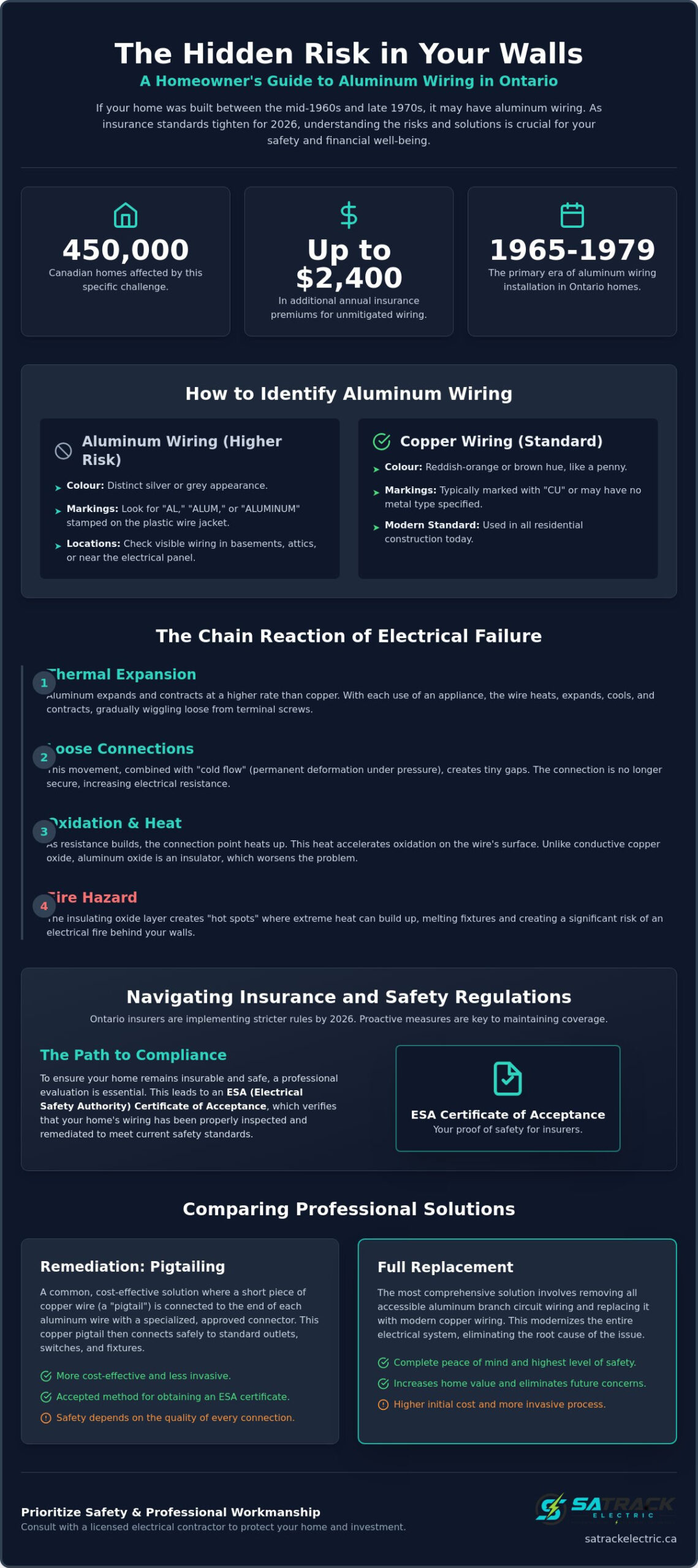
Aluminum wiring is a light, silver-coloured conductor that was widely installed in Ontario residential construction from 1965 through the late 1970s. During this era, a global copper shortage drove prices to record highs, leading builders to seek a more affordable alternative. While aluminum is an excellent conductor of electricity, its physical properties differ significantly from copper. These differences create unique challenges for aging electrical systems in 2026. Homeowners considering aluminum wiring replacement Ontario often ask why this material was used if it presents these risks. The answer lies in its initial cost-effectiveness and its performance in high-voltage transmission lines, where it’s still safely used today.
The History of Aluminum Wiring in Ontario
The adoption of aluminum for branch circuit wiring was a response to economic pressures rather than a compromise in engineering standards at the time. In communities like Belleville and Quinte West, many of the brick bungalows and split-level homes built during this period utilized aluminum for their internal circuits. These properties were constructed during a time of rapid suburban expansion, where builders aimed to keep housing prices accessible for growing families. Understanding the history and properties of aluminum building wiring helps clarify that the material itself isn’t faulty. Instead, the issues arise from how it interacts with standard household devices. In 2026, these systems have reached a critical age where original connections have undergone decades of thermal stress, making aluminum wiring replacement Ontario a common topic during home inspections.
The Science of Electrical Failure
The primary safety concern with aluminum is not the wire’s ability to carry current, but how it behaves at connection points. Aluminum has a higher rate of thermal expansion and contraction than copper. Every time you turn on a light or an appliance, the wire heats up and expands. When you turn it off, it cools and contracts. Over thousands of cycles, this movement causes the wire to pull away from terminal screws, creating loose connections.
This process is compounded by “cold flow,” which is the tendency of aluminum to permanently deform or “creep” when under the pressure of a screw or clamp. As the wire deforms, the connection loosens further, increasing electrical resistance. This resistance generates heat, which leads to oxidation. Unlike copper oxide, which remains conductive, aluminum oxide acts as an insulator, creating “hot spots” that can eventually lead to a fire. Using standard switches or outlets designed only for copper worsens the problem because the metals expand at different rates. Galvanic corrosion occurs when aluminum and copper come into direct contact in the presence of an electrolyte, such as moisture, leading to the rapid deterioration of the metal connection.
How to Identify Aluminum Wiring and Spot Early Warning Signs
Determining if your home contains aluminum wiring is the first step toward ensuring long-term safety. Most wiring remains hidden behind drywall, but you can often find visible sections in the basement, attic, or near the electrical panel. Look for the wire jacket’s embossed markings; manufacturers typically stamped “ALUM,” “AL,” or “ALUMINUM” directly onto the plastic insulation. Unlike the reddish-orange hue of copper, aluminum conductors have a distinct silver or grey appearance. It’s helpful to review Ontario’s rules for aluminum wiring to understand what these markings signify for your specific property.
When inspecting your electrical panel, always prioritize safety. You don’t need to remove the cover or touch any live components to spot aluminum. Look at the wires where they enter the top or sides of the panel box. If the exposed ends are silver, your home likely uses aluminum for its branch circuits. If you’re unsure about the state of your system, seeking a professional evaluation for aluminum wiring replacement Ontario is the most reliable way to confirm your home’s status. Because these systems are now several decades old, identification is the only way to begin managing the risks associated with aging connections.
Visual Warning Signs in Your Living Space
Often, the first signs of failure aren’t in the wires themselves but in the devices they power. Flickering lights that persist even after you’ve replaced the bulb are a common indicator of a loose connection. You should also examine your outlet faceplates and switch covers for any signs of heat damage. Discoloured, warped, or charred plastic suggests that a “hot spot” has formed behind the wall. In some cases, you might notice a faint smell of burning plastic or ozone near high-use outlets. These are not minor issues; they indicate that the wiring is actively overheating and requires immediate attention.
Advanced Detection Techniques
Some warning signs are more subtle and require a keen eye. If a wall plate feels warm to the touch, it’s a clear signal of high resistance in the connection. You might also experience static interference on audio equipment or see “snow” on electronic displays when appliances are running. These symptoms often point to a system that’s struggling to maintain a steady current. Addressing these issues frequently involves more than just fixing a single outlet; it often requires a comprehensive electrical panel upgrade to ensure the entire system meets modern safety demands. If you notice these persistent issues, scheduling professional electrical maintenance can help identify risks before they escalate into a fire hazard.
Navigating Ontario Insurance and ESA Regulations
Insurance providers in Ontario view aluminum wiring as a significant liability due to the elevated risk of fire. In 2026, the industry trend has shifted from simple inquiries to mandatory requirements for policy renewals. Homeowners with unmitigated systems often find themselves paying annual premiums that are $1,200 to $2,400 higher than those with copper wiring. In some instances, insurers may refuse coverage entirely until the system is brought up to modern safety standards. This financial pressure makes aluminum wiring replacement Ontario a strategic investment for protecting your property’s value and your financial standing.
The Electrical Safety Authority (ESA) serves as the primary regulatory body for electrical safety in the province. During a home sale, owners have a legal obligation to disclose the type of wiring present in the structure. Buyers, lenders, and insurers typically demand an ESA Certificate of Acceptance as a condition of the transaction. This document confirms that a Licensed Electrical Contractor (LEC) has inspected the system and that it complies with the Ontario Electrical Safety Code. It’s the gold standard for compliance and provides the peace of mind that lenders require before releasing funds; for those navigating these specific lending requirements, Dhugga Mortgages provides the expertise needed to secure financing for homes with unique safety considerations.
Meeting ESA Standards in 2026
The current Ontario Electrical Safety Code permits the continued use of aluminum wiring, provided it’s maintained correctly and uses approved components. When you hire a professional for aluminum wiring replacement Ontario or remediation, they must file a notification of work with the ESA. An inspector then reviews the installation to ensure all connections are secure and that no incompatible devices are present. This process is essential because it validates that the technical risks identified in CPSC research on aluminum wiring fire hazards have been professionally addressed.
Insurance Policy Requirements
Major Canadian insurers, such as Intact and Aviva, have tightened their underwriting criteria for older homes. They now frequently require a specialized electrical inspection before issuing or renewing a policy. These inspections typically cost between $485 and $750 in the current market. It’s vital to distinguish between a general home inspection report and a formal remediation certificate. While a report identifies potential issues, only a certificate confirms that the hazards have been eliminated. Utilizing professional residential electrical services to perform these upgrades is the most effective way to satisfy these demands and potentially lower your monthly insurance costs. Most insurers will only recognize work performed by a licensed contractor who provides the necessary ESA documentation.
Aluminum Wiring Replacement vs. Remediation: Comparing Costs and Safety
Homeowners in Ontario generally face two choices when managing their electrical systems: a complete aluminum wiring replacement Ontario or professional remediation. A full replacement involves pulling new copper cable through the walls to every outlet, switch, and fixture. While this is the most thorough solution, it’s also the most disruptive. It often requires cutting into drywall and significant repair work afterward. However, it removes the aluminum entirely, making it the “Gold Standard” for long-term safety and property value.
Remediation, or “pig-tailing,” is the most common alternative. This method focuses on the connection points where the risks are highest. Instead of replacing the entire wire, a technician joins a short length of copper wire to the existing aluminum lead using specialized connectors. This copper “tail” then attaches to the switch or outlet, effectively bypassing the problematic aluminum-to-device connection. In Ontario, the choice of connector is critical. While traditional twist-on wire connectors were once the standard, many modern professionals prefer mechanical lug connectors like AlumiConn. These provide a more secure, separate connection for each conductor, which significantly reduces the risk of loosening over time.
The Remediation Process Explained
Pig-tailing requires precision and specific materials to be effective. A key component is the application of antioxidant paste to the exposed aluminum wire before it’s joined to the copper. This paste prevents the formation of aluminum oxide, which acts as an insulator and creates heat. Additionally, replacing old devices with CO/ALR (Copper/Aluminum Revised) rated switches and outlets provides a secondary layer of protection. These devices are engineered specifically to handle the unique expansion rates of aluminum, ensuring a more stable connection even under heavy electrical loads. The same principles of thermal expansion and moisture-related corrosion that affect indoor aluminum connections are equally important to understand when planning outdoor electrical wiring in Ontario, where freeze-thaw cycles and weathering add additional stress to connection points.
Full Rewiring: When is it Necessary?
While remediation is suitable for many, a full aluminum wiring replacement Ontario becomes necessary if the original wire insulation is brittle, cracked, or damaged by previous overheating. If you’re planning significant renovations that involve opening walls, it’s the ideal time to modernize the entire system. This is also a perfect opportunity to bundle other electrical upgrades for older homes Ontario, such as adding dedicated circuits for modern appliances. A home with a fully updated copper system typically commands a higher resale value and eliminates all insurance-related hurdles in one stroke. If you aren’t sure which path is right for your property, contact our team to schedule a professional aluminum wiring safety assessment to evaluate your home’s unique needs.
Professional Solutions: Securing Your Ontario Home with Satrack Electric
Addressing the risks of older electrical systems requires more than just technical skill; it demands a deep familiarity with the specific building standards used in Ontario during the 1960s and 1970s. Satrack Electric is a licensed and insured contractor (ESA License #7009789) that has provided specialized electrical services since 2013. We understand that homeowners often feel overwhelmed by insurance demands or the fear of potential fire hazards. Our role is to act as a stable, professional partner, guiding you through the process of aluminum wiring replacement Ontario with a focus on safety and long-term reliability. We take pride in delivering thorough results that meet all current regulatory standards while providing you with total peace of mind.
Our team manages the entire compliance process on your behalf. This includes filing the necessary notifications with the Electrical Safety Authority and coordinating the final inspection. By handling these administrative details, we ensure that your project proceeds smoothly and that you receive your ESA Certificate of Acceptance without unnecessary delays. This document is your primary tool for satisfying insurance requirements and protecting your home’s market value. Choosing a seasoned practitioner ensures the work is done correctly the first time, avoiding the complications that arise from uncertified or amateur modifications.
Our Aluminum Wiring Safety Audit
Every project begins with a methodical safety audit. We don’t rely on guesswork; instead, our technicians perform comprehensive testing on every outlet and switch in your home. We look for signs of heat damage, improper previous repairs, and incompatible components. This assessment also includes a detailed review of your main service to identify any critical electrical repairs needed at the panel level. Once the audit is complete, we provide a clear, itemized quote that outlines the best path forward, whether that involves a targeted remediation or a complete aluminum wiring replacement Ontario.
Serving the Belleville and Quinte Region
We are deeply rooted in our service area, with extensive experience working on the specific home vintages found in Trenton, Picton, and Brighton. Our commitment to the community is reflected in our disciplined approach to workmanship and our adherence to the Ontario Electrical Safety Code. We believe that every resident deserves a home that is both safe and fully insurable. If you’ve received a notice from your insurer or have concerns about the age of your wiring, the next step is to obtain a professional evaluation. You can book your professional electrical consultation today to secure your home’s future and ensure your electrical system remains a reliable asset for years to come.
Securing Your Home’s Long-Term Safety
Managing an older electrical system doesn’t have to be a source of constant stress. By identifying early warning signs like flickering lights or discoloured outlets, you can address potential hazards before they escalate. Understanding the difference between remediation and a full aluminum wiring replacement Ontario allows you to make an informed decision that balances your budget with your long-term safety goals. Securing an ESA Certificate of Acceptance is the most reliable way to satisfy insurance requirements and protect your property’s value in today’s market.
As a licensed and insured Ontario contractor, Satrack Electric has spent years serving Belleville and Quinte West as specialists in ESA-compliant upgrades. We provide the methodical assessments and quality workmanship needed to ensure your home meets modern standards. Don’t wait for an insurance renewal notice to take action. Protect your home and secure your insurance; contact Satrack Electric for an aluminum wiring inspection today. Taking proactive steps now will give you the confidence that your electrical system is safe, stable, and ready for the future.
Frequently Asked Questions
Is aluminum wiring illegal in Ontario?
Aluminum wiring is not illegal in Ontario. The Ontario Electrical Safety Code permits its use as long as it’s installed correctly and maintained according to modern safety standards. While the Electrical Safety Authority doesn’t mandate its removal, many insurance companies require professional remediation before they’ll issue or renew a policy for an older home.
Can I pig-tail aluminum wiring myself?
No, you shouldn’t perform your own aluminum wiring pigtailing in Ontario. All electrical repairs and modifications must be completed by a Licensed Electrical Contractor. This ensures the work meets the Ontario Electrical Safety Code and allows you to obtain the necessary ESA Certificate of Acceptance required by insurance providers to prove the home is safe.
How much does it cost to replace aluminum wiring in an Ontario house?
The cost for aluminum wiring replacement Ontario depends on the size of your home and the complexity of the project. A full rewire is a significant investment that involves replacing all cables behind your walls, while remediation through pigtailing is a more cost-effective alternative. We recommend scheduling a professional assessment to receive an accurate, itemized quote tailored to your property’s specific layout.
Will my insurance be cancelled if I have aluminum wiring?
Your insurance might be cancelled or denied if you have unmitigated aluminum wiring that hasn’t been professionally inspected. Many Ontario insurers view untreated systems as a high-risk factor. To maintain coverage or avoid paying significantly higher annual premiums, most companies require an inspection and a certificate confirming that the wiring has been professionally remediated or replaced.
What is the difference between copper-clad and solid aluminum wiring?
Solid aluminum wiring consists entirely of aluminum, while copper-clad wiring features an aluminum core bonded to a thin outer layer of copper. Copper-clad was intended to combine the conductivity of copper with the lower weight of aluminum. However, both types require specific connectors and devices to prevent the overheating risks associated with thermal expansion and oxidation at connection points.
How long does a typical aluminum wiring remediation take?
A typical aluminum wiring remediation for an average-sized home usually takes between two and four days. This process is much faster and less disruptive than a full aluminum wiring replacement Ontario because it doesn’t involve opening your walls. Our team works methodically through every outlet and switch to ensure all connections are secure and compliant with current safety standards.
Do I need an ESA permit for aluminum wiring repairs?
Yes, you must have an ESA permit, officially known as a notification of work, for any aluminum wiring repairs or modifications. A Licensed Electrical Contractor handles this process on your behalf. Once the work is complete, an ESA inspector reviews the installation to issue a Certificate of Acceptance, which serves as your proof of compliance for insurance purposes.
Can I use a regular light switch with aluminum wiring?
You cannot use a regular light switch with aluminum wiring. Standard switches are designed for copper only and will eventually fail due to the different expansion rates of the two metals. You must use devices marked with “CO/ALR” (Copper-Aluminum Revised), which are specifically engineered to maintain a safe, stable connection with aluminum conductors without overheating.