
The outlet is only one part of planning outdoor plug installation in Quinte West. If the work involves digging, utility locates help identify buried services, while an easement may limit where the installation can go.
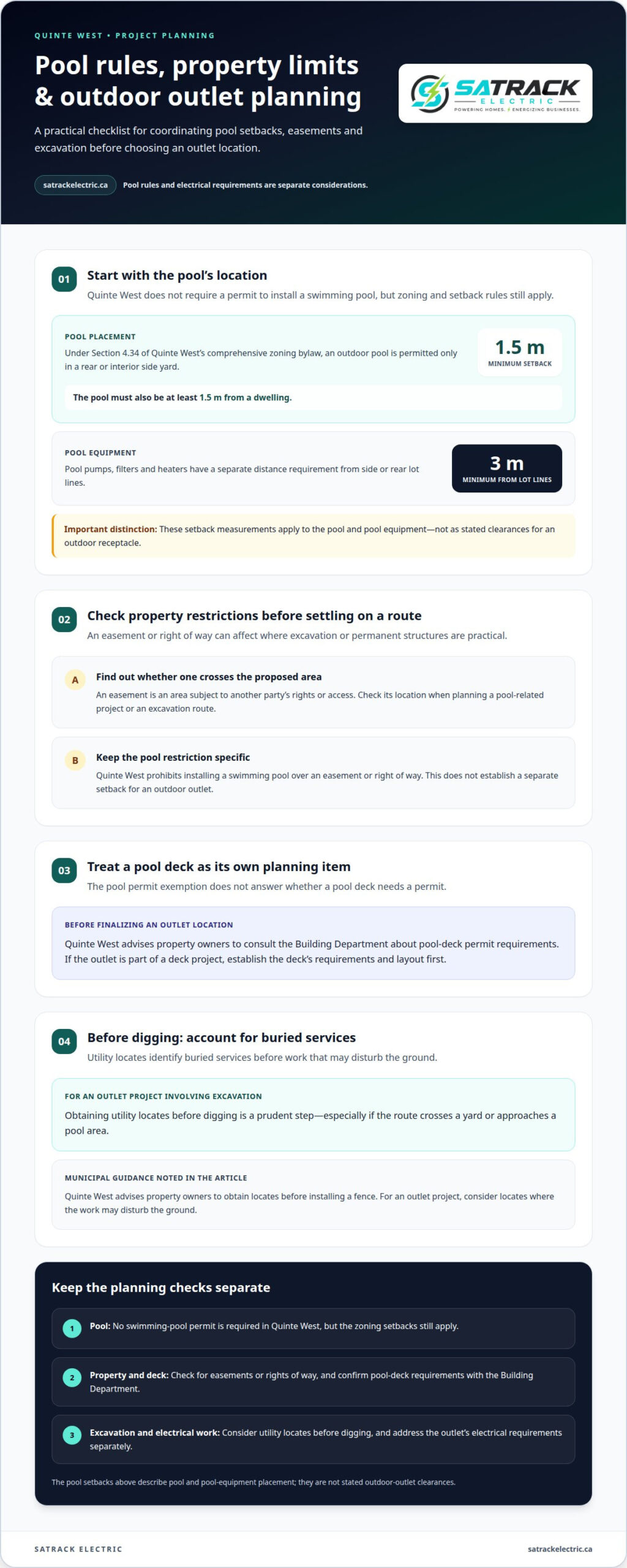
It’s reasonable to wonder whether a nearby pool changes permit requirements. Quinte West doesn’t require a permit to install a swimming pool, but location and setback restrictions apply, and a pool can’t be installed over an easement or right of way. These rules are separate from the requirements for electrical work.
This article explains how pool-related rules, utility locates and easements can affect an outdoor outlet project. You’ll learn which pool setbacks matter, why to consider buried services before excavation, and how property restrictions can influence where the work is planned.
Key Takeaways
- Learn how pool location rules, easements and utility locates can affect where an outdoor outlet project is planned.
- Understand which Ontario Electrical Safety Code and GFCI considerations are relevant to an exterior receptacle.
- See how electrical contractor requirements and ESA notification relate to the work.
- Find out why wiring distance and panel capacity can affect the project’s price.
- Review the key safety considerations involved in installing a weatherproof outdoor outlet.
What permits are required to install an outdoor electrical outlet in Quinte West, Ontario?
A swimming pool permit is municipal approval to install a pool. Quinte West doesn’t require a permit to install a swimming pool, but its location and setbacks remain subject to zoning rules. That exemption doesn’t determine the separate electrical requirements for an outdoor outlet. Keep the pool, electrical work and any deck project distinct when planning.
A setback is the minimum distance a structure must remain from a property feature or boundary. Under Section 4.34 of Quinte West’s comprehensive zoning bylaw, an outdoor pool is permitted only in a rear or interior side yard, with a minimum setback of 1.5 m. The pool must also be at least 1.5 m from a dwelling. Pool pumps, filters and heaters must be at least 3 m from side or rear lot lines.
These measurements matter when an outlet is planned near a pool or its equipment. For example, placing a receptacle beside a pump area may require coordinating the electrical layout with the equipment location and property lines. The setback values apply to the pool and pool equipment, not as stated outlet clearances. Section 4.34 also means a pool cannot be installed over an easement or right of way.
An easement is an area of property subject to another party’s rights or access. Its location can affect where excavation or permanent structures are practical. Before planning a pool-related project, find out whether an easement or right of way crosses the proposed area. Quinte West prohibits installing a swimming pool over either, but this rule doesn’t establish a separate setback for an outdoor outlet.
Utility locates identify buried services before work that may disturb the ground. Quinte West advises property owners to obtain locates before installing a fence. For an outlet project involving excavation, locating underground services is a prudent step before digging, especially if the route crosses a yard or approaches a pool area.
In short, Quinte West doesn’t require a swimming pool permit, but zoning setbacks, easements and pool-deck requirements can shape the project. Identify which parts involve a pool, deck or excavation, then address the outdoor plug installation Quinte West project’s electrical requirements separately with Satrack Electric.
Always check local regulations before proceeding. Fences aren’t permitted within Quinte West city road allowances. This restriction concerns fences, not electrical-outlet clearance. Keep the distinction in mind when planning an outlet route near a road allowance, and address the electrical requirements separately.
What does the Ontario Electrical Safety Code require for outdoor plugs and GFCI protection?
The Ontario Electrical Safety Code (OESC) is the provincial code used to assess electrical installations in Ontario. Requirements for an outdoor receptacle depend on its location, circuit, equipment and installation details. The information here doesn’t establish specific OESC clauses or GFCI requirements, so don’t assume an exact code rule or technical specification.
A receptacle is the outlet device that accepts an electrical plug. Before work begins, define where it will go and what it will serve. An outlet beside a patio, for example, has a different use from one intended for pool equipment. The use and location help shape the code review. “Outdoor plug” alone isn’t enough to determine every requirement.
A ground-fault circuit interrupter, or GFCI, is an electrical protection device. Its role in a particular outdoor installation must be considered as part of the applicable code assessment. Don’t assume every outdoor outlet uses the same protection arrangement, or that a GFCI device alone ensures compliance. Consider the circuit and complete installation together.
Weather exposure is another design factor. The receptacle’s placement and selected equipment should suit the intended outdoor location. An outlet on an uncovered wall, for example, may face different exposure from one beneath a covered patio. Use this comparison as a planning prompt, not a substitute for checking the installation against the OESC.
A code assessment reviews the proposed work against applicable electrical rules. Start with the intended outlet location, the circuit supplying it, the device and protective arrangement, and any nearby equipment. Consider these details together. A change in location or intended use can change the installation being assessed.
For a project near a swimming pool, consider the electrical design separately from municipal pool-location rules. Quinte West’s pool setbacks address pool structures and equipment, not OESC requirements for an outlet. A pool pump’s location, for example, may inform outlet planning, but it doesn’t establish the correct electrical arrangement on its own.
Before installation, have the proposed outdoor receptacle assessed against the current OESC using the actual project details. The assessment should address GFCI protection, the outlet’s location and its intended use. The practical takeaway: don’t select a device or assume a protection method based only on the word “outdoor.”
Requirements depend on the outlet’s location, circuit, equipment and installation details. Consider GFCI protection as part of assessing the complete installation against the OESC.
The receptacle and equipment should suit the intended outdoor exposure, which can differ between an uncovered wall and a covered patio. Assess their selection and placement for the specific installation.
Does outdoor plug installation in Ontario require a licensed electrical contractor or ESA notification?
A licensed electrical contractor is authorized to perform electrical work in Ontario. For an outdoor receptacle, use a licensed contractor to plan and complete work that changes wiring or adds a circuit. An outlet that looks simple can involve connections inside the home’s electrical system, making the job more than attaching a weather-resistant cover.
ESA notification is notice to the Electrical Safety Authority about electrical work. Whether an installation needs notification depends on its scope and applicable requirements. Adding an outlet to an existing circuit differs from installing a new circuit. The type of work, not just the outdoor location, informs the notification question.
The Electrical Safety Authority, or ESA, oversees electrical safety in Ontario. Its role is separate from Quinte West’s municipal rules for pools, decks and property locations. A pool permit exemption, for example, doesn’t settle the electrical notification requirements for an outlet serving pool equipment. Treat municipal approvals and electrical compliance as separate parts of project planning.
Before work starts, establish what the installation involves. A useful scope includes:
- The proposed outlet location and intended use, such as patio lighting or pool equipment.
- Whether the work connects to an existing circuit or requires new wiring.
- Whether the route passes through finished walls, exterior cladding or underground areas.
- Whether the electrical panel needs changes to support the planned work.
These details help distinguish replacing a receptacle from a new electrical installation. Replacing an existing device without changing its wiring differs from extending a circuit to a new exterior wall. An outlet far from the panel may also need a different route from one beside an existing indoor supply point. The final scope guides the compliance steps.
Clarify the work scope and responsibility for ESA notification before installation begins. The record should identify the location, circuit work and any related panel changes. If the project changes, such as moving the outlet or adding another location, reassess the scope instead of assuming the original notification covers every change.
In practical terms, plan outdoor plug installation in Ontario with a licensed electrical contractor, and consider ESA notification in light of the exact work. For a Quinte West home, first define whether the job replaces an existing outlet, extends a circuit or adds new wiring. That distinction helps determine the appropriate electrical process.
What factors affect the price of installing an exterior outlet, such as wiring distance or panel capacity
Wiring distance is the route between the electrical supply and the new outlet. A longer route can require more cable and installation time. An outlet on an exterior wall beside an accessible indoor supply point, for example, may need less routing work than one across the house. The route matters too: finished walls, ceilings or exterior surfaces can affect how wiring is installed.
Panel capacity is the electrical panel’s ability to support planned circuits and loads. The panel’s condition, available spaces and existing electrical demand help determine whether it can serve a new outlet. If the work requires panel changes, that’s a different scope from connecting an outlet to a suitable existing circuit. A panel upgrade may be part of the project if the existing panel can’t support the work.
A circuit is the wiring and protective devices that supply power to outlets or equipment. The electrician assesses whether the proposed outlet can connect to an existing circuit or needs new wiring. Intended use matters: a receptacle for occasional patio use differs from one planned for equipment with ongoing electrical demand. The load and circuit arrangement influence the work required.
Access describes how easily the installation route can be reached. An unfinished utility area may allow a more direct route than a finished wall that requires careful access and restoration. Exterior materials also affect the process. A route through brick, siding or a deck area can require different work from one through accessible framing.
Location and project conditions can add planning steps. An outlet near a pool or hot tub may need coordination with the equipment layout and electrical design. If the route involves excavation, buried services and property restrictions also affect where wiring can go. Moving a proposed location may change the cable route and installation scope.
Factors commonly reviewed include:
- Distance and complexity of the route from the electrical supply.
- Panel condition, capacity and any required panel changes.
- Whether existing wiring can support the intended use.
- Access through walls, ceilings, exterior finishes or ground.
- Outlet location and coordination with nearby equipment.
The price depends on the project and is provided after a quote request; key cost factors include wiring distance, panel capacity, access, circuit requirements and outlet location.
For a useful estimate, first define the outlet’s intended use and proposed location. These details help clarify the likely route, panel considerations and project scope before work begins.
For properties in Quinte West, site planning may involve local rules as well as electrical considerations. Quinte West’s comprehensive zoning bylaw limits fences in residential front or exterior side yards to 0.8 m high. This is a property-layout consideration rather than an electrical requirement, so it should be kept distinct from the assessment of wiring, circuit needs and panel capacity.
When discussing the proposed location with an electrician, clearly describe nearby structures and the intended route. This helps focus the assessment on actual installation conditions, including access and the connection to the electrical supply, while keeping separate property constraints in view.
Installing a Weatherproof Outdoor Outlet Safely to Code
A weatherproof outdoor outlet is a receptacle assembly selected and installed for an exterior location. Its suitability depends on conditions at the proposed spot and how the outlet will be used. A wall exposed to rain differs from a covered patio, so start the installation plan with the precise location.
A code assessment reviews the proposed work against applicable electrical requirements. First, define the outlet’s purpose, such as powering patio equipment or serving a garden area. That use helps determine which circuit and installation details need assessment. A device selected before those details are clear may not suit the completed project.
The circuit is the electrical path that supplies power to the outlet. The installation plan should identify whether existing wiring can serve the new receptacle or whether additional wiring is needed. An outlet on the far side of a house, for example, may need a different route from one near an existing supply point. The route also affects how wiring is protected and accessed.
GFCI protection responds to certain electrical fault conditions. Consider its application as part of the complete outdoor installation, not as an isolated device choice. The outlet’s location, intended use and circuit arrangement are relevant details. A poolside receptacle, for example, needs a project-specific assessment rather than assumptions based only on being outdoors.
A weatherproof cover is an enclosure intended to help protect an outlet from outdoor exposure. It must suit the outlet and its location. A covered porch and an uncovered wall have different exposure conditions, so the design should account for how the receptacle will be used and exposed. The cover alone doesn’t establish that the entire installation is suitable.
Before installation, the work plan should address:
- The exact wall or outdoor location and its exposure to weather.
- The outlet’s intended use and the circuit supplying it.
- The wiring route, access points and any nearby equipment.
- The selected receptacle, protective arrangement and suitable enclosure.
- The assessment and notification steps applicable to the work.
After installation, assess and check the completed work as appropriate to its scope. This brings the device, wiring, protection and enclosure together as one installation. If the location or intended use changes, revisit the design before proceeding. Moving an outlet from a covered patio to an exposed wall, for example, changes the conditions to consider.
For a professionally planned outdoor electrical installation, arrange the work around the outlet location, intended use and existing electrical setup.
Satrack Electric: Electrical Installations
Satrack Electric provides residential and commercial electrical installations, including outdoor outlet work. Turn to Satrack Electric when planning a new exterior receptacle, routing wiring to a chosen location, or considering the installation alongside existing electrical conditions.
For a home project, residential electrical services can address an outlet for a patio or yard. Commercial electrical services support exterior receptacle needs at a business. If an existing outlet or wiring needs attention, electrical repairs may be appropriate. The right scope depends on whether the job involves a new installation, a repair or both.
Share the planned outlet location and its intended use when discussing your project. Contact Satrack Electric to discuss your outdoor electrical installation.
Plan the next step for your outdoor outlet
Planning outdoor plug installation in Quinte West is an opportunity to make an outlet serve your space well over time. Consider how you’ll use the area and where power will be most convenient. A clear project scope connects those practical needs with the electrical work, rather than choosing a location solely for convenience today.
Satrack Electric provides residential and commercial electrical services, including installations and repairs. If your project involves a new exterior outlet or an existing one that needs attention, describe its intended use and proposed location when you reach out.
Discuss your project with Satrack Electric and take the next step towards a practical outdoor setup.
Frequently Asked Questions
How much does it cost to install an outdoor electrical outlet in Quinte West?
The price depends on the project and is provided after a quote request. The outlet’s intended use, number of outlets, wiring route, access through finished surfaces and any panel work affect the scope. For a useful estimate, describe where you want the outlet and what it will power. An outlet for patio use, for example, may involve different work from one planned for outdoor equipment.
How can I find licensed electricians for outdoor plug installation in Quinte West?
Choose a licensed, insured electrical contractor with experience in residential or commercial installations. Satrack Electric is licensed and insured, and its ESA licence number is 7009789. The company serves Quinte West and nearby Belleville, Trenton, Picton, Brighton, Greater Napanee and Cobourg. When discussing your project, provide the proposed outlet location and intended use so the electrical work can be scoped appropriately.
What are the risks of DIY outdoor electrical outlet installation?
Work that changes wiring or adds a circuit should be planned and completed by a licensed electrical contractor. An outdoor outlet can involve connections to the home’s electrical system, making the work more than attaching a weather-resistant cover.