
Could a hidden fault behind your walls be the only thing standing between your family and a preventable electrical fire? Many homeowners across the province feel a lingering uncertainty about their older wiring or whether their property truly complies with current standards. Using a comprehensive home electrical safety checklist Ontario residents can trust is the first step toward resolving that anxiety. It’s natural to feel overwhelmed by the technicalities of the Electrical Safety Authority (ESA), especially with the 29th edition of the Ontario Electrical Safety Code now legally binding for all new work as of May 1, 2025.
We understand that your priority is a safe, reliable home for your loved ones. This guide will help you identify potential hazards, from aging aluminum wiring to the expanded requirements for arc-fault circuit interrupter protection. You’ll gain a clear understanding of the 2026 fee adjustments and the specific scenarios where a licensed electrical contractor is legally required. We’ll provide a methodical overview of current safety standards, ensuring you have the knowledge needed to protect your investment and achieve lasting peace of mind.
Key Takeaways
- Understand how the 29th edition of the Ontario Electrical Safety Code impacts your home renovations and the expanded requirements for AFCI and GFCI protection.
- Utilize a professional home electrical safety checklist Ontario residents can use to systematically evaluate electrical panels, wall outlets, and lighting fixtures for hidden hazards.
- Identify the specific warning signs, such as persistent flickering lights or unusual odours, that signal a requirement for immediate professional electrical repairs.
- Learn about the legal necessity of ESA permits and inspections to maintain your home insurance coverage and ensure your property meets provincial standards.
- Recognize the unique risks associated with aging infrastructure in older homes and how targeted upgrades can secure the safety of your family and investment.
Why Every Ontario Home Needs an Electrical Safety Check
Maintaining a safe environment for your family begins with a clear understanding of your property’s electrical health. Using a home electrical safety checklist Ontario residents can rely on will reveal vulnerabilities before they escalate into dangerous situations. While electricity is a modern convenience we often take for granted, it remains a leading cause of residential fires across the province. A proactive assessment is the most effective way to manage these risks and ensure your system can handle the demands of modern technology.
Understanding the Ontario Electrical Safety Code (OESC)
The Ontario Electrical Safety Code (OESC) is updated every few years to reflect advancements in technology and safety research. The Electrical Safety Authority (ESA) serves as the provincial regulatory body, ensuring that all installations meet these rigorous requirements. The current 29th edition of the code, which became effective on May 1, 2025, includes critical updates for features like electric vehicle charging stations and energy storage systems. The Ontario Electrical Safety Code (OESC) is the legal standard for all Ontario electrical work.
In regions like Belleville, Trenton, and the Quinte West area, many residents live in beautiful heritage properties. While these homes offer character, they often rely on home electrical wiring systems that are nearly a century old. Knob-and-tube or early aluminum wiring wasn’t designed to handle modern luxuries like high-efficiency heating systems or high-draw kitchen appliances. Over time, insulation becomes brittle and connections loosen, which creates a significant fire hazard. Engaging a Licensed Electrical Contractor (LEC) is the gold standard for safety, as they possess the specific qualifications and insurance required by provincial law to identify these hidden risks.
The Financial Benefits of Electrical Maintenance
Proactive maintenance is an investment in your property’s future. When you’re ready to sell, a clean inspection report from a licensed professional can prevent delays during the closing process. Many Ontario insurance companies now demand proof of system upgrades, such as moving from a fuse box to a modern breaker panel, before they’ll provide or renew coverage. It’s a strategic move that protects both your family and your finances.
By scheduling regular residential electrical services in Belleville, you avoid the high costs of emergency repairs and keep your premiums manageable. Following a home electrical safety checklist Ontario standards recommend is a small investment that yields significant dividends in security. This methodical approach helps maintain your property value while ensuring your home remains a safe, stable environment for years to come.
The Essential Home Electrical Safety Checklist
A thorough home electrical safety checklist Ontario homeowners can follow should be methodical. It starts at the heart of the system and moves through every room. By examining components individually, you can identify small issues before they become hazards. This proactive approach is the best way to maintain a safe and stable living environment. Regular inspections help you understand the health of your home and prevent unexpected failures.
Inspecting Your Electrical Panel and Breakers
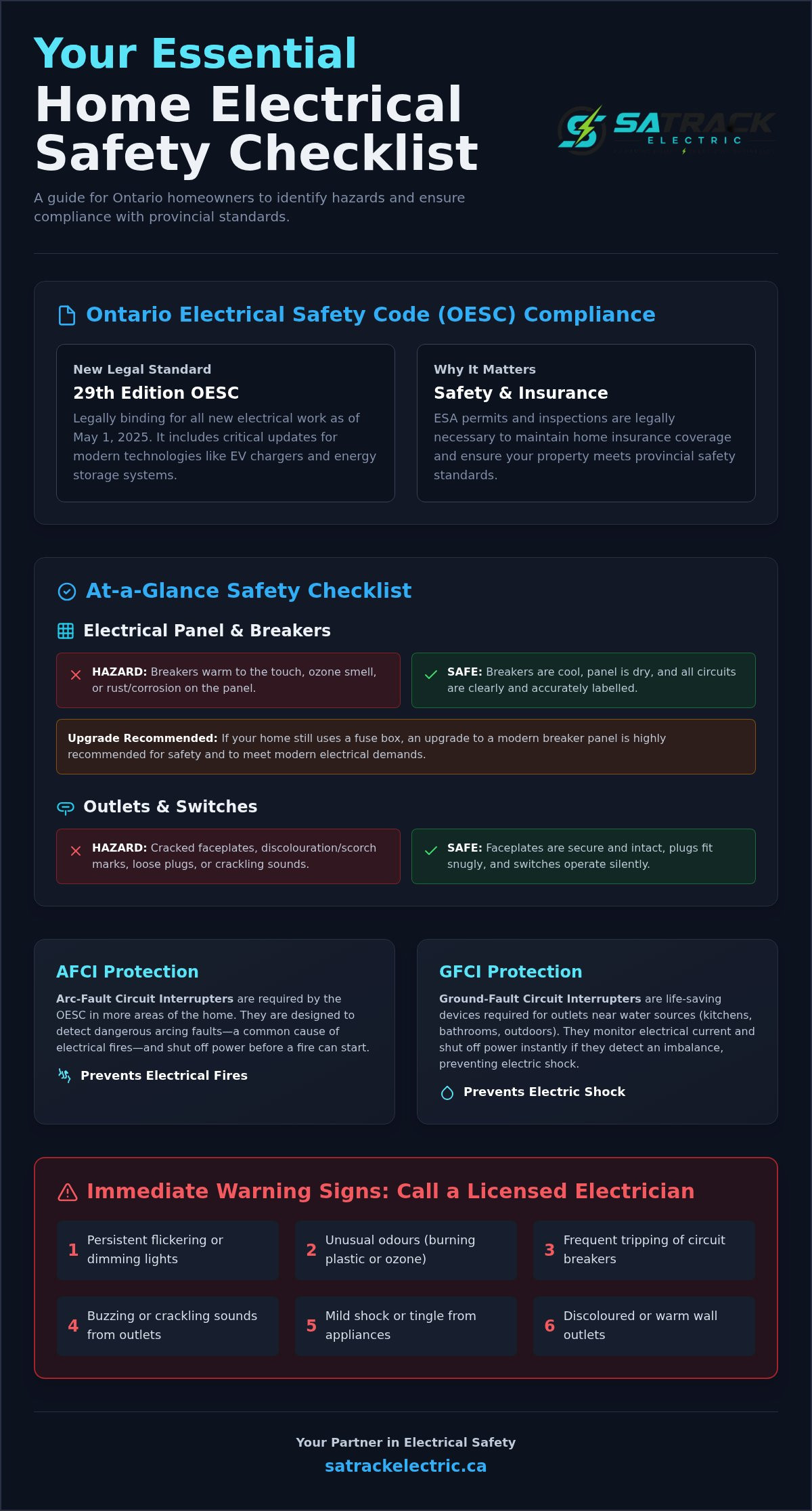
The electrical panel is the central hub of your home’s power. It requires a visual inspection for any signs of moisture, such as rust or corrosion on the metal box. Open the panel door to ensure all breakers are clearly and accurately labelled. If you notice breakers that feel warm to the touch or smell like ozone, these are immediate warning signs. For those still using a fuse box, it is often safer and more efficient to consider an electrical panel upgrade to meet modern demands. This is especially true in homes where newer appliances have been added recently.
Outlets and Switches Safety Standards
Move through each room to evaluate outlets and switches. Faceplates should be secure and free from cracks. Discolouration, such as yellowing or dark scorch marks, indicates internal heat buildup. If a plug falls out of an outlet easily, the internal tension is lost. This creates a high-resistance connection that can lead to overheating. Similarly, any crackling sounds when you toggle a switch suggest arcing, which is a serious fire risk. Lighting fixtures should also be checked to ensure they are using bulbs with the correct wattage rating for the socket.
Don’t ignore the hidden parts of your system. Inspect visible wiring in your basement, crawlspace, or attic for frayed insulation or evidence of rodent damage. Power bars should only be used for low-voltage electronics. Never use them for heavy appliances like space heaters or refrigerators. The Electrical Safety Authority (ESA) provides detailed guidelines on the safe use of extension cords and temporary power solutions. Managing your cords properly prevents tripping hazards and reduces the risk of wire damage. If your inspection reveals any of these red flags, scheduling professional Electrical Maintenance ensures your system remains compliant and safe.
Advanced Protection: GFCI and AFCI Requirements
Advanced electrical safety involves more than just looking for frayed wires. It requires understanding the specific devices designed to intervene before an accident occurs. Two primary components of a modern home electrical safety checklist Ontario homeowners should prioritize are Ground Fault Circuit Interrupters (GFCI) and Arc Fault Circuit Interrupters (AFCI). While they may look similar, they serve distinct and vital functions in protecting your property and family from different types of hazards.
GFCI Protection Near Water Sources
GFCIs are specifically engineered to prevent electric shock by monitoring the flow of electricity through a circuit. If the device detects a current leaking to ground, such as through water or a person, it shuts off power in milliseconds. These are mandatory in all “wet” areas, including kitchens, bathrooms, and laundry rooms. They are also essential for outdoor installations and hot tub wiring in Belleville, where the proximity to water significantly increases the risk of a ground fault.
To maintain these devices, you should perform a manual test once a month. Press the “Test” button to ensure the power cuts off immediately; the “Reset” button should pop out. Press “Reset” to restore power. If the button does not respond or the power remains on during the test, the device has failed and requires immediate replacement. This simple monthly habit ensures that the protection remains active and reliable throughout the year.
AFCI: Preventing Electrical Arcing
While GFCIs prevent shock, AFCIs are primarily focused on fire prevention. They monitor the circuit for dangerous arcing, which occurs when electricity jumps between damaged wires, loose connections, or through pierced insulation. These arcs generate intense heat that can easily ignite nearby building materials. The Canadian Electrical Code has progressively expanded the requirement for these devices because of their proven ability to reduce residential distribution fires.
AFCIs are designed to sense subtle electrical leaks and signature patterns that standard breakers miss. Under the latest Ontario standards, they are now required in most living areas, including bedrooms, hallways, and dens. This technology is particularly important in older homes where wire insulation may have degraded over time. Integrating these devices into your system is a critical step in achieving full compliance with provincial regulations. Regularly verifying the operation of these devices is a hallmark of a responsible homeowner who values professional standards and family security.
Warning Signs: When to Call a Licensed Electrician
While following a home electrical safety checklist Ontario residents can easily spot red flags. Some signs are obvious, while others are subtle cues that your system is struggling under modern loads. Recognizing these symptoms early allows you to address vulnerabilities before they result in property damage or injury. A methodical approach to monitoring your home’s performance is the best way to maintain long term stability.
The Danger of Flickering Lights and Power Surges
Flickering or dimming lights are rarely just a bulb issue. They often indicate a loose connection or an overloaded circuit. If lights dim when the air conditioner or microwave starts, your system may lack the capacity to handle simultaneous loads. This is particularly relevant in the Quinte West area, where seasonal ice storms and high winds can cause external power surges. These surges threaten expensive Canadian home electronics, making integrated surge protection a wise addition. If you experience persistent issues, it’s time to schedule professional electrical repairs in Belleville to prevent a total system failure.
Listen for buzzing sounds coming from switches or outlets. Any smell of burning plastic or ozone is an immediate safety concern. Charred or discoloured outlet covers suggest that heat is building up internally, which is a common precursor to an electrical fire. If your breakers trip frequently, don’t simply reset them and move on. Breakers are safety devices designed to cut power when they detect a fault; a recurring trip is a clear instruction to investigate the underlying cause.
Identifying Outdated Wiring Systems
Ontario homes built between 1965 and 1976 often contain aluminum wiring. While not inherently illegal, aluminum expands and contracts more than copper. This leads to loose connections at outlets and switches over time. Heritage properties in Belleville and Picton may still have active knob-and-tube wiring. These systems were never designed to be covered by modern attic insulation, which can cause them to overheat. In the Bay of Quinte region, seasonal humidity and temperature fluctuations can stress these older connections, making regular professional oversight essential.
Both aluminum and knob-and-tube systems require a full assessment by a Licensed Electrical Contractor (LEC) to ensure they remain safe for continued use. An LEC can provide a detailed report on the condition of your wiring and recommend necessary upgrades to meet current provincial standards. If you identify any of these warning signs, don’t delay your response. Protecting your property requires a methodical approach to maintenance and a willingness to act on expert advice. Book a residential safety inspection to confirm your home meets the latest safety requirements and to achieve total peace of mind.
Professional Safety Solutions and ESA Compliance
Completing a home electrical safety checklist Ontario residents can rely on is an important first step, but professional intervention is necessary to achieve full legal compliance. While visual inspections identify obvious issues, many hazards remain hidden behind walls or within the panel itself. Moving from observation to action requires a partnership with a qualified professional who understands the specific nuances of the provincial code. This ensures that your home remains a safe, stable environment for your family.
The Role of a Licensed Electrical Contractor (LEC)
There is a significant legal and safety distinction between a general handyman and a Licensed Electrical Contractor. In Ontario, only an LEC is authorized to pull the required permits from the Electrical Safety Authority (ESA) for residential work. Satrack Electric is a fully licensed and insured contractor serving the Quinte region, including Belleville and Trenton. We maintain active WSIB coverage and liability insurance, which protects you as a homeowner throughout the duration of any project. Our commitment to quality workmanship ensures that every installation meets or exceeds the current Ontario Electrical Safety Code standards.
Attempting DIY electrical work or hiring unlicensed labour poses a serious risk to your financial security. Most Ontario home insurance providers will void your coverage if a fire or injury is traced back to unpermitted electrical work. By choosing a professional, you ensure that all repairs and upgrades are documented and inspected by provincial authorities. This transparency is essential for maintaining your property’s value and your family’s safety over the long term.
Scheduling Your Professional Safety Assessment
A professional safety assessment is a comprehensive walkthrough of your entire system. During this process, we evaluate your panel, branch circuits, and grounding systems to identify any deviations from current codes. We also assess your readiness for seasonal challenges. For example, a professional generator installation provides necessary resiliency during the frequent power outages seen in Quinte West and surrounding areas. This proactive approach prevents small maintenance issues from becoming expensive emergency repairs.
Once the work is complete and has passed inspection, you will receive an ESA Certificate of Inspection. This document is your legal proof that the electrical work in your home complies with the Ontario Electrical Safety Code. It provides peace of mind for your family and serves as a vital record for insurance companies and future home buyers. Securing your home’s future requires a methodical approach to safety and a partnership with a trusted local expert. Contact Satrack Electric today to schedule your assessment and ensure your property remains a safe, reliable environment for years to come.
Securing Your Home with Professional Standards
Maintaining a safe household requires a methodical approach to identifying hidden risks and adhering to the latest provincial regulations. By utilizing a home electrical safety checklist Ontario homeowners can rely on, you’ve taken the first step toward preventing electrical fires and ensuring your system is prepared for modern energy demands. From recognizing the warning signs of aging aluminum wiring to verifying the operation of AFCI and GFCI protection, your vigilance is the best defence against unexpected hazards.
While DIY observation is valuable, achieving true peace of mind requires the expertise of a licensed professional. Satrack Electric is a licensed and insured Ontario contractor with expert ESA compliance knowledge. We’ve been serving Belleville, Trenton, and the Quinte West area for years, helping residents navigate the complexities of the Ontario Electrical Safety Code. Book your professional electrical safety assessment with Satrack Electric today to ensure your property meets the highest standards of workmanship and reliability. Taking these proactive steps today protects your investment and ensures a stable, secure environment for your family for years to come.
Frequently Asked Questions
Do I legally need an ESA permit for small electrical repairs in Ontario?
In Ontario, almost all electrical work requires an ESA permit, including many small repairs. While replacing a light bulb doesn’t require notification, most permanent wiring changes do. If you hire someone, they must be a Licensed Electrical Contractor (LEC) who will file the permit for you. This process ensures the work is inspected and recorded, which is vital for your home insurance and future property sales.
How often should I have a professional electrical safety check in my Ontario home?
You should schedule a professional safety check every three to five years, especially if you live in an older property in Belleville or Trenton. If you’re buying a new home or planning a significant renovation, an immediate inspection is necessary. Regular assessments help identify degraded insulation or loose connections before they cause a fire. Following a home electrical safety checklist Ontario homeowners can trust ensures your system remains compliant with the latest OESC standards.
What are the most common electrical code violations in older Ontario houses?
Common violations in older Quinte West homes include ungrounded three-prong outlets, improper grounding of the main system, and over-fused circuits. We also frequently see uncertified wiring that bypasses safety codes, such as missing junction boxes or improper wire splicing. These issues often surface during a home electrical safety checklist Ontario homeowners use before a sale. Addressing these violations through professional upgrades is essential for maintaining insurance eligibility and household safety.
Can I replace my own electrical outlets and switches in Ontario?
Ontario law allows homeowners to perform electrical work on their own primary residence, provided they obtain an ESA permit and pass all required inspections. However, you must follow the Ontario Electrical Safety Code exactly. Many homeowners in Picton and Brighton find this process complex and choose to hire a Licensed Electrical Contractor. This ensures the work is done correctly and safely without the risk of voiding your home insurance policy.
Is aluminum wiring safe, or does it need to be replaced for insurance?
Aluminum wiring is safe if it’s properly installed and maintained, but it requires specific connectors. Because aluminum expands and contracts differently than copper, connections often loosen over time, which creates a fire hazard. Most insurance companies in Ontario require a safety inspection or “pig-tailing” with copper connectors before they’ll provide coverage. Satrack Electric specializes in aluminum wiring assessments to ensure your heritage property meets modern safety and insurance requirements.
What should I do if my electrical panel is making a buzzing or humming sound?
A buzzing or humming sound from your electrical panel indicates a serious issue, such as a loose wire or a failing circuit breaker. You should immediately reduce the load on your system by turning off high-draw appliances and contact a Licensed Electrical Contractor. This sound often suggests electrical arcing, which generates intense heat and can lead to a fire. Professional electrical repairs are necessary to diagnose the fault and prevent damage to your home’s infrastructure.
How do I verify if an electrician is actually a Licensed Electrical Contractor in Ontario?
You can verify a contractor’s status by visiting the Electrical Safety Authority (ESA) website and using their “Find a Contractor” tool. Every Licensed Electrical Contractor (LEC) in Ontario must display their seven-digit ECRA/ESA license number on their vehicles and paperwork. This number confirms they have the required insurance, WSIB coverage, and qualifications to perform work legally. Satrack Electric is a fully licensed LEC serving Greater Napanee and the surrounding Quinte region.
Why does my breaker trip every time I use the microwave and toaster at the same time?
This occurs because your microwave and toaster are likely sharing a single 15-amp circuit that cannot handle their combined electrical draw. Each of these appliances requires significant power, and using them simultaneously exceeds the circuit’s capacity. To prevent the breaker from tripping, you should move one appliance to a different circuit. If you frequently experience this issue, it may be time for an electrical upgrade to add dedicated circuits for your kitchen appliances.