
In Ontario, a home generator is not a “set it and forget it” appliance. It is a seasonal commitment to your family’s safety. You likely purchased your system to avoid the stress of a sudden blackout, but that peace of mind disappears if you aren’t certain the engine will turn over when the grid goes down. Effective home generator maintenance Ontario homeowners can rely on involves more than a quick visual check. It requires a methodical approach to ensure every component, from the transfer switch to the battery, is ready for the province’s harshest winter conditions.
We recognize that keeping up with the 2024 Ontario Electrical Safety Code can be confusing. You want to ensure your backup power is safe, ESA-compliant, and functional when it matters most. This guide provides a clear roadmap for your maintenance needs, covering essential service intervals and the latest regulatory updates. We’ll explain how the July 2026 plan review threshold changes affect you and offer practical advice to keep your system running efficiently all year long.
Key Takeaways
- Understand how Ontario’s humidity and freezing cycles impact fuel and battery health during long periods of inactivity.
- Learn the specific oil and filter change intervals required for home generator maintenance Ontario winters demand, including the benefits of synthetic 5W-30 oil.
- Identify the critical Electrical Safety Authority (ESA) standards and inspection requirements that ensure your system remains legal and does not void your home insurance.
- Discover the essential cold-weather components, such as battery warmers and oil heaters, that guarantee a reliable start in sub-zero temperatures.
- Recognize why professional installation and maintenance by licensed electrical contractors are vital for long-term system reliability and safety.
Why Regular Home Generator Maintenance in Ontario is Critical
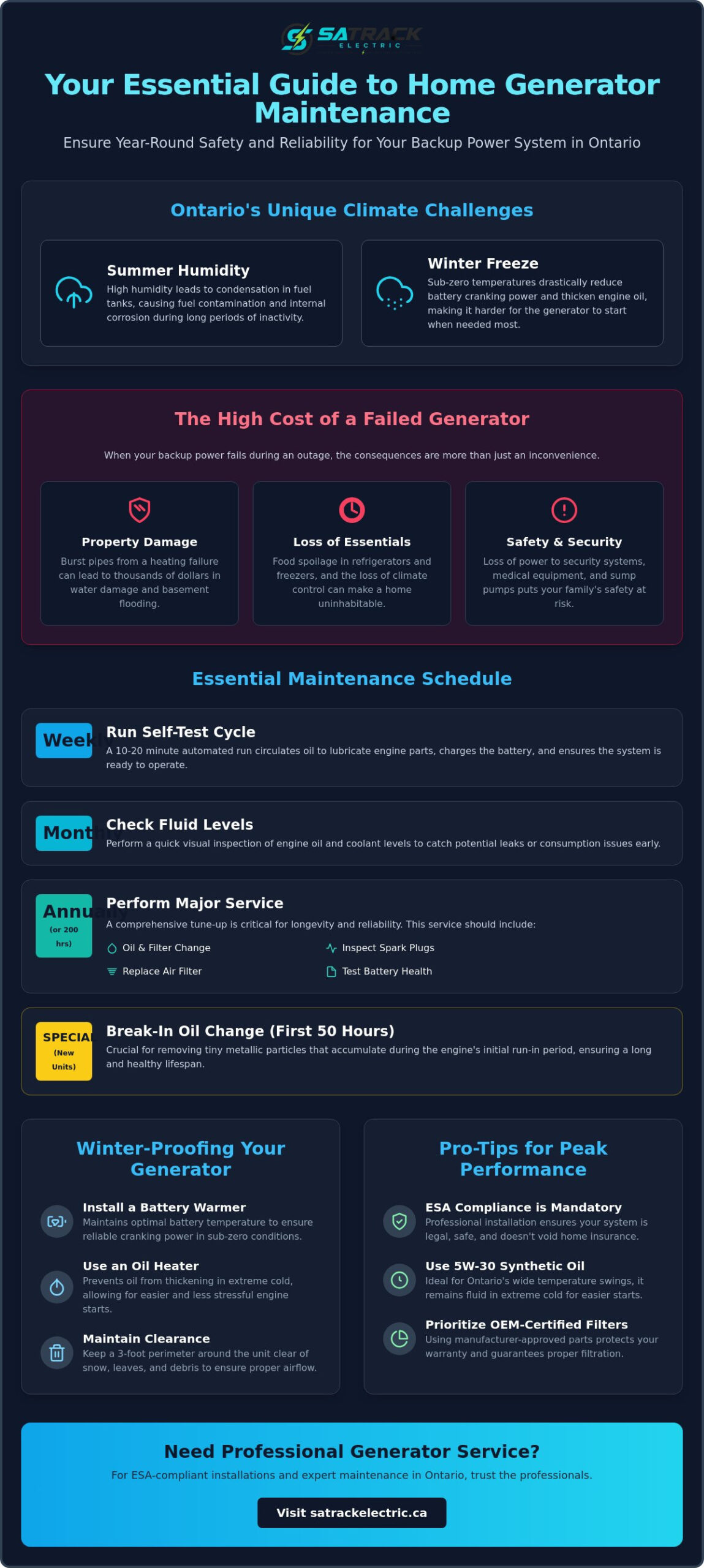
A standby generator is a unique piece of equipment. Unlike your vehicle, which likely runs every day, a generator remains idle for the vast majority of its life. This prolonged inactivity is precisely why home generator maintenance Ontario residents invest in is so vital. When an engine sits for months without use, oil settles, seals can dry out, and moisture begins to accumulate in the fuel system. Without regular attention, these small issues become major failures at the exact moment you need power.
Ontario’s climate presents specific challenges that other regions might not face. Our high humidity levels during the summer and extreme freezing cycles in the winter create a volatile environment for mechanical components. Humidity leads to condensation inside fuel tanks, which can contaminate fuel and cause internal corrosion. Meanwhile, sub-zero temperatures are notoriously hard on lead-acid batteries, often reducing their cranking power just when a winter storm makes a power outage most likely.
To combat these issues, most standby generator systems include a programmed exercise cycle. This is a weekly period where the unit runs for about 10 to 20 minutes. It isn’t just a test of the starter; it circulates oil to lubricate engine parts and ensures the battery charger is functioning. Neglecting this routine or failing to monitor the results can lead to catastrophic engine seizures. Routine checks are a simple way to avoid the massive expense of a full engine replacement.
The Consequences of a Failed Generator Hookup
If your generator fails to start during a winter grid collapse, the results are often more than just an inconvenience. In Ontario, temperatures can drop fast enough to cause pipes to burst within hours of a heating failure, leading to significant water damage and basement flooding. During summer outages, food spoilage in refrigerators and the loss of climate control can make a home uninhabitable. Beyond the physical damage, there is a distinct emotional toll when you realize your backup plan has failed during a crisis.
Understanding Your Generator Hookup in Ontario
A generator hookup is a safe, code-compliant bridge between backup power and your home panel. This connection relies on a transfer switch, which acts as the brain of the system. It detects when utility power is lost and safely disconnects your home from the grid before engaging the generator. Professional wiring is mandatory in Ontario to prevent backfeeding, a dangerous situation where your generator sends electricity back into the utility lines. This can be fatal for utility workers trying to restore power. Proper home generator maintenance Ontario homeowners schedule includes inspecting these electrical connections to ensure the transfer switch operates seamlessly every time.
The Essential Checklist for Standby Generator Maintenance
Maintaining a standby generator requires a disciplined schedule. You cannot wait for a storm to arrive before checking if the system is functional. For effective home generator maintenance Ontario homeowners should follow a structured checklist that addresses mechanical wear and environmental factors. Most manufacturers suggest a major service every 200 hours of operation or at least once per year. However, new units require a “break-in” oil change after the first 50 hours of use to remove any tiny metallic particles that accumulate during the initial run-in period.
Clean combustion is the result of proper airflow and ignition. You should inspect the spark plugs and air filters annually to prevent misfires or reduced engine efficiency. For liquid-cooled models, checking coolant levels and the integrity of rubber hoses is a safety priority. These hoses can become brittle over time, leading to leaks that cause the engine to overheat and shut down. Keeping the area around the unit clear of debris is equally important. A three-foot perimeter of “breathing room” ensures the intake and exhaust vents aren’t blocked by snow, leaves, or overgrown shrubs.
Fluid and Filter Management
Checking your oil levels monthly is a small task that prevents large-scale engine damage. Even if the generator hasn’t run a full cycle, oil can degrade or leak. Use the correct viscosity for our climate; 5W-30 synthetic oil is often the standard for Ontario’s wide temperature swings because it remains fluid in extreme cold. Always prioritize OEM-certified filters. Using generic parts might save a few dollars now, but they often lack the specific filtration ratings required to maintain your manufacturer’s warranty. If you are unsure about which fluids are best for your model, consulting a professional for electrical maintenance can ensure your unit is serviced correctly.
Battery and Electrical Connections
The battery is the most common point of failure in any standby system. A generator battery typically lasts three to five years, but Ontario’s winters can shorten that lifespan. You should test the voltage regularly to ensure it has the strength for a cold start. Clean any white, crusty corrosion from the terminals with a wire brush to maintain a solid connection. Beyond the battery, the electrical system requires a steady eye. This includes following ESA standards and professional inspections for your transfer switch. Look for signs of heat discolouration or loose wiring, as these indicate resistance that could lead to a system failure or an electrical fire during a prolonged outage.
Navigating ESA Standards and Professional Inspections
Compliance with provincial regulations is a fundamental part of responsible ownership. In Ontario, the Electrical Safety Authority (ESA) governs all electrical installations and modifications. When a standby generator is installed, an ESA permit is mandatory. This process includes an inspection to verify that the wiring and transfer switch meet the Ontario Electrical Safety Code. Skipping this step or hiring an unlicensed “handyman” for a hookup creates significant liability. Most home insurance providers in Ontario require proof of an ESA certificate. If a fire or electrical surge occurs and the system was not professionally inspected, your policy could be voided, leaving you responsible for all damages.
Fuel safety is another layer of regulation that homeowners must respect. While an electrician handles the power, the Technical Standards and Safety Authority (TSSA) oversees natural gas and propane lines. These connections must be performed by a TSSA-certified technician to prevent leaks and ensure the fuel pressure is correct for the engine. Beyond safety, maintaining a professional service record adds tangible value to your property. When it comes time to sell your home, a documented history of Preparing Your Generator for an Ontario Winter and regular maintenance provides buyers with confidence in the home’s infrastructure.
DIY vs. Professional Maintenance: Where to Draw the Line
Homeowners can safely manage several basic tasks. You should check oil levels, clear snow or leaves from the unit, and perform visual inspections of the exterior housing. However, internal electrical components require specialized tools and training. Tasks like voltage testing, frequency adjustments, and transfer switch repairs must be handled by a licensed electrician. There is a risk of “stacking” faults when minor issues are ignored. A professional can identify a slight voltage fluctuation that a homeowner might miss, preventing a domino effect that could destroy sensitive electronics inside the house.
Ontario Safety Codes and Your Warranty
A consistent log of home generator maintenance Ontario professionals provide is your best defence against warranty disputes. Most manufacturers require proof of service to honour claims on major components like the alternator or engine block. These requirements often align with the CSA-C282 standard, which outlines the rigorous testing needed for emergency power systems. Adhering to these standards ensures your system remains a reliable asset rather than a liability. Only a licensed electrician can verify the safety of a high-voltage generator hookup Ontario residents rely on.
Preparing Your Generator for an Ontario Winter
Ontario winters are uncompromising. While previous sections discussed year-round care, the months between November and March require a specialized approach to home generator maintenance Ontario residents can trust. When temperatures drop below -20°C, standard mechanical setups face immense strain. To ensure your system remains reliable, you should consider installing a cold-weather kit. These kits typically include thermostatically controlled battery warmers and oil heaters. By keeping the engine’s core components at a manageable temperature, you eliminate the “cold start” friction that often leads to starter motor failure or battery depletion.
Switching to 5W-30 synthetic oil is another non-negotiable step for the Canadian climate. Conventional oils tend to thicken in extreme cold, making it nearly impossible for the engine to crank at the required speed. Synthetic variants maintain their viscosity, allowing for a smoother start and immediate lubrication of internal parts. Additionally, fuel stability becomes a concern as the mercury drops. For those using propane, cold temperatures can lead to a drop in tank pressure. Ensuring your regulator and supply lines are rated for sub-zero performance is essential for maintaining a consistent fuel flow to the engine.
The Impact of Extreme Cold on Starting
Cold weather is the primary enemy of lead-acid batteries. Chemical reactions slow down significantly in the frost, which means your battery might show a full charge but lack the “burst” power needed to turn the engine over. A warm-start system, which keeps the coolant or oil at an optimal temperature, is a wise investment for whole-home standby units. We recommend testing your unit under load before the first major snowstorm of the season. This identifies potential issues while the weather is still mild enough for a comfortable repair.
Post-Storm Inspections
Your maintenance duties don’t end once the snow stops falling. After a significant weather event, you must inspect the generator enclosure. Check for ice buildup on the hinges and the air intake louvres. Blocked vents can lead to overheating or even a shutdown due to poor combustion. It’s also vital to verify that shifting snow or ice hasn’t put undue stress on your fuel supply lines. Finally, always clear a wide path to the unit. If a technician needs to perform generator installation or emergency maintenance, they require safe and immediate access to the equipment. Keeping the area shovel-ready ensures that help can reach you without delay.
Reliable Generator Solutions with Satrack Electric
The safety of your home during a power failure depends entirely on the reliability of your electrical contractor. At Satrack Electric, we prioritize professional assurance and unwavering reliability in every service we provide. Our team consists of licensed and insured electrical contractors who understand the specific technical requirements of the Ontario Electrical Safety Code. We don’t simply perform repairs; we build long-term partnerships with homeowners to ensure their backup power systems remain in peak condition regardless of the weather outside.
Our expertise extends beyond residential properties. We also provide specialized services for commercial generator installation Ontario businesses use to maintain continuity during grid failures. Whether you are protecting a family home or a professional facility, our comprehensive maintenance plans are tailored to meet your specific needs. We focus on a methodical approach that identifies potential faults before they lead to system failure, providing you with the confidence that your power will stay on when it matters most.
Serving Belleville, Trenton, and the Quinte Area
Operating within the Quinte region gives us a unique perspective on the local power grid. We are familiar with the common causes of outages in Belleville and Trenton, from severe winter ice storms to summer grid instability. This local knowledge allows us to anticipate the challenges your system will face. Customers on our maintenance plans benefit from our disciplined workflow and efficient response times. We are dedicated to keeping our community safe and powered through every season, ensuring that home generator maintenance Ontario residents require is always handled with the highest standards of workmanship.
Get Started with a Professional Maintenance Check
Organizing your annual inspection before the peak of the storm season is a practical decision for any homeowner. A professional assessment identifies hidden wear and tear that an exercise cycle might not reveal. We help you understand the long-term value of your investment, including how routine care impacts your overall generator installation cost Ontario and maintenance ROI. A well-maintained system lasts longer and operates more efficiently, saving you from the stress of emergency repairs. Contact Satrack Electric today for a professional generator assessment to ensure your home remains a safe haven during the next provincial power outage.
Secure Your Reliability for the Seasons Ahead
Maintaining a standby power system is a commitment to your family’s safety and your home’s infrastructure. We have explored how consistent oil changes, battery health checks, and proper winterization kits keep your engine ready for the extreme temperature swings common in our province. Adhering to the latest ESA standards ensures your installation remains legal and your insurance coverage stays intact. These steps are not just suggestions; they are the foundation of a dependable backup power strategy.
Professional oversight is the only way to guarantee these systems operate as intended during a crisis. As a licensed and insured Ontario electrical contractor with deep expertise in ESA and TSSA compliance, Satrack Electric has been serving the Quinte region since our inception. We take pride in delivering thorough results that provide true peace of mind for our neighbours. Ensure your backup power is ready for winter—schedule your Satrack Electric maintenance check today. Proactive home generator maintenance Ontario homeowners prioritize today prevents the stress of a failed start tomorrow. It is always better to be prepared before the next storm arrives.
Frequently Asked Questions
How often should I have my home generator serviced in Ontario?
You should schedule a major service for your unit once per year or every 200 hours of operation, whichever comes first. For new systems, the first oil change is typically required after only 50 hours of use to remove manufacturing debris. Consistent home generator maintenance Ontario winters demand ensures that these mechanical components remain lubricated and the battery remains fully charged for sudden outages.
Can I use regular car oil in my standby generator?
You must only use the specific oil viscosity and grade recommended by your generator’s manufacturer. While some car oils share similar ratings, standby generators often run at higher temperatures and constant speeds compared to vehicle engines. Using the wrong oil can lead to engine overheating and may void your manufacturer’s warranty.
Does a generator hookup in Ontario require an ESA permit?
Yes, every permanent generator installation in Ontario requires an Electrical Safety Authority (ESA) permit and inspection. This process verifies that the transfer switch and wiring comply with the Ontario Electrical Safety Code. This legal requirement protects your home from fire hazards and ensures your utility company is aware of the backup power source on your property.
What is the best type of oil for a generator in the Canadian winter?
5W-30 synthetic oil is the superior choice for Ontario’s extreme temperature fluctuations. Unlike conventional oils that thicken in sub-zero conditions, synthetic oil remains fluid, allowing the engine to crank quickly and receive immediate lubrication during a cold start. This is a critical component of reliable home generator maintenance Ontario homeowners should prioritize before November.
Why does my generator run for 12 minutes every Tuesday?
This is the exercise cycle, a programmed test run designed to keep the engine healthy during long periods of inactivity. This weekly run circulates oil through the engine, prevents seals from drying out, and tests the battery’s ability to start the unit. It’s an automated health check that ensures the system is ready for a real power failure.
Will my home insurance cover a DIY generator installation?
Most home insurance providers won’t cover damages caused by a DIY or uncertified generator installation. If an electrical fire or equipment failure occurs, insurers will request proof of an ESA certificate and professional installation. Without this documentation, you may be held personally liable for all repair costs and property damage.
How long do standby generators typically last with proper maintenance?
A high-quality standby generator typically lasts between 20 and 30 years when it’s maintained correctly. This longevity depends on regular oil changes, battery replacements every three to five years, and ensuring the unit is kept clear of debris. Professional inspections help identify minor electrical wear before it shortens the lifespan of the alternator or engine.
What should I do if my generator fails to start during a power outage?
First, check the status indicator on the generator or your monitoring app to identify any fault codes. Ensure the fuel supply is open and the battery terminals are clean and tight. If the unit still refuses to start, don’t attempt internal electrical repairs yourself; contact a licensed electrical contractor to diagnose the issue safely and restore your backup power.