
Imagine receiving a notice from your insurance broker stating that your policy won’t be renewed until your home’s original wiring is replaced. This is a stressful reality for many homeowners in Quinte West who manage older properties with systems that can’t keep up with modern power demands. Whether you’re worried about the risks of aluminum wiring or the limitations of an old panel, the need for Whole Home Rewiring often becomes a priority when safety and insurance coverage are at stake.
It’s natural to feel concerned about the scope of such a project and the technical standards required by the Ontario Electrical Safety Code. We understand that you want a home that is both safe and compliant without unnecessary complications. This guide will help you identify the critical signs that your electrical system is failing, explain the professional rewiring process in Ontario, and show you how to protect your investment for the long term.
We’ll walk through the current 2026 safety regulations, the impact of the latest OESC updates on residential projects, and how modernizing your home’s infrastructure provides lasting peace of mind. By the end of this article, you’ll have a clear roadmap for upgrading your home’s electrical capacity safely and efficiently.
Key Takeaways
- Identify the specific fire hazards associated with outdated electrical systems and how adhering to the 2026 Ontario Electrical Safety Code protects your property.
- Learn why insurance providers often require the replacement of knob and tube or aluminum wiring and how these systems fail to meet modern power needs.
- Understand how home layout and accessibility influence the total investment for Whole Home Rewiring and what to expect during the ESA permit and inspection process.
- Discover how to integrate value-adding upgrades, such as EV chargers or generator hookups, while your home’s electrical infrastructure is being modernized.
- See how working with a licensed Ontario contractor ensures your project is completed with minimal disruption and full code compliance for lasting peace of mind.
Why Consider Whole Home Rewiring for Your Ontario Property?
Maintaining an older home in Quinte West requires a proactive approach to infrastructure. While many local properties possess historic charm, their internal systems often lag behind modern safety requirements. Undertaking a Whole Home Rewiring project is more than a simple renovation; it’s a fundamental safety upgrade that aligns your property with the 29th edition of the Ontario Electrical Safety Code (OESC). As of May 1, 2025, these updated Electrical wiring standards are mandatory for all residential work. They ensure that your home can safely handle the heavy electrical load of modern appliances, electric vehicle chargers, and home office equipment.
Beyond immediate safety, modernizing your electrical system significantly enhances property value in the Belleville and Quinte market. Potential buyers are increasingly wary of the hidden costs associated with aging infrastructure. A house that features a fully updated, code-compliant system is a much more attractive investment than one requiring immediate, large-scale repairs. It removes the uncertainty of future renovation costs for the next owner.
Common Warning Signs Your Wiring is Failing
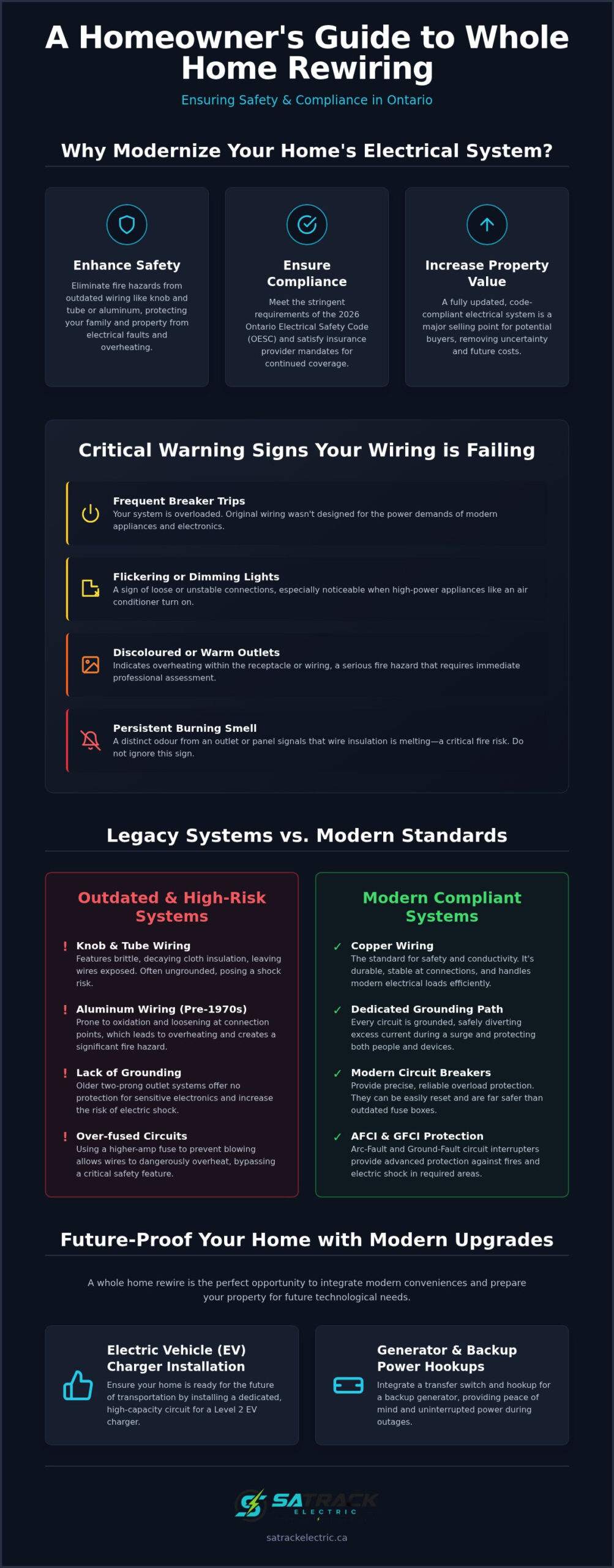
Electrical systems rarely fail without warning. You might notice your circuit breakers tripping more often than they used to. This often happens because the original wiring wasn’t designed for the number of devices we use today. Flickering lights are another red flag, especially when heavy-draw appliances like your air conditioner or refrigerator start up. If you notice discoloured outlet covers, feel warmth when touching a switch, or detect a persistent burning smell, your system is likely overheating. These signs indicate that the integrity of your wiring is compromised and requires professional assessment.
The Insurance Factor: Why Policies Change
Insurance providers in Ontario have become increasingly strict regarding legacy systems. Many companies now view knob and tube or aluminum wiring as high-risk assets due to their higher probability of causing electrical fires. It’s common for an insurer to threaten policy cancellation or refuse a renewal unless a full update is performed. This can happen suddenly during a home inspection or policy review.
To maintain coverage, you’ll often need a “Letter of Compliance” from a licensed electrical contractor. This document proves that your home meets current safety standards following an inspection or upgrade. While the investment in a rewire is significant, it often leads to lower annual premiums. Insurers are generally more willing to offer competitive rates for homes that have eliminated the risks associated with outdated technology. This transition provides long-term financial stability and ensures you aren’t left without protection.
Understanding Aging Systems: Aluminum, Knob and Tube, and Beyond
Older homes in Quinte West often contain legacy systems that were standard at the time of construction but have since been surpassed by safety advancements. Understanding the technical limitations of these systems explains why Whole Home Rewiring is frequently necessary for long-term safety. A primary concern is the lack of a grounding path in many pre-1960s installations. Modern electronics and appliances require a dedicated ground wire to safely divert excess current. Without it, your sensitive devices are at a higher risk of damage during a power surge, and residents face a greater risk of electric shock. Grounded systems provide a path of least resistance for faults, a feature missing in older ungrounded circuits.
Another common hazard in aging properties is over-fusing. This occurs when a homeowner or unqualified person replaces a 15-amp fuse with a 20-amp version because the original keeps blowing. While this stops the fuse from blowing, it allows more current than the wire is rated to handle. The result is excessive heat buildup inside your walls, which can ignite surrounding materials. This practice effectively bypasses the system’s primary safety mechanism, turning a minor inconvenience into a significant fire risk.
The Risks of Knob and Tube Wiring
Knob and tube systems rely on porcelain insulators and rubberized cloth insulation. Over several decades, this cloth material becomes brittle and flakes away, leaving bare wires exposed. The risks increase when modern renovations occur. For instance, adding spray foam or blown-in attic insulation around these wires traps heat that was originally meant to dissipate into open air. This lack of ventilation can cause the temperature of the wires to rise well beyond safe limits. Because these systems lack a ground wire, it’s impossible to safely ground three-prong appliances on these circuits without a complete update.
Aluminum Wiring: Repair vs. Replacement
Homes built between 1965 and 1975 often feature aluminum branch circuit wiring. Aluminum has a high rate of thermal expansion and contraction, which causes connections at outlets and switches to loosen over time. This phenomenon, known as “cold flow,” creates gaps that lead to electrical arcing and potential fires. While some choose “pigtailing”—connecting copper leads to aluminum ends—this is often a temporary measure. Opting for aluminum wiring replacement in Belleville is usually the most reliable way to ensure a home meets modern safety standards. A Whole Home Rewiring project removes these vulnerabilities entirely. If you’re unsure which system is currently behind your walls, our team can provide a professional inspection to clarify your home’s needs.
Calculating the Cost and Value of Residential Rewiring
Determining the investment required for a Whole Home Rewiring project depends on several variables specific to your property’s layout and age. In Ontario, the cost per square foot for this service typically ranges from $2 to $17. The lower end of this scale usually applies to homes with open and accessible framing, such as those with unfinished basements or accessible attics. The higher end accounts for complex projects where walls and ceilings are finished, requiring more time and specialized techniques to navigate the internal structure. It’s helpful to view these figures as a strategic investment in your property’s long-term viability and safety.
Labour costs are heavily influenced by how easily a contractor can access your home’s internal passages. Homes with crawl spaces or open joists allow for faster installation, while finished basements and lath-and-plaster walls require a more methodical, time-consuming approach. Beyond the physical work, mandatory Electrical Safety Authority (ESA) fees are a necessary part of the budget. In 2026, the minimum fee for a wiring notification is $92, though most residential rewiring projects fall into a range between $100 and $450 depending on the total scope. These permits ensure every aspect of the project is inspected and verified, which is essential for maintaining your insurance coverage and maximizing property appraisal value.
The Return on Investment (ROI) for a complete electrical update is significant. Beyond the immediate peace of mind, a modernized system eliminates the “insurance surcharge” often applied to older homes. It also removes a major hurdle during the home-selling process. Buyers in the Quinte West market prioritize safety and code compliance, and having a certified, updated system can prevent price negotiations or failed inspections during a sale. You’re not just fixing wires; you’re securing the financial future of your home.
Factors That Influence Your Rewiring Quote
The physical structure of your home plays a major role in the final quote. A two-storey house requires more complex wire routing than a bungalow, often involving vertical runs through multiple levels. We also consider the total number of outlets, switches, and light fixtures you wish to modernize to meet current lifestyle needs. Often, this is the most logical time to include a professional electrical panel upgrade. Moving from an older 100-amp service to a 200-amp system ensures your home can handle the increased demands of modern appliances and electronics without strain.
Saving Money During the Process
Timing your project strategically can lead to significant savings. If you’re already planning a kitchen or basement renovation, performing a Whole Home Rewiring at the same time can save between 20% and 40% on labour costs because the walls are already open. You can also bundle other services like data cabling or new lighting installations into the same project window. Planning for future needs, such as installing a dedicated circuit for a future EV charger or a generator hookup, prevents the need for a second, more expensive visit later. This methodical approach ensures you get the most value out of every dollar spent on your home’s infrastructure.
The Rewiring Process: From ESA Permits to Final Inspection
A successful Whole Home Rewiring project begins with a methodical assessment of your current electrical load. We calculate the peak demand of your household, accounting for everything from kitchen appliances to modern additions like home theatres or electric vehicle chargers. This ensures that the new infrastructure isn’t just a replacement, but a significant upgrade that meets the 2026 Ontario Electrical Safety Code requirements. Once the plan is established, we file a notification with the Electrical Safety Authority (ESA), which is a mandatory legal step for any residential wiring installation in Ontario. This permit must be secured before any work begins to ensure full regulatory compliance.
During the physical installation, we employ a “fishing” technique to navigate new wires through your existing walls. This specialized method allows us to pull cables through the cavities behind lath and plaster or drywall, significantly reducing the need for invasive structural repairs. While some small access holes are inevitable, this approach preserves the aesthetic integrity of your home. You should prepare for short, planned power outages during the final cutover phase. We coordinate these outages to minimize disruption as we transition your home from the old system to the new, safer infrastructure.
What to Expect Inside Your Home
Our team uses attic and basement spaces as primary conduits to reach the interior walls of your home. For a standard three-bedroom property in the Quinte area, the process typically takes between five and ten business days, depending on the accessibility of the framing. We focus on creating small, strategic access points rather than removing entire sheets of drywall. This methodical pace ensures that every connection is secure and that the workspace remains organized throughout the project duration. We prioritize cleanliness and safety to ensure your home remains habitable during the transition.
The Importance of ESA Certification
Every project involving Whole Home Rewiring must be recorded with the ESA to ensure it meets provincial safety standards. This process involves two critical milestones: the rough-in inspection, where the inspector verifies the wiring before walls are closed, and the final inspection once all fixtures and devices are installed. Obtaining a final certificate of inspection is vital. It serves as your legal proof of compliance, which is often required by insurance companies and is a major asset during a future home sale. If you’re ready to begin this process, you can schedule a residential consultation with our licensed team to review your home’s specific requirements.
Professional Rewiring and Modern Upgrades in Belleville
Satrack Electric serves as a dependable local authority for homeowners across Belleville, Trenton, and the Quinte region. As a licensed and insured electrical contractor in Ontario, we prioritize precision and safety in every project. Choosing a professional partner for a Whole Home Rewiring ensures your property remains compliant with all provincial regulations while providing the capacity needed for modern living. We don’t just replace old wires; we build a foundation that supports your family’s evolving needs. This commitment to quality workmanship helps maintain your property’s integrity and gives you long-term peace of mind.
Working with a licensed professional is the only way to guarantee that your project meets the strict requirements of the Ontario Electrical Safety Code. We manage the entire process, from the initial load calculations to the final ESA certification. This thorough approach prevents the safety risks and insurance complications discussed in previous sections. Our team understands the local housing stock and the specific challenges presented by the historic homes in our community. We take pride in delivering results that are both functional and durable.
Future-Proofing Your Home’s Electrical Capacity
A rewire is the ideal time to add specialized circuits that enhance your lifestyle and increase your property’s utility. You might consider hot tub wiring to create a backyard retreat or backup generator installation to protect your home during severe weather. Integrating modern USB outlets and smart home control hubs during this phase also eliminates the need for future modifications. These additions turn a necessary safety upgrade into a comprehensive home improvement project that readies your house for the next generation of technology.
Maintaining Your New Electrical System
Once your Whole Home Rewiring is complete, sticking to a schedule of routine electrical repairs and maintenance will keep your infrastructure in peak condition. We recommend monitoring your panel for any signs of wear and ensuring it has room for future expansion as your needs change. A 200-amp service has become the new standard for modern Canadian homes, providing ample power for high-demand devices like EV chargers and central air conditioning. This increased capacity ensures your system won’t become obsolete as you add more electronics to your household.
The safety of your home is our primary concern. If you’re ready to modernize your property and eliminate the risks of aging wiring, contact our team to schedule a professional assessment. We’ll provide a clear, methodical plan to ensure your home is safe, efficient, and fully code-compliant for years to come.
Secure Your Home’s Future with a Modern Electrical Foundation
Undertaking a Whole Home Rewiring project is a definitive step toward ensuring the safety and longevity of your property. By removing legacy systems like aluminum or knob and tube wiring, you eliminate significant fire hazards and resolve the insurance hurdles that often plague older homes in Ontario. This process also provides the perfect opportunity to increase your home’s capacity, preparing you for modern demands such as EV charging and smart home integration.
As a licensed Ontario Electrical Contractor, we ensure every installation meets strict ESA compliant workmanship standards. We are proud to serve the residents of Belleville, Trenton, and the Quinte Region with reliable, professional service that prioritizes your peace of mind. Investing in your home’s electrical infrastructure today prevents costly repairs and regulatory issues in the future.
Book your professional whole home rewiring assessment with Satrack Electric today. We look forward to helping you create a safer, more efficient living space for your family.
Frequently Asked Questions
How do I know if my house needs to be rewired?
You should consider an update if your home was built before 1970 and still uses original legacy systems like knob and tube or aluminum. Persistent red flags include circuit breakers that trip frequently, flickering lights when you use appliances, or a faint burning smell near outlets. If your insurance provider has requested an inspection or a letter of compliance, it’s often a sign that your system is no longer considered safe by modern standards.
Does whole home rewiring require me to move out during the work?
Most homeowners choose to stay in their properties while we work, as we manage the project in stages to maintain a habitable environment. While there will be temporary power outages in specific zones, we coordinate these to minimize disruption to your daily routine. We focus on one area at a time, ensuring that essential services remain available whenever possible throughout the duration of the project.
Is it possible to rewire a house without removing the drywall?
Yes, we use a technique called “fishing” to pull new cables through existing wall cavities with minimal impact on your surfaces. Instead of removing entire sheets of drywall, we create small, strategic access holes that are much easier to patch and paint later. This specialized approach allows us to modernize your infrastructure while preserving the aesthetic integrity of your home’s interior.
Will rewiring my home lower my insurance premiums in Ontario?
It often leads to lower premiums because insurance companies view modern copper wiring as a significantly lower risk than older systems. Many Ontario providers actually mandate Whole Home Rewiring before they will even offer or renew a policy for an older house. Providing your insurer with an official ESA certificate of inspection proves the home is safe and often helps you secure more competitive rates.
How long does it typically take to rewire a 2,000-square-foot home?
A project of this size generally takes between five and ten business days to complete from start to finish. The exact timeline depends on the accessibility of your home’s framing, such as whether you have an unfinished basement or an open attic. We provide a detailed schedule before we begin so you know exactly what to expect each day we are on-site.
Can I just replace the visible outlets instead of a full rewire?
No, simply changing the outlets is a cosmetic fix that doesn’t address the safety of the wires hidden behind your walls. If the underlying wire is degraded, ungrounded, or improperly fused, the risk of an electrical fire remains exactly the same. A Whole Home Rewiring project is the only way to ensure the entire electrical path from the panel to the device is safe and code-compliant.
What is the difference between a partial and a whole home rewire?
A partial rewire involves updating specific circuits, such as those in a newly renovated kitchen, while a whole home rewire replaces every cable in the entire structure. Partial work is useful for targeted upgrades, but it leaves older, potentially dangerous wiring in other parts of the house. A comprehensive update provides total peace of mind by ensuring every room meets the same high safety standards.
Does the Electrical Safety Authority (ESA) inspect every rewiring job?
Yes, every professional rewiring project in Ontario must be filed with the ESA and undergo a formal inspection process. This typically involves a “rough-in” inspection while the wires are still visible and a final inspection once all fixtures are installed. These steps are mandatory to ensure the work adheres to the Ontario Electrical Safety Code and to provide you with a legal certificate of compliance.